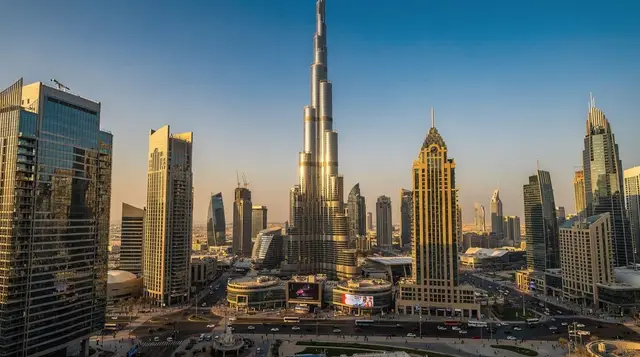
At the Top vs At the Top SKY: which Burj Khalifa deck to book
Dubai: Burj Khalifa levels 124 & 125 entry ticket + options
Duration: 1.5 hours
- Free cancellation
What's the difference between At the Top and At the Top SKY at the Burj Khalifa?
At the Top (levels 124/125, 452-456m) is the standard deck. At the Top SKY (level 148, 555m) costs roughly double and adds a smaller, quieter lounge with a included drink, but the view itself is only marginally different from 96 meters lower.
Why this comparison trips up so many first-time bookers
Search results and third-party listings routinely present At the Top and At the Top SKY side by side with little explanation of what the price gap actually buys, which pushes many visitors toward the more expensive tier on the assumption that a higher number must mean a better experience. That assumption holds in plenty of travel contexts — a higher hotel category, a higher tour rating — but it doesn’t map cleanly onto observation-deck altitude once you’re already several hundred meters up. This guide exists specifically to separate the marketing framing from what changes in practice between the two tiers, so the decision comes down to your actual priorities rather than a default toward the pricier label.
For the full picture of what a visit to either deck involves beyond just the ticket tier, see the Burj Khalifa guide.
The short answer
At the Top (levels 124 and 125) is the standard Burj Khalifa deck at 452-456 meters, and At the Top SKY (level 148) sits 96 meters higher at 555 meters and costs close to double. For most visitors, the extra height doesn’t translate into a meaningfully different view or photo — the case for paying more comes down to a quieter floor and a couple of included extras, not altitude. This guide breaks down exactly what separates the two so the decision isn’t based on guesswork or the assumption that “higher must mean better.”
| Where | Burj Khalifa, Downtown Dubai |
| Cost | 124/125 from ~AED 169; SKY (148) from ~AED 449 at prime hours |
| Time needed | 60-75 min (124/125); 75-90 min (SKY) |
| Getting there | Ticketed entrance via Dubai Mall |
| Best time | Non-prime hours for value; sunset for photos (book ahead) |
At the Top vs SKY: the decision at a glance
| At the Top (124/125) | At the Top SKY (148) | |
|---|---|---|
| Altitude | 452-456m | 555m |
| Price (non-prime → prime) | ~AED 169 → ~AED 259 | ~AED 449+ |
| Included extras | None beyond the deck itself | Hosted lounge, complimentary drink, short presentation |
| Crowd level | Higher capacity, busier peak evenings | Lower capacity, calmer floor |
| Best for | Most first-time visitors, budget-conscious | Peak-season crowds, special occasions |
What At the Top (124/125) includes
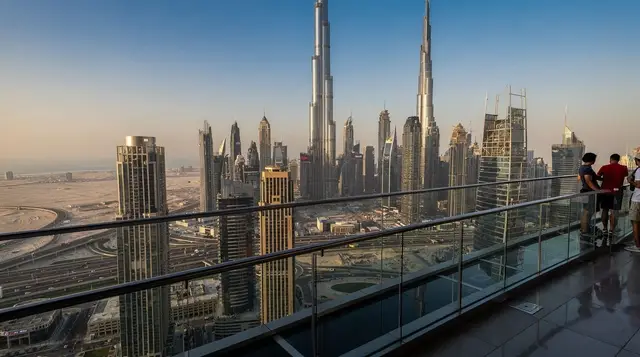
Burj Khalifa levels 124 and 125 entry ticket is the building’s original and most-booked observation experience: two connected floors, an indoor deck with floor-to-ceiling glass plus a partially open-air terrace section on 124, and a smaller lounge one floor up on 125 reached by an internal staircase. Both floors are included in a single ticket, and the view spans the full 360 degrees around the tower — the Marina skyline to the west, the Palm’s outline on the coast, Old Dubai and the Creek to the northeast, and the desert stretching out on the inland side.
Full pricing and booking details are covered in the Burj Khalifa tickets guide.
What At the Top SKY (148) adds
Burj Khalifa Sky level 148, 124 and 125 entry ticket includes everything in the standard ticket, plus a second elevator ride up to level 148 itself — a smaller, more intimate floor with a hosted lounge, a complimentary drink, and a short multimedia presentation on the tower’s construction. The floor holds noticeably fewer visitors at once than 124/125, which is the practical difference that matters most in person: less waiting at the glass, more breathing room for photos, and a calmer atmosphere generally.
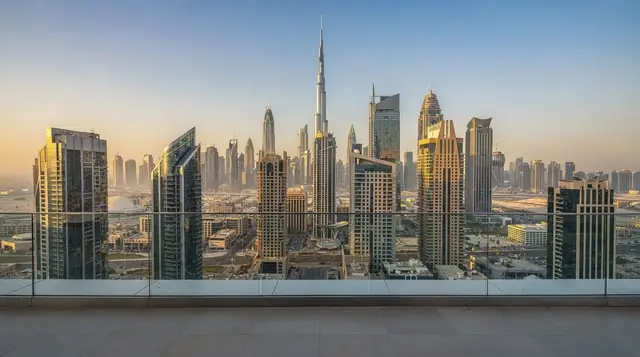
What it does not deliver is a dramatically different visual experience — from 452 meters, the ground below is already abstracted into a map-like pattern, and climbing another 96 meters doesn’t change that perception as much as the price difference might suggest.
The name that trips people up: Sky Views
This is worth stating plainly, because it causes real booking mistakes: At the Top SKY is not the same as Sky Views Observatory. At the Top SKY is level 148 of the Burj Khalifa itself. Sky Views Observatory is an entirely separate attraction at the Address Sky View hotel, a short walk away in Downtown Dubai, featuring its own infinity pool deck and a glass sky bridge slide between its twin towers. The two attractions are sometimes bundled into a single combo ticket, which is a legitimate way to see both, but booking a “Sky Views” ticket expecting the Burj Khalifa’s level 148 lounge — or the reverse — is a common and avoidable error.
If a listing’s title includes both names, read the description carefully to confirm which building, or both, the ticket actually covers.
Price difference, side by side
At non-prime hours, level 124/125 typically runs AED 169–179 (46–49 USD), rising to roughly AED 229–259 (62–70 USD) during prime sunset hours. Level 148 costs close to double at equivalent time bands, often reaching AED 449-plus (122 USD-plus) at prime hours. That gap — potentially AED 200-plus (55 USD-plus) per adult — buys a quieter floor, a drink, and a brief presentation, not a materially different photo. For a family of four choosing SKY over the standard tier, that difference can add several hundred dirhams to the day’s budget, which is worth weighing against the Dubai budget guide rather than assumed as a fixed cost of “doing the Burj Khalifa properly.”
When At the Top SKY is genuinely worth it
There are legitimate reasons to pick the higher tier. If you’re visiting during the busiest weeks of the year — December, January, or around a major holiday — the crowd difference between the two floors becomes more noticeable, and a calmer floor with room to actually compose a shot has real value. If you want the small ceremony of a hosted drink and a construction story rather than a purely self-guided visit, that’s a legitimate preference too. And if this is a special-occasion visit — an anniversary, a proposal, a milestone trip — the extra polish of level 148 (or the level 152 VIP lounge above it, for an even more private setting) fits the moment in a way pure sightseeing value doesn’t need to account for.
When At the Top (124/125) is the better call
For most first-time visitors focused on seeing the skyline and getting a good photo without overthinking it, level 124/125 delivers essentially the same experience for close to half the price. It’s also the more flexible option — more time slots available across the day, generally shorter waits for booking a specific date, and a more forgiving cancellation landscape given the wider inventory. If you’re building a Downtown day that already includes Dubai Mall and the Fountain, the money saved by choosing 124/125 over SKY is better redirected toward one of the other attractions covered in Dubai observation decks compared, several of which cost less than either Burj Khalifa tier individually.
What about the level 152 VIP lounge?
Above both tiers sits a third option — a VIP lounge experience on level 152 with a private host and an extended, unhurried visit. This isn’t really part of the At the Top vs SKY decision most visitors face; it’s a distinct premium product aimed at travelers who want a private, paced experience regardless of the marginal view difference, priced well above both standard tiers. See the Burj Khalifa tickets guide for where it fits into the full pricing picture.
How crowding actually differs between the two floors
Level 124/125 is the building’s highest-capacity deck and can feel genuinely busy during peak season evenings — multiple large tour groups cycling through at once, meaning real waiting time at the best window positions. Level 148’s smaller footprint and higher price act as a natural crowd filter: fewer tickets are sold for the same time slot, and the floor itself holds fewer people comfortably. If getting an unobstructed few minutes at the glass without maneuvering around other visitors’ photos matters to you specifically, that’s the clearest, most concrete benefit SKY delivers over the standard tier — more so than the extra 96 meters of height.
Building this into a Downtown day
Whichever tier you choose, the visit connects directly to Dubai Mall through the ticketed entrance, and most visitors pair it with the Dubai Fountain shows in the evening and time in the Dubai Mall itself, all within the wider Downtown Dubai area covered by getting around Dubai for transit planning. The choice between At the Top and At the Top SKY doesn’t need to be made in isolation — factor in whether you’re visiting during a peak-crowd period, whether the day already has other paid attractions competing for budget, and whether a calmer floor or a lower price matters more to your specific trip.
For first-time visitors following the Dubai 1-day itinerary or a longer Dubai 3-day itinerary, the standard tier fits comfortably into a packed schedule without eating disproportionately into the day’s budget.
The honest recommendation
If you’re choosing based purely on value, book At the Top (124/125) at a non-prime time — it’s the same skyline, the same building, and roughly half the price of SKY at an equivalent time slot. If you’re choosing based on comfort and a calmer experience during a crowded season, or if the small hospitality touches genuinely appeal to you, SKY is a reasonable premium to pay, just go in understanding what that premium actually buys: quieter floor space and a drink, not a better view. What you should avoid is choosing SKY purely because “higher must be better” without weighing the actual price gap against what changes in the experience — that assumption is where most visitors overspend on this particular decision.
Does altitude affect visibility at these heights?
In practical terms, no. Both decks sit well above Dubai’s low-level haze layer on most days, so the 96-meter gap between them rarely changes what’s visible toward the horizon — visibility on a given day is driven far more by overall atmospheric conditions (dust, humidity, seasonal haze) than by which of the two floors you’re standing on. The main visual difference visitors report isn’t clarity but angle: level 148’s smaller footprint means you’re closer to the glass more consistently, since there’s simply less floor space for a crowd to spread across, giving a slightly more immersive feel even though the actual sightline distance is nearly identical.
A brief history of the naming
The Burj Khalifa’s operator introduced level 148 as “At the Top, Burj Khalifa SKY” several years after the original 124/125 deck opened with the tower in 2010, positioned as a premium tier for repeat visitors and those seeking more exclusivity. Around the same period, the nearby Address Sky View hotel opened its own “Sky Views Observatory” attraction with a similarly sky-themed name but no operational connection to the Burj Khalifa whatsoever — different owner, different building, different ticketing system.
The naming overlap is coincidental rather than intentional, but it’s persistent enough in search results and third-party listings that confirming exactly which building a ticket refers to before purchasing is a genuinely useful five-second check.
Accessibility comparison
Both At the Top and At the Top SKY offer accessible routes and elevator access for wheelchair users, and neither deck requires stairs for the core visit — the internal staircase between levels 124 and 125 is optional, with an alternative route available on request. Visitors with mobility needs should flag this when booking either tier rather than at the entrance, since staff coordinate the accessible route in advance. There’s no meaningful accessibility advantage of one tier over the other; the choice comes down to budget and crowd tolerance rather than ease of access.
Group and tour considerations
Large tour groups are more commonly routed through level 124/125 given its higher capacity, which is part of why that floor can feel busier during peak-season evenings — multiple coach groups can cycle through in the same hour. Level 148’s lower capacity means group tour operators book it less frequently for large parties, which indirectly reinforces its calmer atmosphere for independent travelers booking a standard ticket. If you’re traveling with a large family or group and crowd management is a real concern, splitting into smaller booking slots throughout the day, rather than assuming SKY solves the problem, is often the more cost-effective fix.
What repeat visitors say
Anecdotally, and consistent with the pricing logic above, most visitors who’ve done both tiers on separate trips report the standard 124/125 deck as the better value, while acknowledging SKY’s calmer atmosphere as a genuine, if modest, upgrade. The visitors most likely to say SKY was “worth it” tend to be those who visited during a crowded period and specifically valued the breathing room, or those celebrating an occasion where the small extras mattered more than the marginal cost. Few report feeling that the additional 96 meters of height itself changed their experience of the view in a way that justified the price gap on its own.
Frequently asked questions about At the Top vs SKY
Which ticket should a first-time visitor book?
At the Top (levels 124/125) at a non-prime time slot, unless a calmer, less crowded floor specifically matters to you or you’re visiting during the busiest weeks of the year.
Is the level 148 lounge presentation worth watching?
It’s a short, optional multimedia piece on the tower’s construction — informative but brief, not a deciding factor either way for choosing this tier.
Does At the Top SKY include a meal?
No, it includes one complimentary drink, not a full meal. Dining at height is a separate paid experience at the building’s At.mosphere restaurant on level 122.
Can I see the Palm Jumeirah from both decks?
Yes, on clear days the Palm’s outline is visible from both level 124/125 and level 148, though distance and haze affect clarity more than which specific floor you’re on.
Is one deck better for a marriage proposal?
Level 148 or the level 152 VIP lounge suit that purpose better than the busier 124/125 floor, given the lower crowd density and more private atmosphere.
How much time should I budget for each option?
Roughly 60-75 minutes for At the Top, and 75-90 minutes for At the Top SKY, given the additional elevator transfer and time in the level 148 lounge.
Do both tickets require the same advance booking window?
SKY tickets, being lower-inventory, tend to sell out for popular time slots slightly faster than the higher-capacity 124/125 ticket, so book SKY a few days earlier if you have a fixed date in mind.
Is it possible to visit both decks on the same trip?
Yes, though not on the same ticket — you’d need to book each separately on different visits, since the SKY ticket already includes 124/125 as part of its route rather than as an add-on for existing 124/125 ticket holders.
Does either deck get significantly windier at the glass?
No, both decks are enclosed with floor-to-ceiling glass along the main indoor sections, so wind isn’t a factor either way; the small outdoor terrace section on level 124 is the only point where outside air is noticeable, and it’s shielded by railings rather than fully open.
Making the final call
If this is your only Burj Khalifa visit and you’re not traveling during the December-January peak, the standard At the Top ticket at a non-prime time is the sensible, well-justified default — it gives you the same building, the same skyline, and the same sense of scale as SKY for meaningfully less money. Save the SKY upgrade for a specific reason: a crowded travel window, a celebration, or simply wanting the calmer floor and the small hospitality touches enough to pay for them deliberately, rather than defaulting to the pricier option because it’s labeled as the “premium” tier.
Whichever tier you land on, the view from either floor is genuinely one of the more memorable things a Dubai trip offers, and the decision here is about matching spend to priorities, not about picking a “wrong” answer.
Booking timing: prime versus non-prime hours
Prime hours — generally the couple of hours around sunset — carry the highest price for both tiers, and they’re also when the deck feels busiest, since everyone books the same window for the same photos. Booking a mid-morning or early-afternoon slot instead costs meaningfully less on either tier and comes with a calmer floor as a side benefit, even on the higher-capacity 124/125 deck. If a sunset photo genuinely matters to your trip, prime-hour SKY is the more defensible upgrade of the two premium choices covered here, since the calmer floor compounds with the already-busier sunset crowd on 124/125.
What day-of walk-up availability actually looks like
Advance booking is strongly recommended for both tiers, but SKY’s lower inventory means it sells out for popular dates and sunset slots noticeably faster than 124/125. If you’re booking within a day or two of your visit, 124/125 is far more likely to still have availability at a reasonable time, while SKY may only have less convenient slots left, if any. This is a practical, not just financial, reason budget-conscious and spontaneous travelers alike tend to default to the standard tier.
Top experiences
Bookable activities with verified prices and instant confirmation on GetYourGuide.