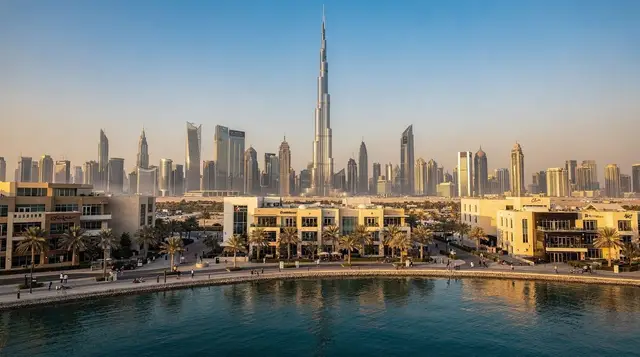
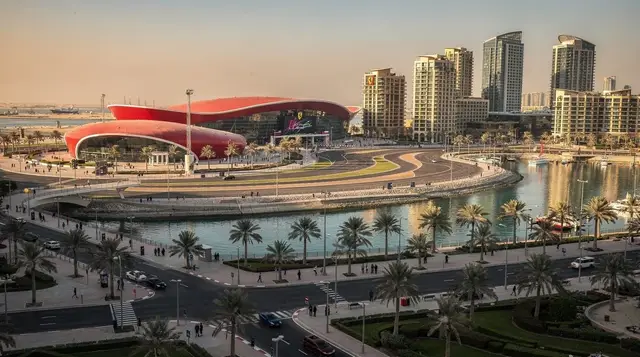
Abu Dhabi — the UAE capital, 90 minutes from Dubai
Abu Dhabi guide: Sheikh Zayed Grand Mosque dress rules, Qasr Al Watan, Louvre Abu Dhabi, the Corniche, and whether to do it as a day trip or overnight.
From Dubai: Abu Dhabi Sheikh Zayed Mosque guided tour
Duration: 5-7 hours
Quick facts
- Distance from Dubai
- ~1.5 hours by car (140km via E11)
- Grand Mosque entry
- Free, but modest dress mandatory for all visitors
- Best for
- Culture, architecture, day trips, a quieter capital pace
- Currency
- AED, same as Dubai
- Peak season
- November–March, 20–30°C
Abu Dhabi versus Dubai
Abu Dhabi is the UAE’s capital and the seat of the federal government, roughly 90 minutes from Dubai along the E11 highway, and it feels distinctly different from its more famous neighbor within minutes of arriving. Where Dubai leans into skyline spectacle and retail scale, Abu Dhabi is built around formal, monumental architecture — mosques, palaces, museums — and a noticeably lower-key public atmosphere, since it holds more government and old-money wealth than Dubai’s tourism-and-trade economy.
Most Dubai-based visitors treat it as a single day trip, which genuinely covers the essentials, though a two- or three-night stay opens up Yas Island’s theme parks and Saadiyat Island’s museum district properly.
The city sits on a natural island connected to the mainland by bridges, with its own Corniche waterfront promenade, and its own distinct downtown skyline visible from the bridges on approach. If you’re deciding whether Abu Dhabi deserves a spot on a short Dubai trip, the honest answer is: yes, if you have more than 3 days, since the Grand Mosque alone justifies the trip and nothing in Dubai replicates it.
| Where | Abu Dhabi, UAE capital, ~140km southwest of Dubai via the E11 |
| Cost | Grand Mosque free; guided day tours around AED 250–450 (68–123 USD) per person |
| Time needed | 1 day for the highlights, 2–3 days to add Yas Island or Saadiyat |
| Getting there | Guided tour, self-drive (~90 min), or intercity bus |
| Best time | November–March for outdoor Corniche time |
Sheikh Zayed Grand Mosque
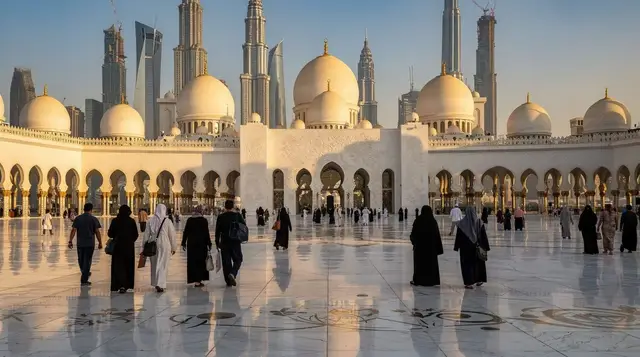
The single reason most visitors make this trip: Sheikh Zayed Grand Mosque is one of the largest mosques in the world, completed in 2007, with 82 domes, over 1,000 columns, and the world’s largest hand-knotted carpet inside the main prayer hall. It’s open to non-Muslim visitors outside prayer times and entry is free, but dress code enforcement here is genuinely strict and non-negotiable — shoulders and knees fully covered for everyone, and women additionally need a headscarf covering the hair, which the mosque provides as an abaya loan at the entrance if you arrive unprepared, though queues for loaner robes can run long during peak hours.
A guided visit is worth booking rather than going independently, both because guides explain the calligraphy and design symbolism you’d otherwise miss and because a guided Sheikh Zayed Mosque tour from Dubai bundles round-trip transport, which otherwise requires arranging your own car or an expensive one-way taxi. Photography is allowed throughout the public areas, and the courtyard’s reflecting pools around sunset produce some of the best photos in the whole country — but plan your visit for morning or early afternoon if photography without harsh midday light and heat matters to you.
The Sheikh Zayed Mosque guide covers visiting hours, prayer-time closures, and etiquette in more depth, and the Emirati culture and etiquette guide is worth reading before any mosque visit in the UAE.
Qasr Al Watan: the presidential palace
A short drive from the mosque, Qasr Al Watan is the UAE’s official presidential palace, opened to the public in 2019 as a working museum of Emirati governance, diplomacy, and design — think less “royal residence tour” and more a genuinely impressive showcase of Islamic architecture, with a library, a hall of ceremonial gifts from world leaders, and a central dome covered in gold leaf detailing. A combined Grand Mosque, Royal Palace and Heritage Village tour pairs the two sites efficiently in a single day if you don’t want to arrange separate transport, and it’s the most time-efficient way to see both without doubling back across the city.
Evenings bring “Palace in Light,” a projection show across the palace facade, worth timing your visit around if you’re staying late enough — check current showtimes before planning around it, since the schedule shifts seasonally.
Louvre Abu Dhabi and the Corniche
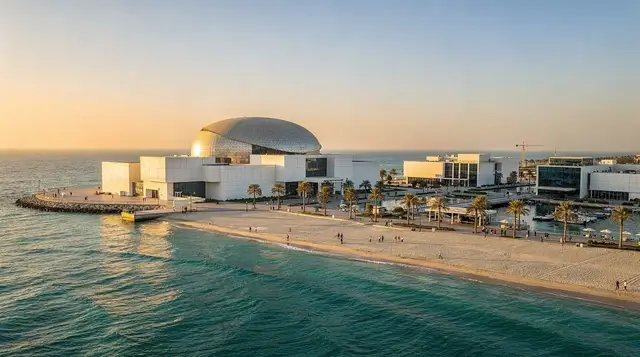
On Saadiyat Island, the Louvre Abu Dhabi is the standout cultural institution — a genuine branch museum built under a 30-year agreement with the French Louvre, housed under Jean Nouvel’s dramatic perforated dome that casts a “rain of light” pattern across the galleries below. The collection spans human history and art from across civilizations rather than any single regional focus, and Louvre Abu Dhabi general admission tickets are worth booking ahead for a timed slot, particularly on weekends.
The Louvre Abu Dhabi guide covers gallery highlights and how much time to actually budget — most visitors need 2.5–3 hours to see it properly, more than the “quick museum stop” many day-trip itineraries allow for.
Back on the mainland, the Corniche is an 8km waterfront promenade running along the Gulf side of the city, with dedicated cycling and walking paths, public beach access, and views back toward the downtown skyline — a genuinely pleasant, free way to spend an hour, especially in the November–March cooler months when the whole path is walkable in comfort.
Emirates Palace and the Etihad Towers
Between the mosque and downtown, Emirates Palace is one of the most photographed hotels in the world — a vast, gold-domed property that isn’t strictly a hotel visitor attraction but welcomes non-guests for afternoon tea, a stroll through its marble lobby, and (a genuine novelty) a gold vending machine in the lobby dispensing gold bars and coins for a price. It’s worth a short stop even without booking a meal, particularly around sunset when the building’s facade and the beach behind it catch the light.
Directly across the road, the Etihad Towers — five angled skyscrapers anchored by a five-star hotel — house an observation deck on the 74th floor with panoramic Corniche and Gulf views that make a reasonable, less-crowded alternative to queuing at Qasr Al Watan on a return visit. Neither stop is essential on a first, time-limited day trip, but both fit naturally into a Corniche-focused afternoon if the mosque and palace are already checked off, or into a longer stay that isn’t rushing between Yas Island and Saadiyat.
Getting there from Dubai
The drive from central Dubai takes roughly 90 minutes via the E11/Sheikh Zayed Road, and the route itself is straightforward highway driving without the need for a 4x4 or special permit — see the Dubai car rental guide if you’d rather self-drive than book a tour. Most visitors, though, are better served by a guided day tour or a half-day Abu Dhabi city tour with the Grand Mosque and Royal Palace, since parking near the mosque and palace during peak hours can add real friction, and a guide adds context you’d otherwise miss entirely.
Public buses run between Dubai and Abu Dhabi at a fraction of the cost of a private transfer but take longer and require managing your own onward transport once you arrive — see transport between Dubai and Abu Dhabi for the full comparison of driving, bus, and tour options, and Abu Dhabi as a mosque day trip for a mosque-focused single-day plan.
Day trip or overnight
For most Dubai-based travelers with 3–5 days total, a single day trip genuinely covers Abu Dhabi’s headline sights: the Grand Mosque in the morning, Qasr Al Watan or the Louvre after lunch, and a Corniche walk before heading back — a day trip to the Grand Mosque, Royal Palace and lunch structures exactly this. If you have longer, or if theme parks matter to your group, staying 1–2 nights unlocks Yas Island’s Ferrari World, Yas Waterworld, and Warner Bros World without the round-trip drive eating into park time, plus a more relaxed pace through the museums on Saadiyat.
The Dubai and Abu Dhabi combined itinerary lays out a realistic split for a longer trip that includes both cities properly rather than rushing Abu Dhabi into a single exhausting day.
Weather and when the outdoor sights are actually enjoyable
Abu Dhabi’s climate follows the same broad pattern as Dubai’s — brutally hot and humid from roughly June through September, with daytime temperatures regularly exceeding 40°C, and a far more pleasant November through March window with daytime highs in the 20s. The distinction matters more here than in a city built almost entirely around indoor malls, since several of Abu Dhabi’s headline sights (the Grand Mosque’s courtyard, the Corniche, Qasr Al Watan’s gardens) involve meaningful time outdoors on exposed stone or paved surfaces.
Visiting the mosque during summer is still possible and the interior areas are air-conditioned, but crossing the marble courtyard barefoot at midday in July is genuinely uncomfortable, and photography suffers under the season’s characteristic haze.
If your trip falls in the summer months, plan mosque and palace visits for the morning, before the heat peaks, and treat the Corniche as an early-morning or evening activity rather than a midday one. The Louvre, being fully indoor, is one of the few Abu Dhabi sights that works equally well regardless of season, making it a sensible priority if you’re visiting outside the cooler months.
| Season | Months | Daytime temp | Outdoor comfort |
|---|---|---|---|
| Cool | November–March | 20–30°C | Best — Corniche, mosque courtyard, palace gardens all comfortable |
| Shoulder | April, October | 30–35°C | Manageable if outdoor time is limited to morning or evening |
| Peak heat | June–September | 38–45°C+ | Indoor sights only (Louvre); outdoor stone surfaces genuinely uncomfortable by midday |
Where to eat and what it costs
Abu Dhabi’s dining scene skews slightly more formal and slightly less internationally diverse street-food-wise than Dubai’s, though the city has a strong Emirati and Gulf-cuisine restaurant scene worth seeking out beyond hotel dining. Budget AED 80–150 (22–41 USD) per person for a casual sit-down meal, more near the Corniche or in Saadiyat’s gallery district. Alcohol is available in licensed hotel bars and restaurants only, same as Dubai — see the general UAE etiquette guide before assuming Dubai’s exact rules translate identically, since Abu Dhabi’s public conduct expectations run slightly more conservative overall.
Practical budgeting for an Abu Dhabi day trip
A realistic single-day budget from Dubai, covering a guided half-day tour with the Grand Mosque and Qasr Al Watan, lunch, and a Corniche walk, runs roughly AED 350–550 (95–150 USD) per person before adding the Louvre or a Yas Island park. Self-driving instead of booking a tour saves the tour fee but adds parking costs and the value of your own time navigating an unfamiliar city — most first-time visitors still come out ahead booking a guided half-day tour once fuel, tolls, and parking near the mosque are factored in. Adding the Louvre Abu Dhabi pushes the day toward AED 550–750 (150–204 USD) per person once its own admission and the extra time it needs are included.
A short history of Abu Dhabi
Abu Dhabi’s transformation from a modest pearling and fishing settlement into the UAE’s political and financial capital happened almost entirely within living memory. Oil was discovered offshore in the late 1950s and onshore shortly after, and the resulting wealth funded the city’s rapid development from the 1960s onward under Sheikh Zayed bin Sultan Al Nahyan, the country’s founding president, whose vision shaped much of what visitors see today — wide boulevards, extensive public parks and greenery in an otherwise arid environment, and monumental public buildings like the mosque that now bears his name.
Unlike Dubai, whose growth leaned heavily on trade, tourism, and property development, Abu Dhabi’s wealth and pace of growth are still closely tied to the emirate holding the large majority of the UAE’s oil reserves, which shows up in the city’s more formal, government-oriented atmosphere and its slower, more deliberate approach to tourism development compared with Dubai’s faster-moving, trend-driven skyline.
That history is worth keeping in mind while visiting, since it explains why so much of Abu Dhabi’s visitor appeal centers on architecture, governance, and culture (the mosque, the palace, the Louvre) rather than the retail and entertainment spectacle that defines Dubai’s tourist pitch. It’s a capital city built to project permanence and heritage, not a resort city built to maximize visitor turnover.
Shopping and family activities
Beyond the headline cultural sites, Abu Dhabi has its own mall culture, led by Yas Mall near Yas Island and several large malls closer to the downtown core, offering a similar mix of international retail to Dubai’s malls without quite matching the scale of Dubai Mall or Mall of the Emirates. For families with younger children not ready for Yas Island’s bigger rides, Abu Dhabi’s Corniche has dedicated children’s play areas and a public beach with calmer, more sheltered waters than some of Dubai’s more exposed coastline sections, plus bike rental stands along the promenade for an easy, low-cost family activity.
Manarat Al Saadiyat, a public arts and cultural space on Saadiyat Island, hosts rotating exhibitions and community events and is worth checking alongside a Louvre visit if you have extra time, since entry is typically free and it gives a sense of Abu Dhabi’s broader contemporary arts scene beyond the flagship museum.
Honest take: is Abu Dhabi worth the trip from Dubai?
Yes, unambiguously, if the Grand Mosque and Qasr Al Watan are on your list — nothing in Dubai replicates either, and both are genuinely among the best examples of contemporary Islamic architecture open to the public anywhere in the world. Where the trip becomes less essential is if your Dubai visit is already under 3 days and packed with Dubai-specific sights; in that case, a rushed Abu Dhabi day trip competes directly with time you could spend properly seeing Old Dubai or Dubai Marina, and a half-rushed version of both trips serves you worse than doing one properly.
If Abu Dhabi makes the cut, book the mosque visit for the morning regardless of what else you add — afternoon light and afternoon crowds both work against a first visit there.
Frequently asked questions about Abu Dhabi
Is the Sheikh Zayed Grand Mosque dress code really enforced?
Yes, strictly, for every visitor regardless of nationality or religion. Shoulders and knees must be covered, and women need a headscarf; loaner abayas are available on-site but expect a queue during busy periods, so dressing appropriately beforehand saves time.
How long does the drive from Dubai to Abu Dhabi take?
Around 90 minutes under normal traffic via the E11/Sheikh Zayed Road, though allow extra time during Dubai’s morning and evening rush hours, roughly 7–9am and 5–7pm.
Can I visit Abu Dhabi without a tour or rental car?
Yes — inter-city buses connect Dubai and Abu Dhabi affordably, though the trip takes longer and you’ll need your own transport once there, since the mosque, palace, and Corniche aren’t within easy walking distance of each other.
Is one day enough for Abu Dhabi?
For the Grand Mosque, Qasr Al Watan, and a Corniche walk, yes. Adding the Louvre or any Yas Island park realistically pushes you toward an overnight stay to avoid rushing.
Do I need to book Grand Mosque visits in advance?
Entry itself is free and doesn’t require advance booking for individual walk-in visitors, but a guided tour with transport should be booked ahead, especially for weekend or peak-season dates.
Is alcohol available in Abu Dhabi?
Yes, in licensed hotel bars and restaurants, similar to Dubai’s rules, though public drinking and intoxication are not tolerated anywhere in the emirate.
What’s the best time of day to visit the Grand Mosque?
Morning, both for softer light and to avoid the midday heat crossing the marble courtyard barefoot, which gets genuinely hot underfoot from around 11am onward for most of the year.
Is Abu Dhabi more expensive than Dubai?
Broadly comparable for tourist spending — dining and hotels run similar ranges, though Abu Dhabi has fewer budget hostel-style options than Dubai and skews toward mid-range and luxury properties.
Can I combine Abu Dhabi with Yas Island theme parks in one trip?
Yes, but not comfortably in a single day alongside the mosque and palace — most visitors either dedicate a full day to Yas Island’s parks separately or stay overnight to split the mosque/palace day from the theme-park day.
Why is Abu Dhabi the UAE’s capital instead of Dubai?
Abu Dhabi holds the large majority of the UAE’s oil reserves and has been the seat of the federal government since the country’s 1971 founding, under the leadership of Sheikh Zayed bin Sultan Al Nahyan, whose family continues to lead both the emirate and the federal presidency.
Is Abu Dhabi good for families with young children?
Yes — the Corniche has dedicated play areas and calmer beach sections than parts of Dubai’s coastline, and Yas Island nearby covers older children and teens who want theme-park thrills.
Can I see the Sheikh Zayed Grand Mosque and Qasr Al Watan in one visit?
Yes, they’re a short drive apart, and several guided tours combine both in a single half-day or full-day itinerary, making it the most time-efficient way to see Abu Dhabi’s two biggest architectural landmarks together.
What language is spoken in Abu Dhabi?
Arabic is the official language, but English is widely spoken across hotels, restaurants, and tourist sites, similar to Dubai, given the large expatriate population working across both emirates.
Is public transport between Abu Dhabi and Dubai reliable?
Yes — regular intercity buses run between the two cities throughout the day at a fraction of the cost of a private transfer, though journey time is longer than driving and you’ll need your own transport once you arrive, since Abu Dhabi’s sights aren’t within easy walking distance of each other or of the bus terminal.
Is Emirates Palace worth visiting without staying there?
Yes — non-guests can walk through the lobby, have afternoon tea, or see the gold vending machine, and it’s a short, worthwhile stop near the mosque and Qasr Al Watan even on a tight day-trip schedule.
Is the Etihad Towers observation deck worth it if I’ve already done Qasr Al Watan?
It’s a reasonable add-on rather than a must, since both offer elevated Corniche and Gulf views; prioritize it on a return visit or a longer stay rather than a first, time-limited day trip.
How much should I budget for a full Abu Dhabi day trip from Dubai?
Roughly AED 350–550 (95–150 USD) per person for a guided half-day covering the mosque, Qasr Al Watan, and lunch, rising to AED 550–750 (150–204 USD) if you add the Louvre Abu Dhabi, before factoring in any Yas Island theme park tickets.
Is it cheaper to self-drive to Abu Dhabi than to book a tour?
Not always in practice — once fuel, tolls, and parking near the mosque and palace are added up, a guided half-day tour often costs little more than self-driving while removing the hassle of navigating an unfamiliar city and finding parking during peak hours.
Top experiences
Bookable activities with verified prices and instant confirmation on GetYourGuide.
From Dubai: Abu Dhabi Sheikh Zayed Mosque guided tour
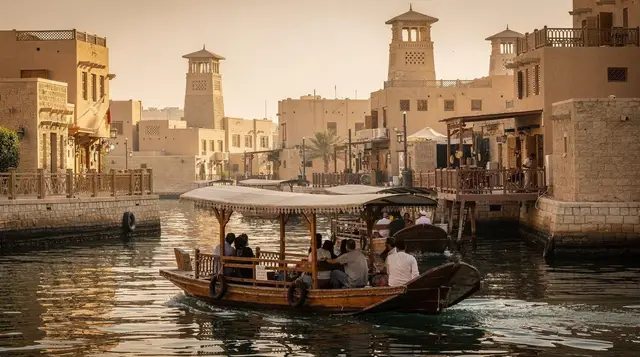
From Abu Dhabi: Grand Mosque, Royal Palace & Heritage Village
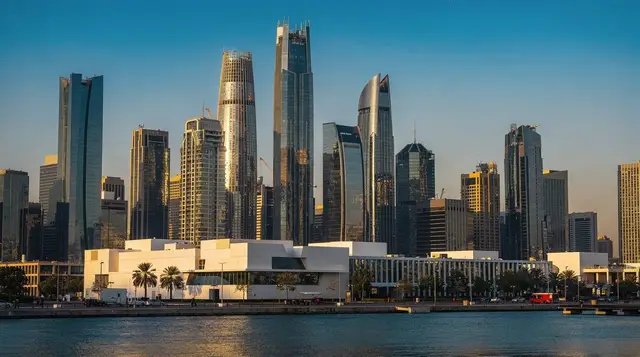
Louvre Abu Dhabi museum general admission ticket

Abu Dhabi: Qasr Al Watan palace & garden entry ticket

Abu Dhabi: city tour with Grand Mosque & Royal Palace visit
Dubai: Abu Dhabi day-trip Grand Mosque, Royal Palace & lunch

Abu Dhabi: SeaWorld quick pass