Louvre Abu Dhabi guide: tickets, highlights, and the architecture worth seeing
Louvre Abu Dhabi museum general admission ticket
What does Louvre Abu Dhabi cost and is it worth visiting?
Standard adult admission runs around AED 63 ($17), making it one of the more affordable major museums in the region. Yes, it's worth visiting — the collection spans human history across cultures rather than a single region, and the dome's dappled light effect is a genuine architectural highlight on its own.
What Louvre Abu Dhabi actually is
Opened in 2017 on Saadiyat Island’s cultural district, Louvre Abu Dhabi is an independent museum operating under a curatorial and naming partnership with the original Louvre in Paris, rather than a branch or satellite of the French institution. Its permanent collection is organized chronologically and thematically across human civilization broadly, rather than focused on any single region or culture, deliberately placing objects from vastly different traditions side by side to draw out shared human experiences across history.
Combined with Jean Nouvel’s landmark dome architecture, it’s become one of the two headline reasons (alongside Sheikh Zayed Grand Mosque) that visitors justify a full day trip out to Abu Dhabi from Dubai.
| Where | Saadiyat Island, Abu Dhabi |
| Cost | Around AED 63 ($17) standard adult entry |
| Time needed | 2.5-4 hours |
| Getting there | ~1.5-2hrs from Dubai by taxi, rental car, or tour |
| Best time | Weekday mornings, outside school holidays |
Tickets and pricing
Louvre Abu Dhabi general admission ticket runs around AED 63 ($17) for standard adult entry, notably affordable relative to major museums elsewhere in the world and even compared to some of Dubai’s own paid landmark attractions. Reduced pricing applies for children and students, with free entry for young children under a set age threshold. A skip-the-line admission ticket is worth the modest premium during peak weekend periods or whenever a major temporary exhibition is drawing larger crowds than usual.
The dome: Jean Nouvel’s signature achievement
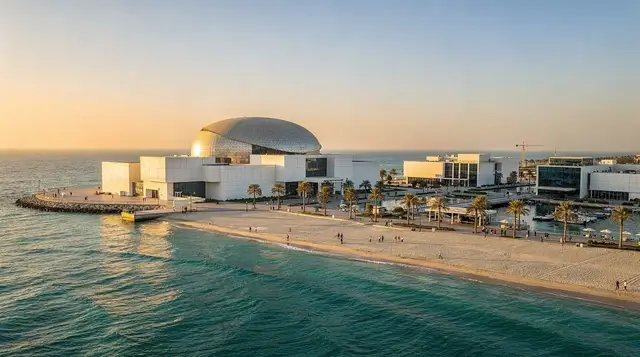
The museum’s most photographed feature is its vast dome, a complex multi-layered lattice structure designed by French architect Jean Nouvel to filter sunlight into a shifting, dappled “rain of light” pattern across the plaza, water channels, and building facades beneath it. The effect changes throughout the day as the sun’s angle shifts, and it’s worth allocating time simply to sit in the plaza and watch the light pattern move rather than rushing straight into the galleries. Midday visits, when the sun sits highest, produce the most striking version of this effect.
Collection highlights
The permanent galleries move chronologically from ancient civilizations through to contemporary art, deliberately juxtaposing pieces from different cultures and eras within shared thematic rooms rather than segregating them by geography, a curatorial approach distinct from most encyclopedic museums. Notable holdings include ancient artifacts, Islamic art and manuscripts, European masterworks, and pieces on loan or long-term rotation from partner French institutions as part of the founding agreement. Temporary exhibitions rotate regularly and often feature major loaned collections, so checking what’s currently running before your visit can meaningfully change how much time to budget.
How long to budget
2.5 to 4 hours covers the permanent collection at a comfortable, unhurried pace, including time in the plaza appreciating the dome’s light effect. Add extra time if a temporary exhibition is running during your visit, since these frequently draw as much attention as the permanent galleries themselves. Visitors purely interested in the architecture and a lighter overview of the collection can move through in closer to 1.5-2 hours.
Is it worth visiting compared to other museums in the region?
Among UAE museums, Louvre Abu Dhabi is the strongest single option for visitors with a genuine interest in art and history rather than the more experience-driven, immersive-attraction format found at places like the Museum of the Future in Dubai. See the Museum of the Future guide for how that Dubai experience compares if you’re deciding between a Dubai or Abu Dhabi museum day, and the Dubai museums guide for the wider museum landscape across both cities.
Combining with a Dubai day trip
An Abu Dhabi city tour with Louvre museum from Dubai bundles round-trip transport, a guide, and general admission into a single day-trip booking, useful if you don’t want to arrange the roughly 1.5-hour drive yourself. See the Dubai to Abu Dhabi day trip guide for the fuller range of day-trip formats and how much time each realistically allows at the museum itself.
Combining with Sheikh Zayed Grand Mosque
Many visitors pair a Louvre Abu Dhabi visit with Sheikh Zayed Grand Mosque in a single day trip from Dubai, since both rank among Abu Dhabi’s headline attractions. Doing both comfortably requires a full, tightly scheduled day — a morning mosque visit followed by an afternoon at the Louvre works better than the reverse, since the mosque’s photogenic light and quieter hours suit an earlier slot, while the museum’s air-conditioned galleries are a comfortable way to spend the hotter afternoon stretch.
Getting there
Saadiyat Island sits a short drive from central Abu Dhabi and roughly 1.5-2 hours from Dubai depending on traffic and starting point. No direct convenient public transit route covers the journey from Dubai, so most visitors arrive by taxi, rental car, or an organized tour with transport included. See getting around Dubai for the wider transit context relevant to planning a day trip out of the city.
The wider Saadiyat cultural district
Louvre Abu Dhabi anchors a broader cultural district on Saadiyat Island that includes a public beach and future museum developments, including the still-under-construction Guggenheim Abu Dhabi, whose opening date remains unconfirmed. Visitors with extra time can combine a Louvre visit with time on Saadiyat’s public beach, one of the region’s cleanest, for a half-day museum, half-day beach combination rarely possible elsewhere in the UAE.
Photography inside the museum
Photography without flash is generally permitted throughout most of the permanent galleries, though specific loaned pieces or temporary exhibitions occasionally carry restrictions clearly signposted at the gallery entrance. The plaza and dome exterior are unrestricted and among the most rewarding photography subjects in Abu Dhabi, particularly at midday for the light effect or at dusk as the structure is illuminated against the darkening sky.
Dining and amenities
An on-site café and a more formal restaurant both operate within the museum complex, offering a comfortable stop between gallery sections rather than requiring a full exit and re-entry for a meal break. A gift shop near the exit stocks museum-branded items and art books reflecting the collection’s global scope.
The France-UAE partnership behind the museum
Louvre Abu Dhabi exists because of a 2007 intergovernmental agreement between France and the UAE, under which Abu Dhabi pays for the use of the Louvre name along with curatorial expertise and loaned artworks from a consortium of French museums over a multi-decade period. This arrangement is why the museum can present major loaned pieces from French institutions alongside its own growing permanent collection, a structure distinct from franchise museums that simply license a brand name without this level of ongoing curatorial collaboration.
Gallery highlights worth prioritizing
Within the permanent collection, look for the early galleries tracing shared origins across ancient civilizations, arranged to draw direct visual parallels between objects from entirely different regions and eras displayed side by side. The Islamic art galleries house an especially strong collection reflecting the museum’s regional context, while later rooms move through European painting, including significant works that draw the same crowds a similar piece would in Paris. If time is limited, prioritizing the earlier chronological galleries and the Islamic art rooms gives the strongest sense of the museum’s distinctive curatorial approach within a shorter visit.
Dome specifications and engineering
Jean Nouvel’s dome spans roughly 180 meters in diameter and comprises eight layers of interlocking star-shaped patterns, a design inspired by the interwoven palm-frond roofing traditionally used in the region, scaled up using modern engineering to create the shifting light effect below. The dome appears to float above the museum’s white cube-shaped buildings, an effect achieved through a structural support system deliberately hidden from view at ground level, reinforcing the sense of a canopy suspended rather than resting directly on the buildings beneath it.
Family and children’s programs
Beyond general family-friendly trails through the galleries, the museum runs a dedicated Children’s Museum section with hands-on activities designed around a rotating collection theme, giving younger visitors an interactive alternative to a purely gallery-based visit. Workshops and storytelling sessions are scheduled periodically, particularly during school holiday periods, worth checking the museum’s current events calendar for if traveling with children specifically interested in a more participatory museum experience.
Membership and repeat-visit options
For visitors planning an extended UAE stay or a return trip within the same year, an annual membership option grants unlimited entry along with member-only previews of new temporary exhibitions, generally representing better value than repeated single-visit tickets for anyone expecting to return more than a couple of times.
A realistic half-day museum plan
For visitors with limited time, prioritize the earlier chronological galleries and the Islamic art rooms first, since these represent the collection’s most distinctive curatorial strengths, before deciding whether remaining time allows for the later European painting galleries or any temporary exhibition currently running. Building in 20-30 minutes specifically to sit in the plaza beneath the dome, rather than treating it purely as a walkway between galleries, is worth protecting in your schedule given how central the light effect is to the overall experience.
Why it’s worth the trip even for non-art-focused travelers
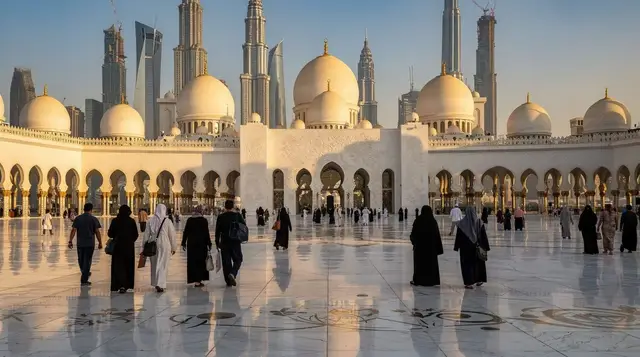
Even visitors without a strong general interest in art museums tend to find the building itself, and the dome specifically, worth the visit on architectural merit alone — it’s a genuinely different kind of Abu Dhabi landmark from Sheikh Zayed Grand Mosque’s ornate maximalism, favoring a more restrained, modern design language built around light and water rather than dense ornamentation. Pairing the two on the same day trip, despite the long day it creates, gives a compelling contrast between Abu Dhabi’s two very different architectural showpieces.
Notable individual pieces to look for
Among the permanent collection’s standout pieces are early Mesopotamian and Egyptian artifacts displayed in the museum’s opening galleries, a strong holding of Islamic-world manuscripts and ceramics reflecting centuries of cross-cultural trade, and select European paintings from major historical periods placed deliberately near objects from entirely different traditions to draw out shared human themes rather than isolating each culture into a separate wing. The specific rotation of loaned pieces from French partner institutions changes periodically, so a piece present on one visit may not be on display during a later trip — worth checking the current collection highlights before visiting if a specific work is your reason for going.
The building’s relationship to the water around it
Beyond the dome itself, the museum’s cluster of white cube-shaped galleries is intentionally arranged to evoke a traditional Arabian medina, with narrow channels of water running between buildings and reflecting both the structures and the dome’s light pattern back upward. This design choice reinforces the sense of walking through a cohesive district rather than a single monolithic building, and it rewards slower exploration of the exterior pathways between galleries rather than moving directly from entrance to exhibition halls.
A note on nearby dining beyond the museum café
Beyond the on-site café and restaurant, Saadiyat Island’s wider cultural district has a small but growing range of dining options worth knowing about for a longer visit, particularly if you’re pairing the museum with beach time on the same day. For most visitors on a single day trip from Dubai, eating at the museum’s own facilities is the simplest choice given the schedule pressure of a return drive, but travelers staying overnight on or near Saadiyat have more flexibility to explore beyond the museum grounds for a meal.
Practical booking advice
Tickets purchased online in advance generally offer the same or better pricing than counter purchases, with the added benefit of a confirmed entry window rather than queuing on arrival, particularly valuable during weekends or whenever a major loaned exhibition is drawing extra visitors. If you’re combining the museum with Sheikh Zayed Grand Mosque or another Abu Dhabi stop in the same day, booking a fixed time slot for the museum specifically helps anchor the rest of your day’s schedule around a confirmed arrival window rather than leaving the timing open-ended.
How the museum has grown since opening
Since its 2017 opening, Louvre Abu Dhabi has steadily expanded its own permanent holdings beyond the initially loaned French pieces, acquiring works independently to build a collection that increasingly stands on its own rather than relying primarily on the founding partnership’s loans. This growth trajectory matters for repeat visitors specifically, since the museum genuinely looks and feels different on a return trip several years later than it did at opening, with entire new acquisition-driven sections added to the original layout.
Why some visitors are surprised by the pacing
Visitors expecting an encyclopedic, exhaustive museum experience similar to the original Louvre in Paris sometimes find Louvre Abu Dhabi’s more selective, thematically curated approach initially unexpected — this is a deliberately smaller, more focused museum built around cross-cultural dialogue rather than an attempt to replicate the scale of its Parisian namesake. Approaching the visit with that expectation set correctly from the start leads to a considerably more satisfying couple of hours than comparing it directly against a museum many times its physical size.
Getting the most out of a rainy or extremely hot day
Since the entire museum experience is indoors and climate-controlled beyond the open-air plaza beneath the dome, it’s a reliable option during the hottest stretches of summer or on the rare occasion of rain, much like Dubai’s own Museum of the Future. Pairing an indoor museum day like this with an outdoor Saadiyat beach morning earlier in the day, before temperatures peak, makes efficient use of a single day on the island regardless of season.
Language support and guided tours
Gallery signage is presented in both Arabic and English throughout the museum, and guided tours in additional languages are periodically available, worth checking for at the information desk on arrival if English isn’t your first language. Group guided tours run at scheduled times and offer a more structured alternative to the self-paced audio guide for visitors who prefer a live narrated walkthrough.
A final honest note
Louvre Abu Dhabi rewards visitors who come with realistic expectations about its scale and curatorial approach — treat it as a focused, thoughtfully curated cultural experience built around a genuinely striking piece of architecture, rather than an attempt to rival the original Louvre’s sheer size, and it consistently delivers one of the strongest museum days available anywhere in the Gulf region.
Ticket tiers and what the skip-the-line premium buys
Beyond the base general admission ticket, the skip-the-line option’s value is genuinely situational rather than universally worth the premium. On a quiet weekday morning outside a major exhibition run, standard admission moves through security and entry with little wait, making the upgrade largely unnecessary. During a weekend afternoon or whenever a major loaned exhibition is drawing extra visitors, the skip-the-line ticket can save a meaningful chunk of time that’s better spent in the galleries. Checking the museum’s current exhibition calendar before booking is a reasonable way to decide which tier actually suits your specific visit date rather than defaulting to the pricier option out of caution.
Louvre Abu Dhabi vs Museum of the Future
Visitors planning a Dubai-plus-Abu-Dhabi museum day sometimes ask how these two very different attractions compare.
| Louvre Abu Dhabi | Museum of the Future | |
|---|---|---|
| Format | Traditional fine-art and history museum | Immersive experience venue |
| Cost | Around AED 63 ($17) | Around AED 169 ($46) |
| Time needed | 2.5-4 hours | 1.5-2 hours |
| Best for | Genuine art and history interest | Design, technology, and space themes |
Neither substitutes for the other — they suit different moods, and a longer UAE trip has room for both on separate days.
Frequently asked questions about Louvre Abu Dhabi
Is Louvre Abu Dhabi worth it if I’ve been to the Paris Louvre?
Yes, for a genuinely different curatorial experience — the Abu Dhabi collection and its cross-cultural thematic approach are distinct from the Paris original, not a smaller repeat of the same galleries.
How does the museum handle temporary exhibitions?
Major temporary exhibitions rotate through dedicated gallery space regularly and sometimes carry a separate ticket premium beyond standard general admission; check current listings before visiting.
Is the museum accessible for visitors with mobility needs?
Yes, the complex is fully accessible, with elevators and ramps serving all gallery levels and the plaza areas.
Can I visit both Louvre Abu Dhabi and the beach on Saadiyat Island in one day?
Yes, comfortably — the museum and Saadiyat’s public beach sit close together, making a combined half-day museum, half-day beach visit realistic for visitors with a full day on the island.
Is there an audio guide available?
Yes, multilingual audio guides are available for an additional fee, covering the permanent collection’s key pieces and thematic rooms.
What’s the best day of the week to visit for smaller crowds?
Weekday mornings, particularly outside school holiday periods, offer the quietest visiting conditions compared to weekend afternoons.
Does Louvre Abu Dhabi ever close?
It closes on select days during the week (verify current published hours before traveling) and remains closed during certain public observances; always confirm hours ahead rather than assuming daily operation.
How does Louvre Abu Dhabi compare in price to Dubai’s paid landmarks?
It’s notably cheaper — around AED 63 ($17) for standard adult entry, well below the Burj Khalifa’s higher observation-deck tiers and even the Museum of the Future’s roughly AED 169 ($46) admission.
Can I combine Louvre Abu Dhabi with the Eastern Mangroves in one day trip?
Yes — Abu Dhabi’s Eastern Mangroves sit within easy reach of the city center, so a morning kayak session pairs naturally with an afternoon at the Louvre on the same day trip from Dubai.
Top experiences
Bookable activities with verified prices and instant confirmation on GetYourGuide.