Dubai photography tours: best spots, timing, and guided options
Dubai: private city tour with Frame and Burj Khalifa ticket
What are the best photography spots in Dubai?
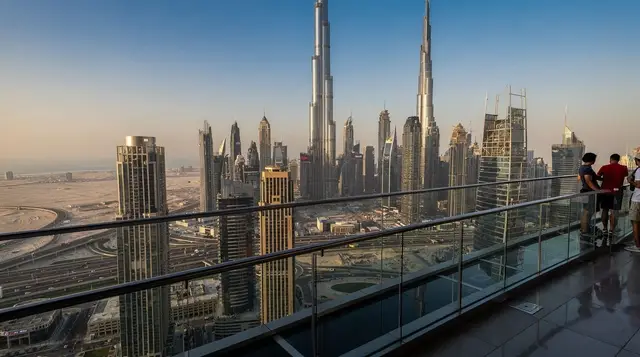
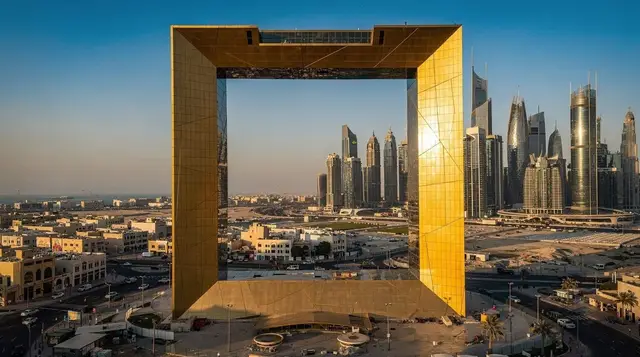
The Burj Khalifa and Downtown skyline from ground level or an observation deck, the Dubai Frame's sky bridge, Old Dubai's souks and abra crossings, and the Marina/JBR waterfront at sunset cover the core shots. Golden hour, roughly an hour before sunset, gives the most consistent light for skyline photography year-round.
Why Dubai photographs so well
Few cities pack this much visual contrast into one frame: glass megatowers rising directly out of desert flatness, centuries-old wind-tower architecture a short drive from the world’s tallest building, and a coastline engineered into artificial islands visible from above. This mix is exactly why Dubai has become one of the more photographed cities globally relative to its age, and why a photography-focused visit benefits from planning around light and specific vantage points rather than just pointing a camera at whatever a standard tour happens to stop at. This guide covers the essential shot list, the timing that actually matters, and how a guided or private option compares to figuring it out on your own.
| Best subjects | Burj Khalifa/Downtown, Dubai Frame, Old Dubai, Marina, desert |
| Best light | Golden hour (~1hr before sunset) and blue hour (20-30 min after) |
| Cost | Free (self-guided) to a private-tour premium |
| Getting there | Metro/taxi between spots; private tour for flexible timing |
| Best time | November–March for the clearest air and skyline shots |
Best time of day by subject
| Subject | Best window |
|---|---|
| Burj Khalifa / Downtown skyline | Golden hour + blue hour |
| Old Dubai souks and abras | Early morning, before crowds |
| Marina/JBR waterfront | Sunset into blue hour |
| Desert dunes | Just before dune-bashing starts (sunset) |
| Dubai Fountain | Any evening showtime, 15-20 min early for a spot |
The essential shot list
Five subjects cover most of what a photography-focused first visit should capture: the Burj Khalifa and Downtown skyline, the Dubai Frame’s sky bridge framing old and new Dubai in one shot, Old Dubai’s souks and an abra crossing on the Creek, the Marina and JBR waterfront at sunset, and a desert landscape shot during a safari. Beyond these five, everything else — Palm Jumeirah from The View, the Museum of the Future’s calligraphy-clad exterior, Burj Al Arab from Jumeirah Beach — is a worthwhile addition rather than essential to a first photography-focused trip.
Golden hour and blue hour timing
Golden hour, roughly the hour before sunset, gives the most flattering, warm-toned light on glass towers and is when most professional Dubai skyline shots are taken; blue hour, the 20-30 minutes after sunset when the sky still holds color but building lights have switched on, is arguably even more striking for skyline photography since it combines ambient sky color with illuminated architecture. Sunset times shift meaningfully across the year, roughly 6:30pm in December versus 7:15pm in June, so check the specific date rather than assuming a fixed time when planning a shoot. Morning light works better for Old Dubai’s souks, where the lower angle brings out texture in the older buildings that flatter midday sun tends to flatten out.
Guided photography tours vs a standard city tour with a camera
A dedicated photography tour differs from a standard city tour mainly in scheduling logic: stops are timed around light rather than efficient ground coverage, and the guide is usually experienced at pointing out a specific angle or composition at each location rather than delivering general historical commentary. A private tour combining the Dubai Frame and Burj Khalifa works well adapted into a photography-focused private booking, since a private format lets you request specific timing and linger at each stop as long as the light holds, something a fixed shared-tour schedule can’t accommodate.
Old Dubai through a photographer’s lens
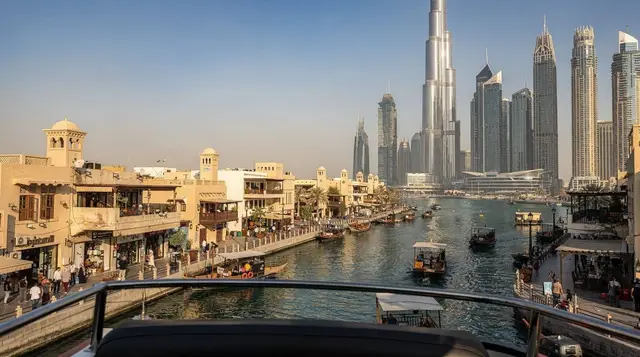
Old Dubai offers the richest textural photography in the city — Al Fahidi’s wind-tower architecture, the layered spice bags and lantern displays in the souks, and the Creek’s wooden abras crossing between banks all reward slower, more deliberate shooting than the Marina’s cleaner architectural lines. A guided tour through the Frame, Creek, and souks covers this ground with a guide who can point out specific angles and the best light timing for each stop along the way, useful since the narrow lanes here don’t always make the best shot obvious on a first pass.
Early morning, before the souks get busy and while light stays soft, is consistently the best window for this district.
Modern Dubai and skyline photography
For the newer side of the city, a half-day modern Dubai city tour hits Downtown, the Marina, and newer developments in one outing, adaptable to a photography focus by requesting stops at specific vantage points rather than a generic drive-past. The Museum of the Future’s Arabic-calligraphy-etched facade and the Frame’s gold-toned structure both photograph distinctly depending on the time of day, rewarding a visit timed specifically around light rather than whenever a standard itinerary happens to pass by. See Dubai skyline photo spots for a fuller list of specific vantage points across the modern side of the city.
Photographing Old Dubai vs new Dubai in one outing
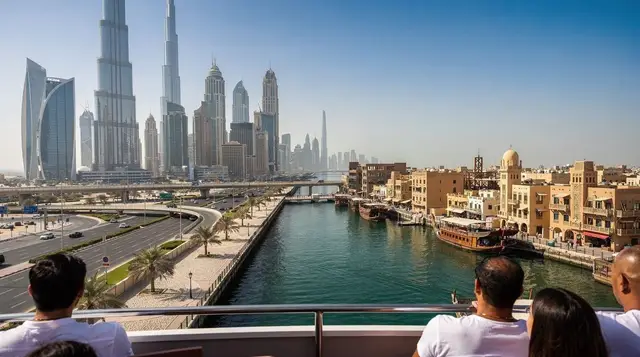
Since Old and new Dubai photograph so differently — warm, textured, and human-scaled versus clean, reflective, and monumental — combining both into a single day gives a genuinely satisfying before-and-after visual narrative for anyone building a photo essay of the trip. The old vs new tour guide covers how to structure exactly this kind of combined day, including realistic timing for covering both without rushing either.
Photographing the desert
A desert safari offers a completely different photographic register from the city — open dunes, warm sand tones, and a genuinely dark sky once away from urban light pollution. Sunset over the dunes during the drive out, before dune-bashing starts in earnest, is the single best window for landscape shots, while the overnight camp segment offers a rare opportunity for star photography given how little light pollution reaches the desert compared to the city. The full rundown of safari formats and timing sits in the desert safari guide, worth reading alongside this one if the desert is a priority stop on your photography list rather than a secondary add-on.
Observation decks vs ground level for skyline shots
Shooting from an elevated deck gives a genuinely different composition than any ground-level vantage — a top-down city panorama rather than the tower-as-subject shots most visitors already have plenty of. The observation decks compared guide breaks down which of Dubai’s five main decks suits a photography priority best; The View at the Palm and the Dubai Frame tend to produce the most distinctive, less commonly seen images relative to their price, while the Burj Khalifa delivers unmatched scale at a higher cost.
Helicopter and aerial photography
For the one shot no ground-based or tower vantage can replicate — Palm Jumeirah’s full frond-and-crescent shape from directly overhead — a helicopter tour is the only realistic option, at a meaningfully higher price than any single observation deck. It’s worth treating as a dedicated splurge for photographers specifically chasing that composition rather than a default add-on to a standard sightseeing day.
Photographing from the water
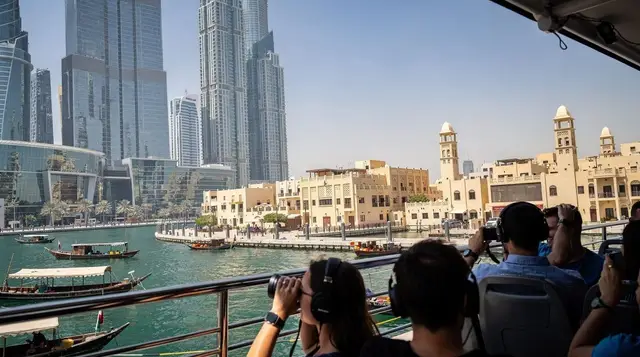
A dhow cruise or Marina boat ride gives a genuinely different skyline angle than any ground-level or elevated vantage — shooting toward the shore captures the full height of towers without the foreshortening that comes from standing at their base. Evening cruises time well with golden hour and the transition into illuminated night shots, effectively giving two different lighting conditions within one outing if timed for a departure an hour or so before sunset. Motion from the boat itself is the main technical challenge, similar to shooting from a moving bus, so a slightly faster shutter speed than you’d use on solid ground helps keep shots sharp.
Seasonal light and haze considerations
Winter months (November-March) generally give clearer air and more consistently sharp long-distance skyline shots, while summer’s heat and humidity can introduce a visible haze that softens detail on very long lens shots across the city, even when the foreground subject looks fine. This isn’t a reason to avoid photographing in summer — many of the best golden-hour and blue-hour shots work regardless of season — but it’s worth knowing if you’re specifically chasing crisp, long-distance skyline clarity rather than closer compositions where haze matters less.
Common photography mistakes to avoid
Shooting the Burj Khalifa exclusively from directly below is a common first-timer mistake that exaggerates distortion without capturing the tower’s actual elegance — stepping back toward the Fountain promenade or Burj Park gives a far more flattering angle. Another frequent miss is skipping Old Dubai photography entirely in favor of only shooting the modern skyline, missing half of what makes Dubai visually distinctive as a destination. And treating every stop as equally worth the same amount of time dilutes a photography-focused day — better results usually come from picking two or three priority locations and genuinely working the light there rather than rushing through a longer list.
Night photography and the fountain show
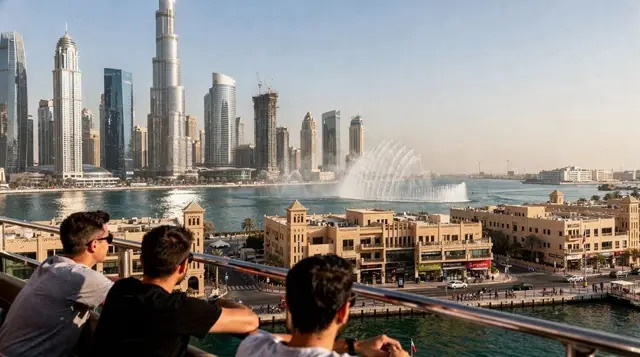
After dark, the illuminated skyline and the Dubai Fountain shows near Downtown offer some of the most reliably impressive shots in the city, and unlike daytime skyline shots, don’t depend on clear weather in the same way since the lights themselves are the subject. A tripod and a slower shutter speed help capture the fountain’s water movement with more drama than a quick handheld shot. The full breakdown of evening touring options, including fixed-departure night tours that hit multiple illuminated landmarks in one outing, sits in the night tour guide.
Booking a photography-focused private guide
If image quality genuinely matters more than covering the maximum number of stops, requesting a private guide with specific photography experience is worth the extra planning, since not every general city guide thinks in terms of light and composition the way a photography-focused one does. When contacting an operator, it’s reasonable to ask directly whether the assigned guide has experience specifically catering to photographers, what vantage points they’d recommend for your priority subjects, and whether the itinerary can flex around sunset timing rather than a fixed departure slot.
The private tours guide covers the broader logistics and pricing of private bookings if you’re weighing this against a standard shared tour with a camera along for the ride.
Equipment and practical shooting tips
A wide-angle lens handles Dubai’s scale better than a standard kit lens, particularly for skyline and interior mall architecture shots where you often can’t back up far enough to fit the whole subject in frame. Lens fogging is a genuine issue moving between air-conditioned interiors and outdoor heat, especially in summer — give equipment a few minutes to acclimate before shooting rather than immediately opening the camera bag outdoors. Sand and dust protection matters for any desert photography session, and a simple lens cloth carried at all times earns its space given how much fine sand tends to circulate during a safari.
Drone photography: know the restrictions before you pack one
Unlike many destinations where casual drone use over public spaces is loosely tolerated, the UAE enforces registration and permit requirements strictly, and flying an unregistered drone, even briefly over what looks like an empty stretch of beach or desert, carries real legal risk rather than a minor inconvenience. If aerial photography genuinely matters to your trip, look into the registration process well before travel or use a licensed local operator rather than bringing a personal drone with the assumption you’ll sort out permissions on arrival.
Photographing with kids along
Family photography in Dubai works best with realistic expectations about attention spans — young children rarely hold still long enough for a carefully composed golden-hour skyline shot, so candid, in-motion frames at the souks or a beach walk often turn out better than staged attempts at the “perfect” landmark shot. The Dubai Frame and Museum of the Future both photograph well with kids in frame since their scale and color work as a backdrop without requiring perfect timing, unlike a fountain show that depends on a specific few minutes. Building in slack time between photo stops, rather than a tight back-to-back schedule, tends to produce both better images and a less stressful day for everyone involved.
Beach and coastline photography
Beyond the Marina and the desert, Dubai’s beaches offer their own distinct photography register — Kite Beach’s kite-surfers against the skyline, JBR’s promenade at golden hour, and Burj Al Arab’s sail silhouette from the sand all reward a slower, unhurried session rather than a quick drive-by stop. Late afternoon into golden hour works best here too, avoiding the flat, high-contrast light of midday that tends to wash out beach scenes more than it does architectural shots.
Editing for Dubai’s specific light conditions
Dubai’s midday light runs harsh and high-contrast for much of the year, which tends to blow out highlights on reflective glass towers if shot straight-on without adjustment — shooting in a camera’s RAW format where possible gives more room to recover highlight detail in editing than a compressed JPEG. Warm white balance corrections often help golden-hour shots look natural rather than oversaturated, since Dubai’s actual sunset light already skews quite warm and can look artificial if pushed further in post-processing. For blue-hour and night shots, a slight cool balance on the sky against the warm building lights tends to produce the most realistic and appealing contrast.
Private vs shared tours for photography priorities
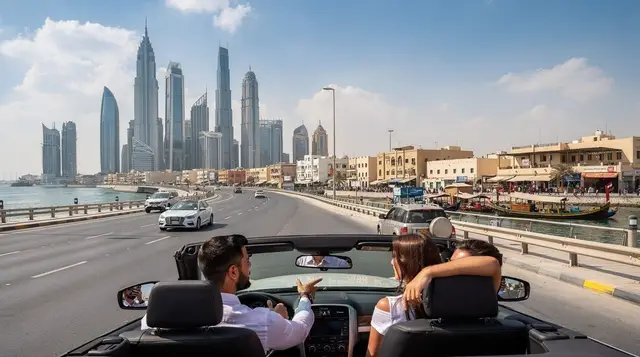
Because photography benefits so directly from flexible timing, a private tour generally serves photography-focused visitors better than a shared group tour, since stops can be timed around light rather than a fixed group schedule. That said, a standard city tour or even the hop-on hop-off bus can still produce solid results for casual photographers who don’t need to chase exact golden-hour timing at every stop, and both cost considerably less than a dedicated private photography booking.
Smartphone photography in Dubai
Most modern smartphones handle Dubai’s key shots perfectly well without needing dedicated camera gear — the Burj Khalifa and Marina skyline both photograph cleanly on a phone’s wide lens, and portrait or night modes on recent phones cope reasonably well with the blue-hour and illuminated skyline shots that used to require a dedicated camera and tripod. Where a phone struggles more is very long-distance skyline compression and low-light desert star photography, both of which benefit from a dedicated camera with manual controls if those specific shots matter to you.
For the vast majority of visitors documenting a trip rather than building a professional portfolio, a phone plus attention to the timing advice in this guide will produce genuinely good results without any additional equipment investment, and freeing yourself from carrying a heavier camera setup can make it easier to actually enjoy the moment between shots rather than treating the whole trip as a shoot.
Frequently asked questions about Dubai photography tours
Can I get professional-quality shots without a guided tour?
Yes, with some planning around timing and location — a guided tour mainly saves research time and adds local knowledge of specific angles, but isn’t strictly necessary for good results if you’re willing to do the legwork yourself.
Are there dedicated Instagram-spot tours in Dubai?
Some operators market tours specifically around trending photo locations rather than traditional sightseeing, though the core stops overlap heavily with the standard landmark list covered in this guide.
What should I wear for photos at cultural sites like the souks or a mosque?
Modest dress covering shoulders and knees is expected and also tends to photograph better in these settings than typical tourist beachwear, which looks visually out of place against the architecture.
Is it better to photograph the Burj Khalifa from inside or outside?
Both work for different shots — from inside the observation decks you get the panoramic city view, while from outside at ground level you capture the tower itself as the subject, which most photographers ultimately want as their signature Dubai shot.
How crowded do the main photo spots get?
The Dubai Fountain promenade and Frame sky bridge can get busy around sunset and the fountain’s show times; arriving 20-30 minutes early for a preferred spot is a reasonable strategy at the most popular locations.
Can I hire a local photographer instead of just a guide?
Yes, some operators offer photographer-led sessions rather than general guiding, useful if you want professionally shot images of your own group rather than just guidance on where to shoot yourself.
What’s the biggest weather factor to plan around for a photography trip?
Summer haze and heat (June-September) reduce long-distance skyline clarity and make extended outdoor shooting genuinely uncomfortable, particularly for anything requiring more than a few minutes standing outdoors around midday; winter (November-March) offers the clearest air and most comfortable conditions for a photography-focused itinerary, and is worth prioritizing if your travel dates are flexible.
Are there good photography spots that most tourists miss?
Yes — quieter stretches of the Marina promenade away from the main restaurant strip, less-visited alleys within Al Fahidi beyond the main tourist path, and early-morning souk shots before vendors and crowds arrive all tend to be underused by visitors sticking to the most obvious single vantage point at each stop, and often produce more distinctive images than the standard, heavily photographed angle everyone else is shooting from at the same time of day.
Is a helicopter tour worth it just for photos?
Only if the overhead Palm Jumeirah shape shot matters specifically to you — it’s the one composition no ground or tower vantage replicates, but it comes at a meaningfully higher price than any observation deck.
Which observation deck is best for photography specifically?
The View at the Palm and the Dubai Frame tend to produce the most distinctive images relative to price; the Burj Khalifa delivers the most complete panoramic scale at a higher cost.
Top experiences
Bookable activities with verified prices and instant confirmation on GetYourGuide.