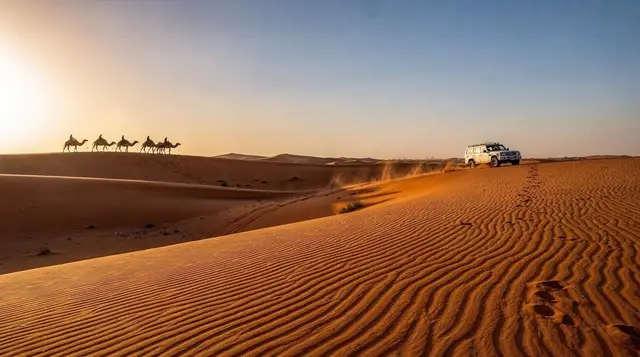
Dubai desert safari: the complete guide
Dubai: evening red dunes desert safari with buffet dinner
Duration: 7 hours
What does a Dubai desert safari actually involve?
A 4x4 pickup from your hotel, 20-30 minutes of dune bashing on red sand dunes, a stop for photos and usually a camel ride, then a desert camp with a BBQ buffet, shisha, henna, and folk dancing before a night drive back. Shared evening tours run AED 150-250 (41-68 USD) per person; private and overnight versions cost more.
Desert safari at a glance
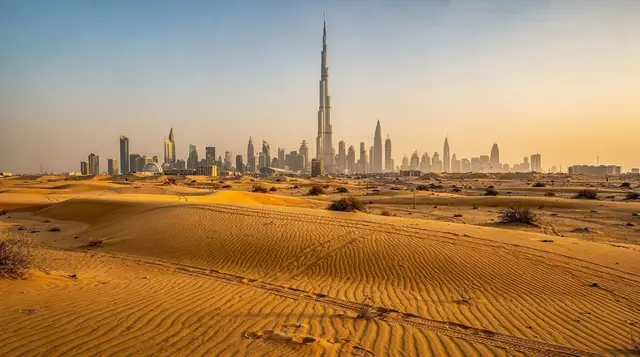
A Dubai desert safari is a half-day (or overnight) trip out of the city into the red sand dunes, built around three fixed elements: a 4x4 dune-bashing drive, a stop for camel photos and sandboarding, and a Bedouin-style camp dinner with entertainment. It’s the single most-booked experience in the UAE after the Burj Khalifa, and for good reason — it’s the fastest way to see a landscape and culture that the skyline hides completely.
| Duration | Evening: 5-6 hrs. Morning: 3-4 hrs |
| Cost (shared) | AED 150-250 ($41-68) evening |
| Cost (private) | AED 800-1,400 ($218-381) per vehicle |
| Pickup window | 3-4pm, return 9-10pm (evening) |
| Includes | Dune bashing, camel stop, BBQ camp dinner |
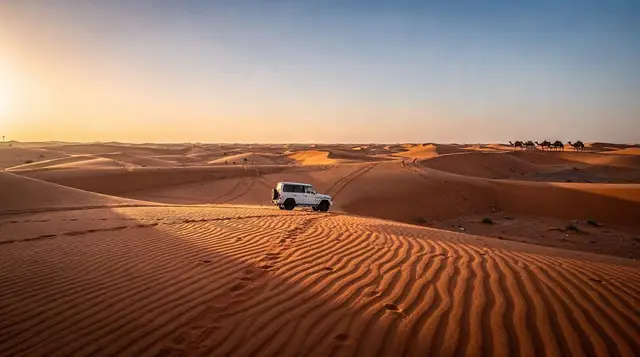
Most safaris depart from Dubai hotels between 3pm and 4pm and return by 9pm to 10pm; the desert itself is usually the Al Lahbab red dunes area, roughly 45-60 minutes from central Dubai, not the protected Dubai Desert Conservation Reserve, where motorized dune driving is banned to protect wildlife.
Quality varies more than the identical-looking marketing photos suggest, and that’s the main thing to understand before booking. The same route and camp format gets sold by dozens of operators at wildly different price points, and the difference shows up in group size, vehicle condition, and how crowded the camp feels at 7pm. Two operators can use nearly identical stock photography — the same red dunes, the same tanoura dancer mid-spin — while one runs a 40-guest camp with a real buffet and the other packs 180 people into the same footprint with a thin, cold spread.
Price is a decent proxy for this difference, but not a perfect one; a handful of mid-priced operators cut corners while a few genuinely good ones price competitively because they run higher volume with better logistics rather than a bloated camp.
Licensing matters more here than for most tours. Desert safari operators need a permit to run vehicles in the dune areas, and the reputable ones display it in their listing or can produce it on request. Unlicensed operators do exist, particularly among the very cheapest street-corner and hotel-lobby touts in areas like Deira or Bur Dubai — booking through a platform like GetYourGuide, a hotel concierge, or a known DTCM-registered operator removes most of that risk.
What a Dubai desert safari actually includes
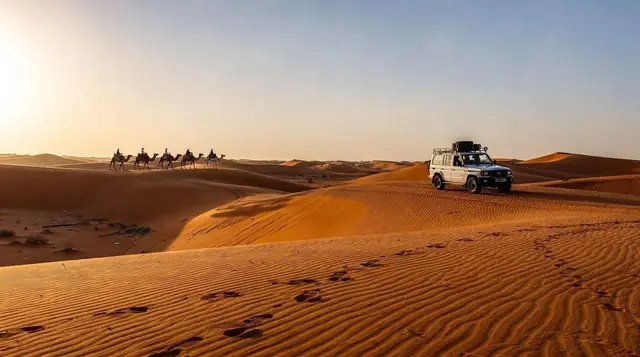
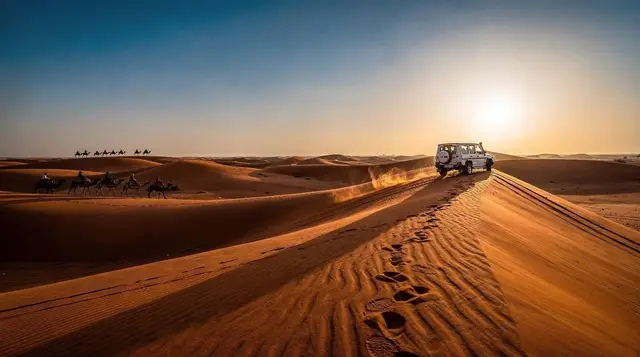
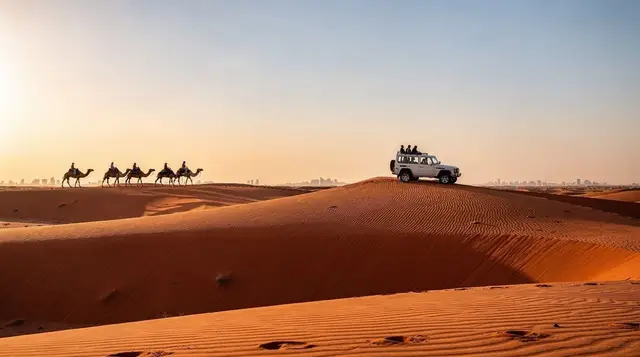
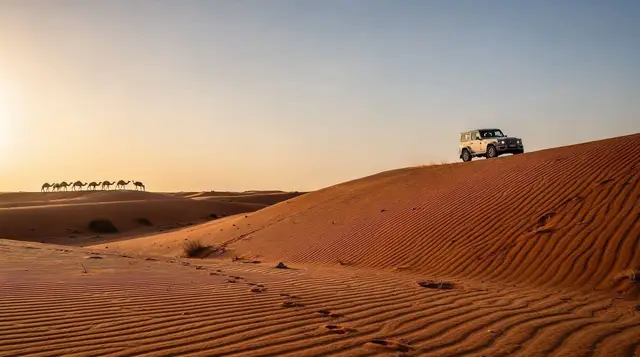
A standard package has four parts. First, hotel pickup in a shared or private Land Cruiser, timed so the convoy reaches the dunes as temperatures start dropping. Second, 20-30 minutes of dune bashing — the driver deflates the tires and takes the vehicle up, down, and across steep dune faces in a controlled, practiced way. Third, a stop at a photo point that usually includes camels available for a short ride, sandboarding down a dune face, and sometimes falconry displays.
Fourth, the camp itself: a fenced compound with low seating, a buffet of grilled meats, rice, and mezze, unlimited soft drinks and tea, and a stage show — typically a tanoura (spinning dervish-style) dance and a fire show, plus henna painting and shisha available on the side.
This evening desert safari with buffet dinner is a reliable, well-reviewed version of the standard package and a reasonable default if you’re booking your first (and only) safari of the trip. If you want quad biking bolted onto the same format, this desert safari with quad biking options lets you add it as a paid extra rather than committing to a full quad tour.
Falconry displays show up on some, not all, itineraries — a handler brings a trained falcon for photos, a nod to the UAE’s traditional hunting heritage. It’s a brief add-on rather than a core part of the format, and worth asking about if it matters to you, since not every camp includes it on every night.
Evening, morning, or overnight
Evening is the default booking and the one described above — cooler temperatures, sunset dune photos, and the full camp dinner. Morning safaris run 3-4 hours, skip the camp dinner, and focus purely on dune bashing plus the camel and sandboarding stop; they’re cheaper and better suited to travelers with an evening flight or an aversion to crowds. Overnight safaris extend the evening format with a night in the desert — either shared tents or, on pricier packages, private cabins — plus stargazing away from city light pollution and breakfast before the return drive.
See the evening vs morning desert safari comparison and the overnight desert camp guide for the full breakdown of which suits which trip.
Dune bashing: what to expect
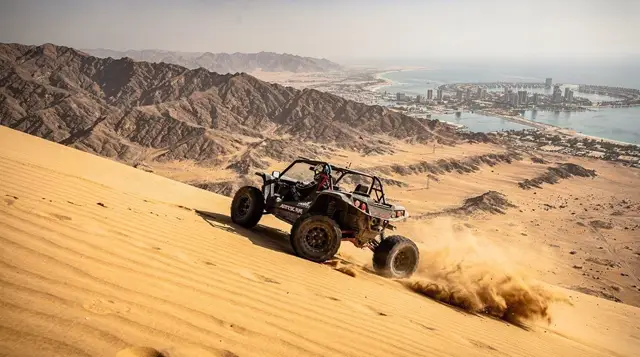
Dune bashing is the part that surprises people who’ve only seen the calm camp photos. It’s a genuinely physical ride — the vehicle climbs steep dune faces, drops down the other side, and banks hard through S-turns, closer to a fairground ride than a scenic drive. Drivers are trained specifically for this terrain and vehicles run on deflated, wide tires for grip, but it is not a gentle experience: expect to be thrown side to side against your seatbelt for 20-30 minutes. If you’re prone to motion sickness, sit in the front seat if the operator allows it, avoid a heavy meal beforehand, and tell the driver early if you need a break — most will slow down or stop on request.
The full dune bashing guide covers safety details, who should skip it, and what the more extreme self-drive dune buggy options add on top.
The camp: BBQ, entertainment, and crowding
This is where operator quality shows up most clearly. A well-run camp seats 40-80 guests with enough space between low tables to move around comfortably; a poorly run one packs in 150-200 people from multiple tour operators sharing the same compound, with a thin buffet line and a stage show you can’t see past the crowd. Ask, before booking, roughly how many guests the camp holds on a typical night — a legitimate operator will give you a straight answer. This overnight desert safari with BBQ dinner runs a smaller, calmer camp format than the mass-market evening tours since it keeps guests through the night rather than turning the site over for a second dinner seating.
Photography in the desert
Sunset over the dunes is the single best photo window of the whole trip, roughly the 20-30 minutes before the sun drops below the horizon during the drive out or at the first photo stop. Bring a lens cloth or microfiber cloth rather than your shirt to wipe sand off a phone or camera — fine desert sand scratches glass more readily than city dust. Camp lighting after dark is warm and low, workable for phone cameras with night mode but tough for the fire show, which moves fast under inconsistent light; a few operators allow a paid professional photographer package if you want reliably good shots without fighting the conditions yourself.
Health and safety considerations
Beyond motion sickness, a few conditions are worth flagging honestly before you book. Pregnant travelers and anyone with a herniated disc, recent back or neck surgery, or a heart condition should skip dune bashing — the repeated jolting is more forceful than it looks in photos, and operators will generally ask about this at pickup and offer an alternative camp-only transfer instead. The fire show at camp uses open flame and, on some nights, strobe-style lighting effects; if you’re sensitive to either, it’s easy to watch from further back or step away during that segment.
Heatstroke is a real risk on morning safaris scheduled too close to midday in summer — legitimate operators shift their morning slots earlier (7am-8am departure) between June and September specifically to finish before the worst heat, so a summer booking that promises a 10am start on a hot-weather morning safari is worth double-checking.
Vehicles carry bottled water, and most drivers stop if you ask, but bringing your own extra bottle is sensible, especially in shoulder-season heat (April, May, October) when the camp can still run warm even after sunset.
Camel riding and the honest picture
Camel photos and short rides are bundled into almost every safari package. It’s worth reading the camel riding guide before you go, because animal welfare quality varies by operator just as much as camp quality does — some camels are worked in short rotations with real rest breaks, others less so. Riding is entirely optional at every stop; you can walk past it without any pressure from staff.
Private vs shared, and what pricing actually buys
Shared safaris fill a Land Cruiser with six to eight guests from different hotels and run on a fixed schedule with a fixed camp. Private safaris keep your group in its own vehicle, let you set pickup timing within a window, and — on the better packages — put you in a smaller, separate camp area. This private 6-hour desert safari with BBQ and Al Khayma camp is a solid mid-range private option for families or groups who don’t want to share a vehicle with strangers.
The full private vs shared desert safari guide walks through the price gap in more detail — expect to pay roughly three to five times a shared per-person rate for a private vehicle, split across your group.
What to wear and bring
Loose, breathable clothing works better than tight activewear for the dune-bashing jolts and sand exposure. Closed shoes beat sandals, which fill with sand at every stop. Bring a light layer for after sunset, when desert temperatures drop noticeably even in summer, and sunglasses or a scarf for blowing sand during the drive and sandboarding stop. The desert safari what to wear guide covers seasonal differences in detail, including how much colder overnight desert camps get in winter (down to 10-15°C after midnight, December through February).
Choosing a good operator: the red flags
Price is the first, blunt signal — packages under AED 100 (27 USD) per person are almost always overcrowded, undermaintained, and rushed. Beyond price, check: whether the listing states group or camp size, whether reviews mention specific vehicle or driver problems rather than generic complaints, and whether the operator is upfront about what’s included versus paid as an extra (quad biking, VIP seating, and alcohol at some camps are common add-ons).
The best desert safari Dubai guide has a fuller checklist, and desert safari scams covers the specific tactics — bait-and-switch camp locations, unlicensed drivers, and last-minute “upgrade” pressure — worth knowing before you pay a deposit.
Where the desert safari actually happens
Almost all commercial dune-bashing safaris operate in the Al Lahbab red dune area off the Dubai-Al Ain road, sometimes marketed loosely as “near the Dubai Desert Conservation Reserve” even though the reserve itself prohibits motorized activity to protect its Arabian oryx and gazelle population. If you want the conservation-reserve wildlife-drive experience instead of dune bashing, that’s a separate, quieter product bookable through eco-lodges inside the reserve, not a standard safari operator.
For a longer desert trip beyond the standard half-day format, the Liwa Empty Quarter guide covers Abu Dhabi’s far larger dune sea, a genuinely different scale of desert than the Dubai-side red dunes — Liwa’s dunes rise well over 100 meters in places, roughly triple the height of the Al Lahbab dunes used for standard Dubai safaris, and see a fraction of the tourist traffic simply because of the extra driving distance from either city.
Alcohol and dietary options at the camp
Most standard evening camps are dry, in line with typical operator licensing, though a growing number of “5-star” or “VIP” packages include a licensed bar area with beer, wine, and spirits included or available for purchase — check the specific listing rather than assuming either way. Buffets are halal by default and generally include a reasonable vegetarian selection alongside the grilled meats, though vegan and gluten-free options are more limited; flagging a specific dietary requirement to the operator ahead of booking, rather than at the camp itself, gets a better result if your needs go beyond standard vegetarian.
Solo travelers and groups without a full party
Shared safaris work well for solo travelers, since the format is built around filling a vehicle with guests from different hotels rather than assuming a pre-formed group, and the camp’s communal seating makes it easy enough to strike up a conversation if you want to. Larger groups of six or more sometimes find it simpler and not meaningfully pricier per person to book a private vehicle instead of splitting across multiple shared pickups, which also keeps the group together for the whole experience rather than scattering across different Land Cruisers heading to potentially different camps.
How it compares as a once-per-trip experience
If you’re only doing one desert activity on your Dubai trip, the standard evening safari format covers the most ground: dune bashing, camel photos, sandboarding, and the camp dinner in a single afternoon-to-night block. Travelers who’ve already done a desert safari elsewhere in the region, or who want more physical involvement than a passenger seat provides, tend to get more out of the quad biking and dune buggy self-drive format or the dedicated dune buggy guide instead of repeating the standard package.
Families with young kids or older relatives usually do better with the standard safari’s gentler pacing than with self-drive options, which have minimum age and driving-license requirements.
Booking timing and practical tips
Book at least a day ahead in peak season (November-March), when the best-reviewed operators sell out their evening slots; in summer (June-September), availability is easier but heat makes morning or evening timing more important than ever — midday desert temperatures reach 45-48°C and no reputable operator runs a midday tour. Confirm your hotel pickup time the night before, since convoy scheduling shifts by 15-30 minutes depending on traffic and group logistics. If you’re traveling with kids, check the desert safari with kids guide for age minimums on quad biking and camel rides, which most operators enforce at 8 years old and up.
Combining a desert safari with other activities the same day
Stacking a desert safari onto a busy day already spent sightseeing is a common temptation but a real risk of overloading yourself, particularly for a first day still adjusting to jet lag — a morning Burj Khalifa visit followed by an evening desert safari is genuinely manageable, but adding a third major activity into the same 24 hours tends to produce a day remembered more for exhaustion than enjoyment. If you’re combining a desert safari with a city tour or another half-day activity, put the lighter activity in the morning and the safari in the evening, since it’s the more physically demanding of the two and better suited to a day that isn’t already front-loaded.
What a bad camp actually looks like
Beyond the generic “overcrowded” warning, the specific signs of a poorly run camp are worth naming directly: a buffet line running out of food before the last group is served, seating so tight that moving between tables requires stepping over other guests, a stage show visible only from the front few rows, and staff who seem stretched too thin to answer basic questions about timing or what’s included. None of these show up in marketing photos, which is exactly why recent review text matters more than the listing images when choosing between operators offering an outwardly similar package at a similar price.
Tipping and other practical notes
Tipping isn’t mandatory but is customary and appreciated: AED 10-20 per person for the driver and a similar amount left in the tip box at the camp for staff is standard practice. Bring cash in small denominations, since camp souvenir stalls and any paid extras (professional photos, alcohol at licensed camps, premium seating upgrades) are usually cash-only. If you’re building a full itinerary rather than booking the safari as a standalone add-on, the desert and city combined itinerary shows how a half-day or overnight safari slots into a broader 3-5 day Dubai trip without wasting a full day.
Frequently asked questions about Dubai desert safaris
Is a Dubai desert safari worth it?
For most first-time visitors, yes, as long as you book a mid-range or better operator rather than the cheapest listing you find. It’s the one experience that shows a side of the UAE the skyline doesn’t.
How much does a Dubai desert safari cost?
Shared evening safaris with BBQ dinner run AED 150-250 (41-68 USD) per person. Morning safaris without dinner cost less, roughly AED 100-180 (27-49 USD). Private safaris run AED 800-1,400 (218-381 USD) per vehicle, and overnight camps add AED 100-250 (27-68 USD) per person.
Is dune bashing safe?
With a licensed operator, yes. Vehicles are purpose-built for the terrain and drivers are trained specifically for it. Wear your seatbelt, speak up if you feel unwell, and skip it if you’re pregnant or have a back or neck condition.
What should I wear on a desert safari?
Loose, breathable clothing, closed shoes, and a light layer for after sunset. Sunglasses or a scarf help with blowing sand.
Do I have to ride a camel?
No — the camel stop is optional at every camp, and you can walk past it without pressure from staff.
Evening or morning safari — which is better?
Evening is the default for cooler temperatures, sunset photos, and the full camp dinner. Morning suits travelers with an evening flight or those wanting to avoid crowds and afternoon heat.
Can I skip the dune bashing?
Most standard packages bundle it in, but some operators offer camp-only transfers for guests prone to motion sickness — ask before booking rather than assuming it’s optional.
How far is the desert from Dubai city?
Roughly 45-60 minutes by road from central Dubai to the Al Lahbab red dune area, depending on your hotel’s location and traffic.
Is alcohol included at the desert camp?
Not on standard packages, which are typically dry. Some “5-star” or “VIP” packages include or sell alcohol — check the specific listing before assuming.
Top experiences
Bookable activities with verified prices and instant confirmation on GetYourGuide.