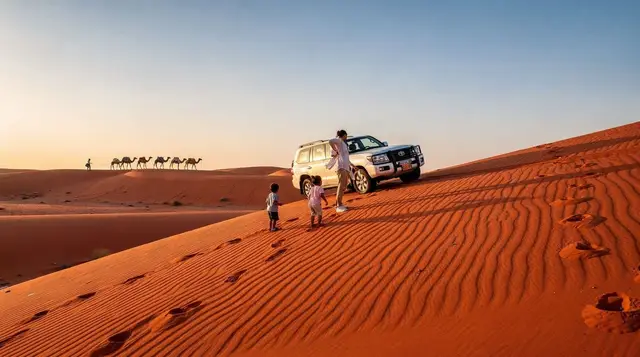
What to wear on a Dubai desert safari
Dubai: evening red dunes desert safari with buffet dinner
Duration: 7 hours
What should I wear on a Dubai desert safari?
Loose, breathable clothing that covers most of the body, closed shoes rather than sandals, sunglasses, and a scarf or buff for blowing sand. Add a light jacket for after sunset, especially November through March, when desert nights can feel genuinely cold. Avoid anything too tight or restrictive for the dune-bashing jolts.
What to wear on a Dubai desert safari, at a glance
A Dubai desert safari puts your clothing through more than most city sightseeing does: dune-bashing jolts, blowing sand, a sunset temperature drop, and a camp environment with open fire and sandy seating. Loose, breathable fabric beats tight activewear, closed shoes beat sandals, and a light layer for after dark matters more than most first-time visitors expect, especially outside the peak summer heat. What you need shifts meaningfully by season and by which format of safari — evening, morning, or overnight — you’ve booked.
| Footwear | Closed shoes or light trainers, not sandals |
| Top layer | Loose, breathable long sleeves or a scarf |
| After dark (Nov-Mar) | A genuine jacket — nights can drop to 10-15°C |
| Sun protection | Sunglasses, scarf or buff, sunscreen |
| Avoid | Tight activewear, loose jewelry, open sandals |
Clothing for evening and afternoon safaris
Evening safaris are the most common booking, and the clothing calculus balances daytime heat during pickup against the temperature drop after sunset. Loose, breathable trousers or a long, flowy dress or skirt work well — cotton or linen blends breathe better than synthetic activewear in the heat, while still offering more sun and sand protection than shorts. A short-sleeved or three-quarter-sleeve top keeps shoulders reasonably covered, useful both for sun protection and because it reads as more culturally considerate if your safari operator also handles Bedouin-camp cultural framing.
This evening red dunes safari with buffet dinner runs the standard 5-6 hour format, meaning you’ll want the light layer mentioned below ready for the camp portion after sunset.
Clothing for morning safaris
Morning safaris depart earlier — as early as 7am in summer — when temperatures are at their coolest point of the day, only to warm up through the dune-bashing and photo-stop segment. Dressing in light layers you can adjust, rather than a single fixed outfit, handles this swing better: a light long-sleeve layer over a breathable base that you can push up or remove as the morning warms. This 4-hour morning red dunes desert safari finishes before the camp portion of an evening safari would even begin, so you won’t need the after-dark layer that an evening or overnight trip requires.
Footwear
Closed shoes are the clearest, least negotiable recommendation in this guide. Sandals and flip-flops fill with sand at every stop, offer no protection during sandboarding, and can slip off entirely during a hard dune-bashing turn or while mounting a camel. Trainers or light hiking shoes work well; avoid anything with a complex lace or strap system that’s a hassle to empty sand from repeatedly throughout the afternoon. If you plan to try sandboarding, shoes you don’t mind getting genuinely sandy — inside and out — are worth choosing over anything precious.
Sun protection
Sunglasses are close to essential, both for UV protection and for managing blowing sand during the dune-bashing drive and the open-air camp. A wide-brim hat or cap helps during the earlier, sunnier portion of the trip, though many guests swap to a scarf or buff once the wind picks up during dune bashing, since a loose hat is prone to blowing off. Sunscreen applied before departure, with a small reapplication if your trip includes a lot of time outside the vehicle, matters even in cooler months — reflected light off pale sand is stronger than it feels.
Layering for overnight and winter desert nights
This is the detail most visitors underestimate: the desert cools faster and further after dark than Dubai’s city center, and in winter (December-February), overnight temperatures commonly drop to 10-15°C — cold enough to need a genuine jacket, not just a light cardigan, if you’re staying for an overnight camp or a late evening safari. Even during warmer shoulder months (April, May, October), the temperature swing between a hot afternoon pickup and a breezy post-sunset camp is noticeable enough that a packable layer is worth having, even if you don’t end up needing it every night. The overnight desert camp guide covers this in more detail for anyone booking that longer format specifically.
Camera and phone care
Fine desert sand is genuinely abrasive and finds its way into camera seams, phone charging ports, and lens threads if devices are left exposed during the dune-bashing segment or the sandboarding stop. A simple zip-lock bag or a dedicated dry pouch for your phone during the bashing drive, plus a microfiber cloth (not your shirt, which can scratch rather than clean) for wiping sand off a lens or screen, prevents most of the minor damage that shows up after a safari. A wrist strap for your phone or camera is worth the minor inconvenience, since a dropped device in soft dune sand can be genuinely difficult to locate.
If you’re bringing proper camera gear rather than just a phone, a lens hood and a UV filter add a cheap layer of protection worth using for this trip specifically.
What to bring beyond clothing
A reusable water bottle, even though most operators provide water at camp, keeps you hydrated during the drive itself. Cash in small denominations covers tips and any camp extras like professional photos or premium seating. A phone charger or small power bank is useful for an overnight stay, and any personal medication should travel with you rather than left at the hotel, particularly for anyone managing a chronic condition on a longer overnight or private safari.
What to leave at the hotel
Valuables beyond what you need for the day are better left in your hotel safe — the safari involves dust, sand, and an outdoor camp environment that isn’t ideal for anything delicate or expensive you’re not actively using. Heavy jewelry or accessories can also catch or swing uncomfortably during dune bashing and camel mounting, so it’s worth minimizing what you’re wearing to what you’re genuinely comfortable moving around in.
Dressing for quad biking or dune buggy add-ons
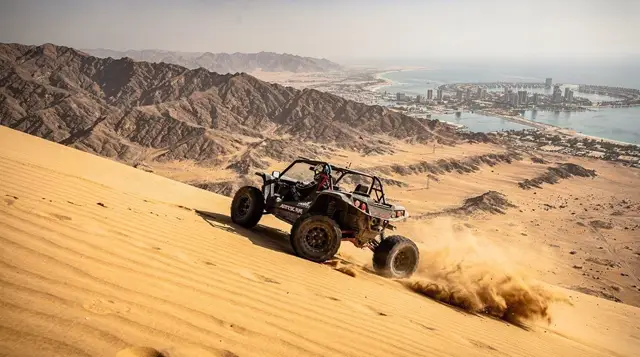
If your safari includes an optional quad bike or dune buggy segment — this VIP BBQ desert safari with an optional quad bike is one example — the clothing calculus shifts slightly. Long sleeves and full-length trousers are worth wearing regardless of heat, since minor scrapes and increased sand exposure are more likely on a self-driven or semi-driven vehicle than in the standard passenger 4x4. Closed shoes become non-negotiable rather than just preferable, and tying back long hair is worth doing for both comfort and practicality under a helmet, which most operators require and provide for the quad or buggy segment specifically.
Dressing kids for a desert safari
Children need broadly the same protections as adults — closed shoes, breathable long layers, and sun protection — but a hat with a chin strap or a wide-brim design that won’t blow off is worth prioritizing more than for adults, since kids are less likely to re-secure a loose hat themselves. A change of clothes in the vehicle is more useful for families than for adult-only groups, given how much more enthusiastically kids tend to engage with sandboarding and general dune play at the photo stop. See the desert safari with kids guide for broader age and activity guidance beyond clothing.
After the safari: dealing with the sand
However carefully you dress, you’ll likely find sand in pockets, shoes, and hair after a desert safari — this is normal and not a sign you did anything wrong. Shaking out clothing and shoes over a bin or balcony before bringing them fully into your hotel room saves some cleanup, and a quick hair rinse handles most of what accumulates during dune bashing and sandboarding. If your itinerary has you visiting a mosque or another modest-dress setting the same evening or the next day, budget a little extra time to freshen up — the Dubai dress code guide covers those separate requirements, which are stricter than anything a desert safari itself demands.
How wardrobe choices differ for private vs shared safaris
Clothing needs don’t change much between private and shared safaris, but a private tour, described in the private vs shared desert safari guide, sometimes allows more flexibility to bring a change of clothes for the camp portion if you’d rather not spend the whole evening in dusty dune-bashing clothes — worth asking your operator if a mid-trip change is logistically possible, since shared tours generally don’t build in the time or space for it.
Packing by season: a fuller month-by-month view
November through March, peak season, is the most comfortable stretch to dress for — daytime layers work fine, and the after-dark drop is real but manageable with a mid-weight jacket rather than heavy winter gear. April, May, and October, the shoulder months, need lighter overall clothing with the same evening-layer logic, since daytime heat builds faster and the after-dark cooling is less dramatic than in winter but still present.
June through September is when breathability matters most: loose, light-colored, moisture-wicking-adjacent natural fibers help manage the heat during pickup and the drive out, and while the evening cooldown is less severe than in winter, air-conditioned vehicle transitions can still feel like a temperature shock without a light cover-up. See Dubai in summer and best time to visit Dubai for the broader seasonal picture that this packing advice sits inside.
A simple packing list to run through before you leave
Beyond the specific fabric and footwear advice above, a quick mental checklist before heading out the door covers most of what matters: closed shoes, a layer for after dark, sunglasses, a scarf or buff, sunscreen applied in advance, a phone protection method for the dune-bashing segment, cash in small denominations, and — if you’re prone to motion sickness — any medication you rely on. None of this requires special desert-specific gear beyond what a reasonably prepared traveler would already be packing for a warm-climate trip; the main adjustment from ordinary Dubai sightseeing clothing is the closed-shoe requirement and the after-dark layer, both of which are easy to overlook if you’re focused mainly on beating the daytime heat.
Cultural considerations without overthinking it
A commercial desert safari camp isn’t a religious or particularly conservative setting, and there’s no formal dress code enforced the way there is at a mosque or in a traditional souk — but a moderate approach still serves you better than beachwear or very short, tight clothing, both for practical reasons (sand, sun, dune-bashing motion) and because it fits the broader tone of the experience, which leans into Bedouin cultural framing throughout the evening.
If your trip also includes a mosque visit, such as the Jumeirah Mosque or the Sheikh Zayed Grand Mosque in Abu Dhabi, those settings have genuinely mandatory dress requirements — full-length, loose clothing and a headscarf for women — that go well beyond anything a desert safari itself requires, so don’t assume safari-appropriate clothing automatically covers a mosque visit on the same trip.
Renting or buying gear locally if you’re underpacked
If you land in Dubai without appropriate desert-safari clothing — a common situation for travelers who didn’t realize the dune-bashing and sand exposure involved — mall stores throughout the city, including in Downtown and the Marina, stock reasonably priced breathable layers, closed athletic shoes, and sun accessories, so it’s not a reason to skip or dread booking a safari. A same-day mall stop before an afternoon pickup is a realistic option if you’re missing a specific item like closed shoes or a light jacket, and prices for basic athletic wear are generally reasonable rather than tourist-inflated, particularly at larger chain stores rather than boutique shops.
Comparing outfit needs across safari formats
The dubai desert safari guide covers the standard evening format’s full sequence, and clothing needs there track closely to what’s described above — daytime comfort transitioning into an after-dark layer. A private safari, covered in private vs shared desert safari, doesn’t change the clothing calculus meaningfully, though the extra flexibility of your own vehicle sometimes makes it easier to bring a small extra bag with a spare layer than a shared tour’s tighter luggage-space norms allow.
An overnight stay needs the most planning, effectively doubling your packing list since you’re dressing for both an afternoon-to-evening safari and an unfamiliar overnight sleeping environment before a morning departure the next day.
A final practical note on laundry and hotel logistics
Because sand tends to travel home in pockets and shoe treads regardless of how carefully you dress, it’s worth doing a quick check of clothing and footwear before packing them into a suitcase for a later flight, since fine sand has a way of working into luggage lining and reappearing days later. If your hotel offers same-day or next-day laundry, using it for whatever outfit you wore on the safari — rather than repacking it straight into a suitcase — is a small habit that avoids sand turning up in unrelated luggage for the rest of the trip.
The short version, if you’re packing in a hurry
If you only remember a handful of points from this guide: closed shoes, loose breathable clothing, sunglasses, a scarf or buff for wind and sand, and a light layer for after sunset regardless of what season you’re traveling in. Everything else — camera protection, sun cream, cash for tips — is worth doing but won’t make or break the experience the way getting the footwear and layering basics wrong can.
Why closed shoes matter more than most first-time visitors expect
Of everything covered in this guide, footwear is the single item most first-time visitors get wrong, largely because it seems like a minor detail against the bigger question of what to wear on top. In practice, an evening desert safari involves several distinct terrains within a single trip — the fine, loose sand of the dune-bashing photo stop, the packed but uneven ground around the camp’s seating area, and often a short sandboarding run — none of which sandals handle well. Beyond the practical discomfort of sand filling an open shoe at every stop, a slipping sandal during a hard dune-bashing turn or while mounting a camel is a genuine, if minor, safety consideration rather than just an inconvenience. Trainers or light hiking shoes solve this cleanly, and the trade-off — slightly warmer feet than sandals would offer — is a fair exchange for the added stability and sand protection across a multi-hour trip. Visitors who arrive without appropriate footwear shouldn’t feel they need to cancel or skip a safari over it — see the note on renting or buying gear locally below for how easily this gap is closed within Dubai itself.
Seasonal packing at a glance
Putting the month-by-month guidance from earlier in this guide into a single table makes it easier to check quickly before packing.
| Season | Daytime clothing | After-dark layer |
|---|---|---|
| Nov-Mar (peak) | Light layers, breathable fabric | Mid-weight jacket, genuinely needed |
| Apr, May, Oct (shoulder) | Lighter overall clothing | Packable layer, less critical |
| Jun-Sep (summer) | Loose, light-colored, breathable | Light cover-up for AC transitions |
What to double-check the night before
A short pre-departure check the evening before pickup catches most of the common packing gaps this guide covers: closed shoes rather than sandals laid out, a light jacket or scarf packed for after dark regardless of season, sunscreen applied the morning of rather than forgotten entirely, and a phone-protection method (a zip-lock bag or dry pouch) ready for the dune-bashing segment. For an overnight stay specifically, add a phone charger or power bank and any personal medication to that list, since neither is easy to source once you’re at a desert camp. Cross-referencing this against the dubai desert safari guide’s format breakdown helps confirm which specific segments — camel riding, quad biking, an overnight stay — your particular booking includes, since that changes which items on this list actually matter for your trip.
Frequently asked questions about what to wear on a desert safari
Should I wear shorts or long pants on a desert safari?
Long, loose pants or a maxi dress work better than shorts — they protect against sun exposure, blowing sand, and seating, while still staying cool if the fabric is breathable.
Are sandals okay for a desert safari?
Closed shoes are strongly preferable. Sandals fill with sand and offer no protection during sandboarding or a camel mount.
Do I need a jacket for a desert safari in summer?
A light layer is still worth packing, since the temperature drop after sunset and air-conditioned vehicles can feel cold by contrast, though it’s far less essential than in winter.
How cold does it get in the desert at night?
In winter (December-February), overnight temperatures can drop to 10-15°C, colder than Dubai’s city center. Even shoulder-month evenings cool faster in the open desert than in the city.
Should women wear a headscarf on a desert safari?
It’s not required for a standard commercial safari, though a scarf is genuinely useful for sun and sand protection rather than for modesty reasons.
What should I bring to protect my phone or camera?
A microfiber cloth, a zip-lock bag or dry pouch for the dune-bashing segment, and a wrist strap. Fine desert sand can work into camera seams and phone ports if devices are left exposed.
Is it worth bringing a change of clothes?
For a standard evening or morning safari, no — the trip is short enough to manage in one outfit. For an overnight stay, packing a fresh layer for the return journey is worth it.
What fabric works best in desert heat?
Cotton and linen blends breathe better than synthetic activewear and handle both the heat and sand exposure more comfortably over a multi-hour trip.
Do I need different clothing for a quad biking or dune buggy add-on?
Yes — long sleeves and full-length trousers are worth wearing regardless of heat, since minor scrapes and sand exposure are more likely on a self-driven vehicle than in a standard passenger 4x4.
Can I buy desert safari clothing in Dubai if I forgot to pack it?
Yes — mall stores throughout the city, including in Downtown and the Marina, stock reasonably priced breathable layers, closed athletic shoes, and sun accessories at non-tourist-inflated prices.
Top experiences
Bookable activities with verified prices and instant confirmation on GetYourGuide.