Best time to visit Dubai: an honest month-by-month verdict
Dubai: desert safari with BBQ dinner in a Bedouin camp
What is the best time to visit Dubai?
November through March is the best time to visit Dubai, with daytime temperatures in the low-to-mid 20s to low 30s Celsius (70s-90s Fahrenheit), comfortable evenings, and every outdoor activity — desert safaris, beaches, rooftop dining — fully usable. December and January are the busiest and most expensive weeks; October and April are quieter shoulder months with similar weather and lower prices. June through September is genuinely hot (40-48°C / 104-118°F) and best avoided unless you plan an indoor-heavy trip and accept minimal outdoor time.
The short, honest answer
Dubai’s weather has one dominant, easy-to-state pattern: November through March is genuinely pleasant, June through September is genuinely hard to be outside in, and the shoulder months of April, May, and October fall somewhere between the two depending on how much heat you can tolerate. If you have full flexibility on when to travel, aim for November to March, and treat the price premium of December-January as the cost of the most comfortable, most crowded window rather than a scam — the weather really does justify some of it.
| Best overall window | November-March |
| Best single month | February — warm, dry, past the Dec-Jan peak |
| Most expensive | Late December-mid January |
| Avoid outdoor-heavy plans | June-September (40-48°C) |
| Booking tip | Timed-entry tickets a few days ahead; 3-4 months for winter flights |
Month-by-month seasonality at a glance
| Month | Daytime temp | Crowds/price | Outdoor activity |
|---|---|---|---|
| Nov-Mar | Low-mid 20s to low 30s°C | Dec-Jan peak; Feb noticeably lower | Fully usable all day |
| Feb | Warm, dry | Below Dec-Jan peak, before April crowd | Fully usable — the underrated pick |
| Oct, Apr | Upper 20s to low 30s°C | Lower rates, thinner crowds | Comfortable outside midday |
| May, Sep | Variable, often hot | No consistent price/crowd edge | Treat as bonus, not baseline |
| Jun-Sep | 40-48°C | Lowest rates and crowds | Evening-only; indoor-heavy trip recommended |
Why November-March is the real answer
Daytime highs from November through March sit roughly in the low-to-mid 20s to low 30s Celsius (70s to low 90s Fahrenheit), with low humidity for most of the window and cool, genuinely pleasant evenings — the kind of weather where a rooftop dinner or an outdoor desert camp doesn’t feel like an endurance exercise.
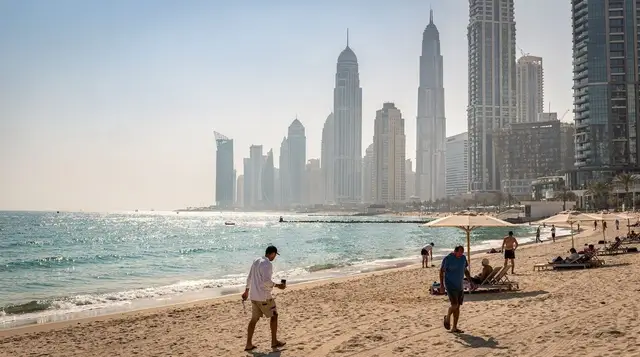
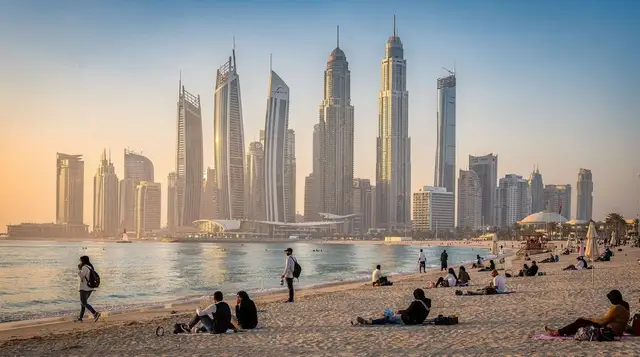
Every outdoor-dependent activity is fully in play during these months: beach days at JBR or Kite Beach, a desert safari with BBQ dinner in a Bedouin camp without the evening heat cutting the experience short, and a walk through Old Dubai or the souks without ducking into air conditioning every twenty minutes. Global Village and Dubai Miracle Garden, both seasonal outdoor attractions, run specifically within this window (roughly October to April) because the flowers and open-air market format simply don’t work in summer heat.
December-January: the crowded, expensive peak
Late December through mid-January is the single most expensive and most crowded stretch of the year, driven by a stack of factors — European and Gulf-region school holidays, New Year’s Eve (Burj Khalifa’s fireworks display is one of the most-watched in the world), and simply the best weather of the year landing in the same window as the biggest holiday season. Hotel rates in this period can run 30-60% above shoulder-season pricing for the same room, and popular timed-entry attractions like the Burj Khalifa and Museum of the Future sell out days in advance around New Year’s specifically.
If your dates are flexible at all, shifting even two or three weeks either side of the December 20-January 5 window preserves most of the good weather while meaningfully cutting the price premium.
February: the sweet spot most visitors miss
February gets less attention than December or March, but it’s arguably the strongest single month on the calendar — the weather is as reliably warm and dry as any winter month, the New Year’s crowd has cleared out, and rates sit noticeably below the December-January peak. It’s also before the Easter-adjacent April crowd and before temperatures start climbing toward the spring heat. If a specific date isn’t dictated by other travel plans, February is a genuinely underrated pick.
October and April: solid shoulder-season value
Both October and April sit in a reasonable middle ground — daytime temperatures in the upper 20s to low 30s Celsius (low-to-mid 80s to low 90s Fahrenheit), warmer than peak winter but well short of true summer heat, paired with meaningfully lower hotel rates and thinner crowds at major sights. October has the advantage of Global Village and other seasonal outdoor attractions reopening for the season; April sits at the tail end of the comfortable window before May heat starts building in earnest. Neither month rules out a beach day or a morning desert activity, though afternoons get genuinely warm enough that scheduling outdoor time for morning or evening (rather than midday) is worth doing.
May and September: the true transition months
May and September are honestly the hardest months to give a clean recommendation on — both can swing from tolerably warm to uncomfortably hot depending on the specific week, and neither offers a meaningful price or crowd advantage over the more predictable shoulder months on either side. If your dates land here regardless of preference, plan the trip closer to how you’d plan a summer trip (see below) than a winter one, and treat any comfortable outdoor day as a bonus rather than the baseline.
June-September: hot, but not off the table
Summer in Dubai is genuinely intense — see the dedicated summer guide for specifics — with daytime highs regularly in the 40-48°C (104-118°F) range and high humidity near the coast that makes the heat feel worse than the number alone suggests. It’s not a season to write off entirely: hotel rates, including at genuinely luxury properties, drop substantially, flights are cheaper, and Dubai’s enormous indoor infrastructure (malls the size of small towns, Ski Dubai, aquariums, museums, indoor theme parks) means a full week is realistically plannable without much outdoor exposure.
It suits visitors prioritizing value and indoor attractions over beach and desert time, and honestly doesn’t suit families expecting a poolside holiday, since even hotel pools become uncomfortably warm by midday.
Ramadan: a different kind of trip, not a bad one
Ramadan’s dates shift roughly 10-11 days earlier each year on the Gregorian calendar, so it’s worth checking against your specific travel dates rather than assuming a fixed month. During Ramadan, daytime public eating and drinking is restricted (most restaurants close or curtain off during fasting hours, reopening for iftar at sunset), and some attractions run shortened hours, but hotels, malls, and the vast majority of the tourist infrastructure operate normally. The dedicated Ramadan guide covers what genuinely changes and what doesn’t — for many visitors, the evening iftar atmosphere and Ramadan night markets are a real cultural upside rather than a compromise.
Dubai Shopping Festival and Summer Surprises
Two annual retail events shape pricing and crowds beyond the weather calendar: Dubai Shopping Festival (typically mid-December to end of January) drives up both retail activity and hotel occupancy on top of the already-busy peak season, while Dubai Summer Surprises runs through the hot months specifically to give residents and value-seeking visitors a reason to shop and visit attractions despite the heat. The shopping festival season guide covers the specifics of both if retail and deals factor into your timing.
Matching your trip type to the season
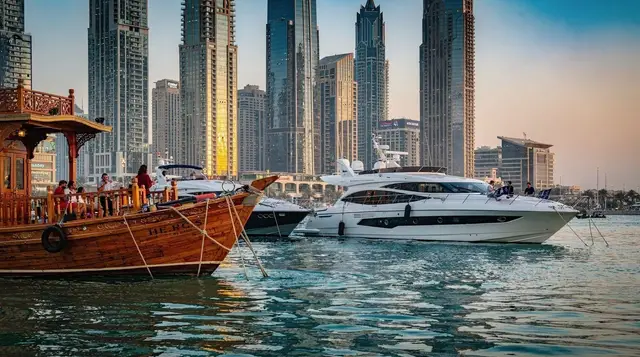
A first-time visitor prioritizing the classic Dubai list — desert safari, beach time, Burj Khalifa, dhow cruise — gets the most out of November through March, full stop. A budget-focused trip willing to trade outdoor time for lower prices does genuinely well in summer, particularly with a Marina dhow dinner cruise scheduled for evening when the heat has eased. A trip built around Abu Dhabi, the mosques, and museums works comfortably almost year-round since so much of that itinerary is indoor or brief outdoor exposure.
If a sunrise or evening hot air balloon flight over the desert is on your list, winter’s cooler mornings make for a genuinely more comfortable experience than a summer sunrise flight already pushing 30°C before 7am.
Weather isn’t the only variable
Flight prices and hotel availability sometimes move independently of the weather pattern — a global event, a major conference, or a regional holiday can spike rates even in an otherwise quiet month, and conversely airlines occasionally run promotional fares into shoulder or even summer months that make the value case stronger than the weather alone would suggest. It’s worth checking flight and hotel pricing for your specific dates rather than assuming the general seasonal pattern holds exactly for every year.
How many days you need, regardless of season
The season you visit in doesn’t change the core itinerary math much — see the how many days in Dubai guide for the full breakdown, but as a rule of thumb, 4-5 days covers the essentials (Downtown, Marina, Old Dubai, one desert or Abu Dhabi day trip) comfortably in any season, with summer trips leaning more heavily on indoor days within that same timeframe rather than needing more or fewer days overall.
Booking timing regardless of season
Whatever month you choose, book timed-entry tickets for Burj Khalifa, Museum of the Future, and any desert safari or dhow cruise with a specific date at least a few days ahead — these don’t typically require the weeks of advance planning that a December booking might, but walking up same-day risks sold-out slots or a worse time window (a midday desert safari slot instead of the better sunset one, for instance) even in quieter months.
How the season changes specific activities
Weather affects Dubai’s activity categories unevenly, which is worth knowing when you’re deciding what to prioritize on a given trip. Beach and pool time depends almost entirely on sea and air temperature — genuinely comfortable from November through April, workable but hot in the shoulder-adjacent weeks, and a morning-only activity in peak summer. Desert activities (safaris, dune bashing, camel riding) shift from all-day options in winter to evening-only in summer, since daytime desert temperatures run even higher than the city itself. Indoor attractions — Museum of the Future, the aquarium, Ski Dubai, the malls — barely change at all across the calendar, which is exactly why they carry the summer season on their own.
Walking-based activities, including Old Dubai’s souks and self-guided city exploration, are the most weather-sensitive category of all, comfortable for hours in winter and realistically limited to 20-30 minute stretches in peak summer heat.
Regional events that shift demand independent of weather
A handful of recurring events move Dubai and Abu Dhabi’s pricing and crowd calendar independent of the weather pattern itself. The Abu Dhabi Formula 1 Grand Prix, typically held in late November or early December on Yas Island, drives a genuine spike in Abu Dhabi hotel rates and spillover demand into Dubai for the surrounding week, layering on top of what’s already a comfortable-weather period. The Dubai Marathon and various regional business conferences through the winter months can also tighten hotel availability in specific weeks without much public visibility ahead of time.
If your travel dates are flexible, it’s worth a quick search for major events on your specific dates before finalizing hotel bookings, since a well-timed trip that otherwise fits the ideal November-March window can still land in an unexpectedly expensive week because of an event unrelated to tourism seasonality.
UAE National Day and other public holidays
UAE National Day, held annually on December 2nd, sits right in the middle of the winter peak season and adds a further, if modest, bump to an already busy period, with fireworks and celebrations across the city, most visibly around the Marina and Downtown. Eid al-Fitr and Eid al-Adha, the two major Islamic holidays, shift dates each year on the lunar calendar and bring a noticeable increase in domestic and regional travel, since many UAE and Gulf residents travel or host family during these periods — worth checking against your dates if avoiding the busiest domestic-travel weeks is a priority, independent of the international tourist season.
First-time visitor vs repeat-visitor timing
A first-time visitor building a trip around the classic Dubai list — desert safari, beach days, Burj Khalifa, a dhow cruise — gets meaningfully more value out of hitting the November-March window than a repeat visitor who’s already covered that list and is returning for a more specific reason (a particular event, a business trip extended into leisure time, visiting friends or family based in the city). If this is a first Dubai trip and dates are flexible at all, weighting the decision toward good weather makes more sense than optimizing purely for the lowest price, since so much of the classic Dubai experience is genuinely weather-dependent.
A repeat visitor with a narrower, more specific goal has more room to take advantage of summer’s value pricing without losing much relative to what they’re actually trying to do.
Comparing Dubai’s timing to a combined Abu Dhabi trip
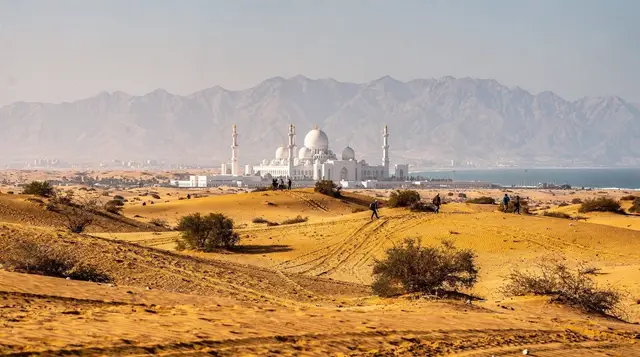
Many visitors combine Dubai with a day trip or overnight stay in Abu Dhabi, and the seasonal logic largely mirrors Dubai’s own — Sheikh Zayed Grand Mosque, Louvre Abu Dhabi, and Yas Island’s theme parks are all comfortable across a wider range of months than pure outdoor activity, since much of an Abu Dhabi day trip involves air-conditioned museums and covered attractions alongside brief outdoor stretches at the mosque courtyard. That said, timing an Abu Dhabi day trip for the cooler months still makes the mosque visit and any Corniche walking time meaningfully more pleasant, so the same November-March logic applies with slightly less urgency than for a Dubai-only itinerary built around the desert and beaches.
Flight pricing patterns across the year
Flight prices into Dubai broadly track the same peak-and-value pattern as hotels, with the added wrinkle that Dubai’s status as a major long-haul hub means fares can also move based on fuel prices, airline capacity changes, and connecting-route demand that has nothing to do with local weather. As a general pattern, expect the highest fares around the December holidays and into early January, moderate fares through the rest of winter and the shoulder months, and the lowest fares in the deep summer months of July and August, when demand into the region drops the most.
Booking three to four months ahead for winter travel and being more flexible about exact dates for summer travel both tend to capture better fares than booking close to departure in either season.
What to do if you can’t choose your dates
Plenty of visitors don’t have full flexibility — a school break, a work trip extended into leisure time, or a fixed group of travel companions can all lock in dates regardless of the seasonal calendar. If your trip lands in summer, the honest move is to lean fully into an indoor-focused itinerary rather than trying to force a beach-and-desert trip through the heat and coming away disappointed. If it lands in the shoulder months of April, May, September, or October, shift outdoor activities to early morning or evening and treat midday as mall, museum, or hotel-pool time.
Whatever the season, the weather month-by-month guide gives the specific numbers for your exact travel dates so you can plan realistically rather than guessing from a general seasonal label.
The bottom line
There’s no single wrong time to visit Dubai — even peak summer, planned around correctly, delivers a real trip with genuine value. But if the question is genuinely open and the goal is the fullest, most flexible version of Dubai’s outdoor and indoor attractions together, November through March remains the honest answer, with February standing out as the best specific month for balancing weather, price, and crowds. Everything else on this page is about making the most of whichever window you actually end up traveling in.
Frequently asked questions about the best time to visit Dubai
What is the best month to visit Dubai?
February is arguably the strongest single month — reliably warm, dry, and past the December-January price and crowd peak. November and March are close alternatives.
Is Dubai too hot to visit in summer?
Outdoor activity is genuinely difficult from June through September, but an indoor-focused trip is entirely workable, and hotel prices drop substantially to reflect it.
When is Dubai most expensive?
Late December through mid-January, driven by New Year’s Eve, school holidays, and peak weather all landing in the same window.
Is October or April a good time to visit?
Yes — both offer warm but manageable weather with lower rates and crowds than the December-March peak.
Does Ramadan affect the best time to visit?
It changes daytime dining and some attraction hours but doesn’t rule out a good trip — see the dedicated Ramadan guide for specifics.
What’s the rainiest time of year in Dubai?
Winter, especially January and February, though total rainfall is low and disruptions are usually brief.
Is Dubai crowded during peak season?
Yes, December through February sees the highest visitor numbers — book major attraction tickets a few days ahead during this window.
Is it better to visit in February or March?
Both are strong, but February edges it out — similarly reliable weather to March, without March’s slightly higher rates as the shoulder season approaches April.
How far ahead should I book my Dubai trip?
Three to four months ahead for winter (Nov-Mar) flights and hotels, since this is the highest-demand window; summer travel can be booked with more flexibility and often at better last-minute rates.
Matching the season to specific plans
If your trip centers on a desert safari or beach days, November through March delivers the fullest, most flexible version of both — daytime desert time, comfortable evening camps, and beach afternoons that don’t require retreating indoors by 11am. If your plans lean toward Global Village or Dubai Miracle Garden, note both only operate roughly October through April, so a summer trip won’t include them regardless of how you plan around the heat. For a trip built mostly around indoor attractions — Ski Dubai, the malls, museums — the season matters far less, and summer’s lower prices become a genuine advantage rather than a compromise.
Top experiences
Bookable activities with verified prices and instant confirmation on GetYourGuide.