Dubai weather month by month: the detailed climate breakdown
Dubai: desert safari with BBQ dinner in a Bedouin camp
What is Dubai's weather like throughout the year?
Dubai has two dominant seasons rather than four: a long, hot summer from roughly May through September, with daytime highs of 38-48°C (100-118°F) and high humidity, and a comfortable, dry winter from November through March, with highs of 20-32°C (68-90°F). April and October are transition months that lean toward whichever season they're closer to. Rainfall is low year-round, with what little falls concentrated in January and February.
Two seasons, not four
Dubai’s climate is best understood as two dominant seasons rather than the four most visitors are used to: a long, intense summer running roughly May through September, and a comfortable, dry winter running roughly November through March, with April and October as short transition months leaning toward whichever neighboring season they’re closer to. There’s essentially no autumn or spring in the temperate sense — the shift from hot to comfortable and back happens over a matter of weeks each direction rather than a gradual multi-month change. The table below breaks down the specifics month by month so you can plan travel dates, packing, and daily activity timing around real numbers rather than general seasonal labels.
| Hottest months | June-August, highs of 40-42°C (104-108°F) |
| Coolest month | January, highs around 24°C (75°F) |
| Best weather-to-crowd ratio | February |
| Rain window | January-February, short heavy bursts |
| Best sea temp for swimming | November-May, 22-30°C (72-86°F) |
Month-by-month climate table
| Month | Avg. daytime high | Avg. overnight low | Humidity | Rainfall | Sea temp |
|---|---|---|---|---|---|
| January | 24°C (75°F) | 14°C (57°F) | Moderate | Highest of the year (short bursts) | 22°C (72°F) |
| February | 25°C (77°F) | 15°C (59°F) | Moderate | Second-highest | 22°C (72°F) |
| March | 28°C (82°F) | 18°C (64°F) | Moderate | Low-moderate | 24°C (75°F) |
| April | 33°C (91°F) | 22°C (72°F) | Rising | Minimal | 26°C (79°F) |
| May | 38°C (100°F) | 26°C (79°F) | Rising, humid near coast | Negligible | 30°C (86°F) |
| June | 40°C (104°F) | 29°C (84°F) | High, humid | Negligible | 32°C (90°F) |
| July | 41°C (106°F) | 31°C (88°F) | High, humid | Negligible | 34°C (93°F) |
| August | 42°C (108°F) | 31°C (88°F) | High, humid | Negligible | 34°C (93°F) |
| September | 39°C (102°F) | 29°C (84°F) | High, humid | Negligible | 33°C (91°F) |
| October | 35°C (95°F) | 25°C (77°F) | Moderate-high | Minimal | 30°C (86°F) |
| November | 30°C (86°F) | 20°C (68°F) | Moderate | Low | 27°C (81°F) |
| December | 26°C (79°F) | 16°C (61°F) | Moderate | Moderate | 24°C (75°F) |
These are typical averages rather than guarantees — any given year can run a degree or two warmer or cooler than the historical pattern, and short heat spikes above 45°C (113°F) in peak summer or unusually heavy rain bursts in winter both happen periodically without breaking the overall seasonal pattern described here.
January: cool, occasionally wet
January is typically Dubai’s coolest month, with daytime highs around 24°C (75°F) and overnight lows that can dip into the low teens Celsius (mid-50s Fahrenheit) — genuinely cool enough that a light jacket for evenings is worth packing, something many first-time visitors underestimate. It’s also when Dubai sees the most rainfall of the year, though “most” is relative — a handful of days with short, heavy downpours rather than a genuinely wet month by most standards. This is peak tourist season regardless of the occasional rain, coinciding with New Year’s and school holidays.
February: the sweet spot
February holds steady with January’s comfortable temperatures — daytime highs around 25°C (77°F) — while typically seeing slightly less rain and, more importantly, meaningfully lower prices and crowds once the New Year’s period has passed. It’s arguably the single best month for a first-time visitor prioritizing comfortable outdoor activity without peak-season pricing.
March: warming, still comfortable
March marks the start of the warming trend, with highs climbing to around 28°C (82°F) and rainfall dropping off further. It remains comfortable for every outdoor activity — desert safaris, beach days, walking tours — while sea temperatures start becoming genuinely pleasant for swimming rather than merely tolerable.
April: the last easy month before summer
April sees a real jump, with highs around 33°C (91°F), still manageable for outdoor activity especially earlier in the day, but noticeably warmer than the winter months. It’s a solid shoulder-season choice with lower rates than peak winter, provided you shift outdoor plans toward morning and evening rather than midday.
May: the transition into summer heat
May is where Dubai firmly crosses into summer territory, with highs around 38°C (100°F) and humidity beginning to build near the coast. It’s still workable for a trip with careful planning — see the summer guide for how to structure a hot-season itinerary — but outdoor midday activity becomes genuinely uncomfortable rather than just warm.
June-August: peak heat
June through August represent the hottest stretch of the year, with average highs of 40-42°C (104-108°F) and regular spikes well above that, combined with high humidity, especially overnight and near the coast, that keeps the “feels like” temperature elevated even after sunset. Overnight lows in the high 20s Celsius (mid-80s Fahrenheit) mean there’s little relief even at night. This is the window where an indoor-focused itinerary, covered in the summer guide, matters most.
September: still summer, slightly easing
September stays firmly in summer territory, with highs around 39°C (102°F), though there’s a slight, gradual easing compared to the August peak. It’s not yet a comfortable outdoor month, but travelers with fixed September dates can expect marginally better conditions than a July or August trip, particularly by the second half of the month.
October: summer’s long goodbye
October sees a more meaningful drop, with highs around 35°C (95°F), still warm but past the most extreme heat, and this is also when seasonal outdoor attractions like Global Village and Miracle Garden typically reopen for the season. It’s a reasonable shoulder-season month, particularly the back half, for travelers prioritizing lower prices over guaranteed cool comfort.
November: the start of the comfortable window
November marks a clear return to comfortable conditions, with highs around 30°C (86°F) and noticeably lower humidity than the preceding months. This is genuinely one of the best months for a desert safari with BBQ dinner in a Bedouin camp or any full-day outdoor itinerary, without yet hitting the December-January price and crowd peak.
December: comfortable but crowded
December brings highs around 26°C (79°F), among the most comfortable of the year, but this is also peak season for pricing and crowds, especially in the back half of the month around Christmas and New Year’s — see the winter guide and the best time to visit guide for how to navigate the pricing spike specifically.
Humidity: the number that matters as much as temperature
Raw temperature alone understates how Dubai’s summer heat actually feels — coastal humidity, often above 60-70% from May through September, particularly overnight, means the “feels like” temperature runs meaningfully higher than the thermometer reading, especially in humid areas like the Marina or JBR compared to slightly drier inland areas. Winter humidity is generally lower and more comfortable across the board, which is a real part of why the season feels so much more pleasant than the temperature difference alone would suggest.
Sea temperature across the year
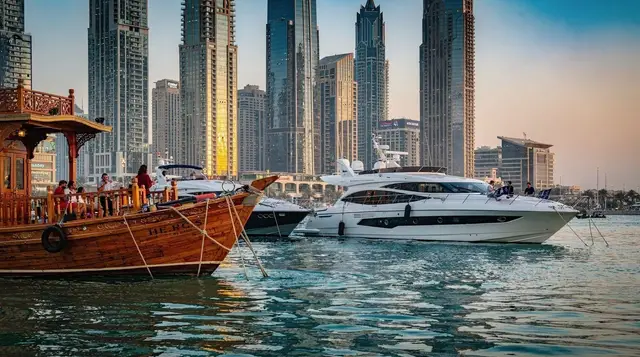
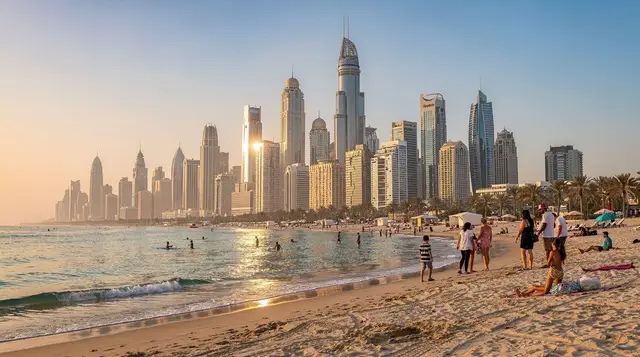
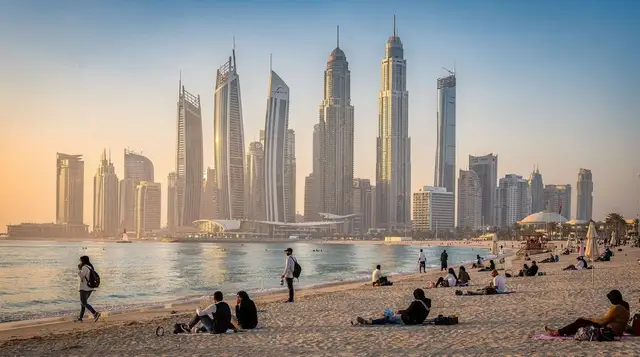
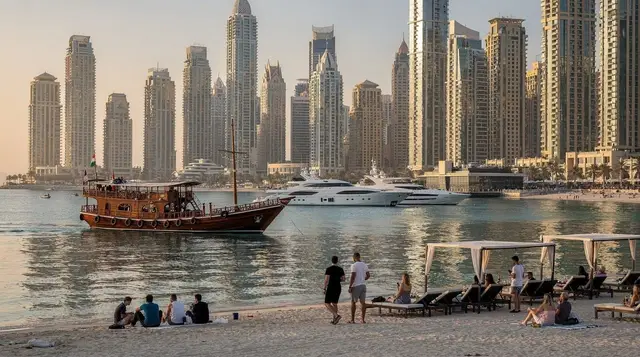
Gulf sea temperatures track the air temperature pattern closely but with less extreme swings — winter waters around 22-24°C (72-75°F) are genuinely refreshing for swimming, while summer sea temperatures climbing to 32-34°C (90-93°F) feel closer to a warm bath than a cooling swim, a detail worth knowing if a beach trip is a priority. A Marina dhow dinner cruise in winter also benefits from this — the open-water breeze feels genuinely cool rather than merely a break from land heat.
How the weather affects Dubai’s public pools and hotel pool schedules
Hotel and public pool temperatures track the sea temperature pattern closely, meaning winter pools often run a heated add-on rather than being naturally warm the way they are from roughly April through October. Some hotels heat their pools through the cooler months specifically to keep them comfortable for guests unaware that Gulf sea and pool temperatures dip meaningfully in December and January, so checking whether a specific hotel heats its pool matters if a winter trip’s plans lean heavily on daily pool time rather than the beach itself.
Wind and dust
Dubai isn’t a particularly windy city for most of the year, but occasional shamal winds from the north or northwest can bring dust or sandstorms, most commonly in spring and early summer, briefly reducing visibility and air quality. These events are usually short-lived (a day or two) rather than a sustained seasonal pattern, but worth being aware of if outdoor visibility (photography, viewpoints) matters to your specific plans.
Air quality during a shamal event can also briefly affect anyone with respiratory sensitivities, so checking a short-range forecast before a physically demanding outdoor day — a desert hike, an intensive water sport session — is a reasonable precaution during the spring months when these winds are most common.
Using this table to plan your trip
If comfortable outdoor activity across the full day is the priority, target November through March using the table above to pick the specific weeks that best balance your tolerance for cooler evenings (January) against price and crowd sensitivity (avoiding December 20-January 5). If value and indoor attractions are the priority instead, the June-September numbers above show clearly why an indoor-first itinerary, not a compromise but a genuinely different trip style, is the right approach for those months.
Dubai’s climate classification, briefly
Dubai sits within a hot desert climate zone, characterized by extremely low annual rainfall, high summer temperatures, and a relatively short, mild winter compared to temperate climates. This classification explains several patterns in the table above: the near-total absence of rain from April through September, the concentration of what little rain does fall into the cooler winter months, and the sharp, fast transitions between the two dominant seasons rather than the gradual spring-and-autumn shift familiar from temperate climates. Understanding this underlying climate type helps make sense of why Dubai’s weather calendar reads so differently from most visitors’ home climates.
UV index and sun exposure by season
Dubai’s UV index runs high to extreme for most of the year, including winter, which surprises visitors who associate strong sun exposure risk exclusively with the hottest months. Even a comfortable 25°C January day carries a UV index that warrants sunscreen and sun protection for extended outdoor time, since UV intensity is driven by sun angle and latitude as much as air temperature. Summer months push UV levels to their most extreme, compounding the heat risk with a genuine sunburn risk on any exposed skin within a shorter window than many visitors expect from home climates.
Record temperatures and extreme events
While the averages in the table reflect typical conditions, Dubai has recorded temperatures well above 48°C (118°F) during exceptional summer heatwaves, and understanding that these spikes exist helps calibrate expectations beyond the average figures — a “typical” August day might be intensely hot, but an unusual heatwave week can push meaningfully beyond that baseline. Conversely, winter has occasionally seen unusually heavy, short-duration rain events causing localized flooding given the city’s limited stormwater drainage infrastructure, historically designed around a desert climate’s typical near-absence of rain rather than occasional intense downpours.
How month-by-month weather affects photography conditions
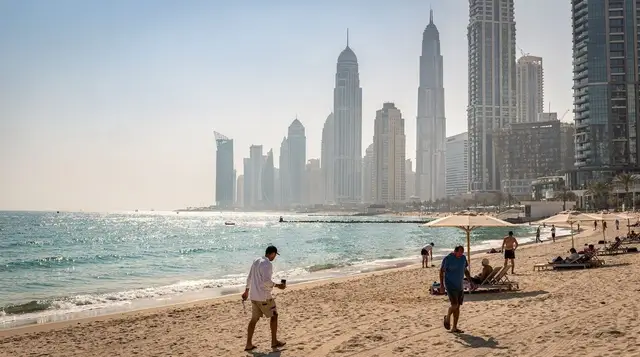
Atmospheric haze, driven by a combination of humidity and airborne dust, varies noticeably across the year and affects long-distance and skyline photography quality. Winter’s drier air, particularly in December through February, produces the clearest conditions for skyline and desert photography, while summer’s higher humidity creates a visible haze that softens distant details in wide shots. Spring’s occasional shamal wind events can add windblown dust to the mix, sometimes reducing visibility further for a day or two at a time, worth checking a short-range forecast for if a specific photography outing (a sunrise desert shot, for instance) is a trip priority.
Comparing Dubai’s pattern to nearby Gulf destinations
Dubai’s climate pattern closely mirrors neighboring Gulf destinations like Abu Dhabi and Qatar, all sharing the same hot-desert classification and similar seasonal timing, though Dubai’s coastal position gives it slightly higher humidity than more inland desert areas within the same region. This matters mainly for multi-stop regional trips — a Dubai-and-Abu Dhabi combination doesn’t require separately researching each city’s climate, since the same seasonal logic (November-March comfortable, June-September hot) applies to both with only minor variation.
Using the monthly data to time specific activities
Beyond general trip timing, the month-by-month figures are useful for timing specific activity types precisely: a sunrise hot air balloon flight benefits from the cooler mornings of December through February specifically, when pre-dawn temperatures are at their most comfortable for an early departure; a full beach day benefits from the warmer sea temperatures of April through June, before peak summer humidity sets in but while the water is already comfortably warm; and an Old Dubai walking tour is most comfortable stretched across any month from November through March, with October and April as reasonable but warmer alternatives if scheduled for morning hours specifically.
How the monthly pattern affects clothing choices
The month-by-month numbers translate fairly directly into a packing strategy: January and February call for a light jacket or cardigan for cool evenings on top of the standard lightweight daytime wardrobe; March through May and October through December need only the lightweight wardrobe with perhaps a light layer for indoor air conditioning; and June through September call for the most breathable fabrics available, minimal layering, and a genuine plan for managing sweat and sun exposure across even brief outdoor stretches. The packing list guide applies this logic in more practical detail, including desert-specific and mosque-visit items that layer on top of the seasonal baseline described here.
Reading a real-time forecast against these averages
The month-by-month averages in the table are a planning tool, not a substitute for checking an actual forecast closer to your travel dates — any given week can run warmer, cooler, wetter, or drier than the historical average, sometimes by a meaningful margin. This matters most around the seasonal transition months (April, May, September, October), where a specific week’s actual weather has more room to vary from the average than in the more stable core summer or core winter months. Checking a forecast a few days before any outdoor-heavy day, rather than relying purely on the seasonal average, is worth the extra few minutes it takes.
A quick summary by trip type
Beach and pool-focused trips do best from November through May, once sea temperatures rise out of the cooler winter range but before peak summer humidity sets in. Desert and outdoor adventure trips do best from November through March, when daytime and evening desert temperatures both stay comfortable. Indoor, shopping, and museum-focused trips work well any month, making them the natural anchor for a summer visit. Culture and walking-heavy trips, built around Old Dubai, the souks, and similar districts, do best November through March and are the itinerary type most affected by summer heat given how much time they spend outdoors on foot.
Matching your specific trip type against this summary, rather than relying on a single blanket “best time to visit” answer, gives a more accurate read on how any given month will actually suit your plans.
Air conditioning and the indoor-outdoor temperature swing
A detail the monthly averages don’t capture: Dubai’s indoor spaces run genuinely cold year-round, including in peak summer, which means the temperature swing between an air-conditioned mall or metro car and the street outside can be 15-20°C in either direction on a hot day. Packing a light layer for indoor spaces isn’t just a winter-evening consideration — it matters in July and August too, when the contrast between outdoor heat and indoor cold is at its most extreme. This is worth factoring into any day plan that alternates between outdoor sightseeing and indoor attractions like the Museum of the Future or Dubai Mall.
Timing a desert safari around the monthly weather pattern
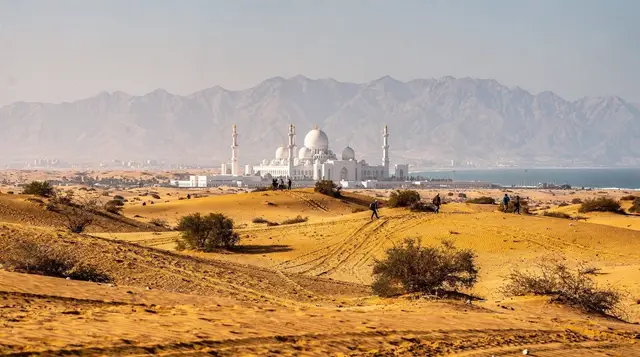
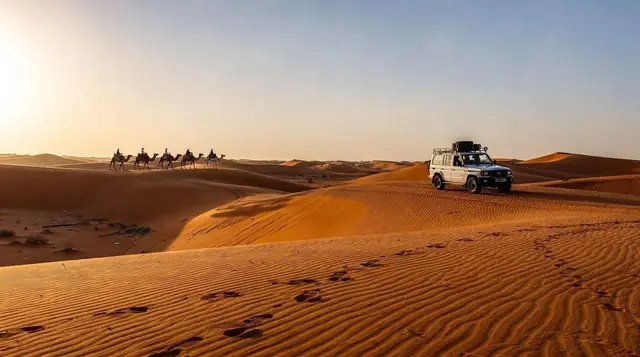
Desert temperatures track the coastal figures in this table closely during the day but swing further at night, since the desert loses heat faster than the coast once the sun sets — a winter evening desert safari can feel genuinely cold, while a summer evening one still cools meaningfully after dark even though the daytime heat was extreme. A desert safari with BBQ dinner in a Bedouin camp scheduled for November through March benefits from this cooler evening pattern most, while summer desert safaris shift start times later specifically to avoid the worst of the daytime heat before the evening cool-down begins.
Frequently asked questions about Dubai’s weather month by month
What is the hottest month in Dubai?
July and August, with average highs around 40-42°C (104-108°F) and frequent spikes above 45°C (113°F).
What is the coolest month in Dubai?
January, with daytime highs around 24°C (75°F) and overnight lows sometimes in the low teens Celsius (mid-50s Fahrenheit).
When does it rain in Dubai?
Mostly in January and February, as short, heavy bursts rather than sustained rain — summer sees essentially none.
What is the sea temperature in Dubai in winter?
Around 21-24°C (70-75°F), swimmable and refreshing.
How humid is Dubai?
Lower and more comfortable in winter; often above 60-70% in summer, especially overnight near the coast.
Is Dubai windy?
Generally not, though occasional shamal winds, most common in spring and early summer, can bring brief dust or sandstorms.
What month has the best weather-to-crowd ratio in Dubai?
February — reliably warm and dry, after the December-January peak-season crowds and prices have eased.
Does Dubai’s indoor air conditioning really matter for packing?
Yes — malls, the metro, and restaurants run noticeably cold year-round, including in summer, so a light layer is worth packing even on the hottest months for time spent indoors.
Is a summer evening desert safari still worth it despite the daytime heat?
Yes — desert temperatures cool meaningfully after sunset even in summer, and operators shift start times later specifically to avoid the worst daytime heat, making an evening safari workable outside the November-March window too.
Top experiences
Bookable activities with verified prices and instant confirmation on GetYourGuide.