Dubai for first-time visitors: what to see and in what order
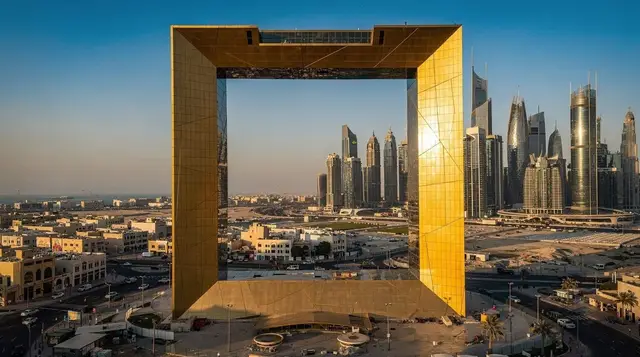
Dubai: Frame tickets, Creek, souks & Blue Mosque guided tour
What should a first-time visitor to Dubai prioritize?
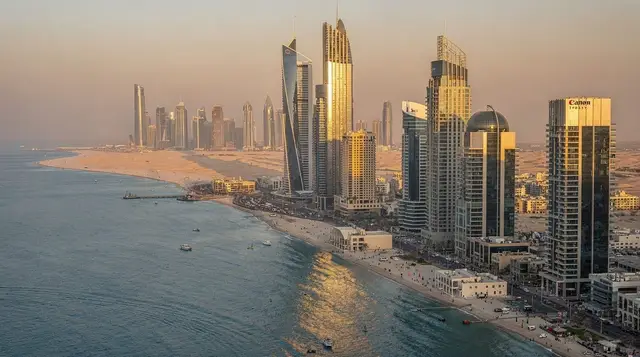
Downtown (Burj Khalifa and Dubai Fountain), Old Dubai (Al Fahidi, souks, an abra crossing), the Marina/JBR waterfront, and a desert safari cover the core of what makes Dubai distinctive. With 3+ days, add Abu Dhabi's Sheikh Zayed Mosque as a day trip. Sequence indoor, air-conditioned stops around the hottest hours if visiting May-September.
| Best first stops | Downtown (Burj Khalifa, Fountain), Old Dubai, Marina/JBR, a desert safari |
| Minimum time | 3 days for the core; 4+ to add Abu Dhabi |
| Getting around | metro Red Line (Downtown-Marina) + taxi/Careem for Old Dubai |
| Best season | November-March; June-September pushes indoors |
| Budget shape | around AED 300-800+ ($82-218+)/day depending on style |
What actually makes Dubai worth a first visit
Dubai’s appeal for a first-timer comes from contrast: a city that built the world’s tallest building and some of its most engineered islands sits a short drive from centuries-old souks, a working creek crossing, and the open desert. A first trip works best when it touches all three registers — modern skyline, historic core, and desert or coast — rather than spending the whole visit inside malls and towers, which is the single most common way visitors leave underwhelmed despite hitting the “famous” landmarks.
This guide sets out what to prioritize, what order makes sense, and what to honestly skip, drawing on the same anchors covered across this site’s destination and itinerary pages so you can plan a realistic first trip rather than an aspirational list that never quite fits into the time you actually have on the ground.
The four things that matter most
If time is genuinely limited, these four cover the core of a first Dubai visit: the Burj Khalifa and Downtown, including the free Dubai Fountain show; Old Dubai with Al Fahidi’s wind-tower architecture, the souks, and a 1 AED abra crossing; the Marina and JBR waterfront; and a desert safari, the experience most distinct from any other city break you’ve taken. Everything else — theme parks, additional observation decks, shopping-as-activity — is genuinely optional layered on top of these four, not a replacement for any of them.
Suggested sequencing by trip length
With a single day, a guided half-day city tour or hop-on hop-off ticket covering Downtown and Old Dubai is the most efficient use of limited hours; see the 1-day itinerary for a structured version. With 2-3 days, split Downtown and Old Dubai from a Marina evening and a desert safari across separate days rather than compressing everything into one. With 4+ days, add an Abu Dhabi day trip and slower time in each district rather than cramming more stops into the original days — the first-timer itinerary is built specifically around this pacing.
A realistic day-by-day shape for a 3-day first trip
Day one: Downtown in the morning for the Burj Khalifa and Dubai Mall, then Old Dubai in the afternoon and evening for the souks, an abra crossing, and dinner in Bur Dubai or Deira. Day two: a desert safari, typically an afternoon pickup running into the evening, leaving the morning free for a slower-paced activity like the Dubai Frame or a Jumeirah beach morning. Day three: the Marina and JBR for a waterfront walk, a marina cruise or lunch, and an evening flight home or a final dinner.
This shape isn’t the only valid sequence, but it avoids the two most common first-trip mistakes — stacking too many outdoor stops into one hot afternoon, and leaving the desert safari, which needs an evening slot, until a day when transport timing gets tight or an afternoon delay puts the evening pickup at risk.
What actually surprises first-time visitors
Three things consistently catch first-timers off guard: how far apart Dubai’s districts actually are (Downtown to the Marina is a genuine 20-30 minute drive, not a stroll), how strong the air conditioning contrast is between outdoor heat and indoor cold for much of the year, and how quickly the desert safari’s dune-bashing segment turns into the trip’s most talked-about moment despite going in with lower expectations than the skyline stops. A milder surprise is how walkable specific micro-areas are once you’re actually there — Old Dubai’s lanes, the Marina promenade, Downtown around the mall — even though the city as a whole isn’t built for cross-district walking the way many older European capitals are.
Downtown and the Burj Khalifa first
Most first-time visitors should do Downtown early in the trip rather than last — it anchors your sense of the city’s scale and gives context for everything else you’ll see. A private half-day city tour with Burj Khalifa tickets bundles the tower entry with a broader Downtown orientation in one booking, useful if you’d rather not plan the logistics separately on day one. Book Burj Khalifa tickets, especially sunset slots, before you land — this is the one reservation that genuinely tightens up and gets pricier the closer you book to your date, detailed in the Burj Khalifa tickets guide.
Old Dubai second, ideally with guidance
Old Dubai rewards a guided first visit more than most areas, since the souks and Al Fahidi’s alleyways aren’t intuitively laid out for a first-timer navigating alone. A guided tour combining the Dubai Frame, Creek, and souks covers this ground with context a self-guided walk would miss, particularly around the gold and spice souks’ bargaining norms and the abra crossing’s actual function as everyday transport rather than a tourist novelty. Independent visitors can do this on their own too, using a mix of metro and short taxi hops between the Creek’s two banks.
Orienting yourself with a hop-on hop-off pass
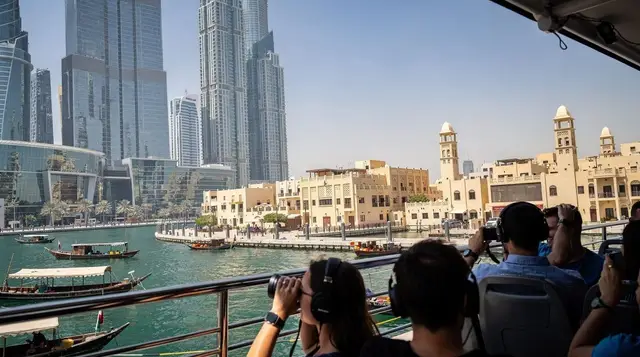
For visitors who’d rather explore at their own pace than follow a fixed guided schedule, a 24-48h hop-on hop-off pass, detailed fully in the hop-on hop-off guide, gives a flexible way to sample Downtown, Old Dubai, and the Marina across your first day or two before deciding where to spend more dedicated time. A hop-on hop-off ticket with an optional dhow cruise pairs this orientation with an evening cruise, a natural way to end a first full day without additional planning.
Transport basics between districts
Dubai’s metro Red Line runs along Sheikh Zayed Road connecting Downtown-adjacent stations to the Marina, making it a genuinely useful option for that specific corridor, while Old Dubai and the Creek area are better served by a short taxi or Careem than a multi-leg metro trip. Buying a Nol card on arrival, either at the airport or any metro station, is worth doing regardless of how much you plan to use public transport, since it also works on the bus network and at some parking facilities. For a full breakdown of when metro beats a taxi and vice versa across a first-timer’s typical stops, see getting around Dubai.
Packing and practical prep before you land
Beyond modest clothing for mosque and souk visits, sun protection matters more than most first-time visitors from temperate climates expect, even outside peak summer — a hat and sunscreen earn their space in the bag year-round. A light layer helps for indoor spaces, since air conditioning runs aggressively cold in malls, restaurants, and vehicles compared to the outdoor heat. Comfortable closed shoes suit both the souk’s uneven lanes and the sand at a desert camp better than sandals, and a portable charger is genuinely useful given how much of a first-day itinerary tends to run through photo-heavy stops like the Burj Khalifa and the Frame.
Common misconceptions that trip up first-timers
A frequent assumption is that Dubai is exclusively an ultra-luxury, budget-breaking destination — in practice, costs range widely, and a first-timer can build a genuinely reasonable trip around mid-range hotels, metro transport, and food courts alongside one or two splurges like a desert safari or a Burj Khalifa ticket. Another common misconception is that alcohol is entirely banned; it’s restricted to licensed venues rather than prohibited outright, an important distinction for anyone planning an evening out. A third is assuming the whole city shuts down during Ramadan — daytime public eating is restricted and some hours shift, but tourist infrastructure continues operating, just with adjusted norms rather than closure.
The desert safari: don’t skip this one
Of everything on a first Dubai trip, the desert safari is the experience with no equivalent back home for most visitors, and skipping it to fit in another mall or observation deck is a genuine misallocation of a limited trip. An evening safari with dune bashing, a camel photo stop, and a Bedouin-style camp dinner is the standard format and a reasonable default choice — full comparison of formats sits in the desert safari guide. Book this for early or mid-trip rather than your last night, so a delay or reschedule doesn’t cost you the experience entirely.
What to genuinely skip on a first trip
Not everything marketed to tourists deserves a slot in a short first visit. Multiple competing observation decks beyond one (the Burj Khalifa, Dubai Frame, or The View at the Palm — pick one, not all three) rarely add proportional value to the time and cost; the observation decks compared guide breaks down which single option suits which priority. Extensive standalone mall time as a planned activity, rather than an incidental stop, is also easy to overrate on a first visit when time could go toward the desert or Old Dubai instead.
A handful of heavily marketed add-ons — certain souvenir-shop-heavy “cultural” stops, overpriced central beach clubs sold as must-do experiences, and generic buffet dinner cruises priced well above the quality delivered — are easy to skip without any real loss to a first-timer’s trip.
Cultural basics before you land
Modest dress — shoulders and knees covered — is expected in malls, souks, and any mosque visit, and swimwear belongs strictly on beaches and at pools, not elsewhere. The weekend runs Saturday-Sunday, not Friday-Saturday, since the 2022 shift, which affects which days some attractions and markets are busiest. Alcohol is available at licensed hotels and venues but not in public spaces, and public intoxication carries real legal consequences rather than a slap on the wrist. None of this requires special preparation beyond awareness — Dubai is a genuinely easy city for first-time international visitors to navigate respectfully once you know these basics.
Money and budgeting basics for a first visit
The currency is the UAE dirham (AED), pegged at roughly 3.67 to the US dollar, which makes mental conversion straightforward once you get used to it. Dubai can run as an affordable or a genuinely luxury trip depending on where you stay and eat — it’s not uniformly expensive the way some visitors assume before arriving. Realistic daily costs vary widely across different spending levels, from budget hostel-and-metro stays to five-star hotels and private tours, and picking up a Nol transit card on arrival is worth doing regardless of budget level.
Weather and timing your first trip
November through March is the most comfortable season, with temperatures in the 20-30°C range that make outdoor stops like the souks and desert safari genuinely pleasant. June through September brings 40-48°C heat that makes extended outdoor time genuinely difficult and pushes most itineraries toward indoor malls, aquariums, and ski slopes instead — see Dubai in summer for how to adapt a first trip if those are your only available dates. December-January is the busiest and priciest stretch of the peak season, worth knowing if you’re flexible on exact timing.
Food and dining basics for a first-timer
Dubai’s dining scene spans everything from AED 10-15 ($3-4) shawarma and food-court meals to some of the world’s most expensive tasting menus, and a first-timer doesn’t need to gravitate toward either extreme by default. Old Dubai and Deira offer genuinely good, inexpensive Emirati, Iranian, and South Asian food in unglamorous settings that tend to outperform pricier tourist-zone restaurants on both authenticity and value. Friday brunch, a Dubai institution running from late morning into the afternoon at many hotel restaurants, is worth trying once for the cultural experience even if the price tag runs high, and it’s a genuinely social, food-forward way to spend a Friday if your schedule allows it.
Photography basics for a first Dubai trip
A first-timer’s camera roll typically ends up dominated by three subjects: the Downtown skyline from Burj Khalifa’s base or a nearby vantage, the desert at sunset during a safari, and the contrast shots from Old Dubai’s souks and creek crossing. Golden hour, roughly an hour before sunset, consistently produces the best light for skyline shots given how the glass towers catch and reflect color. If photography is more than an incidental interest on your trip, the dedicated photography tours guide covers specific operators and vantage points built around exactly this rather than treating photos as a byproduct of general sightseeing.
Combining a first Dubai trip with Abu Dhabi
With four or more days, adding Abu Dhabi as a day trip rounds out a first visit meaningfully, particularly the Sheikh Zayed Grand Mosque, one of the more visually striking religious buildings most visitors will ever see, and worth the roughly three-hour round-trip drive time on its own merits. This is a separate day rather than something to squeeze alongside a full Dubai city day — trying to combine both cities in one exhausting day tends to shortchange both.
SIM cards and staying connected
Picking up a local SIM or eSIM on arrival, either from the airport kiosks or a city mall, is worth doing even for a short first trip — data is genuinely useful for navigation, translating menus, and booking last-minute activities, and it’s considerably cheaper than roaming on most home plans. Airport SIM kiosks are quick but slightly pricier than city outlets; an eSIM arranged before departure sidesteps the airport queue entirely if your phone supports it.
Tipping norms for first-timers
Tipping isn’t legally mandatory but is genuinely expected in restaurants and for good service, typically 10-15% where a service charge isn’t already included on the bill — check the bill before adding on top, since double-tipping is a common first-timer habit carried over from other destinations with different norms. Taxi drivers appreciate rounding up rather than a large percentage tip, and hotel staff (bellhops, housekeeping) generally receive a small per-service amount rather than a lump sum at checkout.
Jet lag and arrival-day pacing
Dubai’s time zone (GMT+4) creates meaningful jet lag for visitors arriving from the Americas or East Asia, and a common first-timer mistake is booking a demanding full day immediately after landing. A gentler arrival-day plan — the Dubai Fountain show, a Marina walk, or simply settling into the hotel — before launching into Downtown or a desert safari the following day tends to produce a noticeably better first 48 hours than pushing straight into the busiest sightseeing.
Where the four-day-plus first trip usually goes wrong
Visitors with genuinely generous time (5+ days) sometimes overcorrect by cramming in every theme park and observation deck rather than slowing the pace, ending the trip more exhausted than a tighter 3-day version would have. A longer first trip is better spent adding depth — a second desert experience like Hatta, an unhurried Old Dubai morning, or genuine downtime by the pool — than adding volume for its own sake. The how many days in Dubai guide breaks down what additional days are actually worth versus which ones deliver diminishing returns.
Getting from the airport to your hotel
Dubai International Airport (DXB) connects directly to the metro Red Line from Terminals 1 and 3, a genuinely workable option for light packers heading toward Downtown or the Marina, though most first-timers with luggage and a late-arrival flight find a taxi or pre-booked transfer less hassle for the first leg. The airport to city guide breaks down journey times and costs for each option by terminal and destination district, worth checking before you land rather than deciding on arrival.
Frequently asked questions about visiting Dubai for the first time
What’s the best area to stay for a first-time visitor?
Downtown or the Marina both work well for first-timers — Downtown puts you closest to the Burj Khalifa and Old Dubai, while the Marina suits visitors prioritizing beach access and a livelier evening scene.
Is English widely spoken in Dubai?
Yes, English functions as a practical lingua franca across hotels, restaurants, transport, and most tourist-facing services, making language a non-issue for most first-time visitors.
Do I need cash, or is card payment sufficient?
Card payment, including contactless, is accepted almost everywhere; a small amount of cash is useful mainly for the abra crossing, small souk purchases, and tipping.
How strict is dress code enforcement in practice?
Enforcement is generally informal rather than strict — venues may politely ask for more coverage if genuinely inappropriate, but casual tourist clothing is fine outside mosques and certain formal venues as long as shoulders and knees are covered in malls and public areas.
Is it worth hiring a guide for a first Dubai visit, or is self-guided enough?
Either works; a guide adds context and removes planning friction, particularly in Old Dubai, while a self-guided approach with the metro and some research is entirely workable and cheaper for confident independent travelers.
What should I do on my first evening in Dubai?
The Dubai Fountain show near Downtown is a free, low-effort, genuinely impressive first-evening option that requires no advance booking and gives an immediate sense of the city’s scale.
Is Dubai a good destination for solo first-time travelers?
Yes, Dubai is straightforward and safe for solo travel, with reliable transport and clear signage; the main adjustment is cultural etiquette rather than any practical safety concern.
Should I book a guided tour or plan everything myself for a first visit?
Both work well — a guided city tour or hop-on hop-off pass removes planning friction for the trickier areas like Old Dubai, while confident independent travelers can cover the same ground with metro, taxis, and some upfront research at a lower cost; most first-timers end up mixing both approaches across different days of the trip rather than committing fully to one single style throughout.
Should I get a local SIM or eSIM on arrival?
Yes, it’s worth it even for a short trip — data helps with navigation, menus, and last-minute bookings, and it’s cheaper than most home roaming plans; an eSIM arranged before departure skips the airport queue.
Is tipping expected in Dubai?
Yes, around 10-15% in restaurants where service isn’t already included, though it’s not legally mandatory; check the bill first to avoid tipping on top of an already-included service charge.
Top experiences
Bookable activities with verified prices and instant confirmation on GetYourGuide.