Burj Khalifa: the complete guide to the world's tallest building
Dubai: Burj Khalifa levels 124 & 125 entry ticket + options
Duration: 1.5 hours
- Free cancellation
What is the Burj Khalifa and do you need to book tickets in advance?
The Burj Khalifa is the world's tallest building at 828 meters, in Downtown Dubai next to Dubai Mall, with public observation decks on levels 124/125 and 148. Yes, book at least a few days ahead — walk-up tickets cost more and popular sunset slots sell out.
Why the Burj Khalifa is still the first stop for most visitors
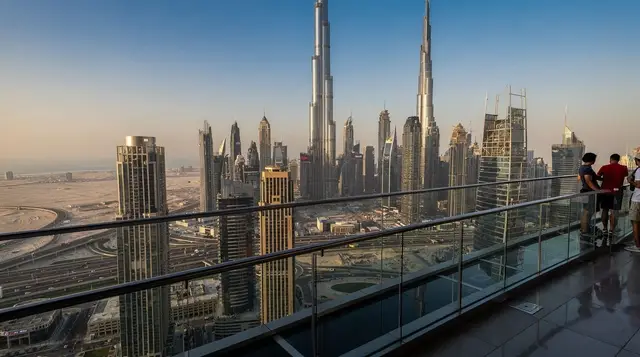
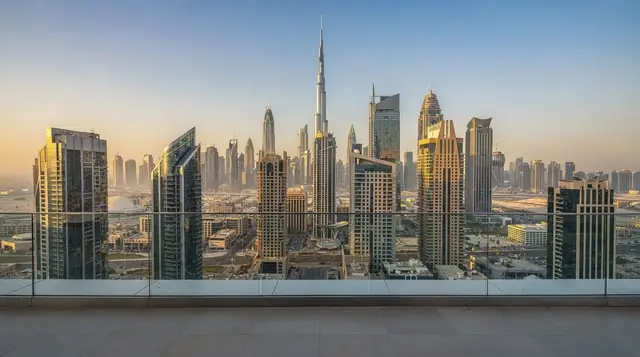
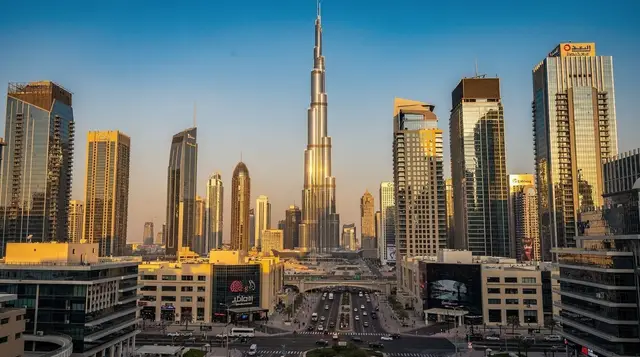
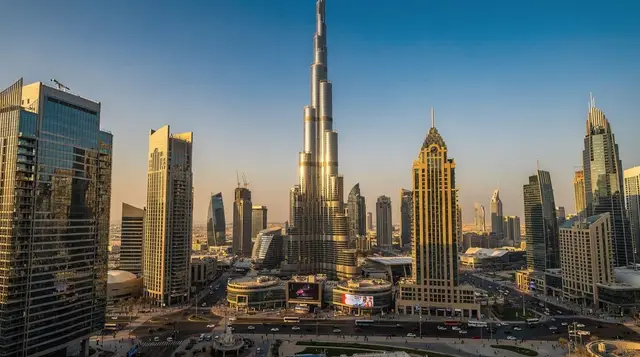
The Burj Khalifa opened in January 2010 at 828 meters, and more than fifteen years later it remains the tallest building on the planet by a wide margin — the runner-up, Merdeka 118 in Kuala Lumpur, tops out nearly 150 meters shorter. It sits at the center of Downtown Dubai, directly attached to Dubai Mall, overlooking the Dubai Fountain’s man-made lake. For a first-time visitor, it’s less a sightseeing option than a default: it’s the single view that makes sense of how the rest of the city fits together, from the Marina skyline to the Palm’s outline on the coast.
That said, it is also the most expensive single ticket most visitors will buy in Dubai, and the building’s own marketing makes the two main deck options — Level 124/125 and Level 148 — sound more different than they are. This guide covers what each level actually offers, when to go, and how to build the visit around Dubai Mall and the Fountain without wasting a half day standing in queues.
| Where | Downtown Dubai, attached to Dubai Mall |
| Cost | Around AED 169-259 ($46-70) for levels 124/125, more for level 148 |
| Time needed | 60-90 minutes for the deck visit itself |
| Getting there | Red Line metro, Burj Khalifa/Dubai Mall station |
| Best time | Late morning (value) or sunset (atmosphere) |
The two observation decks at a glance
Burj Khalifa sells two main public experiences, both accessed through Dubai Mall’s dedicated entrance:
- At the Top, levels 124 and 125 (452m and 456m): the standard experience, an indoor and semi-outdoor deck with 360-degree views, on two connected floors.
- At the Top SKY, level 148 (555m): a smaller, higher deck that includes access to levels 124/125 on the way up, plus a lounge with refreshments included in the ticket.
There’s a third tier above that — a VIP lounge experience on level 152 with a private host and extended time — aimed at visitors who want the full experience rather than a quick photo stop. All three are covered in detail, with current pricing, in the Burj Khalifa tickets guide, and the specific tradeoff between 124/125 and 148 gets its own breakdown in the At the Top vs Sky comparison.
Level 124 and 125: the standard experience
Burj Khalifa levels 124 and 125 entry ticket is what most visitors book, and for good reason — the view from 452 meters is already disorienting enough that most people can’t meaningfully tell the difference from 555 meters once they’re up there. Level 124 is the main indoor deck with floor-to-ceiling windows and a partially open-air terrace section; level 125 is a smaller lounge one floor up, reached by an internal staircase, with a slightly different angle and less crowding. Both floors are included in the same ticket.
Pricing runs in tiers by time slot: non-prime hours (typically mid-morning through mid-afternoon) sit around AED 169–179 (46–49 USD), while prime hours — the two hours around sunset — push toward AED 229–259 (62–70 USD). Booking a non-prime slot is the single easiest way to cut the cost of this visit without changing the experience meaningfully, since the skyline is visible in daylight from every slot; you only lose the golden-hour light and the transition into the city’s night lighting.
Level 148: At the Top SKY
Burj Khalifa Sky level 148, 124 and 125 entry ticket adds a separate high-speed elevator ride up to level 148, plus a hosted lounge area with a complimentary drink and a small multimedia presentation on the building’s construction. The floor is smaller and more intimate than 124/125, with fewer visitors allowed at once, which is the main practical benefit — less waiting at the glass, more room to actually take photos.
Whether that’s worth roughly double the price of the standard ticket is genuinely a personal call, and one this site takes an unusually direct position on: for most first-time visitors, the extra 96 vertical meters do not translate into a noticeably different photo or feeling once you’re already 450 meters up. Where level 148 earns its price is for visitors prioritizing a quieter, less crowded deck and the small hospitality touches, not the view itself. The full side-by-side, including what a level 152 VIP ticket adds on top, is in the At the Top vs Sky guide.
A separate attraction to know about: Sky Views
Some ticket bundles pair Burj Khalifa entry with something called “Sky Views,” and this is a common point of confusion worth clearing up directly: Sky Views Observatory is a completely different building — the Address Sky View hotel a short walk away in Downtown Dubai — with its own infinity pool deck and a glass slide between its two towers. It is not part of the Burj Khalifa and doesn’t share an entrance or elevator system with it. If a combo ticket lists both, you’re visiting two separate attractions on the same day, which can be good value if you want both experiences, but it’s not a discount route to “more Burj Khalifa.”
Best time to go: sunset vs day vs night
Sunset is the most requested slot for a reason — you get daylight views on arrival and watch the city’s lights come on before you leave, all in a single 60–90 minute visit. It’s also the most expensive time band and the first to sell out, often a week or more ahead during the November–March peak season described in best time to visit Dubai.
Late morning on a weekday is the practical alternative: cheaper, far less crowded at the elevators, and the visibility is typically better before afternoon haze builds up, which matters more than it sounds for photos looking toward the Gulf. A dedicated night visit after the fountain show is worth considering too, particularly paired with a night city tour with Burj Khalifa ticket included, which bundles the deck with a guided drive past other illuminated landmarks.
Getting to the Burj Khalifa and Dubai Mall
The Burj Khalifa/Dubai Mall metro station on the Red Line connects via an air-conditioned walkway roughly 10–15 minutes long — a genuinely pleasant option outside of summer’s peak heat, and the cheapest way in using a Nol card. By taxi, expect 15–25 minutes and roughly AED 30–50 (8–14 USD) from most Downtown or Marina hotels, dropping at the mall’s Burj Khalifa entrance rather than the general mall entrances, which sit closer to the ticket counter and security line. See getting around Dubai for the full transit picture across the city.
The Dubai Fountain and the lake ride
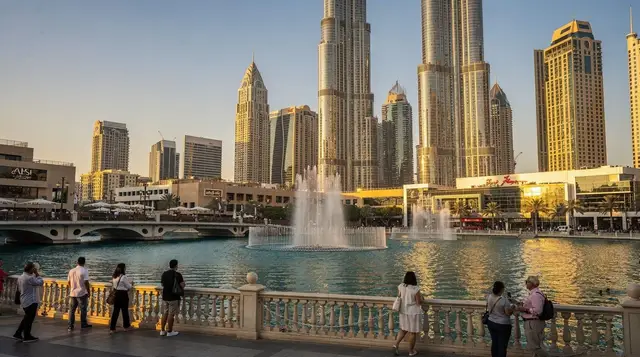
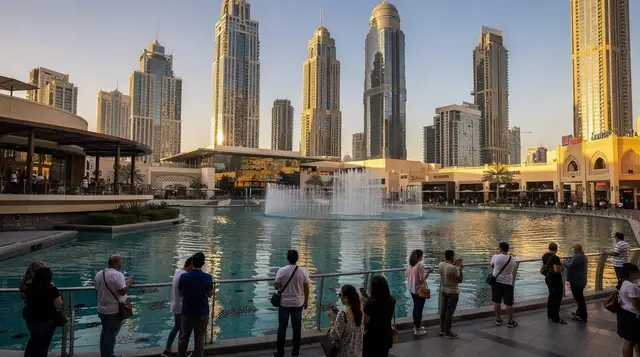
Directly below the tower, the Dubai Fountain performs choreographed shows on the manmade lake most evenings, free to watch from the surrounding promenade — one of the better free things to do in the city, covered fully in the Dubai Fountain guide. For a closer vantage, the Burj Khalifa lake ride ticket puts you on a boat on the lake itself during a show, which is a genuinely different perspective from watching at the rail and worth the modest add-on price if you’re already spending an evening in the area.
Pairing the visit with Dubai Mall
Because entry runs through Dubai Mall, most visitors combine the two in a single outing. The mall itself deserves more than a walkthrough — it houses an aquarium, an ice rink, and hundreds of stores across multiple levels large enough to disorient first-time visitors, all detailed in the Dubai Mall guide. If you’re deciding between spending your shopping time here or at Mall of the Emirates, Dubai Mall wins for anyone also doing the Burj Khalifa the same day, purely on convenience.
Is the Burj Khalifa worth it?
For a first visit to Dubai, yes, without much hesitation — it’s the one attraction that gives visible shape to the rest of the city, and nothing else in Dubai offers quite the same vantage. For a return visit, or if budget is tight, it’s worth weighing against the alternatives on the observation decks compared page: the Dubai Frame and The View at the Palm both cost a fraction of the price and deliver a genuinely satisfying, if different, view. The Burj Khalifa’s advantage isn’t just height, though — it’s being at the literal center of the skyline rather than looking at it from the side, which is what most repeat visitors say they’d pay for again.
How the Burj Khalifa was built
Construction began in 2004 and topped out in 2009, using a reinforced-concrete core and a Y-shaped floor plan specifically designed to reduce wind loads at extreme height — a structural approach borrowed from earlier Chicago-school skyscraper design and adapted by the Samsung C&T and Besix construction consortium. Over 330,000 cubic meters of concrete and 39,000 metric tons of steel rebar went into the structure, and the exterior cladding uses more than 26,000 glass panels engineered to withstand Dubai’s summer heat without excessive thermal expansion.
The building was originally slated to be named Burj Dubai, and was renamed Burj Khalifa at its January 2010 opening in honor of Sheikh Khalifa bin Zayed Al Nahyan, president of the UAE at the time, reportedly in recognition of Abu Dhabi’s financial support during Dubai’s debt crisis in the preceding years. None of this affects a visitor’s experience directly, but it explains why the tower reads as a genuinely engineered achievement rather than just a tall building with an observation deck bolted on.
At.mosphere and dining at height
Beyond the observation decks, the Burj Khalifa also houses At.mosphere, a restaurant and lounge on level 122, one floor below the main public deck. Unlike the observation levels, this is a paid-dining venue rather than a ticketed attraction — there’s a minimum spend rather than an entry fee, and reservations are essential, particularly for dinner and sunset slots. It’s a genuinely different way to experience the building’s height: unhurried, seated, without the standing-room crowd dynamics of the observation decks, though at a materially higher cost per person than a standard ticket.
For visitors who want the view with a meal built in rather than a 60-90 minute visit, it’s worth considering as an alternative to At the Top entirely, not an add-on to it, since the two experiences don’t share a ticket or entrance queue.
Burj Khalifa with kids
The visit is straightforward for families — the elevators are fast (under a minute to the main deck), the floors are climate-controlled, and there’s little standing around once you’re past the initial security and ticket-scanning queue. The main consideration is the glass barriers at the edge, which are solid and safe but can feel intimidating for younger children who aren’t used to unobstructed height views; older kids and most children past early school age tend to find it exciting rather than unsettling. Strollers are permitted through most of the route, though the internal staircase between levels 124 and 125 isn’t stroller-accessible, so one parent typically waits with the stroller while the other takes the short walk up.
For a broader family-trip framework beyond this single stop, see the Dubai with kids guide.
Combining the visit with the rest of Downtown Dubai
Because the tower, mall, and fountain all sit within a five-minute walk of each other, most visitors treat this as a half-day-to-full-day Downtown block rather than a standalone errand. A typical sequence: arrive in the late morning for a non-prime observation deck slot, spend the early afternoon in Dubai Mall (aquarium, lunch, shopping) during the hottest and most crowded hours outside, then finish at the Fountain’s evening shows before or after dinner. Downtown Dubai covers the wider neighborhood context, including hotel options within walking distance if you’d rather not factor in a return taxi trip after dark.
For photographers specifically, the promenade around the fountain lake and the pedestrian bridge near Souk Al Bahar offer some of the better ground-level angles on the tower itself, covered in Dubai skyline photo spots.
Common mistakes to avoid
The most frequent misstep is booking a prime sunset slot without needing to — plenty of visitors are satisfied with the daytime view and end up paying the premium out of habit rather than preference. The second is confusing level 148 with the Sky Views Observatory at Address Sky View, described above, and assuming a higher price automatically means a better or more complete Burj Khalifa experience. The third is underestimating security and entry time during peak season, particularly December and January, when queues at the Dubai Mall entrance can add 20–30 minutes beyond the ticketed slot time.
Arriving with the printed or mobile ticket ready, rather than searching for it at the scanner, avoids most of the friction that causes visitors to miss their allocated window.
Practical tips before you go
Arrive at least 15–20 minutes before your slot; security screening resembles airport-level checks and queues build quickly around prime-time slots. Bring a valid photo ID, since it’s checked against the ticket at multiple points. Photography is unrestricted at both main decks, but the glass can create reflections — bring a dark top or a lens hood if you’re serious about photos, and expect other visitors in most wide shots during busy hours. Wheelchair access is available via a separate accessible route; flag this when booking rather than at the door.
For anyone building a broader Downtown day around this visit, the Dubai 1-day itinerary shows how the Burj Khalifa, Dubai Mall, and the Fountain show typically fit into a single afternoon and evening without feeling rushed.
How the Burj Khalifa compares to Dubai’s other viewpoints
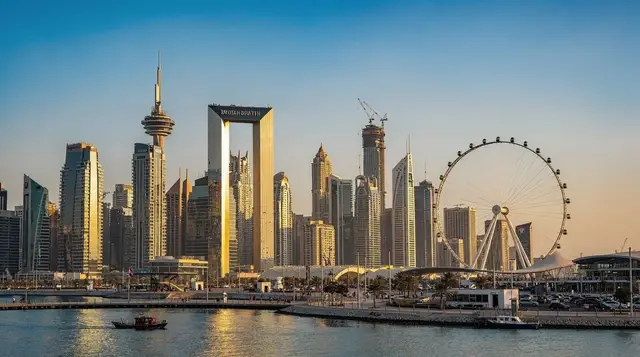
For visitors weighing whether to spend on the Burj Khalifa at all, or how it stacks against the city’s other paid viewpoints, a quick side-by-side helps. The Dubai Frame in Zabeel Park costs a fraction of the price and gives a striking, symmetrical frame shot of old and new Dubai side by side, though from a much lower vantage. The View at the Palm trades height for a different angle entirely — looking back at the Palm Jumeirah’s fronds from Palm Tower rather than at the Downtown skyline. Ain Dubai, the giant observation wheel on Bluewaters Island, gives a slower, more leisurely rotation with Marina views rather than a fixed observation floor.
None of these fully replicates the Burj Khalifa’s specific advantage — being at the literal center of the skyline rather than looking at it from the side — but each is meaningfully cheaper, which matters for visitors on a second or third Dubai trip who’ve already checked the Burj Khalifa off. The observation decks compared page runs the full price and experience comparison across all four side by side.
Sunset vs day vs night, compared
Each time band trades price for atmosphere differently, and the right pick depends on what matters more to you on the day.
| Time band | Approx. price (124/125) | Crowds | What you get |
|---|---|---|---|
| Late morning / early afternoon | AED 169-179 ($46-49) | Lowest | Clearest visibility, best value |
| Sunset (prime hours) | AED 229-259 ($62-70) | Highest | Daylight-to-night transition |
| Night (after Fountain shows) | Similar to non-prime | Moderate | City lights, calmer than sunset |
If photography clarity matters more than the golden-hour moment, late morning consistently outperforms sunset on visibility, since afternoon haze hasn’t built up yet over the Gulf.
Seasonal notes for planning your visit
Booking pressure and comfort both shift across the year, and it’s worth timing a Burj Khalifa visit around more than just the time of day. During the November-March peak season described in best time to visit Dubai, sunset slots routinely sell out a week or more ahead, and Downtown’s boardwalk and Fountain crowds swell accordingly, making an early booking essential rather than optional. Through the summer months (June-September), the deck itself stays fully air-conditioned regardless of outside heat, but the approach through Dubai Mall and the wait outside security can feel more taxing given the outdoor temperature — arriving via the air-conditioned metro walkway rather than a taxi drop-off at a distant entrance is worth prioritizing in these months specifically.
Frequently asked questions about the Burj Khalifa
How tall is the Burj Khalifa compared to other towers?
At 828 meters, it’s roughly 300 meters taller than the Shanghai Tower and nearly 150 meters taller than Merdeka 118, currently the world’s second-tallest building.
Can I visit without booking a specific observation deck ticket?
No — the observation decks are the only publicly accessible parts of the tower beyond the ground floor, and entry requires a timed ticket for one of the levels described above.
Is level 148 worth double the price of 124/125?
For most visitors, no — the view difference is marginal. It’s worth it mainly if a quieter, less crowded deck and the included refreshments matter more to you than saving the money.
What happens if it’s cloudy or hazy on my visit day?
Tickets are non-refundable for weather in most cases, since visibility issues are considered part of the outdoor observation-deck experience; check the specific ticket’s cancellation terms before booking around a forecast.
How far in advance should I book?
At least 3–5 days for a standard slot, and a week or more for sunset during November–March peak season, when the best times sell out first.
Is the Burj Khalifa accessible for wheelchair users?
Yes, an accessible route and elevator access are available — request this when booking so staff can accommodate the route on arrival.
Can I combine the Burj Khalifa with a night tour?
Yes, the by-night ticket option pairs the deck visit with a guided evening drive past other illuminated Dubai landmarks, useful if you want more context than a self-guided visit gives.
Does the ticket price include Dubai Mall entry?
Dubai Mall itself is free to enter and doesn’t require a ticket; only the observation deck levels inside the Burj Khalifa require one.
Is the Burj Khalifa worth it compared to the Dubai Frame?
For a first Dubai visit, yes — the Burj Khalifa’s central position in the skyline gives a vantage nothing else matches. For a return trip or tighter budget, the Dubai Frame costs a fraction of the price for a genuinely satisfying, if different, view.
How long should I budget for the whole visit, including Dubai Mall?
For the deck alone, 60-90 minutes including security and queuing. Most visitors extend this into a half-day to full-day Downtown block once Dubai Mall and the Fountain shows are added in.
Top experiences
Bookable activities with verified prices and instant confirmation on GetYourGuide.