Dubai Frame guide: old vs new Dubai from a 150-meter frame
Dubai: entry ticket to the Dubai Frame with deck access
What is the Dubai Frame and what do you see from it?
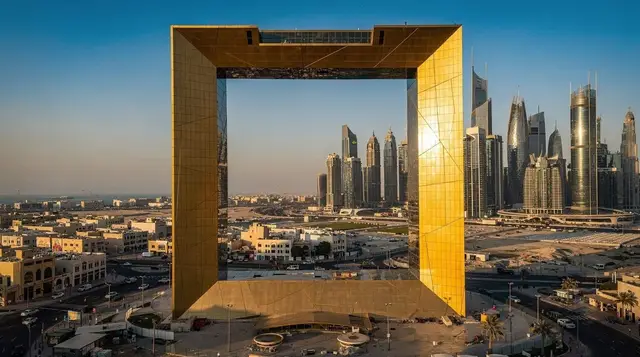
The Dubai Frame is a 150-meter picture-frame-shaped structure in Zabeel Park with a glass-floor sky bridge connecting two towers. One side overlooks Old Dubai (Deira, Karama, the Creek); the other overlooks Downtown's skyline, including the Burj Khalifa. Entry costs around AED 50 ($14), a fraction of the Burj Khalifa's price.
| Where | Zabeel Park, between Old Dubai and Downtown |
| Cost | around AED 50 ($14) standard entry |
| Time needed | 45-60 minutes |
| Best time | late afternoon into sunset |
| Getting there | taxi (10-15 min from Downtown) or Al Jafiliya/Max metro + short walk |
What the Dubai Frame actually is
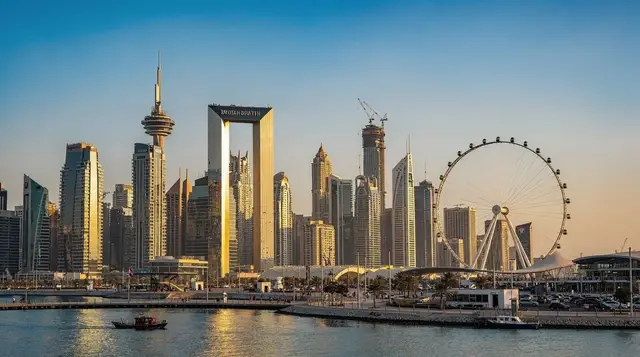
The Dubai Frame is a 150-meter structure in Zabeel Park, shaped exactly like its name suggests — a giant golden picture frame straddling two towers, connected at the top by a glass-floored sky bridge. It opened in January 2018 and was deliberately positioned on the boundary between older, lower-rise Dubai and the newer Downtown skyline, so that looking through the frame from either side genuinely frames a different era of the city. It’s one of the least expensive major viewpoints in Dubai and, unlike the Burj Khalifa or Museum of the Future, doesn’t require choosing between competing ticket tiers — there’s essentially one experience to book.
Old Dubai side vs new Dubai side
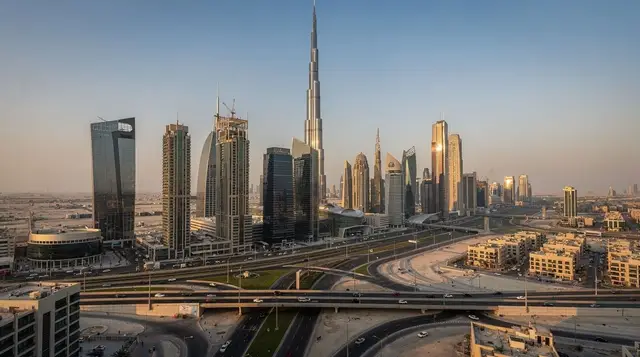
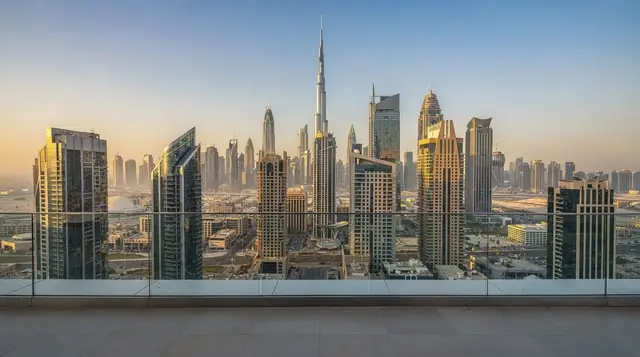
This is the structure’s entire premise, and it delivers on it: from the northeast-facing side, you look out over Karama, Al Jafiliya, and toward the older, denser low-rise neighborhoods and the Creek beyond, giving a sense of the city before its 21st-century skyscraper boom. From the southwest-facing side, the view opens onto Downtown Dubai’s modern skyline, with the Burj Khalifa clearly visible above the surrounding towers.
Standing on the connecting sky bridge, you can turn from one view to the other within a few steps, which is a genuinely effective way to grasp how dramatically Dubai’s skyline has changed within a single generation — something harder to appreciate from either the Burj Khalifa or ground level alone.
Tickets and pricing
Dubai Frame entry ticket with deck access runs around AED 50 (14 USD) for standard adult entry, making it one of the cheapest tickets among Dubai’s major landmarks — a fraction of even the least expensive Burj Khalifa tier. A simpler Dubai Frame entry ticket option covers the same core visit. Reduced rates typically apply for children within a set age bracket, and UAE residents may find discounted resident pricing through the venue directly.
Given the price point, this is one of the easier “yes” decisions among Dubai’s paid attractions — there’s little financial risk in adding it to an itinerary even if you’re uncertain it’ll be a highlight.
What’s inside beyond the view
The visit isn’t just the sky bridge. The ground floor houses a walkthrough exhibit on Dubai’s history — old photographs, artifacts, and a recreated souk-style street scene tracing the city’s growth from a fishing and pearling settlement to its current scale. After crossing the sky bridge, the second tower’s top floor houses a “future” themed exhibit imagining Dubai decades from now, a lighter, more speculative counterpart to the historical exhibit below. Neither section takes long to walk through, but together they add useful context to the view itself rather than just delivering a photo op and an exit.
The glass floor
A short section of the sky bridge has a glass floor, letting visitors look straight down roughly 150 meters. It’s a milder version of glass-floor attractions found at greater heights elsewhere in the world, and most visitors find it more of a fun photo moment than a genuinely nerve-testing one. For anyone uncomfortable with heights or transparent flooring specifically, a solid walkway runs alongside it, so skipping the glass section doesn’t mean skipping the view or the crossing itself.
Best time to visit
Late afternoon into early evening works well here, letting you see the Downtown skyline in daylight and then watch it light up as the sun sets, without the premium pricing structure that applies to sunset slots at the Burj Khalifa. Mornings are quieter and cooler for the walk between the parking area or metro stop and the entrance, which matters more here than at fully indoor attractions given Zabeel Park’s outdoor setting. Avoid the middle of a summer afternoon if possible — see Dubai in summer for the broader case for shifting outdoor time to the cooler parts of the day between June and September.
Getting to the Dubai Frame
The Frame sits inside Zabeel Park, a short taxi ride — typically 10-15 minutes and AED 20-35 (5-10 USD) — from most Downtown hotels. By metro, Al Jafiliya or Max stations on the Red Line are the closest stops, followed by a walk or a brief taxi hop into the park itself, since the stations don’t sit directly at the entrance. See getting around Dubai for the wider transit network, and the Nol card guide for how metro fares work if you’re combining this with other stops by public transport that day.
Combining it with nearby stops
Zabeel Park itself is worth a short walk beyond the Frame — it’s one of Dubai’s larger green spaces, with shaded paths and a lake, a pleasant contrast to the malls and towers that dominate most sightseeing days. The Frame also pairs naturally with a Downtown day: many visitors do the Burj Khalifa and Dubai Mall in the same outing as the Frame, given the short distance between them, or combine it with the Museum of the Future as a single Downtown-adjacent afternoon covering three of the city’s more distinctive modern structures.
A combined Future Museum, Burj Al Arab, and Dubai Frame tour bundles all three into a single guided outing for visitors who’d rather not plan the logistics themselves.
Is the Dubai Frame worth it?
Given the price, yes, for almost any visitor — even those who found the Burj Khalifa’s ticket too expensive to justify booking a second time on a return trip. It won’t match the Burj Khalifa’s altitude or drama, and it shouldn’t be mistaken for a substitute experience; it’s a genuinely different kind of viewpoint, built around contrast and context rather than sheer height, and one of the few Dubai attractions where the low price point removes almost all the usual risk of feeling like you overpaid.
For visitors deciding where to spend limited sightseeing budget among Dubai’s various observation experiences, the observation decks compared guide puts the Frame’s price and experience directly alongside the Burj Khalifa, The View at the Palm, and Ain Dubai.
Ticket types and what to choose
Beyond the two GYG-listed entry options above, some providers sell guided-tour add-ons or skip-the-line variants, though queue times here are rarely long enough to make a skip-the-line upgrade essential the way it can be at busier attractions. For most visitors, either standard entry ticket covers everything needed — the museum-style exhibits, the sky bridge crossing, and the glass floor — without needing an upgrade. The main decision is simply whether to book independently or as part of a combined tour with the Museum of the Future and Burj Al Arab photo stop, which suits visitors who’d rather have transport and sequencing handled for them across a single Downtown-adjacent outing.
Who should skip it
Visitors on a very tight schedule prioritizing only the highest-impact stops — the Burj Khalifa, a desert safari, Old Dubai’s souks — can reasonably skip the Frame without missing anything essential to a first Dubai trip, since it’s a genuinely optional add-on rather than a core landmark. It’s also less compelling on a hazy day, since the “old vs new” contrast depends on being able to actually see both skylines clearly from a distance, something the best time to visit Dubai guide covers in more detail for planning around visibility.
Why it was built where it was
The Frame’s location inside Zabeel Park wasn’t arbitrary — the site sits close to the historical boundary line where Dubai’s older, lower-density districts (Karama, Al Jafiliya, Bur Dubai further beyond) give way to the planned, high-rise Downtown development built up from the 1990s onward. Architecturally, the structure uses two 150-meter towers connected by a 93-meter sky bridge, clad in gold-toned aluminum and glass designed to catch light differently through the day, which is part of why sunset photographs of the Frame from the surrounding park tend to look particularly striking.
The design deliberately echoes a literal picture frame rather than attempting to blend in with either skyline it sits between, making it one of the more purpose-built pieces of civic architecture in the city, alongside the Museum of the Future and the Burj Khalifa itself.
Photography tips specific to the Frame
The sky bridge offers clean, largely unobstructed sightlines toward both skylines, and because ticket volume runs lower than at the Burj Khalifa, crowding in front of the best window positions is rarely a serious issue even during moderately busy periods. Shooting toward the Downtown side in the late afternoon captures the Burj Khalifa with favorable side lighting, while the Old Dubai side reads better around midday when the lower-rise rooftops and older infrastructure show more texture and detail. From ground level, the park surrounding the Frame itself offers a good vantage for photographing the structure as a subject, something that’s harder to do with the Burj Khalifa given its scale relative to the surrounding streets.
For visitors chasing skyline shots more broadly across the city, Dubai skyline photo spots covers other vantage points worth adding to a photography-focused day.
The Dubai Frame with kids
Families generally find the Frame an easy, low-friction stop — the visit is short, air-conditioned throughout except for brief outdoor connector sections, and doesn’t involve the queuing intensity of the Burj Khalifa’s peak-hour slots. The historical exhibit at the base uses visual displays and recreated scenes rather than dense text panels, which tends to hold younger children’s attention better than a typical museum walkthrough. The glass floor is usually a highlight for kids old enough to enjoy the novelty rather than fear the height, though as noted above, a solid alternate path exists for anyone who’d rather skip it.
Pairing this with a broader family day at Zabeel Park’s lawns and lake afterward extends the stop into a half-day outing without much additional cost, a pattern covered more generally in the Dubai with kids guide.
Common misconceptions about the Dubai Frame
A frequent assumption among first-time visitors is that the Frame offers a Burj-Khalifa-comparable height experience at a discount price — it doesn’t, and shouldn’t be booked with that expectation. At 150 meters, the sense of scale and vertigo is far milder than at 450-plus meters, and visitors expecting an equivalent thrill sometimes come away underwhelmed purely because of a mismatched expectation rather than any flaw in the attraction itself. Understood correctly — as a low-cost, contextual viewpoint built around contrast rather than altitude — it delivers exactly what it promises.
Another common mix-up is assuming the Frame sits within walking distance of Downtown; it’s close by car but not a comfortable walk, particularly in summer heat, so budget for a short taxi or metro-plus-walk connection rather than planning to stroll over from the Burj Khalifa.
Combining the Frame with a Downtown or Old Dubai day
Because of its position between the two halves of the city it represents, the Frame works well as a connective stop on a day that also includes Downtown Dubai and Old Dubai — visiting the Frame in between the two gives a useful visual bridge between the modern skyline and the historic districts you’re about to explore or just left. On a first-time visitor’s Dubai 1-day itinerary, the Frame typically slots in as a 45-60 minute stop between a morning at the Burj Khalifa and Dubai Mall and an afternoon or evening in Old Dubai’s souks, rather than as a dedicated half-day destination on its own.
Seasonal notes
Outdoor sections of the visit — the walk from parking or the metro connection, and brief moments on the open sections of the sky bridge — mean the Frame is more weather-dependent than a fully indoor attraction like the Museum of the Future. Winter (November-March) is genuinely the more comfortable season to visit, matching the broader seasonal guidance in best time to visit Dubai, though the Frame’s largely climate-controlled interior sections make it more tolerable in summer than fully outdoor attractions like Global Village or Miracle Garden.
How the Frame compares on value
Set next to Dubai’s other paid viewpoints, the Frame’s price-to-experience ratio is arguably the best in the city — at around AED 50 (14 USD), it costs a fraction of the cheapest Burj Khalifa slot, roughly comparable to Museum of the Future admission at a lower price point, and well under The View at the Palm or Ain Dubai. It won’t replace the Burj Khalifa’s sense of scale or the Museum of the Future’s immersive content, but as a standalone 45-60 minute stop with genuine visual payoff, it’s difficult to find a better value-for-money attraction among Dubai’s iconic landmarks.
Visitors building a tight budget trip, covered in the Dubai on a budget guide, often find the Frame one of the easiest “definitely worth it” inclusions precisely because the downside risk of a disappointing visit is so low relative to the cost.
The Dubai Frame versus the Burj Khalifa and The View
| Dubai Frame | Burj Khalifa | The View at the Palm | |
|---|---|---|---|
| Price | around AED 50 (14 USD) | from around AED 169 (46 USD) | around AED 100 (27 USD) |
| Height | 150m | 452m/555m decks | 240m |
| Time needed | 45-60 min | 60-90 min | 45-60 min |
| Best for | old vs new contrast | sheer scale, sunset drama | Palm Jumeirah’s shape |
The full observation decks compared guide breaks this down across all four of the city’s major viewpoints, including Ain Dubai.
Solo visitors and quick stops
The Frame is one of the easiest solo add-ons in Downtown-adjacent Dubai — low crowds, a short self-paced visit, and no group-dependent activities like a desert safari’s shared vehicle. A solo traveler with a tight schedule can realistically fold it into a single afternoon alongside the Museum of the Future without needing to coordinate timing with anyone else.
Rainy or overcast day contingency
Because sightlines depend on visibility, a hazy or dust-storm day (more common June-September and during occasional winter dust events) genuinely weakens the “old vs new” payoff, since both skylines need to be reasonably visible from a distance for the contrast to land. Checking a same-day air quality or visibility forecast, easy to do via any weather app, is worth doing before committing a clear-weather-dependent morning to the Frame specifically over an indoor alternative like the Museum of the Future.
Combining the Frame with a broader Old Dubai walk
Because the Frame’s northeast side already frames Karama and the older neighborhoods, some visitors use the view as an orientation step before heading into Old Dubai itself — seeing the layout from above first, then walking the souks and Al Fahidi’s lanes at ground level afterward, gives a genuinely useful sense of how the pieces fit together geographically. This sequencing works especially well for a first-time visitor still building a mental map of the city, and pairs naturally with the old vs new tour guide for a fuller old-versus-modern framing across a single day.
Time of year and lighting quality
Winter’s clearer air (November-March) generally produces sharper, more contrast-rich views from both sides of the sky bridge than the haze that can build up during summer’s peak heat, adding a genuine visual argument on top of the comfort argument for visiting in cooler months. Around sunset specifically, the Downtown-facing side benefits from warm, low-angle light hitting the Burj Khalifa’s glass facade, while the Old Dubai side loses definition faster once the sun drops, so timing a visit for golden hour rewards the Downtown side more than the historic one if you can only catch one at its best.
Frequently asked questions about the Dubai Frame
Can you see the Burj Khalifa from the Dubai Frame?
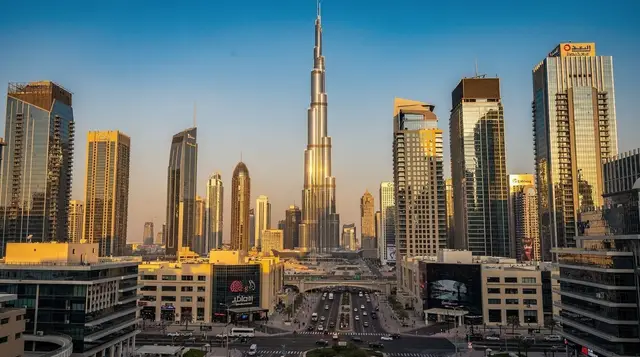
Yes, clearly, from the Downtown-facing side of the sky bridge — it’s one of the more recognizable elements of the “new Dubai” view.
Is the Dubai Frame accessible for wheelchair users?
Yes, elevators serve all public levels including the sky bridge, and the route is designed to be accessible throughout.
How does the Dubai Frame compare in height to the Burj Khalifa?
It’s far shorter — 150 meters versus the Burj Khalifa’s 828 meters — but its lower height doesn’t diminish the specific “old vs new” view it’s built around, since that experience is about contrast rather than altitude.
Do I need to book tickets in advance?
It’s less essential than for the Burj Khalifa given lower demand, but booking ahead still guarantees your preferred time and avoids any queue at the counter.
Is there parking at the Dubai Frame?
Yes, Zabeel Park has on-site parking, a reasonable option if you’re driving rather than taking a taxi or metro.
How much time should I set aside for the full visit?
45-60 minutes covers the exhibits, elevator, and sky bridge crossing comfortably without feeling rushed.
Is the Dubai Frame suitable for young children?
Yes, it’s a straightforward, short visit without the physical demands of some other attractions, though very young children may need reassurance on the glass-floor section.
Can I visit the Dubai Frame at night?
Yes, though the exterior lighting show and the illuminated Downtown skyline are the main draw after dark rather than long-distance daytime visibility, which fades once the sun sets.
Does the Dubai Frame get as crowded as the Burj Khalifa?
No, ticket volume and overall visitor numbers run noticeably lower, which is part of why the experience tends to feel calmer and less rushed even without paying a premium tier.
Is there a café or place to eat at the Dubai Frame?
There’s a small café-style refreshment area near the exit, though it’s not a full dining destination — most visitors eat before or after the visit elsewhere in Zabeel Park or back in Downtown.
Is the Dubai Frame worth it compared to the Burj Khalifa?
They’re not really substitutes — the Frame is a low-cost, contextual “old vs new” viewpoint, while the Burj Khalifa delivers sheer altitude and scale. Budget allowing, both are worth doing rather than picking one over the other.
Top experiences
Bookable activities with verified prices and instant confirmation on GetYourGuide.