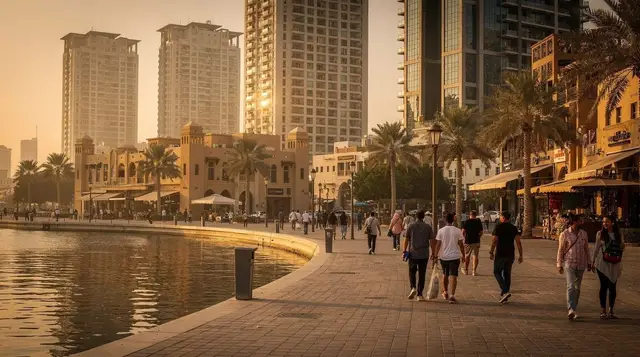
Dubai on a budget: what's free, cheap, and worth skipping
Dubai: city sightseeing HOHO bus tour + sunset & night tour
Can you actually visit Dubai on a budget?
Yes. A traveler using the metro, staying in Old Dubai or Deira, eating at local cafeterias, and leaning on free attractions like the Dubai Fountain and public beaches can realistically spend AED 300-500 (82-136 USD) per person per day including accommodation, versus AED 1,000+ (272+ USD) for the default Downtown-hotel-and-taxis version of the same trip.
The gap between the marketed trip and the affordable one
Dubai’s marketing sells a Downtown hotel, taxi rides between malls, and a Friday brunch, which is a real but expensive way to experience the city. A quieter, cheaper version exists in parallel — free beaches, a functional metro system, and neighborhoods where a meal costs less than a coffee at a five-star hotel — and most first-time visitors never see it because it isn’t what shows up in influencer content or hotel search results by default.
That’s not a criticism of Dubai specifically; most destinations have a marketed default and a cheaper parallel version, but the gap between the two is unusually wide here, because the city’s tourism economy is built so heavily around premium branding that even mid-range options get priced as if they were competing with the top tier. This guide covers what’s genuinely free, what’s cheap without feeling like a compromise, and the specific decisions (accommodation area, transport mode, meal choices) that determine which version of the trip you end up paying for.
| Budget daily cost | Around AED 300–500 per person, incl. accommodation |
| Default (Downtown) cost | AED 1,000+ per person per day |
| Getting around | Dubai Metro + Nol card, taxis only when needed |
| Where to stay | Old Dubai (Bur Dubai/Deira) over Downtown/Marina |
| Best free things | Dubai Fountain, public beaches, Al Seef, souks |
What’s genuinely free in Dubai
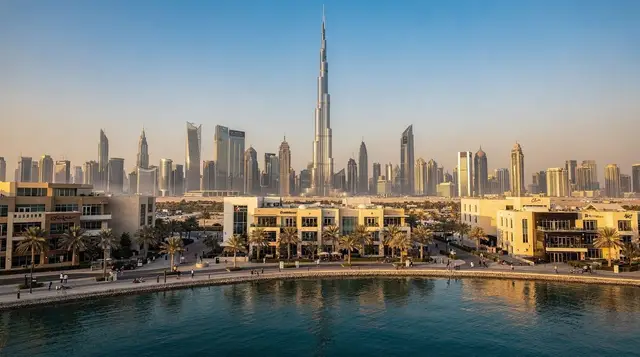
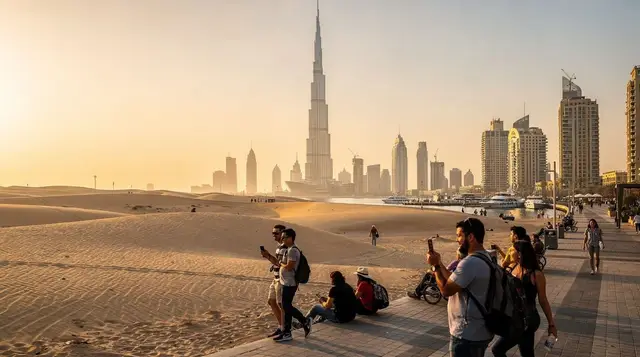
The Dubai Fountain shows at the Dubai Mall boardwalk run every 30 minutes from 6pm to 11pm and cost nothing to watch from ground level — arrive 10-15 minutes early for a decent spot along the railing, since it’s one of the most consistently worthwhile free things to do in the city and shouldn’t be treated as an afterthought before dinner. Dubai’s public beaches, including JBR and Kite Beach, are free to access with showers, changing facilities, and beach volleyball courts, and they’re a legitimate full-day activity rather than a consolation prize compared to a paid beach club.
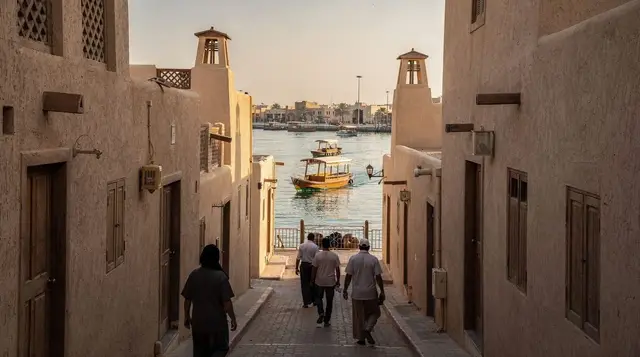
Al Seef, the heritage-style waterfront development along Dubai Creek, is free to walk and mixes restored old buildings with cafes and shops in a low-key setting that doesn’t require a ticket. Window-shopping the Gold Souk and Spice Souk costs nothing and is genuinely worth doing even without buying anything — the density of gold on display and the smell of the spice stalls are part of the experience, not just a prelude to a sale.
The Creek’s abra crossing, a small wooden ferry between Bur Dubai and Deira, costs about AED 1 (0.30 USD), close enough to free that it belongs on this list, and it’s a more interesting way to cross the water than any paid alternative.
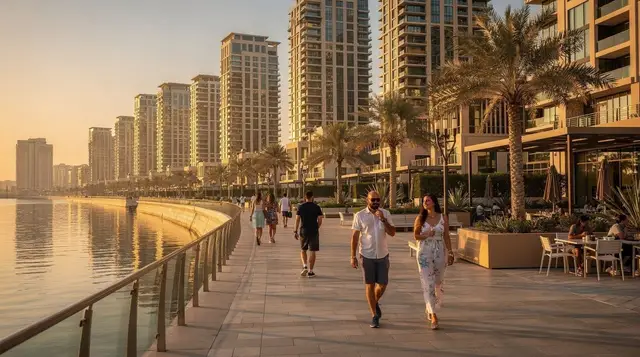
Marina Walk, the promenade along Dubai Marina, is free to walk end to end and is where a lot of the Marina’s skyline photography happens without paying for a cruise. Several mosques, including exterior viewing of Jumeirah Mosque, can be seen and photographed from outside at no cost; guided interior tours at Jumeirah Mosque carry a small fee, while the Sheikh Zayed Grand Mosque in Abu Dhabi, a common day trip, is free to enter and provides free abayas at the door for visitors whose clothing doesn’t meet the dress code.
Cheap eats that don’t feel like a downgrade
Dubai’s most authentic and cheapest food isn’t in the tourist zones — it’s in Deira, Bur Dubai, and Karama, where small Pakistani, Indian, Filipino, and Middle Eastern cafeterias serve full meals for AED 15-30 (4-8 USD). A plate of biryani, a shawarma wrap from a counter rather than a sit-down restaurant, or a Filipino carinderia-style meal all fall in this range and are frequently better than the equivalent dish at a mall food court charging three times as much. The cheap eats guide has specific spots by neighborhood.
Mall food courts are the default for most tourists simply because malls are where a lot of sightseeing naturally routes through, but they’re priced at a premium relative to standalone restaurants nearby — a meal that costs AED 20 (5 USD) two streets away from a mall can cost AED 45-60 (12-16 USD) inside it for a comparable dish. Grocery store bakeries and supermarket hot-food counters, found in most residential neighborhoods, are another underused cheap option for a quick lunch. Water is worth mentioning specifically: tap water is safe in Dubai, and carrying a refillable bottle rather than buying bottled water repeatedly adds up over a multi-day trip, particularly given how much water a visitor needs to drink in the heat.
Budget transport: metro over taxis
The Dubai Metro, run on a prepaid Nol card, is the backbone of budget travel in the city. A single ride typically costs AED 3-7.50 (0.80-2 USD) depending on zones crossed, and the Red and Green lines connect most major tourist areas — Downtown, the Marina, Deira, and the airport — directly or with one easy transfer. This is a real, practical option, not a theoretical one only useful for locals; tourist-facing stations are clearly signed in English and the trains are clean and reliable.
Taxis and Careem are more expensive but not unreasonable for occasional use — a typical cross-city ride runs AED 25-50 (7-14 USD) — and the sensible budget approach is to use the metro for the bulk of daily movement and reserve taxis for late-night trips, heavy luggage days, or routes the metro doesn’t cover well. Relying on taxis for every trip, which is the default many tourists fall into simply because it’s the path of least resistance from a hotel lobby, is one of the fastest ways to inflate a Dubai trip’s daily cost without noticing it happening.
A hop-on hop-off sightseeing bus pass is a reasonable middle option for a single day of heavy sightseeing across multiple spread-out stops, bundling transport and a loose city overview into one ticket rather than paying for individual taxi legs.
Budget accommodation: Old Dubai over Downtown
Old Dubai — the Bur Dubai and Deira districts around the Creek — has hotel prices roughly half those of comparable quality in Downtown or the Marina, and the trade-off is smaller than it sounds. These neighborhoods sit directly on the metro, have some of the cheapest and most interesting food in the city on their doorstep, and are a 20-30 minute ride from the skyline attractions rather than a different city entirely. For a budget trip, this is consistently the highest-leverage decision available — it affects the single largest line item in most travel budgets, and the location downside is modest given how well-connected these areas are by metro.
Within Old Dubai, prices vary further by specific street and hotel age, and it’s worth comparing several options rather than booking the first listing, since quality can vary more than in the more standardized Downtown hotel market. The guide to Dubai’s best areas to stay breaks down the tradeoffs between all the major neighborhoods in more detail, including which areas suit families versus solo budget travelers.
Money-saving passes and combo tickets
Combo tickets that bundle two or three paid attractions — commonly an observation deck with an aquarium, or a theme park with a water park — can save 10-20% over buying tickets separately, but only if you were already planning to visit both individually. Buying a combo purely to access the discount, when you’d only have visited one of the attractions on its own, is a net loss rather than a saving, and it’s a common trap in how these passes are marketed. Before buying any bundle, price out the individual components separately and compare, rather than trusting the advertised percentage saved.
An Old Dubai souks, street food, and abra crossing tour is a useful low-cost way to see several free and cheap highlights — the souks, the Creek, and a local food stop — in a guided couple of hours rather than navigating them independently on a first visit, and it’s priced closer to a single mid-range meal than to a typical paid attraction ticket.
Timing tricks: off-peak pricing
Summer, from June through September, is genuinely uncomfortable for outdoor activity with daytime highs of 40-48°C, but it’s also the cheapest time to visit by a wide margin — hotel rates drop substantially across every tier, and some tour operators discount to fill capacity during the slow months. This is a real budget angle if your trip is flexible: a traveler willing to structure the day around early morning and evening outdoor time, with midday spent in air-conditioned malls, museums, or the Dubai Aquarium, can visit for meaningfully less money than in peak season.
Shoulder months — October, November, and April — offer a partial version of the same discount with noticeably more tolerable weather, and are a reasonable compromise for budget travelers who don’t want the full summer heat trade-off.
Booking flights and hotels several weeks out rather than at the last minute, and avoiding the specific December-to-January peak window when Dubai is at its most expensive and most crowded, are the two other timing levers that make the biggest difference without requiring any sacrifice in what you actually do during the trip. Weekday-versus-weekend pricing is a smaller but real factor too: with the Saturday-Sunday weekend in effect since 2022, some hotels and weekend-oriented experiences price Thursday and Friday nights higher than the rest of the week, so a trip built around a Sunday-to-Thursday stay can shave a further margin off accommodation costs without changing anything else about the itinerary.
A realistic budget day, priced out
A concrete example makes the abstract savings easier to picture. A budget day might start with a metro ride from a Deira hotel to Union station for AED 4 (1 USD), followed by a morning at the Gold and Spice Souks and a walk across the Creek by abra for AED 1 (0.30 USD). Lunch at a Bur Dubai cafeteria runs AED 20 (5 USD). An afternoon at Al Seef and Dubai Creek costs nothing beyond the metro fare back, and the evening closes with a free Dubai Fountain show after a metro ride to Burj Khalifa/Dubai Mall station for another AED 5 (1.40 USD).
Total transport and activity cost for the day: under AED 35 (10 USD) before accommodation and dinner, against a Downtown-and-taxis version of a similar day that could easily run AED 150-250 (41-68 USD) in transport alone.
That gap compounds daily. Over a five-day trip, choosing the budget version of accommodation, transport, and food consistently rather than occasionally can be the difference between a total trip cost in the AED 1,500-2,500 (408-681 USD) per-person range and one closer to AED 5,000+ (1,362+ USD), without the budget version feeling like a lesser trip — it’s a different but equally legitimate way to see the same city.
| Line item | Budget version | Default (Downtown) version |
|---|---|---|
| Accommodation | Old Dubai, ~AED 150–300/night | Downtown/Marina, ~AED 400–800+/night |
| Transport | Metro + Nol card | Taxis/Careem daily |
| Meals | Local cafeterias, ~AED 15-30 | Hotel/mall restaurants, ~AED 60-120 |
| Sightseeing | Free (Fountain, beaches, souks) + 1-2 paid | Multiple paid attractions/day |
| Daily total | ~AED 300–500/person | AED 1,000+/person |
Free SIM and connectivity options
A local prepaid SIM or eSIM from du or Etisalat, available at the airport or any mall kiosk, typically costs AED 50-100 for a tourist data package and is worth the small cost over relying on patchy hotel wifi for navigation and translation apps. Many malls, metro stations, and cafes also offer free wifi, which covers a meaningful share of connectivity needs for a budget traveler comfortable topping up data only when actually out sightseeing rather than needing constant coverage.
Budget-friendly shopping and souvenirs
Souvenir shopping doesn’t have to mean mall prices — the souks in Deira and Bur Dubai sell spices, textiles, and small gold or silver pieces at prices that reward light haggling, generally 10-20% off an opening quote for a confident, polite negotiation. For branded goods at a discount, outlet shopping outside the main mall circuit offers genuine savings on end-of-season stock, worth a stop if a specific brand purchase is part of the trip rather than souvenir shopping generally.
Common budget mistakes
The most expensive mistake is defaulting to a Downtown or Marina hotel without pricing Old Dubai first — this single decision affects the trip’s budget more than almost anything else on this list. The second is relying on taxis for every trip instead of learning the metro system in the first hour of the trip, which takes very little effort given how clearly it’s signed. The third is eating every meal in tourist zones — malls, hotel restaurants, and attractions — rather than walking a few streets over, where prices frequently drop by half or more for comparable or better food.
A fourth mistake specific to Dubai is falling for “free” desert safari or city tour upsells pitched aggressively by unlicensed touts in tourist areas, which usually aren’t free and often deliver a worse experience than a transparently priced tour booked through a reputable platform — the desert safari scams guide covers this in detail. A fifth is assuming every paid attraction is essential; the free alternatives covered earlier in this guide (the Fountain, the beaches, Al Seef, the souks) deliver a genuine sense of the city without a ticket, and a trip that leans on them for two or three of its days alongside one or two paid highlights ends up cheaper without feeling thin.
Free photography spots worth the walk
A budget trip doesn’t mean a worse photo collection — Marina Walk, the Fountain promenade, and Al Seef all deliver strong, camera-ready views without a paid deck or cruise. The skyline photo spots guide and Instagram spots guide round up specific free vantage points across the city, useful for a budget traveler who still wants a strong visual record of the trip without paying for an observation deck or helicopter ride to get it.
Budget-friendly day trips and outdoor time
Not every low-cost day has to stay within city limits. Public buses connect Dubai to neighboring emirates at a fraction of the cost of a private tour, and destinations like Sharjah, with its own museums and heritage areas, or a self-driven trip toward the mountains near Hatta, can be done cheaply if you’re comfortable navigating without a guide. These aren’t the most convenient options — a guided day trip removes the friction of routes and schedules — but for a traveler prioritizing cost over convenience, the savings are substantial compared to a private car and driver for the same route.
Closer to the city, simply spending an unstructured half-day at Kite Beach or JBR, renting nothing beyond a beach towel already at your hotel, remains one of the best-value uses of a Dubai afternoon regardless of budget level. It’s easy to undervalue free options precisely because they don’t come with a booking confirmation or a price tag to compare against, but a beach afternoon here costs nothing and delivers a genuine, unhurried sense of the city that a paid attraction squeezed into a tight schedule often doesn’t.
Frequently asked questions about visiting Dubai on a budget
What’s free to do in Dubai?
The Dubai Fountain shows, public beaches at JBR and Kite Beach, the Al Seef heritage walk, window-shopping the Gold and Spice Souks, walking Marina Walk, and viewing several mosque exteriors are all free. The Creek’s abra crossing costs about AED 1 (0.30 USD).
Is public transport in Dubai cheap?
Yes — a Nol card metro ride runs AED 3-7.50 (0.80-2 USD) depending on distance, far cheaper than taxis, and covers most major tourist areas directly along the Red and Green lines.
Where is the cheapest area to stay in Dubai?
Old Dubai — Bur Dubai and Deira — with hotel prices roughly half of Downtown or the Marina for comparable quality, plus easy metro access and cheap food nearby.
What’s the cheapest time of year to visit Dubai?
June through September, when extreme heat pushes prices down significantly as a low-season effect. It’s a genuine tradeoff between cost and comfortable outdoor conditions.
What are common budget mistakes tourists make in Dubai?
Defaulting to taxis over the metro, choosing Downtown or Marina hotels without comparing Old Dubai prices, eating every meal in tourist zones, and buying combo passes for attractions you weren’t already planning to visit.
Are there money-saving passes in Dubai worth buying?
Combo tickets bundling two or three attractions can save 10-20% if you were already planning to visit all of them — they’re not worth buying just to access a discount on something extra.
Can you eat cheaply in Dubai?
Yes — cafeterias in Deira, Bur Dubai, and Karama serve full meals for AED 15-30 (4-8 USD), a fraction of mall food court or hotel restaurant prices.
Is it cheaper to visit Dubai independently or with a package tour?
Independent travel is usually cheaper for budget-focused visitors, since packages often default to mid-range hotels and private transport. Booking specific attractions individually and using the metro gives more control over spending.
Do I need a local SIM card for a budget trip?
It helps but isn’t essential — a prepaid SIM or eSIM runs AED 50-100, and free wifi at malls, metro stations, and cafes covers a meaningful share of connectivity needs without it.
Is haggling normal in Dubai’s souks?
Yes, particularly for gold, textiles, and souvenirs — a polite opening counter-offer of 10-20% below the quoted price is normal and expected in the Gold and Spice Souks.
Top experiences
Bookable activities with verified prices and instant confirmation on GetYourGuide.