Dubai souks guide: Gold, Spice, Textile, and Perfume markets compared
Dubai: old town, souks, street food, guided tour & abra ride
Duration: 3-4 hours
Which Dubai souk should I visit if I only have time for one?
The Gold and Spice Souks in Deira, a short walk apart on the Creek's north bank, together give the fullest traditional-souk experience — working markets with real bargaining, not a staged tourist recreation. If you only want a market-style shopping stop without the trip to Deira, Souk Madinat Jumeirah offers a comfortable, air-conditioned-adjacent alternative styled after a traditional souk, though it's a modern retail development rather than a historic market.
The souks, in one paragraph
Dubai’s souks split into two genuinely different categories: the historic, working markets clustered in Deira — Gold, Spice, Textile, and Perfume — where prices are negotiable and the goods are the real point, and the newer, purpose-built “souk-style” retail developments like Souk Madinat Jumeirah, which borrow the aesthetic (covered lanes, abra canals, lantern lighting) without the trading culture or fixed pricing that defines a genuine souk. Both are worth visiting for different reasons, but conflating them leads to mismatched expectations — showing up to Madinat expecting to haggle, or showing up to Deira expecting mall-standard comfort and fixed prices, both miss what each place actually is.
| Where | Deira (Gold, Spice, Perfume), Bur Dubai (Textile) |
| Bargaining | 20-40% off first price, expected at Deira souks |
| Time needed | 1-2 hours for Gold + Spice, half-day for a full circuit |
| Getting there | Metro to Al Ras/Baniyas Square (Green Line) or abra crossing |
| Best time | Late afternoon (4-5pm), avoids peak and midday heat |
The Gold Souk
Deira’s Gold Souk is the best known and busiest of the traditional markets — a covered arcade of several hundred independent jewelers, their windows packed floor to ceiling with gold jewelry priced by weight against the day’s international gold rate plus a workmanship charge that varies (and is negotiable) by shop. It’s a serious commitment if you’re actually buying: comparing three or four shops before committing is standard practice, not rude. The full Gold Souk guide covers bargaining tactics, how to verify hallmarking, and realistic pricing in depth.
The Spice Souk
A short walk from the Gold Souk, the Spice Souk is smaller, more casual, and easier to browse without committing to a purchase — sacks of saffron, dried limes, frankincense resin, and dates line narrow shopfronts, and vendors expect some good-natured haggling over quantity and price rather than treating it as a high-stakes negotiation. It’s also one of the most photogenic stops in Old Dubai, with color and texture that photograph well even for casual visitors not planning to buy anything. The Spice Souk guide covers what’s genuinely worth buying versus what’s aimed purely at tourists.
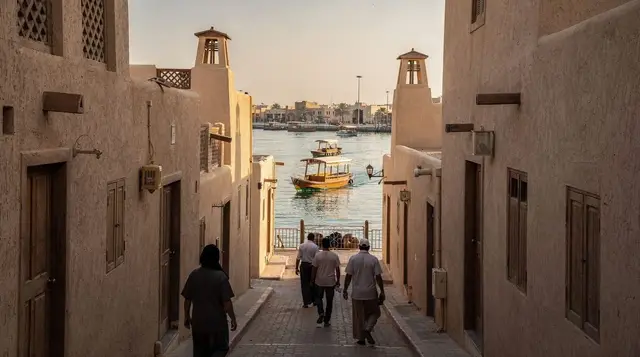
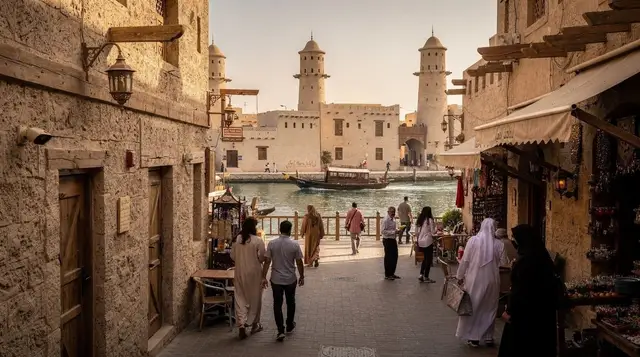
This old town, souks, and street food tour with an abra ride covers both the Gold and Spice Souks alongside a Creek crossing, useful if you’d rather have a guide navigate the layout and point out which stalls are worth stopping at.
The Textile Souk
On the Bur Dubai side of the Creek (rather than Deira), the Textile Souk is a covered market of fabric shops selling everything from cheap synthetic pashminas aimed squarely at tourists to genuinely good silk, cotton, and tailoring-grade cloth for buyers who know what to look for. It’s also home to several tailors who can make a shirt or simple garment within a day or two, a service more visitors overlook than take advantage of. Prices are negotiable here too, though the range between “tourist price” and “fair price” tends to be narrower than at the Gold Souk since the goods themselves are lower value individually.
The Perfume Souk
Less visited than the Gold or Spice Souks but worth knowing about, Deira’s Perfume Souk sells oud (agarwood) oil and traditional Arabic perfumes — concentrated, alcohol-free scents applied directly to skin rather than sprayed, sold by small vials rather than large bottles. Genuine oud oil is expensive (real agarwood is one of the costlier natural materials in the world), so very cheap “oud” here is almost certainly a synthetic blend rather than the genuine article — a useful thing to know before assuming a bargain price reflects the real product.
Shops here will usually let you smell and try scents before buying, and a knowledgeable vendor will be upfront about which products are genuine oud versus synthetic alternatives at a lower price point.
Souk Madinat Jumeirah: a different category entirely
Souk Madinat Jumeirah, inside the Madinat Jumeirah resort near Jumeirah and Burj Al Arab, is a modern, air-conditioned-adjacent retail and dining complex styled after a traditional souk — covered wooden-beamed lanes, waterways with private abra rides, boutique shops, and restaurants with waterfront terraces. It’s genuinely pleasant, particularly in summer heat, but it’s fixed-price retail rather than a bargaining market, and prices generally run higher than Deira for comparable goods, reflecting the resort setting rather than the products themselves. Visit it for the atmosphere and dining, not expecting a Gold-Souk-style trading experience.
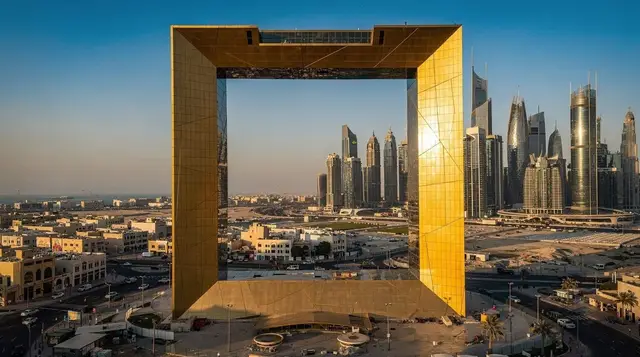
This half-day tour covering Dubai Frame tickets, the Creek, and the souks is a structured way to combine a souks stop with other Old Dubai landmarks in a single guided half-day if you’re short on time to piece the route together yourself.
Global Village: a seasonal souk-adjacent option
Worth a brief mention: Global Village, open seasonally from roughly October to April, includes country-themed pavilions with market-style shopping across dozens of nations’ goods, distinct from the historic Deira souks but sharing some of the same bargaining culture depending on the specific pavilion and vendor. It’s covered fully in its own guide rather than here, since it’s a seasonal entertainment complex rather than a traditional souk, but it’s worth knowing about if your trip falls within its operating months and you want more market-browsing beyond Deira.
A brief history of the Deira souks
Deira’s souks predate Dubai’s oil-era transformation by decades, growing out of the city’s role as a trading port for pearls, gold, and goods moving between the Indian subcontinent, Persia, and East Africa. The Gold Souk in particular built its reputation in the mid-20th century as gold trading through Dubai grew tax-advantaged relative to neighboring markets, drawing buyers from across the region specifically for competitive pricing — a reputation the souk still trades on today, even as Dubai’s broader economy has diversified far beyond gold and pearling.
Understanding this history is part of what separates the Gold Souk from a manufactured tourist market: it exists because of a genuine, still-functioning trade relationship, not because it was built to give visitors something old-looking to photograph.
Fake and counterfeit goods: what to actually expect
Some stalls near the souks — more commonly in side alleys and informal areas around Deira than inside the Gold Souk’s regulated arcade itself — sell counterfeit designer bags, watches, and sunglasses, sometimes openly and sometimes from a back room after an initial approach. Buying these carries real risk beyond ethics: quality is inconsistent, there’s no recourse if a fake watch stops working within a week, and customs authorities in many home countries (including the US, UK, and EU) can legally seize counterfeit branded goods at the border, occasionally with fines attached, regardless of how cheaply or convincingly they were sold.
If a “genuine” designer item is being offered at a fraction of retail price, it is fake, without exception — no legitimate seller in the actual Gold or Textile Souk sells real designer goods at souk prices, and no obscure “backroom stock” story changes that. Sticking to the visible, established shops for jewelry, textiles, and spices avoids this issue almost entirely, since counterfeit goods are a distinct, separate trade from the legitimate souk business happening in the main arcades.
Bargaining basics that apply across the traditional souks
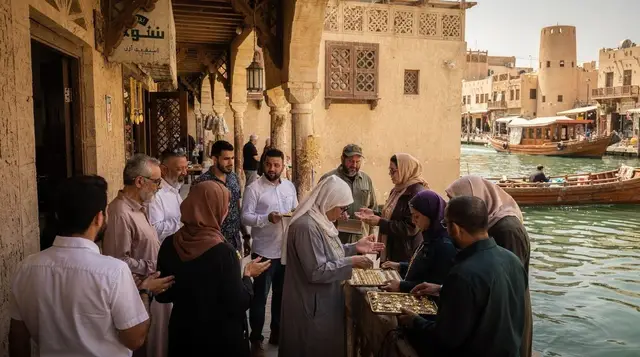
Expect to pay 20-40% less than the first quoted price at Gold, Spice, Textile, and Perfume Souks after a bit of back-and-forth — vendors build in room to negotiate as standard practice, not as a special favor. Starting your counteroffer around half the asking price and meeting somewhere in the middle is normal and not considered rude. Walking away (even a few steps) is a legitimate, commonly used tactic that often produces a better offer, since vendors would rather close a sale at a reduced price than lose it entirely. None of this applies at Souk Madinat Jumeirah or inside mall-based retail, where prices are fixed the same way they would be anywhere else in the world.
Timing and crowd patterns
The Deira souks are busiest in the late morning through early afternoon when tour groups and cruise-ship visitors tend to pass through, and again in the evening (after 6pm) when both tourists and Dubai residents shop together. Early morning (before 10am) is quiet, sometimes too quiet — some stalls haven’t opened yet. A late-afternoon arrival (around 4-5pm), after the day’s heat has eased and before the evening peak, tends to hit a good balance of open shops and manageable crowds. See the souks and shopping guide for how the souks fit into a broader Dubai shopping trip alongside malls and outlets.
Getting between the souks
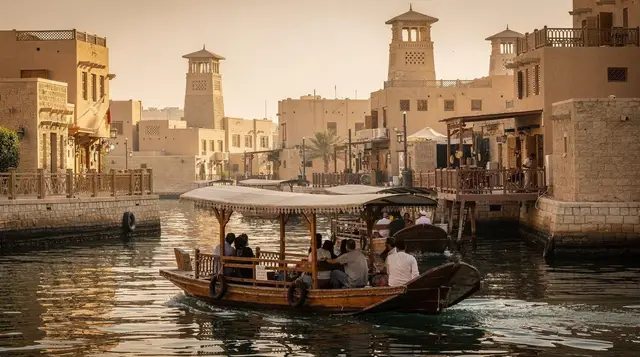
The Gold, Spice, and Perfume Souks in Deira are all within a 10-15 minute walk of each other, making a single visit easy to structure without transport between stops. Getting to the Textile Souk on the Bur Dubai side means either crossing by abra (the atmospheric, cheap option at 1 AED) or taking a taxi around via one of the Creek’s bridges (the faster but less interesting option). Most visitors doing a full souks circuit build the abra crossing into the route deliberately rather than treating it as a necessary inconvenience — see the Old Dubai walking guide for a full route combining all of it.
What to skip if you’re short on time
If you only have an hour, the Gold and Spice Souks together (they’re adjacent) cover the strongest, most distinctive version of the traditional souk experience — the Textile and Perfume Souks are worthwhile additions on a longer visit but skippable without major regret on a tight schedule. Souk Madinat Jumeirah is worth visiting on its own terms (as a resort dining and shopping stop) rather than as a substitute for the Deira souks if authenticity is what you’re after.
Combining a souks visit with a Creek dhow cruise
A Creek-route dhow dinner cruise passes directly alongside the Deira souks and the Old Dubai waterfront after dark, which makes it a natural pairing with a daytime souks visit rather than a repetitive one — the lit-up evening view of the same buildings you walked past hours earlier tends to land differently once the sun’s down. See the dhow cruise guide and the Creek versus Marina cruise comparison for how to structure that pairing into a single day.
Visiting the souks with kids
The Spice Souk in particular tends to go over well with children — the smells, colors, and stacked sacks of dried goods are visually engaging even for kids too young to care about shopping, and vendors are generally friendly toward families browsing without necessarily buying. The Gold Souk is less naturally kid-focused (a lot of window displays of jewelry, less hands-on interest for most children), and the crowded, narrow arcade layout means keeping a close eye on younger kids in busier periods. The Textile Souk’s tailoring stalls occasionally let curious kids see fabric-cutting and sewing in progress, which can hold attention briefly.
None of the souks have dedicated family facilities (changing rooms, play areas), so plan around a mall stop separately if young children need a proper break.
Honest take: are the souks a tourist trap?
Partially, and it depends which one. The Gold Souk remains a genuine trading market used by residents and expatriates buying real jewelry at real, regulated prices — tourism hasn’t hollowed out its function, even though tourists now make up a large share of foot traffic. The Spice and Textile Souks lean more tourist-facing than they once did, with some stalls stocking generic souvenirs alongside genuine spices and fabric, but enough of the real trade remains that it’s not purely staged. Souk Madinat Jumeirah, by contrast, was built for tourism and dining from the start and shouldn’t be judged by the same “authentic market” standard — it succeeds as a pleasant retail environment, which is what it’s actually trying to be.
Beyond Dubai: Sharjah’s Blue Souk
Roughly 30-40 minutes from central Dubai, Sharjah’s Central Souk — known locally as the Blue Souk for its blue-tiled facade — is a larger, more formally organized two-story market specializing heavily in Persian carpets, gold, and antiques, distinct enough from Deira’s souks to be worth a separate trip rather than a substitute. It’s more architecturally striking as a single building than any individual Deira souk, though it trades some of Deira’s organic, street-level atmosphere for a more contained, mall-like structure. The Sharjah culture guide and the Sharjah day trip guide cover it alongside Sharjah’s museum district for visitors extending beyond Dubai proper.
Practical shopping tips that apply everywhere in the souks
Bring small denominations of cash (AED 5, 10, 20 notes) since vendors at smaller stalls sometimes struggle to break large bills, and carry a tote bag or similar, since not every stall provides one and loose spice or textile purchases are awkward to carry bare-handed. If you’re buying anything you intend to declare or that has a meaningful value (gold especially), ask for a proper receipt itemizing weight and price — legitimate shops provide this without hesitation, and it matters both for any warranty claim and for customs declarations back home.
The bottom line
Treat “the souks” as at least three different experiences rather than one: the historic, negotiable Deira markets (Gold, Spice, Textile, Perfume), the modern resort-styled Souk Madinat Jumeirah, and the seasonal Global Village market pavilions. Each rewards a different kind of visit and a different set of expectations, and knowing which one you’re heading to before you arrive is the single best way to avoid disappointment either from an overly touristy Deira stop or an overly high price expectation at Madinat.
Weather-based timing across the year
Souk visits are largely an outdoor-adjacent, covered-but-not-air-conditioned experience, so the comfortable window shifts across the year: November through March allows a comfortable visit at almost any hour, while June through September makes the late-afternoon or evening timing described above less optional and more essential, since midday heat in the covered but non-air-conditioned arcades can be genuinely uncomfortable. See the weather month-by-month guide for the fuller seasonal pattern behind this.
The souks compared
| Gold Souk | Spice Souk | Textile Souk | Perfume Souk | Souk Madinat | |
|---|---|---|---|---|---|
| Location | Deira | Deira | Bur Dubai | Deira | Jumeirah |
| Pricing | Weight + negotiable making charge | Negotiable | Negotiable, narrower range | Negotiable | Fixed |
| Authenticity | Genuine working market | Genuine, some tourist stock | Genuine, tailoring available | Genuine, watch for fake oud | Modern resort styling |
| Best for | Serious jewelry buyers | Photos, dates, spices | Fabric, quick tailoring | Oud oil, Arabic perfume | Atmosphere, dining |
Frequently asked questions about Dubai’s souks
Which Dubai souk should I visit if I only have time for one?
The Gold and Spice Souks in Deira, a short walk apart, together give the fullest traditional-souk experience.
What’s the difference between the Gold Souk and Souk Madinat Jumeirah?
The Gold Souk is a genuine, negotiable trading market; Souk Madinat Jumeirah is a modern, fixed-price retail complex styled to look traditional.
Are Dubai’s souks open every day?
Most operate daily with a split morning-evening schedule, though hours vary by shop.
Do I need cash, or do vendors take cards?
Larger shops take cards; smaller stalls, especially in the Spice and Perfume Souks, often prefer cash.
Is bargaining expected everywhere?
Yes at the traditional Deira souks; no at Souk Madinat Jumeirah, where prices are fixed.
How do I get to the Deira souks?
By metro to Al Ras or Baniyas Square (Green Line), or by taxi, 15-30 minutes from most areas of the city.
Is it safe to buy gold at the Gold Souk?
Yes — it operates under municipal hallmarking and price-transparency rules, making it a reliably regulated place to buy.
Which souk is best for photography?
The Spice Souk, for its color, texture, and stacked sacks of dried goods — it photographs well even for visitors not planning to buy anything, more so than the Gold Souk’s window-display-heavy arcade.
Can I combine a souks visit with other Old Dubai sights in one outing?
Yes — the Gold and Spice Souks sit within a 10-15 minute walk of the Al Fahidi historical district and an abra crossing, making a combined half-day of souks, heritage architecture, and a Creek crossing straightforward without a taxi between stops.
Top experiences
Bookable activities with verified prices and instant confirmation on GetYourGuide.