Sharjah culture guide: museums, Heart of Sharjah, and Islamic art
From Dubai: Sharjah city tour
Why is Sharjah called the UAE's cultural capital?
UNESCO named Sharjah the Arab Capital of Culture in 1998, recognizing a genuine, decades-long investment in museums, heritage preservation, and the arts unmatched elsewhere in the UAE. Its density of museums (including the standout Sharjah Museum of Islamic Civilization), the restored Heart of Sharjah heritage district, and the internationally respected Sharjah Art Foundation give it a cultural depth that Dubai, focused more on scale and spectacle, doesn't try to replicate.
Why Sharjah earned the “cultural capital” title
UNESCO designated Sharjah the Arab Capital of Culture in 1998, and unlike some honorary titles, this one reflects a genuine, sustained civic investment rather than a one-off award. Sharjah’s ruler, Sheikh Sultan bin Muhammad Al Qasimi, has personally driven decades of museum-building, heritage restoration, and arts funding, giving Sharjah a museum density and curatorial seriousness that no other emirate — including Dubai — has matched. Where Dubai’s identity leans on scale, speed, and spectacle, Sharjah’s rests on depth: fewer headline attractions, but a genuinely deeper bench of museums and heritage sites than its size would suggest.
| Where | Sharjah city, about 25-40 minutes from central Dubai |
| Cost | Around AED 5-15 per museum, or a combined museum pass |
| Time needed | 4-6 hours for a focused cultural day |
| Getting there | Taxi, rental car, or a guided day tour from Dubai |
| Best time | November-March, mornings before midday heat |
The Sharjah Museum of Islamic Civilization
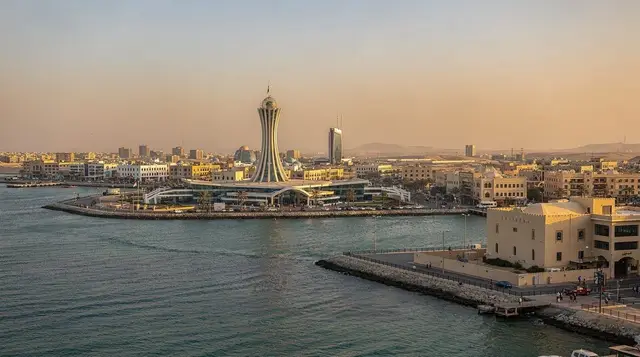
The standout stop for most cultural visitors is the Sharjah Museum of Islamic Civilization, housed in a striking domed building on the Corniche waterfront. Its collection spans Islamic art, science, and everyday life across centuries and geographies — illuminated manuscripts and Qur’ans, intricate ceramics and metalwork, historic astronomical and navigational instruments demonstrating the Islamic world’s major scientific contributions, and galleries dedicated to Islamic faith and practice.
The quality and depth of the collection genuinely rivals comparable Islamic art museums in cities with far larger tourism profiles, and it does so with a fraction of the crowds — a rare case in the UAE of a first-rate cultural attraction that isn’t also a queue-heavy tourist bottleneck.
Why the scientific instruments gallery matters
A section of the museum most visitors don’t expect covers the Islamic world’s historic contributions to astronomy, navigation, and mathematics — astrolabes, celestial globes, and early scientific instruments that predate and in some cases influenced later European scientific development. It’s a genuinely educational corrective to narratives that skip over this period of scientific history, and it rewards visitors willing to slow down in a gallery that isn’t the museum’s most visually flashy but is arguably its most substantively important.
Heart of Sharjah: the heritage district
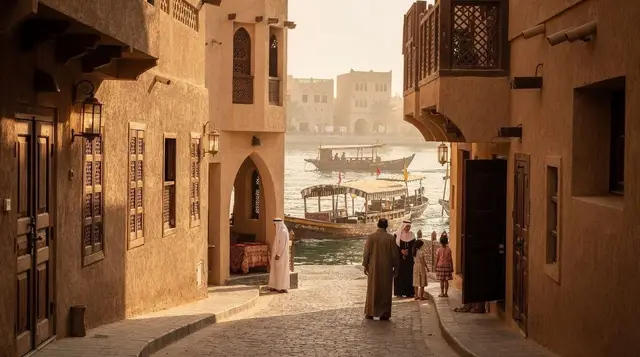
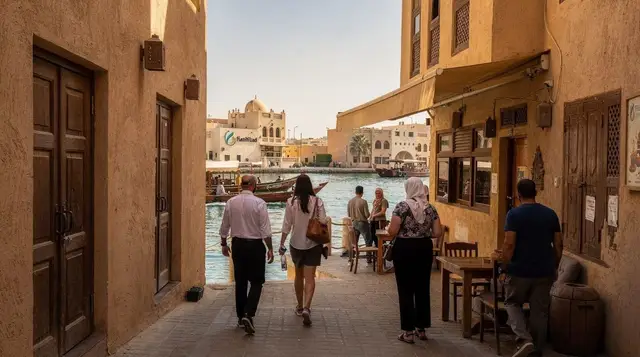
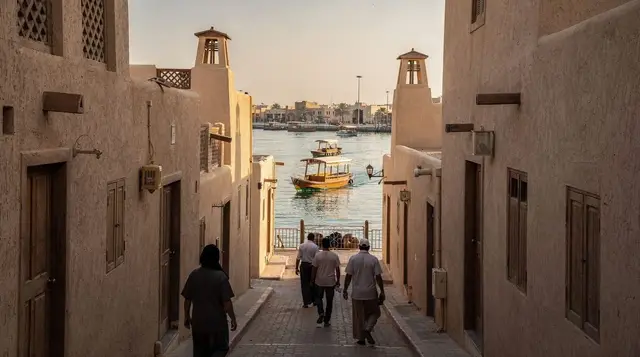
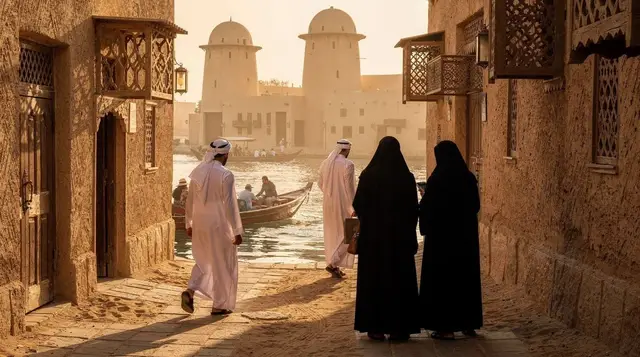
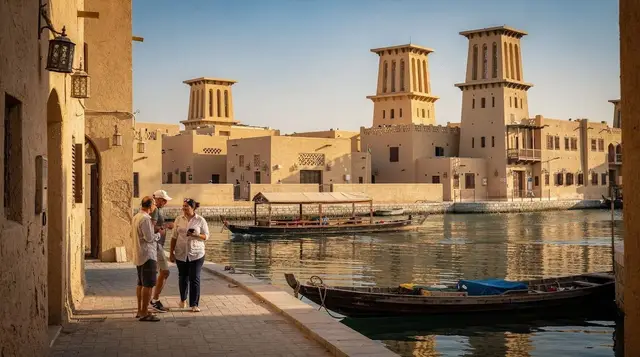
Heart of Sharjah is a large, ongoing restoration project transforming the emirate’s old town — traditional coral-and-gypsum buildings, wind-tower houses, and historic courtyards along the Sharjah Creek waterfront — into a preserved, walkable heritage district. It’s conceptually similar to Dubai’s Al Fahidi but considerably larger in ambition and scope, reflecting Sharjah’s longer-term, more heavily funded approach to heritage preservation as a civic priority rather than a boutique neighborhood project. The district includes several restored historic houses now functioning as small museums, plus cafés and craft shops within genuine period buildings.
Bait Al Naboodah and the historic houses
Within Heart of Sharjah, Bait Al Naboodah — a restored 19th-century merchant’s courtyard house — stands out as one of the best-preserved examples of traditional Gulf domestic architecture open to visitors anywhere in the region, with rooms arranged around a central courtyard reflecting the climate-adapted design principles common across the pre-oil Gulf. Several other restored houses nearby function as smaller specialist museums (covering topics like calligraphy and traditional documents), rewarding visitors who have time to explore beyond the headline sites.
The Sharjah Art Foundation and contemporary art
Beyond its historical museums, Sharjah punches well above its size in contemporary art, anchored by the Sharjah Art Foundation, which operates gallery spaces across the Arts Area (Al Mureijah) using a cluster of restored historic buildings repurposed for contemporary exhibitions. The foundation organizes the Sharjah Biennial, one of the most internationally respected contemporary art biennials in the Middle East, drawing serious international curators, artists, and critics on a scale disproportionate to Sharjah’s size as a city. Even outside Biennial years, the Arts Area hosts rotating exhibitions worth checking before a visit.
The Blue Souk and everyday commerce
The Blue Souk (Central Souk), distinguished by its blue-tiled facade and twin wind-tower-topped buildings, is Sharjah’s main traditional shopping destination — less overtly tourist-oriented than Dubai’s Gold and Spice Souks, with a genuine mix of gold, textiles, antiques, and carpets serving both residents and visitors. It’s a reasonable stop to pair with the museums given its central, walkable location along the same general corridor.
The dry-emirate rule, explained honestly
Sharjah is the only emirate in the UAE with a total alcohol ban, applying even inside hotels — a genuine difference from Dubai and Abu Dhabi’s licensed-venue model, and one visitors should plan around rather than be caught off guard by. This isn’t a minor technicality: don’t bring alcohol into Sharjah, and don’t expect it served anywhere, including at hotel restaurants that might serve it elsewhere in the country. The rule reflects Sharjah’s more consistently conservative civic identity relative to its neighbors, a stance leadership has maintained deliberately rather than incidentally.
Dress code and public conduct
Modest dress — shoulders and knees covered — is more consistently and visibly expected across Sharjah’s public spaces than in Dubai’s more internationally adjusted tourist areas, and this expectation is enforced somewhat more actively in practice, particularly around mosques, museums, and government buildings. The Emirati culture and etiquette guide covers broader dress and conduct norms that apply with slightly more consistency in Sharjah specifically than the Dubai baseline.
Al Noor Mosque and Al Noor Island
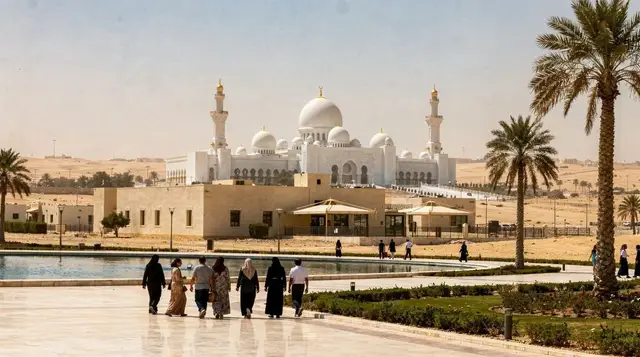
Al Noor Mosque, styled after Ottoman architecture on the Khalid Lagoon waterfront, welcomes non-Muslim visitors during designated hours with modest dress required (including a provided abaya and headscarf for women where needed), offering a lower-key, less crowded alternative to Abu Dhabi’s Sheikh Zayed Mosque for visitors wanting an accessible mosque visit. Nearby Al Noor Island adds a butterfly house and an Arabic calligraphy museum, a small but genuinely distinctive combination worth an hour if time allows.
Comparing Sharjah’s culture scene to Dubai’s
The honest comparison isn’t which is “better” but which serves a different purpose: Dubai’s cultural offerings — Al Fahidi, the Coffee Museum, Al Shindagha — are genuinely worthwhile but sit within a broader city built primarily around commerce, tourism spectacle, and modern skyline landmarks. Sharjah’s cultural infrastructure is the emirate’s primary identity rather than one thread among many, which shows in the depth and seriousness of its museum collections specifically, even as Dubai remains the far larger and more visited destination overall.
A guided way to see Sharjah’s highlights
This Sharjah city tour from Dubai covers the main museums, Blue Souk, and Corniche with transport and a guide, a practical option for visitors who’d rather not navigate the logistics of comparing several museums independently. For a version combining Sharjah with the neighboring emirate on the same trip, this half-day Sharjah and Ajman sightseeing tour covers both without requiring a full day for either.
Getting around within Sharjah
Sharjah’s hop-on hop-off bus tour is a practical, low-effort way to move between the museum cluster, Heart of Sharjah, the Corniche, and Al Noor Island without arranging taxis between each stop, particularly useful given how spread the sites are across the central city compared with Dubai’s more concentrated Al Fahidi.
Museum passes and combined tickets
Sharjah offers a combined museum pass covering entry to several of its major museums (typically including the Museum of Islamic Civilization and a handful of others) at a lower combined cost than paying separately, worth checking if you plan to visit three or more sites in a single trip. Individual entry fees are modest by international museum standards, generally in the AED 5-15 range per site.
Timing a cultural day in Sharjah
A focused cultural day covering the Museum of Islamic Civilization, a walk through Heart of Sharjah, and the Blue Souk realistically takes 4-6 hours including travel time between sites, making it comfortably achievable as a day trip from Dubai without an overnight stay. Adding the Sharjah Art Foundation galleries or Al Noor Island extends a visit into a fuller day. The Dubai to Sharjah day trip guide covers logistics, traffic timing, and getting there in more depth than fits here.
Visiting with kids
Al Noor Island’s butterfly house and the more visual, artifact-rich sections of the Museum of Islamic Civilization tend to hold children’s attention reasonably well, though Sharjah’s cultural offerings overall lean more toward adults and older children than toward young-kid-focused entertainment, unlike Dubai’s dedicated theme parks. It works best as part of a broader family trip rather than the sole activity for a day with very young children.
Accessibility across Sharjah’s cultural sites
The Museum of Islamic Civilization and Al Noor Mosque are modern, purpose-built or well-adapted spaces with generally good accessibility. Heart of Sharjah’s restored historic houses, similar to Al Fahidi in Dubai, retain period features — raised thresholds, narrower doorways — less suited to wheelchair users, consistent with genuine historic construction rather than new-build standards.
Photography etiquette
Photography is generally permitted throughout the museums and Heart of Sharjah’s public areas, though some specific manuscript or artifact displays at the Museum of Islamic Civilization may restrict flash photography to protect fragile items — signage at each gallery makes this clear. Inside Al Noor Mosque, photography is welcomed in most areas but always ask before photographing worshippers directly.
When to visit
November through March offers the most comfortable conditions for walking between Heart of Sharjah’s outdoor sites and the Corniche, avoiding the summer heat that makes extended outdoor walking between museums genuinely uncomfortable from June through September. Museums themselves are air-conditioned and comfortable year-round, so a summer visit remains workable if you minimize outdoor walking time between stops.
Sharjah’s literary and book culture
Beyond visual art and museums, Sharjah has invested heavily in literary culture, hosting the Sharjah International Book Fair, one of the largest publishing and book events in the Arab world, drawing major international publishers and authors annually. This civic emphasis on reading and publishing is unusual for a city of Sharjah’s size and reflects the same top-down cultural investment that built its museum network — a deliberate positioning of Sharjah as a knowledge and literary hub within the wider Gulf, distinct from Dubai’s more commerce-and-tourism-driven civic identity.
General visitor experience and safety
Sharjah is very safe by any practical measure, consistent with the UAE generally, and visitors typically report a calmer, less commercially aggressive atmosphere than parts of Dubai’s more tourist-dense areas — souk vendors and museum staff tend toward a lower-pressure, more matter-of-fact interaction style than the more overtly sales-driven approach found in some of Dubai’s shopping districts. This more understated visitor experience is consistent with Sharjah’s broader identity as a place built around civic and cultural investment rather than tourism spectacle.
Comparing Sharjah’s Islamic art to Abu Dhabi’s Louvre
Visitors building a broader UAE cultural trip often compare Sharjah’s Museum of Islamic Civilization to the Louvre Abu Dhabi, and the comparison is genuinely instructive: Louvre Abu Dhabi takes a global, cross-civilization curatorial approach under a striking modern dome, while Sharjah’s museum focuses specifically and more deeply on Islamic art, science, and material culture. Neither replaces the other, and visitors with a serious interest in Islamic art specifically will find Sharjah’s collection the more focused and rewarding of the two.
Extending a Sharjah trip toward Abu Dhabi’s mosque
Visitors who enjoy Al Noor Mosque often go on to visit the considerably larger Sheikh Zayed Grand Mosque in Abu Dhabi, roughly 90 minutes further south. A Sharjah-focused day and a separate Abu Dhabi mosque day trip work well as two distinct outings on a longer UAE itinerary rather than combined into a single exhausting day, given the driving distance between the two.
Ramadan in Sharjah specifically
Sharjah observes Ramadan with an even more consistently conservative public atmosphere than Dubai, given the emirate’s baseline cultural identity outside the holy month too — see the Dubai Ramadan guide for how the month reshapes daily rhythm, dress expectations, and dining across the wider UAE, with Sharjah generally sitting at the stricter end of that spectrum.
Combining Sharjah with the northern emirates
Sharjah’s location makes it a natural gateway toward the northern emirates further along the coast, including Ras Al Khaimah for visitors extending a cultural day trip into a multi-emirate loop. Doing both in a single day is ambitious given the driving distances involved, but a two- or three-day loop covering Sharjah’s culture and Ras Al Khaimah’s mountains and beaches is a realistic way to see a fuller cross-section of the northern UAE beyond Dubai itself.
What surprises first-time visitors most
Visitors arriving expecting a quieter, smaller-scale version of Dubai are often surprised by how genuinely substantial Sharjah’s museum collections are — the Museum of Islamic Civilization in particular routinely exceeds expectations set by its lower profile relative to Dubai’s headline attractions. The flip side of that surprise is the total alcohol ban catching visitors off guard who assumed UAE-wide rules mirrored Dubai’s licensed-venue model; both surprises are avoidable with a bit of advance reading, which is largely the point of this guide.
A realistic budget for a cultural day
A full cultural day in Sharjah — museum entries, lunch, and transport from Dubai — typically runs modestly by Dubai standards, often well under AED 250 (68 USD) per person excluding a guided tour, reflecting both the emirate’s lower general price level and the low individual museum entry fees. Adding a guided tour raises the cost but removes the need to plan logistics independently, a reasonable trade-off for visitors short on time or unfamiliar with navigating Sharjah’s central district on their own.
A final word on pacing
The temptation on a first Sharjah visit is to try to cram every museum into a single afternoon, which tends to produce museum fatigue rather than genuine engagement with any single collection. A more satisfying approach is picking two or three priorities — the Museum of Islamic Civilization plus Heart of Sharjah is a strong combination for most visitors — and treating anything else as a bonus if time allows, rather than trying to complete an exhaustive checklist in one rushed visit.
Getting to Sharjah independently
If you’d rather skip a guided tour, Sharjah is a straightforward independent trip from Dubai. A taxi from Downtown Dubai or Dubai Marina typically costs AED 60-100 one-way depending on traffic and pickup point, taking 25-45 minutes outside peak hours. A rental car gives the most flexibility for hopping between the Museum of Islamic Civilization, Heart of Sharjah, and Al Noor Island without waiting for taxis at each stop — parking near the Corniche and museum cluster is generally easy and inexpensive. There’s no direct metro line into Sharjah from Dubai, so public bus (the E303 and similar intercity routes from Dubai’s Gold Souk and Union bus stations) is the budget option, though it takes considerably longer than a taxi and drops you further from the museum cluster than most visitors would like.
Eating well in a dry emirate
Sharjah’s food scene is genuinely good despite — or arguably partly because of — the total alcohol ban: the emphasis sits squarely on the food itself rather than a bar scene. The area around the Blue Souk and Al Majaz Waterfront has a solid concentration of Emirati, Lebanese, and South Asian restaurants serving the city’s large expatriate community, generally at noticeably lower prices than comparable Dubai restaurants. Al Majaz Waterfront itself, a landscaped park and dining strip along Khalid Lagoon a short walk from Al Noor Island, is a pleasant place to end a museum day with dinner and the evening fountain and light shows running most nights. Reservations are rarely needed outside major events, and the overall pace is calmer than Dubai’s more tourist-dense dining strips.
Sharjah’s museum cluster at a glance
| Site | Best for | Time needed | Approx. cost |
|---|---|---|---|
| Museum of Islamic Civilization | Islamic art, science, and manuscripts | 1.5-2 hours | AED 5-10 |
| Heart of Sharjah + Bait Al Naboodah | Restored Gulf architecture and heritage houses | 1.5-2 hours | Mostly free, small fees for some houses |
| Sharjah Art Foundation (Arts Area) | Contemporary art, Biennial exhibitions | 1-2 hours | Usually free |
| Al Noor Mosque + Al Noor Island | Accessible mosque visit, butterfly house | 1-1.5 hours | Free mosque; small island fee |
Pairing Sharjah with Dubai’s own souks
Visitors who enjoy the Blue Souk often want to compare it against Dubai’s own shopping heritage — the Dubai souks guide and the Gold Souk guide cover the Dubai side of that comparison in detail. The honest difference is atmosphere: Dubai’s souks lean more overtly tourist-facing with more aggressive stall selling, while Sharjah’s Blue Souk retains more of a genuine local-shopping character, serving residents as much as visitors. Neither is objectively better, but pairing a Sharjah museum day with a Dubai souk evening on a separate day gives a fuller picture of the region’s shopping heritage than either alone.
The bottom line
Sharjah’s cultural capital status isn’t marketing — it reflects genuine, sustained investment in museums, heritage restoration, and the arts that gives the emirate a curatorial depth disproportionate to its size, anchored by the world-class Museum of Islamic Civilization and the ambitious Heart of Sharjah restoration. For visitors who’ve enjoyed Dubai’s own heritage sites and want a deeper, more museum-led version of the same curiosity, Sharjah rewards the short drive with genuinely distinctive content that Dubai itself doesn’t offer.
Frequently asked questions about Sharjah’s culture scene
What is Sharjah’s best cultural attraction?
The Sharjah Museum of Islamic Civilization — a world-class Islamic art and science collection with minimal crowds.
What is Heart of Sharjah?
An ongoing heritage restoration project preserving Sharjah’s historic old town, comparable in concept to Dubai’s Al Fahidi but larger in scope.
Is alcohol available anywhere in Sharjah?
No — Sharjah bans alcohol entirely, including in hotels, unlike Dubai and Abu Dhabi.
How does Sharjah’s art scene compare internationally?
Punches above its size, anchored by the internationally respected Sharjah Art Foundation and Sharjah Biennial.
Can I see Sharjah’s culture highlights in one day from Dubai?
Yes — the main sites sit in a compact, walkable central area, making a half to full day trip realistic.
Is Sharjah’s dress code stricter than Dubai’s?
Yes, modest dress is more consistently expected and observed across Sharjah’s public spaces.
Can I get to Sharjah without a rental car or tour?
Yes — taxis from Dubai cost roughly AED 60-100 one-way, and intercity buses run from Dubai’s main bus stations for a fraction of that cost, though they take longer and drop you further from the museum cluster.
Top experiences
Bookable activities with verified prices and instant confirmation on GetYourGuide.