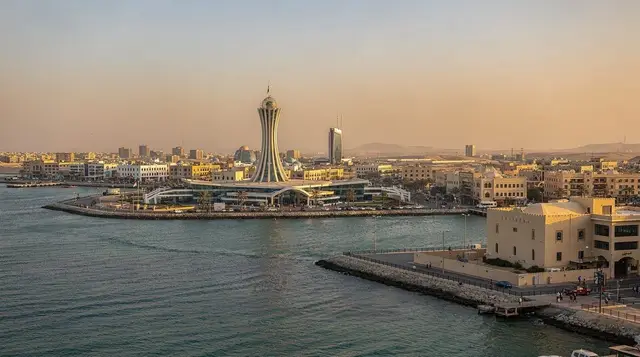
Ras Al Khaimah — mountains, dunes and beaches an hour from Dubai
Ras Al Khaimah guide: Jebel Jais and the Jais Flight zipline, Al Marjan beaches, Dhayah Fort, mangroves and Al Wadi desert — and whether RAK beats Dubai.
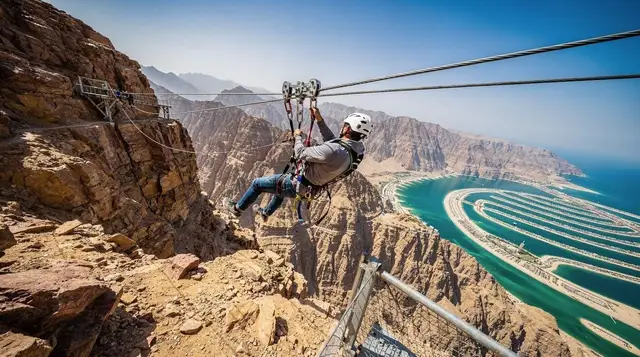
Ras al Khaimah: Jais Flight - world's longest zipline ticket
Duration: 1 hour
Quick facts
- Distance from Dubai
- ~1 hour by car (E11), longer via coastal roads
- Standout
- Jebel Jais, UAE's highest peak (1,934m), and the Jais Flight zipline
- Best for
- Mountain adventure, beach resorts, quieter pace than Dubai
- Currency
- AED (same as Dubai)
- Typical resort price
- AED 400–1,200/night (109–327 USD), below equivalent Dubai/Palm resorts
What sets Ras Al Khaimah apart
Ras Al Khaimah — RAK, in everyday shorthand — is the UAE’s northernmost emirate, roughly an hour’s drive from Dubai along the E11, and it’s the one northern emirate that genuinely competes with Dubai for a multi-day stay rather than just absorbing a day trip. The pitch is straightforward: the same Hajar mountain range that gives Dubai its desert backdrop rises to its highest UAE point here, at Jebel Jais, while RAK’s Gulf coastline delivers beach resorts built to the same international standard as Dubai’s, generally at a noticeably lower nightly rate.
What RAK doesn’t have is Dubai’s density of landmarks, malls, and restaurants — this is a slower-paced emirate built around two or three headline experiences rather than an endless list of things to do. That’s precisely the appeal for visitors who’ve already done Dubai’s core sights and want mountains, open beaches, and fewer crowds for the second half of a trip.
Jebel Jais and the Jais Flight zipline
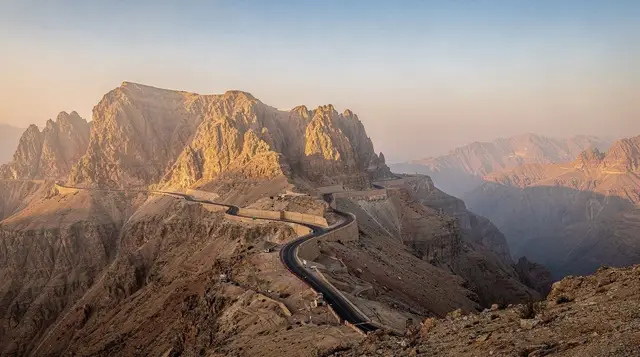
Jebel Jais is the UAE’s highest mountain at 1,934 meters, and its winding access road — itself a popular route for cyclists and drivers chasing cooler air — leads to the country’s biggest cluster of mountain adventure activities. The headline attraction is Jais Flight, a zipline that held the Guinness World Record for the longest in the world when it opened in 2018, sending riders down roughly 2.8 kilometers of cable at speeds that can hit triple digits in kilometers per hour. Book it as Jais Flight — world’s longest zipline ticket, and expect a full safety briefing and harness fitting before you’re sent off the mountainside.
For a different pace, the Jais Sky Tour zipline adventure is a multi-line course closer to the summit, better suited to visitors who want a longer, more varied zipline experience rather than the single high-speed run Jais Flight is built around. The mountain also has the UAE’s only via ferrata routes, fixed cables and rungs bolted into the cliff face for a climb-assisted route without technical climbing gear, an alpine coaster (the Jais Sledder), and 1484 by Puro, a restaurant at 1,484 meters that’s the highest in the country — worth a stop for the view even outside a full meal.
The full detail on booking, difficulty levels, and what to wear lives on the Jebel Jais destination page and the Jais Flight zipline guide.
Beaches and Al Marjan Island
RAK’s coastline runs quieter and less built-up than Dubai’s Marina or JBR strips, with Al Marjan Island — a manmade archipelago similar in concept to Palm Jumeirah but far smaller and less developed — as its main resort hub. International chains including Waldorf Astoria and Rixos operate here, generally at rates well below their Dubai-city equivalents for a comparable beachfront product. Al Marjan is also where Wynn Resorts has been building the UAE’s first licensed casino resort, a development that’s drawn significant regional attention and is expected to reshape RAK’s tourism profile once it’s operating at scale — worth checking current status if that’s part of your interest in the emirate.
Beyond Al Marjan, Mina Al Arab and Bab Al Bahr offer additional resort clusters along quieter stretches of coast, with calmer, shallower water than much of Dubai’s exposed Gulf beaches — a genuine advantage for families with young children. A 45-minute Al Marjan sightseeing speedboat tour gives a quick sea-level look at the coastline and resort skyline if you’re not staying at a beachfront property yourself.
Dhayah Fort and RAK history
Dhayah Fort, in the emirate’s north near the town of Dhayah, is the only remaining hilltop fort in the UAE and the site of a documented historical event: it was the location of the last stand of Qawasim forces against a British expeditionary force in 1819, a campaign launched to suppress what British sources at the time labeled piracy along the coast and that Ras Al Khaimah’s own history frames rather differently, as resistance to European interference with regional trade. The climb to the fort is short but steep and unshaded, best tackled in the cooler months or early morning; the reward is a genuinely commanding view over the surrounding plains and coastline.
The National Museum of Ras Al Khaimah, housed in the old fort in RAK City, covers the emirate’s pearling and seafaring history in more depth, with archaeological finds from sites across the region including Julfar, a significant pre-modern trading port whose ruins sit near the modern city.
A longer look at RAK’s pearling and trading past
Before oil and before tourism, Ras Al Khaimah’s economy — like the rest of the Trucial Coast — ran on pearling, fishing, and maritime trade, with the ancient port of Julfar near the modern city serving as one of the Gulf’s more significant trading hubs for centuries, mentioned in historical Portuguese and Arab sources well before the modern emirate existed. The Qawasim, the ruling family and maritime power based in RAK and Sharjah, controlled a substantial share of Gulf trade and shipping into the early 19th century, which is the backdrop to the 1819 British campaign that ended at Dhayah Fort.
RAK joined the other six emirates in forming the UAE in 1972, a year after the initial 1971 union — the last of the seven to join — and has historically had a smaller oil endowment than Abu Dhabi or Dubai, which is part of why its economy leaned earlier and more heavily into manufacturing (cement, ceramics) and, more recently, tourism as diversification strategies. That relatively later and more modest development is a large part of why RAK still feels less built-up than Dubai even in its resort areas — the pace of construction has been steadier rather than the compressed boom Dubai went through in the 2000s.
Mangroves and Al Wadi desert
RAK’s coastline includes mangrove stands near Al Rams in the emirate’s north, part of the same mangrove ecosystem that continues into neighboring Umm Al Quwain — a useful counterpoint to RAK’s mountain-and-beach reputation, and a worthwhile stop for kayaking or birdwatching if you have transport and time beyond the headline sights. Inland, Al Wadi Desert is a protected reserve area built around a single luxury resort property, with camel trekking, falconry displays, and guided desert walks run through the resort rather than as standalone bookable activities for day visitors — it’s best treated as a resort-stay experience rather than a drop-in attraction.
RAK’s own patch of dune desert, less visited than Dubai’s Al Marmoom or Liwa in Abu Dhabi, gives a quieter alternative for travelers who’ve already done a Dubai desert safari and want the landscape without the crowds — see dune buggy and quad biking in the UAE for how RAK’s desert activities compare.
RAK’s coastline also has some of the better accessible snorkeling and diving conditions in the southern Gulf, since Al Marjan Island and the surrounding waters are less trafficked by shipping than Dubai’s busier Marina channel. Visibility and marine life are modest compared with Fujairah’s east-coast reef sites, but it’s a reasonable add-on for resort guests already based on Al Marjan who don’t want to make a separate trip east.
Weather and when to visit
RAK follows the same seasonal pattern as the rest of the UAE — brutally hot and humid from June through September, with daytime temperatures regularly passing 40°C along the coast, and genuinely pleasant from November through March, when daytime highs sit in the low-to-mid 20s°C and evenings can turn cool enough for a light jacket, especially up at Jebel Jais. Altitude matters more here than anywhere else in the country: temperatures on the mountain run noticeably cooler than RAK City or the coast year-round, and on winter mornings frost and even light snow flurries have been recorded near the summit, a genuine rarity anywhere in the Gulf.
See best time to visit Dubai and Dubai’s weather month by month for how the wider region’s seasons line up with a RAK trip.
Shoulder months — April, May, and October — remain workable if outdoor time is scheduled for morning or late afternoon, which matters more for beach and desert activities than for the zipline, which is fast enough that heat exposure is minimal regardless of season.
Where to eat and where to stay
RAK’s dining scene is thinner than Dubai’s and concentrated almost entirely inside resort properties — expect hotel restaurants, beach club dining, and a handful of standalone spots in RAK City rather than a walkable restaurant district. Budget AED 150–300 (41–82 USD) per person for a resort dinner, broadly in line with equivalent Dubai beachfront pricing, or AED 40–80 (11–22 USD) for simpler options in RAK City itself, mostly Emirati, Lebanese, and South Asian cafes serving the local workforce rather than a tourist-facing scene.
For accommodation, Al Marjan Island covers the beach-resort end of the market, RAK City proper is cheaper but has little to walk to in the evenings, and a handful of properties near Jebel Jais and Al Wadi Desert cater specifically to travelers prioritizing the mountain and desert experiences over beach time. Booking a resort with both a beach and easy road access to Jebel Jais avoids the need to relocate mid-trip if you want both halves of RAK’s appeal.
Combining RAK with a longer UAE loop
RAK sits at the natural endpoint of a northern-emirates road trip that starts in Dubai and passes through Sharjah, making it easy to combine as a multi-stop drive rather than a single out-and-back trip. A typical pattern: a morning in Sharjah’s museum district, a midday drive north with a stop in Ajman or a direct run to RAK, then an afternoon and evening in RAK City or at a coastal resort, with Jebel Jais reserved for a full dedicated day given the extra driving time the mountain road adds.
Travelers short on time sometimes try to fit Jebel Jais into the same day as the drive up from Dubai — it’s doable if you leave early, but it makes for a long day with limited buffer if traffic or weather affects the mountain road.
Getting to Ras Al Khaimah from Dubai
By car, RAK is roughly an hour from central Dubai via the E11, extending toward 75–90 minutes if you’re continuing on to Jebel Jais itself, which adds a further 45–60 minutes up the mountain road from RAK City. There’s no rail or metro connection; RTA intercity buses run from Dubai but with limited frequency and a multi-hour journey, making them impractical for a day trip. A rental car is genuinely the most efficient option here — see the car rental guide for what to expect on cost and requirements — though private transfers and organized day tours from Dubai are also widely available for visitors who’d rather not drive the mountain road themselves.
For a self-contained overnight option that also covers the neighboring exclave, the Khasab Musandam overnight dhow cruise departs from the RAK area into Oman’s Musandam peninsula, worth combining with an RAK stay if you’re not planning a separate trip specifically to Musandam.
Is Ras Al Khaimah worth a trip?
For adventure-focused travelers, yes without much hesitation — Jebel Jais alone justifies the drive, and nothing comparable exists elsewhere in the UAE. As a beach-resort alternative to Dubai, it’s a genuinely strong option for travelers prioritizing value and quiet over density of things to do, though anyone wanting nightlife, extensive dining variety, or walkable neighborhoods should stay in Dubai and treat RAK as a side trip rather than a full-trip base.
A common, efficient pattern is two nights in Dubai, then two to three nights in RAK for the mountain and beach half of the trip — see Dubai’s desert-and-city itinerary for how that split plays out over a week, and best day trips from Dubai if you’d rather do RAK as a single long day instead of an overnight.
RAK with kids
RAK’s calmer, shallower beaches at Mina Al Arab and Bab Al Bahr suit families better than Dubai’s more exposed strips, and most of the international resorts run kids’ clubs comparable to their Dubai counterparts at a lower nightly rate. Jebel Jais itself skews toward older children and adults — Jais Flight has a minimum age and weight requirement, and the via ferrata routes require reasonable fitness and are not appropriate for young children — so plan the mountain day around the Sky Tour or the summit viewing deck and restaurant if traveling with younger kids who can’t do the zipline.
Coast vs summit: how much cooler is Jebel Jais?
Altitude changes the RAK weather equation more than anywhere else in the country, and it’s worth planning clothing around the gap rather than assuming coastal conditions apply on the mountain:
| Location | Winter (Nov–Mar) | Summer (Jun–Sep) |
|---|---|---|
| RAK coast / Al Marjan | Low-to-mid 20s°C daytime | Regularly 40°C+, high humidity |
| RAK City | Similar to coast | Similar to coast, slightly drier |
| Jebel Jais summit | Cool, occasional frost/light snow flurries | Noticeably milder than the coast, still warm |
The practical upshot: winter mornings at altitude can call for a light jacket even when the coast feels mild, while summer’s punishing coastal heat makes the mountain road a genuine escape rather than just a scenic drive.
Frequently asked questions about Ras Al Khaimah
How far is Ras Al Khaimah from Dubai?
About an hour by car via the E11 to RAK City itself; add another 45–60 minutes if you’re driving up to Jebel Jais specifically.
Is Jebel Jais worth the trip on its own?
Yes, for most visitors interested in adventure activities — the zipline, via ferrata, and mountain views aren’t replicated anywhere else in the UAE, and the drive up the mountain road is scenic in its own right.
Do I need a car to visit RAK?
It’s the most practical option given the limited public transport, though guided day tours and private transfers from Dubai are widely available if you’d rather not drive yourself, especially for the mountain road.
Is RAK cheaper than Dubai for a beach holiday?
Generally yes — comparable resort quality on Al Marjan Island and along RAK’s coast typically runs below equivalent Dubai beachfront properties, particularly outside peak winter dates.
Can I visit Jebel Jais and the beach in the same day?
It’s possible but tight — the mountain road adds significant driving time each way, so most visitors either dedicate a full day to Jebel Jais or split an overnight stay between a beach resort and a separate mountain excursion.
Is the Jais Flight zipline safe?
It’s operated to international safety standards with mandatory briefings, harness checks, and weight/age restrictions enforced at check-in. As with any high-speed zipline, it’s not recommended for anyone with cardiac conditions or a fear of heights that briefings can’t manage.
What’s the best time of year to visit Jebel Jais?
November through March for the most comfortable hiking and outdoor conditions; the zipline itself runs year-round since it’s a fast, brief activity rather than an extended outdoor exposure, though summer midday heat even at altitude is still significant.
Is there a casino in Ras Al Khaimah?
Wynn Resorts has been developing a licensed casino resort on Al Marjan Island, a first for the UAE — check current opening status, since large resort developments regularly shift their timelines.
Can I drink alcohol in RAK?
Yes, unlike neighboring Sharjah — licensed hotels and resorts in RAK serve alcohol, following the same licensed-venue model used in Dubai and Abu Dhabi rather than Sharjah’s total ban.
How many days should I spend in Ras Al Khaimah?
Two to three days covers the main draws comfortably: a full day for Jebel Jais, a day for the beach and coastal resort, and a half-day buffer for Dhayah Fort or the National Museum if history interests you. A single long day trip from Dubai works if you’re only after the zipline, though it makes for a rushed, early-start day given the round-trip driving time involved.
Is Ras Al Khaimah a good base for a whole UAE trip?
It can work for travelers who prioritize outdoor adventure and quiet beach time over city sightseeing, but most visitors get better overall value splitting their trip between Dubai and RAK rather than basing entirely in RAK, since Dubai’s landmark density and dining variety aren’t replicated here.
How much colder is Jebel Jais than the RAK coast?
Meaningfully — winter mornings on the summit can bring frost or even light snow flurries, while the coast stays in the low-to-mid 20s°C. Bring a jacket for the mountain even if you’re comfortable in a t-shirt at your beach resort.
Can I visit Ras Al Khaimah without visiting Jebel Jais?
Yes — the beach resorts, Dhayah Fort, and the National Museum give a full day or two without the mountain drive, though most visitors specifically come to RAK for Jebel Jais, so skipping it means missing the emirate’s single most distinctive draw.
Top experiences
Bookable activities with verified prices and instant confirmation on GetYourGuide.