Sharjah — the UAE's cultural capital, honestly explained
Sharjah guide: Sharjah Art Museum, the Blue Souk, Al Noor Mosque, Heart of Sharjah, Rain Room, why it's dry, and whether a day trip from Dubai is worth it.
From Dubai: Sharjah city tour
Quick facts
- Distance from Dubai
- ~35–45 minutes by car (E11 or E311), traffic-dependent
- Status
- UNESCO Arab Capital of Culture (1998), dry emirate — no alcohol
- Best for
- Museums, Islamic art, souks, budget travelers
- Currency
- AED (same as Dubai)
- Typical day-trip cost
- AED 100–250 (27–68 USD) excluding tours
Why Sharjah feels different from Dubai
Sharjah sits directly north of Dubai, close enough that the two cities’ suburbs effectively run together along the E11, yet it operates on a noticeably different set of rules. It’s the UAE’s third-largest emirate and, since UNESCO named it an Arab Capital of Culture in 1998, has deliberately built its tourism identity around museums, heritage restoration, and Islamic art rather than skyscrapers and nightlife. Most visitors come as a half-day or full-day trip from Dubai rather than a standalone base, and that’s the right call: Sharjah rewards a focused museum-and-souk itinerary more than an open-ended wander.
The practical reason Sharjah reads differently the moment you arrive is its alcohol policy, covered in detail further down, but the cultural investment is real too — this is the emirate with the region’s largest concentration of dedicated museums, a restored old town you can actually walk through, and art installations you won’t find anywhere else in the country.
Sharjah Art Museum and the Rain Room
Sharjah Art Museum is the largest fine art museum in the Gulf, spread across multiple floors with a permanent collection of 19th-century Orientalist paintings alongside rotating contemporary exhibitions. It anchors the Sharjah Arts Area, a cluster of restored heritage buildings that also houses the Sharjah Art Foundation’s exhibition spaces — the Foundation runs its own separate program of galleries scattered through adjacent lanes, and a single ticket or free entry (depending on the current exhibition) often covers several of them in one walk.
The standout for most visitors is Rain Room, an immersive installation by Random International that’s been shown in Sharjah as part of the Foundation’s collection: you walk through a downpour that senses your movement and stops the rain directly above you, staying dry while water falls everywhere else in the room. It draws queues on weekends and during school holidays, so check current opening dates and book a timed slot if the museum’s site offers one — installations like this rotate and aren’t guaranteed to be on permanent display, so confirm it’s currently running before building a visit around it specifically.
The Blue Souk
Officially the Central Souk but universally known as the Blue Souk for its twin buildings’ blue-tiled facades and wind-tower-inspired architecture, this is Sharjah’s signature shopping landmark. The ground floor deals mostly in gold, textiles, and souvenirs, while the upper floor is where the souk earns its reputation — dozens of stalls selling Persian and Afghan carpets, antiques, and traditional handicrafts, with far more room to negotiate than the polished carpet shops in Dubai malls. It’s less crowded and less pressured than Dubai’s gold and spice souks, which makes it a genuinely more relaxed place to browse even if you don’t buy anything.
Prices aren’t fixed — haggling is expected and can meaningfully move the number, especially on carpets and larger antique pieces. Go in with a target price in mind rather than asking “what’s your best price,” and be prepared to walk away, which is usually what actually moves a seller.
Al Noor Mosque
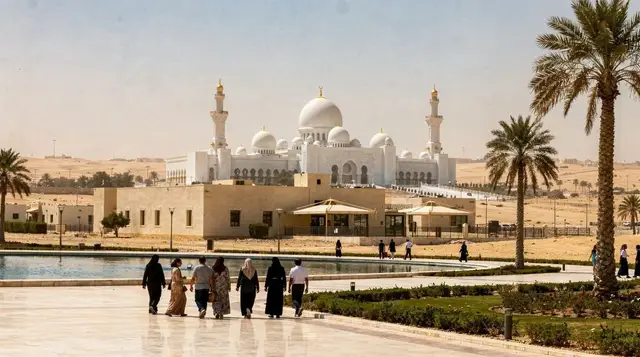
Al Noor Mosque sits on the Buhaira Corniche overlooking Khalid Lagoon, and its Ottoman-style twin minarets and central dome make it one of Sharjah’s most photographed buildings, especially at sunset when it’s lit against the water. Like Jumeirah Mosque in Dubai, it’s one of the few mosques in the UAE that welcomes non-Muslim visitors for guided tours, run by the Sharjah Museums Authority, giving an accessible introduction to Islamic architecture and prayer practice for visitors who won’t otherwise set foot inside a working mosque.
Modest dress is required for the tour: shoulders and knees covered for everyone, and a headscarf provided (or required) for women — bring one if you’d rather use your own. The corniche itself, with cafes and a walking promenade along the lagoon, is worth combining with the mosque visit rather than treating as a separate stop.
Heart of Sharjah
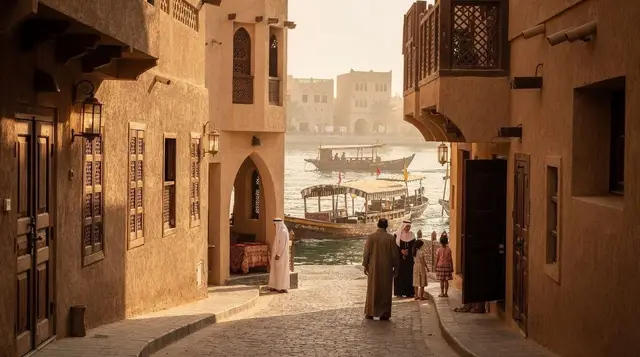
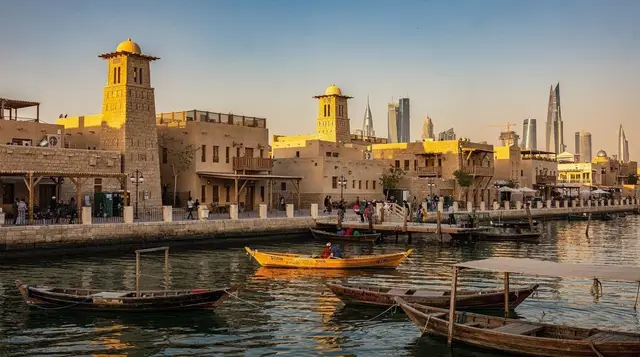
Heart of Sharjah is an ongoing restoration project turning several blocks of the old town into a walkable heritage district, similar in spirit to Al Fahidi in Old Dubai but on a larger, more deliberately curated scale. Within it, Al Arsah Souk is the oldest souk in Sharjah, a simple courtyard of small shops selling spices, textiles, and antiques under a shaded walkway. Bait Al Naboodah, a restored 19th-century courtyard house, shows how a wealthy pearl-merchant family actually lived, with wind towers, carved teak doors, and a central courtyard designed to cool the building before air conditioning existed.
The district also includes the Sharjah Heritage Museum and several smaller specialty museums — calligraphy, Islamic civilization exhibits, and maritime history — packed into a compact enough area that a couple of hours of walking covers most of it. Unlike a lot of restored “heritage villages” elsewhere in the Gulf that feel built for tour buses, Heart of Sharjah still functions as an actual neighborhood edge, with some original residents and businesses intact alongside the restored sections.
Al Qasba and Sharjah Aquarium
Away from the museum district, Al Qasba is a canal-side leisure strip with restaurants, a small cinema, and the Eye of the Emirates, a 60-meter observation wheel that gives an easy skyline view without the ticket price of Dubai’s Ain Dubai. It’s a more low-key, family-oriented evening spot than anything comparable in Dubai — food stalls and canal-side seating rather than nightlife. A short walk or drive away, Sharjah Aquarium is compact compared to Dubai Mall’s aquarium but focuses specifically on Gulf and Arabian Sea marine life, including local species like the Arabian carpet shark, making it a reasonable complement to a museum-heavy day rather than a headline attraction on its own.
Al Noor Island, just off the corniche near Al Noor Mosque, adds a butterfly house and small book pavilions connected by footbridges — a pleasant half-hour stop rather than a destination in its own right, and one of the few genuinely shaded outdoor walks in central Sharjah during the cooler months.
A brief history: from pearling port to culture capital
Sharjah’s economy before oil was built on pearling and trade, and its position on Khalid Lagoon made it one of the more significant Gulf ports of the 19th and early 20th centuries — the wealth from that era is what built houses like Bait Al Naboodah in the old town. When the pearling industry collapsed in the 1930s after Japanese cultured pearls flooded the world market, Sharjah, like the rest of the Trucial States, went through decades of comparative poverty before oil revenue (modest compared to Abu Dhabi’s) and later federal UAE investment funded its recovery.
Rather than chasing Dubai’s skyscraper-and-mega-mall model after unification in 1971, Sharjah’s ruling family made a deliberate, decades-long bet on culture and heritage restoration — a policy choice that predates the UNESCO Arab Capital of Culture designation in 1998 and continues to shape new museum openings today. That’s the actual origin of the “cultural capital” branding: it reflects genuine, sustained government investment in heritage and the arts rather than a marketing label applied after the fact.
Where to eat in Sharjah
Because Sharjah is dry, its food scene leans toward daytime dining rather than the dinner-and-drinks culture common in Dubai. Al Arsah Souk and the surrounding Heart of Sharjah lanes have simple Emirati and Arabic cafes serving karak tea, regag bread, and grilled meats at prices well below equivalent spots in Downtown Dubai. Al Qasba’s canal-side restaurants cover a broader international range — Lebanese, Indian, and casual Western chains — for an early dinner before heading back to Dubai. Budget roughly AED 40–80 (11–22 USD) per person for a casual meal, noticeably cheaper than Dubai Marina or Downtown equivalents.
The dry-emirate rule, explained
This is the fact that surprises visitors most: Sharjah does not license the sale or serving of alcohol anywhere within the emirate — not in hotels, not in restaurants, not in international resort chains that pour freely just across the Dubai border. It’s the only emirate with a total ban rather than the licensed-venue system used in Dubai and Abu Dhabi. If you’re staying in Sharjah, don’t expect a hotel minibar or in-room bar; if you want a drink with dinner, that means driving back into Dubai or planning your accommodation there instead and visiting Sharjah as a day trip.
Beyond alcohol, Sharjah also enforces stricter public decency norms than Dubai in practice — modest dress is expected more broadly, not just at religious sites, and public displays of affection are taken more seriously. None of this makes Sharjah unwelcoming to tourists; it just means treating it as the more conservative counterpart to Dubai rather than an interchangeable extension of it. See emirati culture and etiquette and Dubai’s alcohol rules for the contrast in black and white.
Getting to Sharjah from Dubai
By car, Sharjah is roughly 35–45 minutes from central Dubai via the E11 (Sheikh Zayed Road continuation) or the E311 bypass, though this stretch is notorious for rush-hour congestion since a large share of Sharjah’s population commutes daily into Dubai for work — Sharjah’s rents run well below Dubai’s, which is the actual reason the corridor is so busy. Budget extra time if you’re driving during morning or evening rush hour; midday and weekend travel is far smoother.
There’s no metro connection, but RTA-operated intercity buses (routes E306 and E400) run from Dubai’s Gold Souk and Al Ghubaiba bus stations to Sharjah’s central bus station for a fraction of a taxi fare, if considerably slower. Taxis and Careem cost roughly AED 60–90 (16–25 USD) one-way depending on your Dubai starting point.
For a no-hassle option, a guided Sharjah city tour from Dubai handles transport and hits the museum district, Blue Souk, and corniche in one organized outing, or the half-day Sharjah and Ajman sightseeing tour pairs it with a look at neighboring Ajman in the same trip. See day trips from Dubai to Sharjah for a full self-drive itinerary if you’d rather go independently.
Getting around once you’re there
Sharjah’s museum district, Blue Souk, and Heart of Sharjah all sit within a compact area near the corniche, walkable in the cooler months but better tackled by taxi hop between clusters from May through September. The Sharjah hop-on hop-off bus covers the main sights on a single loop ticket, which suits visitors who want to self-pace across the museums, souk, and corniche without arranging taxis between every stop. Sharjah taxis are metered and easy to flag near any of the major sites, and Careem works the same way it does in Dubai.
Beyond the museums: desert and family options
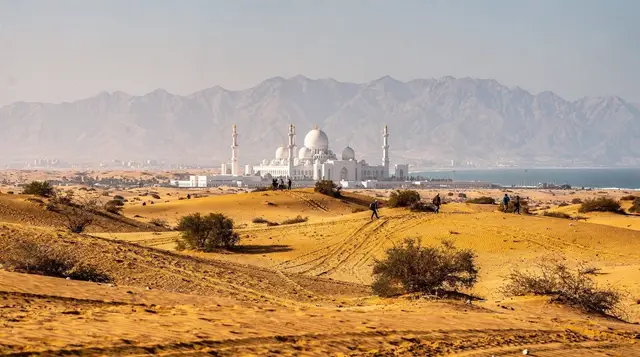
Sharjah isn’t only about culture. Toward the emirate’s desert fringe, quad biking, dune buggy runs, and sandboarding are sold as standalone half-day activities — the Sharjah quad bike, dune buggy, and sandboarding experience is a self-drive alternative to the more scripted Dubai desert safari camps, aimed at visitors who want the dune adventure without the dinner-and-show package. Families with younger kids are generally better served by the museum district and Al Noor Island’s butterfly house near the corniche than by the desert activities, which skew toward teens and adults.
See Dubai with kids for how to weigh a Sharjah add-on against a Dubai-only family schedule.
Is Sharjah worth the day trip?
For visitors with a genuine interest in Islamic art, museums, or a slower, less commercial souk experience, yes — Sharjah delivers a version of “old Gulf” culture that Dubai’s Old Dubai district only partially replicates, and it does so without the crowds. For a first-time visitor with three days or fewer focused on Dubai’s landmarks, it’s a reasonable add-on for day four or five rather than a priority — see how many days you need in Dubai for where it fits. Travelers hoping to drink with dinner or looking for beach-club energy should stay in Dubai and treat Sharjah purely as a museum day, since neither of those things exists here by design.
Combining Sharjah with the rest of a northern emirates trip
Because Sharjah sits on the direct route north, it pairs naturally with a longer loop toward Ras Al Khaimah or Ajman rather than standing alone as an out-and-back trip. A common pattern: morning at the Sharjah museums and Blue Souk, early-afternoon drive onward to Ajman’s corniche and fort museum, or continue further to RAK for an overnight stay near Jebel Jais. See best day trips from Dubai for how this compares against Abu Dhabi or Hatta as a single-day option, and Dubai’s desert-and-city itinerary for how a northern-emirates day slots into a week-long trip.
Sharjah vs Dubai, quickly
| Sharjah | Dubai | |
|---|---|---|
| Alcohol | Banned everywhere, no exceptions | Licensed hotels and restaurants |
| Pace | Museum-and-souk, slower | Landmark-dense, high-energy |
| Cost | Noticeably cheaper day-to-day | Higher across the board |
| Dress norms | Stricter, more conservative | Relaxed in tourist districts |
| Best for | Islamic art, heritage, budget | Skyline, nightlife, variety |
For visitors combining the two on a single northern-emirates loop, a guided Sharjah and Ajman city tour covers both in one organized day if you’d rather not self-drive the full route.
Frequently asked questions about Sharjah
Can I drink alcohol in Sharjah at all?
No. Sharjah does not license alcohol sales or service anywhere in the emirate, including international hotel chains. If a drink with dinner matters to your trip, base yourself in Dubai and visit Sharjah as a day trip.
How far is Sharjah from Dubai?
Roughly 35–45 minutes by car via the E11 or E311, though rush-hour traffic on this corridor can push that closer to an hour in either direction.
Is Sharjah safe for tourists?
Yes, and by most measures it’s at least as safe as Dubai — the main practical difference is stricter enforcement of modest dress and public conduct norms rather than any added safety risk.
Do I need to cover my head to enter Al Noor Mosque?
Women need a headscarf for the guided tour (provided on-site or bring your own), and both men and women need shoulders and knees covered. Outside the mosque tour, a headscarf isn’t required for general sightseeing in Sharjah.
Is the Blue Souk the same as the gold souk in Dubai?
No — it’s a separate, distinct souk in Sharjah, though it does sell gold on its ground floor. Its real specialty, on the upper floor, is carpets and antiques, which sets it apart from Dubai’s Gold Souk in Deira.
Can I visit Sharjah without a car?
Yes — RTA intercity buses run from Dubai, and guided day tours or a taxi/Careem cover the trip without needing to drive yourself. Once there, the main sights cluster closely enough for walking or a hop-on hop-off bus.
Is the Rain Room always open?
Not necessarily — it’s part of a rotating exhibition program run by the Sharjah Art Foundation, not a fixed permanent installation. Check current listings before planning a visit specifically around it.
How much does a Sharjah day trip cost?
Independently, budget roughly AED 100–250 (27–68 USD) per person for transport, museum entries, and food, excluding any paid activities like quad biking. A guided half-day or full-day tour from Dubai typically runs higher but includes transport and a structured route.
Are museum tickets in Sharjah expensive?
No — most individual museums charge a modest entry fee, and several, including parts of the Sharjah Art Foundation’s program, are free. A combined pass covering multiple museums in the Heritage and Arts Areas is usually the better value if you’re planning to visit more than two or three.
Is one day enough to see Sharjah properly?
For the core sights — the Blue Souk, Sharjah Art Museum, Al Noor Mosque, and Heart of Sharjah — a single well-planned day covers it comfortably. Serious museum enthusiasts wanting to see every specialty museum in the Heritage Area in depth could reasonably stretch it to a second half-day.
Can I combine Sharjah with Ajman in the same day trip?
Yes, and it’s a common pairing — Ajman’s corniche and fort museum sit a short drive north of Sharjah, and a guided Sharjah and Ajman city tour or self-drive loop covers both comfortably in a single day.
Is Sharjah worth visiting if I’ve already done Old Dubai?
Yes, they complement rather than duplicate each other — Old Dubai gives a working souk-and-Creek experience within the city, while Sharjah adds a dedicated museum district and Islamic art collection on a larger, more curated scale.
Top experiences
Bookable activities with verified prices and instant confirmation on GetYourGuide.