Emirati culture and etiquette: what visitors actually need to know
Dubai: old town, souks, street food, guided tour & abra ride
Duration: 3-4 hours
What's the single most important etiquette rule for visitors to Dubai?
Dress modestly (shoulders and knees covered) outside beaches and pools, and treat public displays of affection, alcohol consumption outside licensed venues, and photography of local women without permission as things to actively avoid. Beyond that, Dubai is considerably more relaxed toward foreign visitors than its regional reputation suggests, and most day-to-day interactions require little more than the same courtesy you'd extend anywhere.
The short version
Dubai’s cultural reality for visitors is more relaxed than its reputation in some corners of the internet suggests, but a handful of genuine expectations do matter: modest dress outside beach and pool areas, alcohol confined to licensed venues, discretion around public affection, and a bit of care around photographing people directly. Beyond those specifics, most of what makes a visit go smoothly is ordinary courtesy rather than a long list of rules to memorize. This guide covers the practical detail behind each expectation, rather than either alarmist warnings or a dismissive “anything goes” framing — both miss the actual, moderate reality.
| Dress | Shoulders and knees covered outside beaches/pools |
| Alcohol | Licensed venues only, not in public |
| PDA | Discretion recommended, minor affection rarely enforced |
| Photography | Ask before photographing individuals |
| Best first stop | SMCCU sessions in Al Fahidi for direct Q&A |
Dress code, in practice
The oft-repeated rule — shoulders and knees covered — is the right baseline for malls, souks, streets, and government buildings, and it applies to both men and women, though enforcement leans informal and social rather than strictly policed for minor lapses like a slightly bare shoulder. Beaches, pools, and beach clubs are a clear exception where normal swimwear is expected and unremarkable. Mosques (including Jumeirah Mosque on the rare occasions non-Muslims can visit) require the strictest standard: full-length, loose clothing, with women additionally covering their hair. The full dress code guide breaks this down by specific location type in more detail than fits here.
Greetings and basic social interaction
A handshake is a safe, standard greeting in most business and casual contexts, though it’s good practice to let an Emirati woman initiate physical contact with a man rather than extending a hand first — some more conservative women prefer a verbal greeting, a hand over the heart, or simply a nod instead, and none of these should be read as coldness. Among men, a handshake is essentially universal. Using basic Arabic greetings — “salam” (peace, a casual hello) or “shukran” (thank you) — is appreciated as a small gesture of respect, even though English is near-universally spoken and understood throughout Dubai’s tourism and service sectors.
Alcohol: what’s actually allowed
Dubai permits alcohol sale and consumption within licensed hotels, bars, restaurants, and specific retail outlets, and its nightlife and dining scene is built substantially around this — a fact that surprises visitors expecting a fully dry destination. What isn’t permitted is public drinking or visible intoxication outside those licensed spaces, and this is enforced more seriously than some of the more relaxed social norms elsewhere on this list. Tourists can also buy alcohol for personal consumption at licensed retail shops with valid ID, a change from stricter historical rules that required a local liquor license for residents specifically.
See the alcohol rules guide for the fuller breakdown across venues and scenarios.
Public affection: the honest reality
Overt public displays of affection — passionate kissing, overt physical intimacy — run against local social norms and, in theory, can draw a fine or official warning, though in practice enforcement against tourists for minor affection like holding hands is uncommon. The simplest approach, regardless of the technical legal exposure, is discretion: save more overt affection for private spaces, which avoids both any legal risk and the social discomfort it can cause among more conservative onlookers, a courtesy that costs visitors little and matters genuinely to a meaningful part of the local population.
Photography etiquette
General street scenes, architecture, and public spaces are fine to photograph freely, and Dubai’s skyline and landmarks are, unsurprisingly, some of the most photographed subjects in the world. The line to watch is photographing specific individuals — particularly local women, but really anyone — without asking first; this applies throughout the souks, Al Fahidi, and anywhere else people are going about daily life rather than posing for tourism. Government buildings, military installations, and airports also carry photography restrictions worth being aware of, generally signposted where they apply.
Ramadan: how the month changes daily life
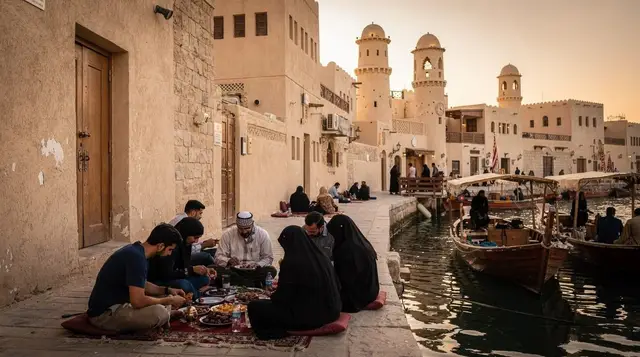
During Ramadan, practicing Muslims fast from dawn to sunset — no food, drink, or smoking during daylight hours — and visitors are expected to avoid eating, drinking, or smoking in public during those hours out of respect, even though most restaurants continue serving (often behind screened partitions) and hotels serve guests normally throughout. Business hours shift, with many shops and offices opening later and closing earlier, and some attractions run reduced schedules. The evening Iftar meal, breaking the day’s fast at sunset, transforms the city’s rhythm — restaurants fill quickly, special Iftar buffets appear across hotels, and the general atmosphere becomes notably more communal and festive after dark.
The full Ramadan guide covers what to expect in much more practical detail, including how it affects specific attractions and transport.
National dress: kandura and abaya
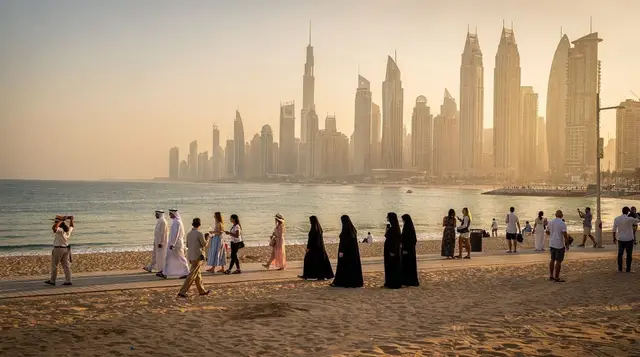
Emirati men traditionally wear the kandura (also called dishdasha), a long, usually white, loose-fitting robe, often paired with a ghutrah (headscarf) held in place by an agal (a black cord). Emirati women traditionally wear the abaya, a long black robe, frequently with a shayla (headscarf), though styles and the degree of additional covering vary by individual preference and occasion. These aren’t costume or ceremonial dress reserved for special events — they’re everyday clothing, worn by a meaningful share of the Emirati population in daily life, government offices, and formal settings alike.
Visitors sometimes mistake the kandura or abaya for a religious requirement rather than a cultural and national dress tradition; while there’s overlap with modesty norms rooted in Islamic practice, the garments themselves carry national identity significance beyond religion specifically.
Tipping norms
Tipping isn’t legally mandated but is a well-established, expected practice in Dubai’s hospitality sector — many restaurant bills already include a service charge (typically 10%), which doesn’t always go directly to staff, so an additional 10-15% cash tip for good service is common and appreciated. Taxi drivers appreciate rounding up the fare rather than a large percentage tip. Hotel staff (porters, housekeeping) commonly receive small cash tips (AED 5-20) for specific services. None of this is obligatory in the way it can feel in some countries, but it’s a genuine and expected part of the local service culture rather than a purely optional extra.
Multiculturalism and who you’ll actually meet
A practical point worth understanding: Emirati nationals make up a minority of Dubai’s actual population, with the majority being expatriate workers and residents from South Asia, the Philippines, other Arab countries, Europe, and beyond. Most day-to-day service interactions — hotel staff, taxi drivers, restaurant workers, tour guides — will be with this broader expatriate population rather than Emirati nationals directly, which is part of why Dubai can feel more internationally casual day-to-day than a narrower focus on “Emirati etiquette” alone might suggest.
Genuine encounters with Emirati culture and people tend to happen more specifically through structured programs like SMCCU, mosque visits, heritage sites, or (more rarely for a typical tourist) a personal invitation, rather than through general daily commerce.
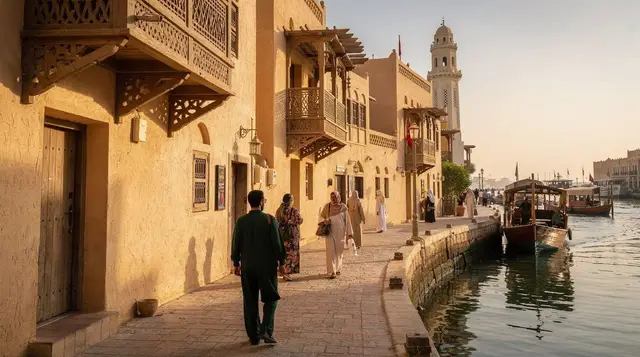
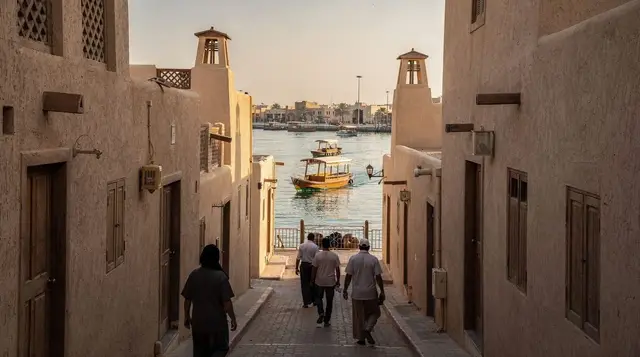
This Old Dubai walking tour through the souks, an abra crossing, and street food stops is a practical way to spend a few hours specifically in the more traditional, heritage-focused part of the city where these etiquette norms matter most.
Etiquette for solo travelers, especially women
Dubai is broadly considered a safe destination for solo travelers, including solo women, with low violent crime rates and a visible security presence in tourist areas. The etiquette guidance above — modest dress outside beach areas, discretion around public affection — applies equally regardless of traveling alone, and solo women generally report feeling comfortable in taxis, restaurants, and public transport, including women-only Metro carriages available if preferred. The solo travel guide and the safety guide go into more specific, practical detail beyond the cultural etiquette covered here.
Visiting with children: what to prepare them for
Traveling with kids raises a couple of specific etiquette points worth preparing for in advance: modest dress applies to children too in mosques and more conservative settings, though enforcement is even more relaxed for young children than adults. Explaining basic context — why some areas ask for more covered clothing, or what the call to prayer they’ll hear is — ahead of the trip tends to make these moments feel like interesting cultural learning rather than confusing restrictions. The family planning guide covers this alongside the more practical logistics of a family trip.
Business and formal interactions
For visitors combining tourism with business meetings, a few additional norms apply: business cards are commonly exchanged with the right hand (or both hands) rather than casually tossed across a table, meetings often begin with a period of general, unhurried conversation before turning to business specifically, and punctuality is valued though meeting start times can run more flexibly than in some Western business cultures. Modest, relatively formal dress is expected in business settings regardless of gender.
Weekend and prayer-time rhythms
The UAE shifted its official weekend from Friday-Saturday to Saturday-Sunday in 2022, aligning more closely with global business calendars, though Friday retains special religious significance as the day of Jummah, the main congregational prayer, typically around midday. Some businesses adjust hours slightly around Friday prayer time, and it’s the one day Jumeirah Mosque’s visitor program pauses specifically. Beyond that, the five daily prayer times are called via the adhan (call to prayer) from mosques citywide but don’t meaningfully disrupt tourist activities or business operations outside of prayer-adjacent venues.
Asking questions respectfully
A genuinely useful, underused resource for visitors is simply asking — Dubai and the wider UAE have invested specifically in structured programs, most notably the Sheikh Mohammed Centre for Cultural Understanding, built around the idea that direct, respectful questions about religion, customs, or daily life are welcomed rather than intrusive.
SMCCU’s cultural breakfast sessions in Al Fahidi and its guided mosque visits exist precisely to give visitors a comfortable, judgment-free space to ask things that might otherwise feel awkward to raise with a stranger on the street — genuinely one of the better ways to move past secondhand assumptions and toward direct understanding.
Gift-giving and hospitality norms
Emirati hospitality places real weight on generosity — being offered Arabic coffee (qahwa) and dates when visiting a home or even some businesses is a common, genuine gesture, and accepting graciously (even a small amount) is the polite response rather than declining outright. If invited into an Emirati home, which is a genuine honor given how relatively rare it is for tourists, removing shoes at the door and dressing modestly are expected, and bringing a small gift (dates, sweets, or a modest item from your home country) is a well-received, low-pressure gesture.
What’s actually illegal versus socially frowned upon
It’s worth distinguishing two categories that get conflated in a lot of online advice: genuine legal restrictions (drug possession, which carries severe penalties even for small amounts; public intoxication; certain speech considered offensive to religion or the government) versus socially frowned-upon but not strictly illegal behavior (overt PDA, immodest dress in non-beach areas, loud or disruptive public behavior). Both categories deserve respect, but they carry very different levels of actual risk, and treating a social faux pas as equivalent to a genuine legal risk (or vice versa) leads to either needless anxiety or genuine trouble, depending on which direction the confusion runs.
LGBTQ+ travelers: an honest note
Same-sex relationships are not legally recognized in the UAE, and public displays of affection between any couple, regardless of orientation, run against the same social norms covered above regarding PDA generally — the practical guidance is the same discretion that applies to any couple in public. Dubai’s tourism industry serves an enormously diverse international visitor base without incident for the vast majority of LGBTQ+ travelers who exercise the same public discretion expected of everyone, but it’s honest to note the legal backdrop differs meaningfully from many visitors’ home countries, and that’s worth factoring into personal comfort and decision-making around the trip.
Where etiquette matters most versus least
Etiquette expectations intensify specifically at religious sites, government buildings, and more traditional neighborhoods like Old Dubai and the souks, and relax considerably at beach clubs, international hotel zones, and Downtown’s more cosmopolitan, internationally staffed environment. Reading the specific context you’re in — rather than applying one blanket standard everywhere — is more useful than a single rigid rule, and it’s exactly the kind of nuance that a resource like SMCCU’s sessions are built to convey directly.
Extending etiquette awareness beyond Dubai
Broader UAE etiquette norms carry over into day trips to Sharjah, which is notably more conservative than Dubai — Sharjah maintains stricter public alcohol prohibition (it’s a fully dry emirate) and somewhat more consistently enforced modest dress expectations, worth knowing before extending a Dubai trip there for the day. Abu Dhabi sits closer to Dubai’s relative relaxedness, though Sheikh Zayed Grand Mosque enforces its own strict dress requirements for all visitors regardless of gender. None of these differences are dramatic, but they’re worth a quick mental adjustment when moving between emirates rather than assuming Dubai’s specific norms apply uniformly across the whole country.
Language basics beyond “salam” and “shukran”
Arabic is the official language, but English functions as a genuine working second language throughout Dubai’s tourism, retail, and service sectors, so fluency isn’t remotely necessary. A few more phrases beyond the basics are worth knowing for the goodwill they generate: “marhaba” (a warm, informal hello, common in the UAE specifically), “afwan” (you’re welcome, or excuse me), and “inshallah” (God willing, used constantly in casual conversation about future plans, from meeting times to weather). None of these are essential — service staff will respond in English regardless — but using even a couple in passing is consistently read as a small, appreciated gesture rather than an expectation.
Gestures and small habits worth knowing
A handful of small physical habits are worth adopting beyond dress and greetings. Use the right hand (or both hands) to give or receive items, including money, business cards, or food — the left hand carries a lingering cultural association some Emiratis and other Gulf or South Asian residents still observe, even if most won’t comment if you slip. Pointing the sole of your shoe or foot directly at someone, common when sitting cross-legged or with legs crossed, is mildly rude in the same regional tradition and worth avoiding in more formal or traditional settings, though it’s rarely treated as a serious offense with visitors.
Quick reference: legal risk versus social norm
| Behavior | Category | Practical guidance |
|---|---|---|
| Public intoxication | Legal risk | Avoid entirely, even minor cases |
| Drug possession (any amount) | Serious legal risk | Zero tolerance, severe penalties |
| Overt public affection | Social norm, minor legal exposure | Discretion recommended |
| Immodest dress outside beaches | Social norm | Cover shoulders and knees |
| Photographing people without asking | Social norm, can escalate | Always ask first |
| Loud, disruptive public behavior | Social norm | Keep it low-key in public |
The bottom line
Dubai asks less of visitors, culturally, than its reputation sometimes suggests, but the handful of things it does ask — modest dress outside beaches, alcohol confined to licensed venues, discretion in public, and care around photographing people — are worth taking seriously rather than dismissing. None of it should feel burdensome: it’s a short, reasonable list, and genuine curiosity expressed respectfully is consistently met with warmth rather than suspicion.
Frequently asked questions about Emirati culture and etiquette
Is Dubai strict about how tourists dress?
Less strict than commonly assumed — modest dress (shoulders and knees covered) is the practical standard outside beaches and pools, informally enforced.
Can I drink alcohol as a tourist?
Yes, at licensed hotels, bars, restaurants, and retail shops — not in public outside those venues.
Is PDA actually illegal?
Overt PDA runs against social norms and can technically draw a fine, though enforcement against minor affection like hand-holding is rare; discretion is the safer approach regardless.
Can I photograph people?
Ask before photographing individuals directly, especially local women; general scenes and architecture are fine without asking.
How does Ramadan change things?
Public eating, drinking, and smoking during daylight hours are restricted; hours shift, and the evening Iftar transforms the city’s rhythm after sunset.
What’s the correct greeting?
A handshake is standard; let Emirati women initiate contact with men, and a simple “salam” works as a warm opener.
Is it rude to ask about local culture or religion?
No — respectful curiosity is welcomed, and structured programs like SMCCU exist specifically to answer these questions directly.
Which hand should I use to give or receive things?
The right hand, or both hands together — a small but genuinely appreciated habit when handling money, business cards, or food.
Is Sharjah stricter than Dubai on etiquette?
Yes — Sharjah is a fully dry emirate with more consistently enforced modest dress expectations, worth knowing before a day trip there.