Emirati cuisine guide: traditional dishes and where to try them
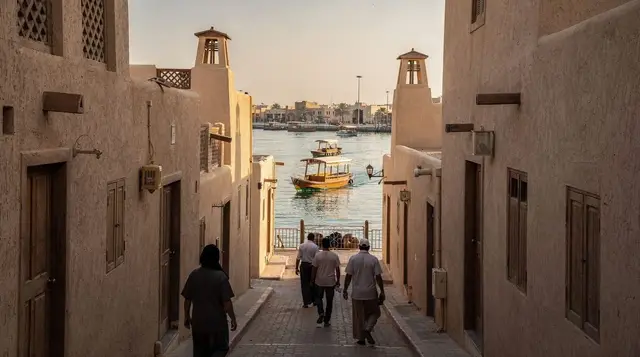
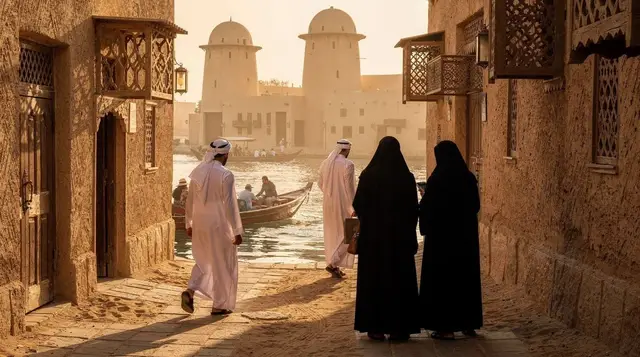
Dubai: old town, Creek, abra boat & souks guided walking tour
Where can I actually try Emirati food in Dubai?
Al Fanar Restaurant & Cafe, with several branches including Al Seef, is the most reliable dedicated Emirati restaurant chain, styled after a 1960s Emirati household. The Sheikh Mohammed Centre for Cultural Understanding (SMCCU) in Al Fahidi runs cultural meals with an Emirati host and open Q&A, which is the better option if you want context alongside the food rather than just the dishes.
Emirati food is a minority cuisine in its own city
Emiratis make up a small share of Dubai’s population, and the restaurant scene reflects that ratio rather than the country’s heritage — Indian, Pakistani, Filipino, Iranian, Lebanese and international cuisines dominate by sheer volume, and genuine Emirati food sits as a specific, deliberately preserved pocket rather than the default option anywhere in the city. This isn’t a criticism of the food itself, which is genuinely distinctive and worth seeking out — it’s a practical note that finding it takes a specific plan rather than happening by accident the way it might in a country where the national cuisine is the majority one.
| Where | Al Fanar (Al Seef, Sharjah) or SMCCU in Al Fahidi |
| Cost | around AED 40-90 / 11-25 USD per person |
| Time needed | 1-1.5 hours for a sit-down meal |
| Best pairing | Old Dubai souks and abra crossing |
| Booking | SMCCU requires advance booking; Al Fanar takes walk-ins |
Machboos: the closest thing to a national dish
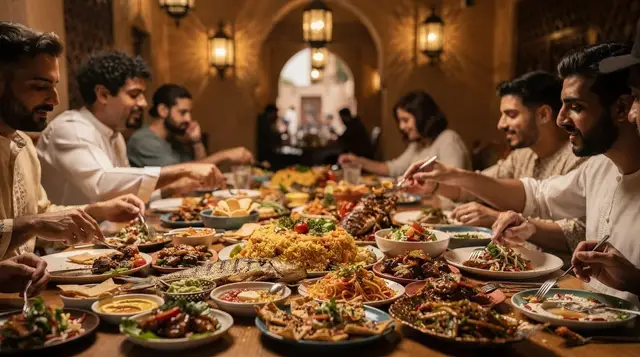
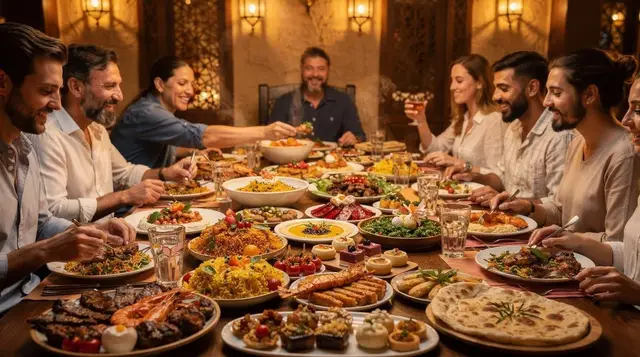
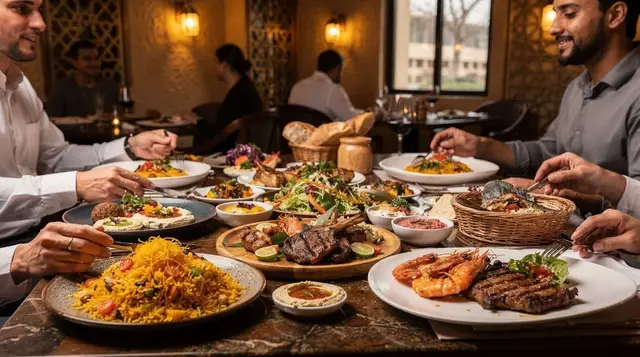
Machboos — rice cooked with meat, chicken or fish, layered with warming spices including cardamom, cinnamon, black lime (loomi) and sometimes saffron — sits in the same broad family as biryani and other Gulf spiced-rice dishes, but with its own distinct spice profile centered on dried lime’s sour, slightly fermented note rather than heat. It’s the dish most likely to appear on any Emirati restaurant’s menu and the best single entry point if you’re only trying one dish.
Harees: celebration and Ramadan food
Harees, a slow-cooked porridge of wheat and meat pounded until smooth, is traditionally associated with celebrations, weddings and Ramadan specifically, and its simple, comforting texture reflects an older, less spice-forward strand of Gulf cooking than machboos. It’s less commonly available outside Ramadan season and dedicated heritage restaurants, so timing a visit around Ramadan (see the Ramadan guide) genuinely improves your odds of finding a well-made version.
Luqaimat: the dish you’ll actually encounter most
Luqaimat — small, deep-fried dough dumplings, crisp outside and soft inside, drizzled with date syrup or honey — is the most widely available Emirati dish outside dedicated restaurants, showing up at Global Village stalls, Ramadan iftar spreads, and increasingly on cafe dessert menus across the city. It’s an easy, approachable starting point for anyone hesitant about diving straight into a full Emirati meal, and genuinely good versions aren’t hard to find given how widely it’s sold.
Chibab and other breakfast dishes
Chibab, sweet cardamom-spiced pancakes similar in format to a thick crepe, and balaleet, sweet saffron vermicelli topped with an omelet, represent the breakfast side of Emirati cooking — a genuinely interesting sweet-and-savory combination that doesn’t map neatly onto Western breakfast categories. These appear specifically at Al Fanar’s breakfast service and at SMCCU’s morning cultural sessions, less commonly elsewhere.
Seafood’s place in a fishing and pearling heritage
Before oil, the UAE’s coastal population made much of its living from fishing and pearl diving, and that history shows up in the cuisine — grilled and spiced hammour (a local grouper), machboos made with fish rather than meat, and dried fish preparations that reflect a pre-refrigeration preservation tradition. This seafood side of Emirati cooking is genuinely underrepresented on Al Fanar’s mainstream menu relative to its historical importance, and worth specifically asking about if a server offers a fish-based machboos as a daily option rather than the more commonly stocked chicken or lamb versions.
Dates: the ingredient behind almost everything
Dates are less a single ingredient than a running theme across Emirati food — eaten plain as a hospitality gesture with gahwa, reduced into syrup for luqaimat and other desserts, stuffed with nuts or cheese as a snack, and even incorporated into savory cooking in some traditional preparations. The UAE and the wider Gulf have cultivated dates for centuries, and the range of varieties available, from soft and caramel-like to firm and less sweet, is genuinely worth exploring beyond the standard supermarket Medjool most visitors already know. Date-focused stalls at the Spice Souk and at Global Village both offer tastings across multiple varieties.
Regional variations across the Emirates
Emirati cuisine isn’t perfectly uniform across the seven emirates — coastal areas like Dubai and Abu Dhabi lean more heavily on seafood given their fishing heritage, while inland areas historically tied to date farming and Bedouin herding, such as Al Ain, carry a slightly different emphasis toward meat and dairy-based dishes. These distinctions are subtle rather than dramatic to an outside palate, but worth knowing if you’re comparing an Emirati meal in Dubai against one encountered later in Al Ain or Abu Dhabi and noticing it doesn’t taste identical.
How Emirati food differs from its Gulf neighbors
Emirati cuisine shares a broad family resemblance with Saudi, Qatari, Bahraini and Omani cooking — spiced rice dishes, dried lime, dates and Arabic coffee all show up across the wider Gulf — but each country’s version carries its own specific dishes and emphasis. Machboos itself has cousins across the region under different names and slightly different spicing, and a visitor who has already tried a similar dish in Oman or Qatar shouldn’t expect an identical experience in Dubai, even though the family resemblance is real.
Al Fanar Restaurant & Cafe: the reliable dedicated option
Al Fanar, a chain with branches including Al Seef along Dubai Creek and locations in Sharjah, is styled deliberately like a 1960s Emirati household — traditional seating, staff in local dress, and a full menu spanning machboos, harees, luqaimat, chibab and more in one sitting. It’s the single most reliable way to get a proper, varied Emirati meal without needing an invitation or advance cultural context, and prices are reasonable relative to the experience, typically AED 40-90 (11-25 USD) per person for a full meal.
SMCCU: cultural meals with context
The Sheikh Mohammed Centre for Cultural Understanding, based in a traditional courtyard house in Al Fahidi, runs cultural breakfast, lunch and dinner sessions where an Emirati host serves a traditional meal and opens the floor to direct questions about local customs, religion, dress and daily life — a level of access most restaurants simply can’t offer. The food itself is comparable to Al Fanar’s, but the format is the real draw: a structured, respectful space to ask questions a local host might not otherwise field from a stranger. Sessions require advance booking and run on a set schedule rather than walk-in service.
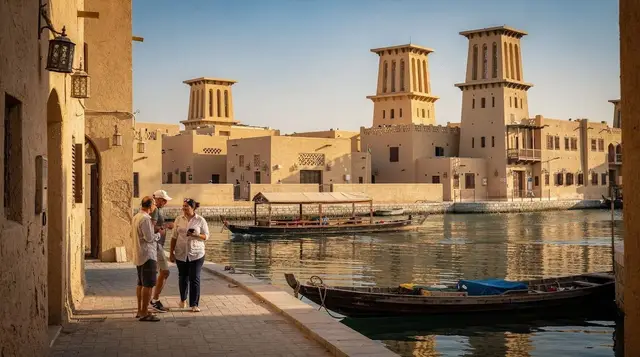
This Old Dubai Creek, abra and souks walking tour pairs well with an SMCCU session or Al Fanar meal, since both sit within walking distance of the same historic district.
Newer fine-dining takes on Emirati food
A small but growing number of higher-end restaurants have begun reworking Emirati ingredients and techniques into modern tasting formats rather than heritage-house settings — part of a broader regional movement to present Gulf cuisine as a serious culinary tradition rather than only a nostalgic one. Orfali Bros Bistro, a Levantine-Emirati fusion restaurant named the best in the Middle East and North Africa by the World’s 50 Best organization, is the standout example. The fine dining guide covers this and comparable venues in full.
Spices and flavors that define the cuisine
Dried black lime (loomi), cardamom, saffron, cinnamon and rosewater define Emirati cooking’s flavor profile far more than chili heat — a genuine surprise for visitors expecting the spice level of nearby South Asian cuisine. Dates, unsurprisingly given the region’s history, appear across both savory and sweet dishes, from stuffing to syrup, and remain a customary hospitality gesture served alongside Arabic coffee at nearly any traditional meal or greeting.
Arabic coffee (gahwa) as part of the meal
No traditional Emirati meal is really complete without gahwa — pale, cardamom-infused coffee served in small handleless cups, traditionally poured by a host as a gesture of hospitality, alongside a small plate of dates. It’s customary to accept at least one cup when offered and to shake the cup gently when finished to signal you’ve had enough, a small but genuinely useful piece of etiquette. The emirati culture and etiquette guide covers this and related customs in more depth.
Desert safari camp food: adjacent, not the same thing
Most desert safari camps serve a BBQ buffet — grilled meats, rice, mezze, shisha — that borrows some regional flavors but isn’t specifically Emirati cuisine in any strict sense, more a generalized Middle Eastern buffet built for large groups from a compact camp kitchen. It’s worth not conflating the two: a desert safari evening is a genuinely good experience in its own right, but it isn’t a substitute for an actual Emirati meal at Al Fanar or an SMCCU session if trying the specific national cuisine is the goal.
Home cooking versus restaurant versions
As with most cuisines, home-cooked Emirati food from a family kitchen and restaurant versions built for volume and consistency aren’t quite the same experience — restaurant machboos, however good, is standardized in a way a home cook’s version, passed down with small personal variations, typically isn’t. Visitors won’t usually get access to a genuine home-cooked meal without a personal connection, which is part of why SMCCU’s format, hosted by an Emirati in a home-style setting rather than a commercial kitchen, comes closer to that experience than a standard restaurant visit can.
What Emirati food is not
It’s worth being direct about a common misconception: Emirati cuisine is not the same as the broader “Arabic food” served at most Lebanese, Levantine or generic “Arabic restaurant” venues across the city, which is a different regional cuisine entirely, however similar some ingredients might look on paper. If a menu heavy on hummus, tabbouleh and shawarma is marketed as “Arabic” or “Middle Eastern,” it’s very likely Levantine rather than Emirati, and worth knowing the difference if trying specifically Gulf, not pan-Arab, food is the goal.
Emirati sweets beyond luqaimat
Khabees, a thick, ghee-rich semolina and date pudding, and asida, a similarly dense wheat-based sweet often served during celebrations, round out the traditional dessert lineup beyond luqaimat’s more widely known fried dumplings. These are richer and denser than most Western desserts, built to be shared in small portions rather than eaten as an individual course, and are more likely to appear at a set-menu SMCCU or Al Fanar meal than ordered individually off a standard menu.
Dietary notes: halal, dairy and nuts
Emirati cuisine is halal by default, as is virtually all food in the UAE, and this isn’t something to specifically request at any Emirati restaurant. Dairy (particularly in desserts and some savory dishes using laban, a yogurt-based drink) and nuts (in stuffed dates and some rice preparations) appear regularly enough that anyone with those specific allergies should flag it directly with staff rather than assume a dish is automatically safe based on its category alone. Vegetarian options exist but are a smaller share of a traditionally meat- and fish-forward cuisine — see the vegetarian and vegan guide for how this plays out in practice across the city more broadly.
Cost expectations across the two main options
Al Fanar runs AED 40-90 (11-25 USD) per person for a full sit-down meal, comparable to a solid mid-range restaurant elsewhere in the city. SMCCU’s cultural meal sessions are priced separately as a fixed experience fee covering the meal, the cultural session and materials, generally in a similar mid-range bracket once the added context is factored in — check current pricing directly with SMCCU, since sessions and formats occasionally change.
Emirati coffee culture beyond the meal itself
Gahwa isn’t limited to accompanying a meal — it’s a standalone social ritual, offered whenever guests arrive at a home or business, often multiple times over a single visit, and refusing outright can read as impolite in a way that simply accepting one small cup and signaling you’re finished afterward does not. The Coffee Museum in Al Fahidi covers this tradition’s history and preparation method in more depth than a restaurant visit alone can, including the specific brewing equipment (the dallah pot) still used today for ceremonial service.
Emirati food at Global Village and seasonal events
Beyond the UAE pavilion, Global Village’s seasonal run (October to April) is a reliable, informal way to sample Emirati sweets and snacks alongside food from dozens of other countries, without needing to book a dedicated restaurant or cultural session. It’s a lower-commitment starting point than Al Fanar or SMCCU if you’re not sure Emirati food is worth a dedicated stop on your itinerary, though the range on offer there is narrower than what a full sit-down meal provides.
Cooking classes and hands-on options
A smaller number of cultural centers and cooking-focused tour operators in Dubai run hands-on Emirati cooking sessions, typically covering a few staple dishes like machboos or luqaimat with a local instructor. These run less frequently and require more advance planning than a simple restaurant booking, but offer a genuinely deeper level of engagement with the cuisine than eating alone ever can, particularly for visitors who cook themselves and want to take the technique home.
Why this cuisine rewards curiosity over convenience
Unlike Dubai’s imported international dining scene, which competes largely on execution of dishes that already exist elsewhere, Emirati cuisine’s value for a visitor lies specifically in its unfamiliarity and its direct tie to a small, specific culture rather than a globally distributed one. It rewards visitors willing to make a dedicated stop for it rather than expecting it to appear incidentally alongside a day built around the skyline and malls — the effort required is genuinely part of what makes it worth doing.
Building this into a Dubai itinerary
An Emirati meal fits naturally into a half-day exploring Old Dubai, paired with the souks, an abra crossing and a stop at the Dubai Museum or Al Shindagha — the historic setting and the food reinforce each other more than either does paired with a Downtown or Marina day. The 3-day itinerary and first-timer itinerary both have natural room for this pairing, and it’s worth booking the SMCCU session first if it’s the priority, since its fixed schedule and smaller group sizes fill up faster than a walk-in Al Fanar table ever will.
Treat the two as complementary rather than redundant — the SMCCU session for context and conversation, Al Fanar for a fuller, more relaxed menu once the cultural introduction has already been made.
Ordering etiquette for a first-time visitor
Emirati meals, particularly the set-menu style served at SMCCU and Al Fanar’s fuller spreads, are traditionally meant to be shared across a table rather than ordered as individual plates — arriving with a small group or being open to sharing with strangers seated nearby (common at SMCCU’s communal-style sessions) is part of the intended format, not an awkward accident. Eating with the right hand, if food is served without cutlery, is customary, and it’s polite to try a little of everything offered rather than visibly skipping dishes, even a small taste. None of this is strictly enforced with visitors, who are given reasonable latitude, but knowing the intended etiquette beforehand makes the meal feel less unfamiliar and is generally appreciated by Emirati hosts.
Where seafood-based Emirati dishes fit beyond Al Fanar
Given the UAE’s fishing and pearling history, it’s worth actively seeking out seafood machboos or grilled hammour rather than defaulting to the more commonly stocked chicken or lamb versions — a handful of Al Fanar branches and smaller heritage-focused restaurants in Deira, near the historic fishing and pearling trade routes along the Creek, rotate seafood options more regularly than the flagship Al Seef branch. Asking a server directly whether a fish-based dish is available as a daily special, rather than assuming the printed menu is exhaustive, genuinely improves your odds of finding it.
Six dishes to know before you order
| Dish | What it is | Where to find it |
|---|---|---|
| Machboos | Spiced rice with meat, chicken or fish | Al Fanar, SMCCU |
| Harees | Slow-cooked wheat and meat porridge | Ramadan menus, heritage restaurants |
| Luqaimat | Fried dough dumplings, date syrup | Al Fanar, Global Village, cafes |
| Chibab | Cardamom-spiced sweet pancakes | Al Fanar breakfast, SMCCU |
| Balaleet | Sweet saffron vermicelli with omelet | Al Fanar breakfast, SMCCU |
| Khabees | Ghee-rich semolina and date pudding | Set-menu SMCCU or Al Fanar meals |
Frequently asked questions about Emirati cuisine
What is the most famous Emirati dish?
Machboos, spiced rice with meat or fish, is the closest thing to a national dish. Harees is a close second, especially around Ramadan.
Is Emirati food spicy?
Generally mild to moderate, built on warming spices like cardamom and dried lime rather than chili heat.
What is luqaimat?
Small fried dough dumplings drizzled in date syrup or honey — the most widely available Emirati dish outside dedicated restaurants.
Why is Emirati food so hard to find?
Emiratis are a small minority of Dubai’s population, so the restaurant scene overwhelmingly serves the much larger expat majority instead.
Is the SMCCU meal worth it?
Yes, mainly for the cultural context and direct Q&A with an Emirati host, alongside a meal comparable to Al Fanar’s.
What should I drink with Emirati food?
Traditional Arabic coffee (gahwa) with dates is the customary pairing, along with karak chai.
Can I find seafood-based Emirati dishes in Dubai?
Yes, though it’s underrepresented on mainstream menus — ask directly about a fish-based machboos or grilled hammour, more commonly rotated at Deira heritage restaurants near the old fishing routes.
Is a desert safari BBQ dinner the same as Emirati food?
No — it’s a generalized Middle Eastern buffet built for large groups, not specifically Emirati cuisine. For the real thing, book Al Fanar or an SMCCU session.
Top experiences
Bookable activities with verified prices and instant confirmation on GetYourGuide.