Coffee Museum Dubai: Arabic coffee culture inside Al Fahidi
Walking tour in old Dubai: souks, abra boat & old town
Is the Coffee Museum in Dubai worth visiting?
Yes, as a short add-on rather than a destination trip on its own. It's a small courtyard house in Al Fahidi covering the history and preparation of Arabic coffee (gahwa), takes 20-30 minutes, charges a nominal entry fee, and usually includes a cup of traditional coffee served on-site — which explains the cultural ritual better than any exhibit panel does.
What the Coffee Museum actually is
Tucked into a restored courtyard house a short walk from Al Fahidi’s main lanes, the Coffee Museum is one of the smallest and least visited paid attractions in Dubai, and also one of the most quietly rewarding. It’s a single-theme heritage museum devoted entirely to coffee — its origins, its journey through the Arab world, and specifically the ritual of Arabic coffee (gahwa) that sits at the center of Emirati hospitality. There’s no flashy building or headline photo op here, which is exactly why most visitors skip it and why the ones who don’t tend to come away having learned something they didn’t expect from a five-minute Google search beforehand.
| Where | Al Fahidi Historical District, Bur Dubai |
| Cost | Around AED 10-15 (3-4 USD) |
| Time needed | 20-30 minutes |
| Getting there | Al Fahidi Metro Station, Green Line |
| Best time | Early morning or late afternoon (outdoor walk to reach it) |
Where it sits in Al Fahidi
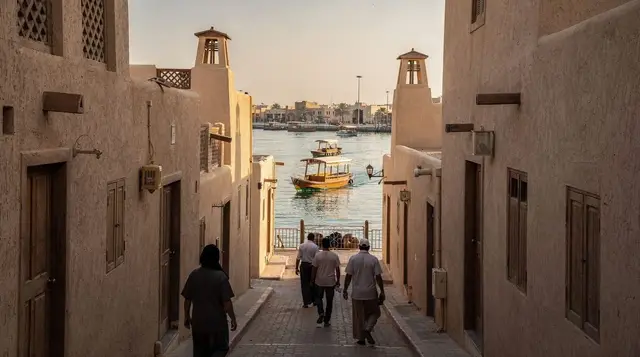
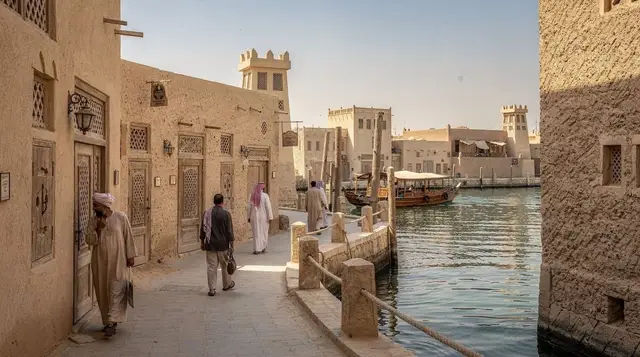
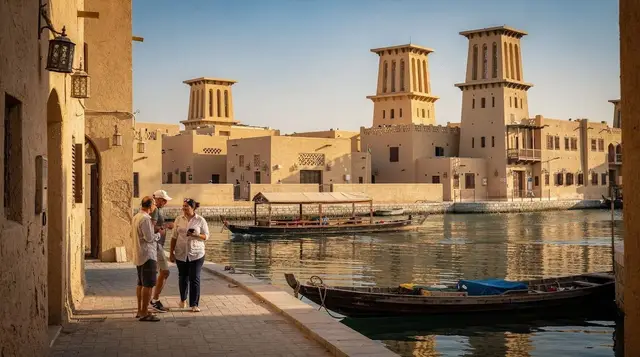
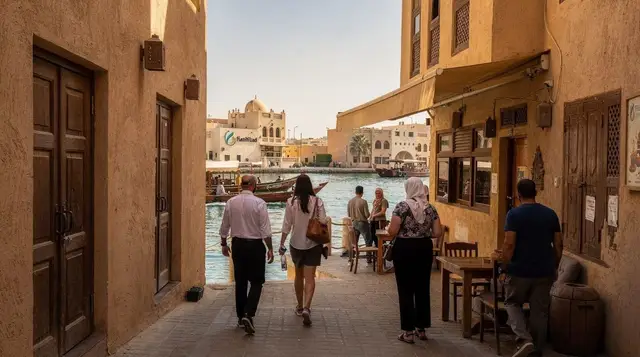
The museum occupies one of the restored coral-and-gypsum houses inside Al Fahidi Historical Neighbourhood in Bur Dubai, a couple of minutes’ walk from the neighborhood’s main gallery cluster and close enough to the Dubai Creek waterfront to fold into the same outing. It isn’t signposted aggressively — part of its charm is that you have to be looking for it, following narrow sandy lanes past wind-tower houses rather than a wide plaza entrance. Staff at nearby galleries or the Sheikh Mohammed Centre for Cultural Understanding can point you toward it if the lanes get confusing on a first visit.
Inside the museum: what you’ll actually see
The exhibits are modest in scale but genuinely well-curated: a timeline tracing coffee’s origin story in Ethiopia, its spread through Yemen and the Ottoman Empire, and its eventual arrival as a defining feature of Gulf Arab hospitality. Display cases hold a collection of dallah pots (the long-spouted brass or copper vessels used to serve gahwa) in different regional styles, alongside roasting equipment, hand grinders, and small handleless cups (finjan) stacked in the traditional serving style. Wall panels explain the etiquette around serving and drinking gahwa in more depth than most visitors get anywhere else in the city, including the specific gestures that signal “more, please” versus “I’m done.”
Arabic coffee, explained properly
Gahwa is unlike the coffee most international visitors know: pale gold rather than dark brown, unsweetened, and infused with cardamom (sometimes saffron or cloves too) rather than milk or sugar. It’s brewed slowly, poured in small quantities into tiny cups so it stays hot through multiple refills, and served alongside dates, which provide the sweetness the coffee itself deliberately lacks. In Emirati households and majlis gatherings, gahwa isn’t just a beverage — it’s the physical act of hospitality itself, poured by a host (traditionally with the right hand) as the first gesture offered to any guest, before conversation even properly begins.
The refill ritual and how to signal you’re done
The custom of continuous refilling is genuine and can catch first-time visitors off guard: a host will keep topping up your cup as a sign of generosity, and it’s considered polite to accept at least two or three rounds before declining. To signal you’ve had enough, gently shake or wobble the empty cup from side to side rather than saying “no thank you” outright — a small wrist motion that Emirati hosts recognize instantly. Getting this wrong isn’t a serious faux pas (nobody will be offended by a verbal decline), but knowing the gesture is a small, low-effort way to show genuine cultural awareness rather than just tourist politeness.
Ticket price and what’s included
Entry runs a few dirhams, typically in the AED 10-15 range (roughly 3-4 USD), making it one of the cheapest tickets attractions in Dubai charge for anything. Many visits include a small complimentary cup of gahwa served on-site as part of admission — arguably the most instructive part of the whole visit, since tasting the actual drink does more to convey its cultural weight than reading about it. Confirm at the entrance whether tasting is included that day, as staffing and format can vary slightly.
Combining the visit with a guided walk
This guided walking tour of old Dubai, the souks, and an abra boat crossing runs through Al Fahidi and can be timed to include a Coffee Museum stop with a guide who can add context — which dallah styles are regional versus imported, how gahwa customs differ slightly between UAE, Saudi, and Omani households — that the museum’s own signage doesn’t always cover. It’s a reasonable option if you’d rather have someone narrate the visit than read wall panels solo.
History of coffee’s journey to the Gulf
The exhibits trace a genuinely interesting trade story: coffee’s documented origins in Ethiopia’s highlands, its cultivation and early spread through Yemen (where the port of Mocha gave its name to coffee exports for centuries), and its movement north through the Ottoman world before becoming embedded in Gulf Arab culture. Because the UAE sits at a historic crossroads of Indian Ocean and Gulf trade routes, coffee arrived here through the same maritime networks that once carried pearls, spices, and textiles — a thread that connects directly to the pearling and trading history covered at Al Shindagha Museum nearby.
The dallah pot as a cultural symbol
The dallah — the distinctive long-spouted coffee pot — appears widely across the UAE beyond the museum itself: on currency, in logos, and as a decorative motif in hotels and public buildings, similar to how a teapot might symbolize British hospitality. The museum’s collection shows the range of dallah styles used historically across different Gulf regions, from simple brass versions to more ornately decorated examples, and explains why the pot’s shape (a narrow spout for controlled, slow pouring) is functional rather than purely decorative.
Common misconceptions worth clearing up
A frequent assumption is that the Coffee Museum resembles a European-style coffee-house history exhibit, heavy on espresso machines and café culture — it isn’t; the focus is specifically Gulf Arab gahwa tradition, not global coffee culture broadly. Another misconception is treating it as a sizeable museum worth a dedicated hour or more; in practice it’s genuinely small, and visitors expecting an extensive collection may be surprised by how compact it is. Neither is a criticism of the place itself — knowing the scope in advance just sets the right expectations for a focused, worthwhile 20-30 minute stop.
Comparing it to Al Shindagha’s coffee and heritage exhibits
Al Shindagha Museum, a short distance away on the Creek waterfront, covers pearling, trading, and pre-oil Dubai across several larger pavilions and touches on hospitality customs including gahwa within a broader historical narrative. The Coffee Museum, by contrast, goes deeper on this single topic in a smaller, more intimate setting. Visitors with limited time typically choose one or the other; visitors spending a full morning in Old Dubai can reasonably do both, since neither requires more than 30-45 minutes.
Visiting with kids
The Coffee Museum works better for curious older children and adults than for young kids — the format leans on text panels and historical artifacts rather than interactive or sensory exhibits. That said, the short visit length means it rarely disrupts a family day even if children move through it quickly; it pairs naturally with a livelier stop such as an abra ride across the Creek immediately afterward to re-engage younger visitors.
Accessibility
The museum occupies a genuine historic courtyard house rather than a purpose-built modern space, so expect raised thresholds, a step or two between rooms, and narrow doorways consistent with early-1900s construction. It’s manageable for most visitors but not fully wheelchair-accessible, similar to several of Al Fahidi’s other restored buildings.
Photography and etiquette inside
Photography of the exhibits and the building itself is generally permitted and welcomed — the dallah pot displays and traditional interior make for genuinely attractive, uncrowded photos compared with Dubai’s busier landmarks. If staff or other visitors are demonstrating the coffee pour for you, it’s polite to ask before photographing them directly, the same courtesy that applies throughout Al Fahidi and the wider souks.
Nearby cafés to extend the experience
Several restored courtyard houses within a few minutes’ walk operate as cafés serving both modern coffee and traditional Emirati fare, letting you sit with an actual cup rather than just viewing displays. Arabian Tea House is a well-known example with a shaded courtyard setting. Pairing the museum with a proper café stop rounds out the experience considerably beyond the 20-minute museum visit alone, and gives a second, more relaxed opportunity to order gahwa if the museum tasting was brief.
Ramadan and seasonal notes
During Ramadan, gahwa and dates take on extra significance as the traditional way an Iftar meal is broken at sunset, and some cafés near the museum adjust their offerings and hours accordingly — the Ramadan guide covers how the holy month reshapes food, drink, and daily rhythm across Dubai more broadly, including in Old Dubai specifically. Outside Ramadan, the museum keeps standard hours consistent with the rest of Al Fahidi’s small attractions.
Getting there
The Coffee Museum sits within walking distance of Al Fahidi Metro Station on the Green Line, making it one of the more transit-accessible small museums in the city. It’s most naturally visited as part of a longer walk covering Al Fahidi’s galleries, rather than as a standalone trip, since the surrounding neighborhood offers considerably more to see per minute spent getting there.
Extending into a fuller Old Dubai morning
This old town, souks, and street food walking tour with an abra ride is a practical way to fold the Coffee Museum into a broader half-day covering the Gold Souk and Spice Souk on the Deira side of the Creek, with a guide managing the logistics of the crossing and timing between stops. The full self-guided version of this route, with realistic timing for each stop, is covered in the Old Dubai walking guide.
Dubai’s wider coffee and café culture, for comparison
Beyond the museum’s historical focus, Dubai has developed a genuinely thriving contemporary café scene over the past decade, spanning specialty third-wave roasters alongside traditional gahwa houses. The Dubai coffee shops and cafés guide covers that modern scene in depth; visiting both the historical museum and a specialty café on the same trip gives a fuller sense of how far coffee culture in the city stretches, from centuries-old cardamom-spiced tradition to flat whites in a Downtown co-working café.
The wider Emirati hospitality tradition beyond coffee
Gahwa doesn’t exist in isolation — it’s one piece of a broader Emirati hospitality tradition that also includes incense, dates, and specific greeting customs, all covered in more depth in the Emirati culture and etiquette guide. Understanding gahwa specifically gives useful grounding before tackling that wider set of customs, since the coffee ritual is often the first (and most literal) point of contact visitors have with Emirati hospitality norms, whether at a museum tasting, a Bedouin-style desert camp, or an Emirati home.
Fitting the museum into a first-time itinerary
For visitors following a first-timer Dubai itinerary or a fuller 3-day itinerary, the Coffee Museum works best slotted into an Old Dubai morning alongside Al Fahidi, rather than treated as a separate outing. Given its short length, it rarely competes for time against the day’s bigger-ticket items — it’s the kind of stop that fits into a gap between the souks and lunch without forcing a rework of the day’s schedule.
Historic coffeehouses as social and political spaces
Beyond the home hospitality ritual, the museum touches on the historical role of coffeehouses across the Arab and Ottoman worlds as genuine centers of public life — places where news traveled, business deals were struck, storytellers performed, and, at various points in history, where authorities grew wary enough of political discussion to periodically ban or restrict them.
This history isn’t unique to the Gulf (Ottoman and Levantine coffeehouse culture predates the UAE’s own coffee traditions by centuries), but it’s a useful reminder that coffee’s social function as a gathering point long precedes its adoption into Emirati majlis culture specifically, and the museum situates the local tradition within that much older regional story rather than presenting it in isolation.
Traditional sweets often paired with gahwa
Gahwa is rarely served entirely alone — dates are the near-universal pairing, providing the sweetness the unsweetened coffee deliberately lacks, but other traditional sweets appear alongside it in Emirati hospitality settings too, including luqaimat (small, deep-fried dumplings drizzled with date syrup) and various nut-and-honey preparations. The museum’s exhibits touch on this pairing tradition, and several nearby cafés in Al Fahidi serve both together, letting visitors experience the full combination rather than the coffee alone. The Emirati cuisine guide covers these dishes and others in more depth for visitors curious about the wider food tradition gahwa sits within.
Weather and timing considerations
Old Dubai’s outdoor lanes get genuinely hot from June through September, and while the museum itself is air-conditioned, the walk to and from it across Al Fahidi is not. The best time to visit Dubai guide covers this seasonal pattern in more depth; in practice, an early morning or late-afternoon visit works year-round, but it becomes closer to essential during the summer heat window rather than simply preferable.
The bottom line
The Coffee Museum won’t anchor anyone’s Dubai trip on its own, and it shouldn’t be expected to — it’s a small, cheap, 20-30 minute detour that adds genuine cultural depth to an Al Fahidi visit, explained through artifacts and, ideally, an actual cup of gahwa rather than a plaque. For visitors who want to understand why coffee sits at the center of Emirati hospitality rather than just being told that it does, it’s one of the better-value stops in the entire city.
Why the museum matters beyond a quick photo stop
It’s easy to dismiss a small, single-theme museum as a minor detour, but the Coffee Museum earns its place on an Old Dubai itinerary for a specific reason: gahwa is genuinely central to how hospitality functions in Emirati culture, and understanding the ritual before encountering it elsewhere — a desert camp, a majlis, a family home — changes how a visitor reads that moment. Rather than a stranger pouring coffee as a generic gesture, it becomes recognizable as the opening move of an actual cultural custom with specific etiquette attached. Few attractions in Dubai deliver that kind of practical, applicable cultural literacy in 20-30 minutes for a few dirhams.
This is also part of why the museum rewards a second look even for repeat Dubai visitors — the exhibits are dense enough with specific detail (the regional dallah styles, the Ottoman-era coffeehouse history) that a first, rushed visit often misses details a more unhurried second pass catches, particularly for anyone who visits again on a return trip and has more context to appreciate on the second look.
Coffee Museum vs Al Shindagha: which to prioritize with limited time
Both cover coffee and hospitality to some degree, but at very different depths and scales.
| Coffee Museum | Al Shindagha Museum | |
|---|---|---|
| Focus | Gahwa and Arabic coffee ritual specifically | Pearling, trading, pre-oil Dubai broadly |
| Time needed | 20-30 minutes | 60-90 minutes |
| Cost | AED 10-15 (3-4 USD) | Higher, multi-pavilion entry |
| Best for | A focused cultural detail | A broader historical overview |
Visitors with under an hour in Al Fahidi should prioritize the Coffee Museum for its brevity; those with a full morning can comfortably do both, since neither requires more than 30-45 minutes each. See the Al Shindagha Museum guide for the fuller pearling and trading history.
Building a longer Al Fahidi morning around the museum
Because the Coffee Museum takes so little time on its own, it works best as one stop within a longer Al Fahidi loop rather than a destination in itself. A realistic sequence: start at the Al Fahidi Historical District’s main gallery cluster for 30-45 minutes, detour to the Coffee Museum for its 20-30 minute visit and a tasting if offered, then finish with a proper café stop at one of the nearby courtyard cafés for a relaxed second cup. This whole sequence comfortably fits into a two-hour morning window before the midday heat builds, and it pairs naturally with an abra crossing to Deira afterward for visitors continuing on to the Gold and Spice Souks.
Frequently asked questions about the Coffee Museum
Is the Coffee Museum worth the detour in Al Fahidi?
Yes, if you’re already walking Al Fahidi — it’s a cheap, short, genuinely informative add-on rather than a museum that justifies a dedicated trip on its own.
What makes Arabic coffee different from regular coffee?
It’s unsweetened, cardamom-spiced, pale rather than dark, and served in small handleless cups alongside dates, as part of a hospitality ritual rather than a caffeine-first beverage.
How do I politely decline another cup?
Wobble the empty cup gently from side to side rather than saying no outright — the standard, widely recognized Gulf gesture for “I’ve had enough.”
How much time should I set aside?
20-30 minutes for the exhibits, plus another 10-15 minutes if you sit for a coffee tasting or a nearby café stop afterward.
Is it better than Al Shindagha’s heritage exhibits?
They cover different scope — Al Shindagha is larger and broader across pearling and trading history, while the Coffee Museum goes deeper on gahwa specifically. Time permitting, both are worth doing together.
Does the ticket include a coffee tasting?
Often, yes, though it can vary — ask at the entrance when you arrive to confirm what’s included that day.
Can I visit the Coffee Museum without a guide?
Yes — it’s a small, self-guided museum with wall panels explaining each exhibit; a guide adds context but isn’t necessary to understand the space.
Is the Coffee Museum family-friendly?
It works better for curious older children and adults, given its text-heavy exhibits, but the short visit length means it rarely disrupts a family day even if younger children move through it quickly.
Top experiences
Bookable activities with verified prices and instant confirmation on GetYourGuide.