Al Shindagha Museum guide: Dubai's real pre-oil history
Dubai: old town, Creek, abra boat & souks guided walking tour
What is Al Shindagha Museum and is it worth visiting?
Al Shindagha Museum is Dubai's largest heritage museum, spread across restored historic houses and purpose-built pavilions on the Creek waterfront, covering pearl diving, traditional boat-building, the Perfume House, and the personal history of the ruling Al Maktoum family. Yes, it's worth an hour to 90 minutes for anyone spending time in Old Dubai — it's the most substantial, best-produced heritage museum in the city and charges modest entry.
What Al Shindagha Museum actually is
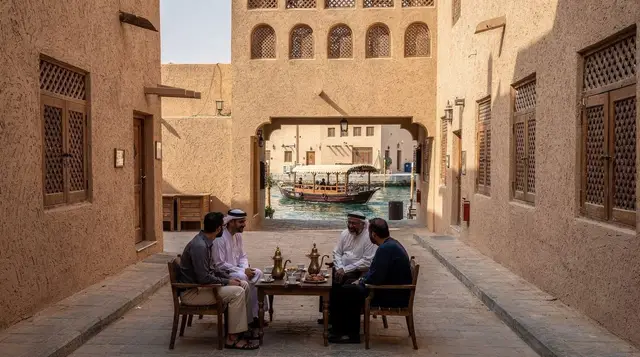
On the Creek waterfront in the historic Shindagha district, Al Shindagha Museum is Dubai’s largest and most developed heritage museum — a sprawling complex of restored historic houses and purpose-built galleries spread across the site where the ruling family and Dubai’s pearling merchants once lived, at the mouth of Dubai Creek. Unlike the city’s smaller single-topic heritage sites, this is a genuine multi-pavilion museum with a scale and production quality closer to what visitors from cities with major national museums expect, and it’s arguably the single most substantial place in Dubai to understand what the city was before oil money reshaped it.
| Where | Shindagha waterfront, Bur Dubai, at the mouth of Dubai Creek |
| Cost | Around AED 25-50 depending on pavilion combination |
| Time needed | 60-90 minutes for a thorough visit |
| Getting there | Metro (Al Ghubaiba/Al Ras) + short walk, or taxi from Deira/Downtown |
| Best time | Any time — pavilions are air-conditioned; early/late for the outdoor walk |
Where it sits and how it connects to Old Dubai
Shindagha occupies the waterfront tip of Bur Dubai, at the point where the Creek meets the Gulf, a short walk or quick taxi from Al Fahidi and the Bur Dubai abra stations. Historically this was where Dubai’s ruling Al Maktoum family and its most prominent pearling merchants built their homes, specifically because the location gave direct access to both the Creek’s sheltered anchorage and open Gulf waters — a strategic choice that shaped the neighborhood’s status for over a century before the museum formalized it as a heritage site.
The pearling pavilion
Pearling sustained Dubai’s economy for generations before oil, and Al Shindagha’s pearling pavilion is one of its strongest sections — covering diving techniques, boat crews, trade routes, and the physically brutal realities of a pearl diver’s working life, using artifacts, models, and multimedia rather than static text panels alone. It’s genuinely eye-opening for visitors who associate Dubai purely with its post-1970s oil-and-skyscraper story, since pearling was the dominant regional industry for far longer than oil has been, right up until the Japanese cultured-pearl industry collapsed Gulf pearl prices in the 1930s.
Traditional boats and maritime craft
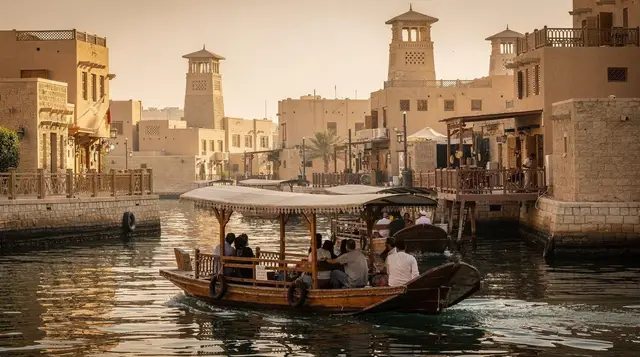
A dedicated section covers the wooden dhows and smaller vessels that carried pearl divers, traders, and goods across the Gulf and Indian Ocean for centuries, including full-scale examples and models illustrating different boat types and their specific purposes. This section connects directly to the living tradition still visible today on the Creek itself — the same style of vessel, in modified form, still operates as dhow dinner cruises and cargo boats along the waterway just outside the museum’s doors.
The Perfume House
One of Al Shindagha’s most distinctive pavilions is the Perfume House, dedicated to Emirati perfumery — a sensory tradition as culturally central to Gulf hospitality as Arabic coffee, built around oud (agarwood), bakhoor incense, and traditional attar oils rather than Western-style fragrance. Exhibits cover how oud is harvested and its high value explained, how bakhoor is burned to scent homes and clothing (particularly before receiving guests), and how perfume gifting functions as a social custom in Emirati life.
It’s one of the few places in Dubai where visitors can genuinely smell, rather than just read about, a defining local tradition, and it pairs conceptually with the Coffee Museum’s exploration of gahwa as another sense-based hospitality ritual.
The ruling family pavilion
A separate pavilion, housed in one of the district’s original historic homes, is dedicated to the personal history of Dubai’s ruling Al Maktoum family, including the childhood home of the late Sheikha Hind bint Maktoum and family artifacts and photographs spanning several generations. This gives Al Shindagha a more personal, human dimension alongside its broader trade- and craft-focused pavilions, and it’s a section international visitors sometimes skip that’s genuinely worth the extra 15-20 minutes for context on how the city’s leadership has evolved.
Bedouin desert life exhibits
Complementing the maritime and trading focus, another section covers traditional Bedouin desert life — tent structures, textiles, tools, and the seasonal patterns of movement between coast and desert that characterized life before Dubai urbanized. It’s a useful counterpoint to the coastal, trade-focused story told elsewhere in the museum, rounding out the picture of how varied pre-oil Emirati life actually was depending on where a family lived and worked.
Ticket price and what’s included
Entry runs modestly, typically in the AED 25-50 range (7-14 USD) depending on which pavilions or combined tickets you select — considerably cheaper than a landmark ticketed attraction and reasonable for the amount of content on offer. Some tickets bundle access to multiple pavilions at once; check current pricing at the entrance or official site, since specific combinations shift periodically. This is a fraction of what Museum of the Future charges, reflecting the difference in positioning between a heritage museum and a headline modern attraction.
Comparing Al Shindagha to Al Fahidi
Al Fahidi is a neighborhood you wander — restored houses, galleries, and cafés experienced as an organic walk. Al Shindagha is a formal museum you visit purposefully, with defined pavilions, ticketing, and a clearer curatorial narrative. Neither replaces the other; most visitors doing a proper Old Dubai morning benefit from both, spending unhurried time in Al Fahidi’s lanes and then a dedicated hour in Al Shindagha’s pavilions for the deeper historical substance that Al Fahidi’s architecture alone doesn’t fully convey. The full museums guide compares Al Shindagha against Dubai’s other museums, including Museum of the Future, for a broader view.
Comparing Al Shindagha to Dubai Museum at Al Fahidi Fort
Dubai Museum, housed inside the older Al Fahidi Fort, has historically covered similar pre-oil ground on a smaller, more dated scale, and has faced extended renovation closures in recent years with a reopening status that shifts periodically — treat any specific claim about whether it’s currently open as something to verify directly rather than assume from an older source. Al Shindagha, being newer and larger, has effectively become the more reliable and comprehensive version of this same historical story for current visitors.
A guided way to see it
This old town, Creek, abra boat, and souks guided walking tour passes through the Shindagha waterfront area as part of its route along the Creek, giving useful context on the district’s history alongside the abra crossing and souk stops — a practical way to see Al Shindagha’s surroundings if you’re combining several Old Dubai sites into a single guided morning rather than navigating independently.
Timing and crowds
Al Shindagha draws considerably fewer visitors than Dubai’s headline landmarks, and walk-up entry without advance booking is normal outside of any special event days. Early morning or late afternoon avoids the worst of the heat for the walk to and from the museum, though the pavilions themselves are air-conditioned throughout, making a midday visit perfectly comfortable once you’re inside.
Visiting with kids
The pearling and traditional boat exhibits tend to hold children’s attention reasonably well, particularly with some parental narration explaining what pearl diving actually involved and why it mattered. The Perfume House also works well for kids given its sensory, hands-on-adjacent nature (some sections let you smell sample scents), while the more document-heavy ruling family pavilion is better suited to older children and adults.
Accessibility
Al Shindagha’s purpose-built galleries are generally accessible with level pathways and modern facilities, though sections housed within the original restored historic homes retain some period features — raised thresholds, narrower doorways — consistent with genuine older construction rather than new-build accessibility standards. Overall it’s more accessible than Al Fahidi’s narrower lanes, given the larger, more modern gallery spaces that make up most of the complex.
Photography
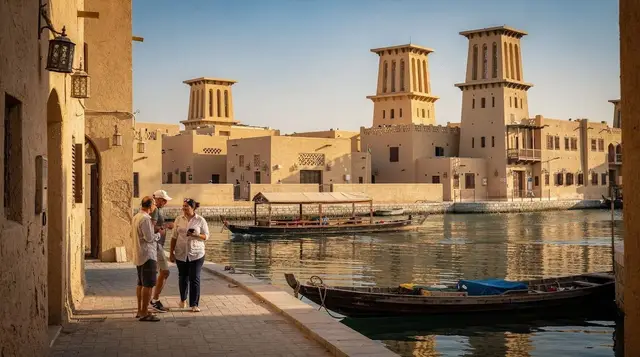
Photography is generally welcomed throughout most pavilions, particularly the boat and pearling displays and the museum’s striking waterfront setting, though some specific artifact cases or personal family displays may carry restrictions, usually signposted at that exhibit. The waterfront views toward the Creek and the Al Maktoum family’s historic wind-tower house are genuinely photogenic and worth allowing time for outside the galleries themselves.
Combining with the rest of Old Dubai
Al Shindagha sits naturally at the end (or start) of the broader Old Dubai walking route, which also covers Al Fahidi, an abra crossing, and the Deira souks. Most visitors fold a 60-90 minute Al Shindagha stop into a half-day that also includes Al Fahidi’s galleries and the Coffee Museum, given how close all three sit to one another along the same stretch of waterfront.
This walking tour covering old Dubai’s souks and an abra boat crossing is a reasonable way to structure that broader morning if you’d rather have a guide manage the route and timing between Al Shindagha, Al Fahidi, and the souks than plan it independently.
Getting there
Al Shindagha is reachable via the Green Line’s Al Ghubaiba or Al Ras Metro stations followed by a short walk, or directly by taxi or Careem from Deira or Downtown Dubai (15-25 minutes depending on traffic). Limited parking exists near the site for those self-driving.
Traditional crafts and everyday material culture
A further section of the complex covers everyday material culture beyond the headline pearling and perfume stories — textile weaving, palm-frond basketry (khoos), and traditional jewelry-making, illustrating the practical crafts that sustained households alongside the pearling economy’s boom-and-bust cycles. These exhibits are easy to move past quickly given their less dramatic presentation than the boat and pearling halls, but they round out the picture of daily domestic life in a way the more headline-grabbing pavilions don’t fully cover on their own.
What Al Shindagha reveals about Dubai’s transformation
Walking through Al Shindagha’s pavilions and then stepping back outside into a city of glass towers and eight-lane highways makes the museum’s real value clear: few cities anywhere have transformed as fast or as completely as Dubai has since the mid-20th century, and Al Shindagha is the clearest single place to grasp the scale of that change. The pearling economy documented inside collapsed within a few decades of the museum’s own historical setting, and the transition from that economy to the oil-and-tourism-driven city visible outside took place within a single living generation — a compression of historical change that’s genuinely hard to grasp without seeing the “before” picture Al Shindagha preserves.
The is Dubai worth visiting guide touches on this broader transformation story from a different angle, for visitors weighing whether the city’s rapid development is a point in its favor or a point of skepticism.
Dining near Al Shindagha after your visit
The Old Dubai waterfront near Al Shindagha has a reasonable spread of casual local eateries within walking distance, and it’s worth pairing a museum visit with a stop covered in the Dubai street food guide or the broader best restaurants in Dubai guide rather than rushing straight back to a hotel or the next attraction. Traditional Emirati dishes referenced throughout the museum’s exhibits — harees, machboos, luqaimat — are genuinely worth seeking out at a nearby restaurant while the historical context is still fresh.
Fitting Al Shindagha into a longer trip
On a 3-day Dubai itinerary or longer, Al Shindagha pairs naturally with a full Old Dubai morning that also covers Al Fahidi, the Coffee Museum, and an abra crossing, leaving afternoons free for Downtown or Marina sightseeing. On a tighter schedule, it’s the single heritage museum worth prioritizing over the smaller sites if you can only fit one, given its scale and the breadth of what it covers in one visit.
Weather and seasonal timing
The walk between Al Shindagha, Al Fahidi, and the abra stations is entirely outdoors, so the same seasonal logic applies here as elsewhere in Old Dubai — comfortable much of the year, genuinely tough during the June-September heat window described in the best time to visit Dubai guide. The museum’s own galleries are fully air-conditioned regardless of season, so the heat only affects the walk itself, not the visit once inside.
How Al Shindagha compares to Sharjah’s heritage museums
Visitors who go on to explore Sharjah’s culture scene, roughly 35-45 minutes away, will find a similarly serious approach to heritage preservation at Heart of Sharjah, though on an even larger civic scale. The two aren’t redundant — Al Shindagha focuses specifically on Dubai’s own pearling and ruling-family history, while Sharjah’s heritage district and Islamic art museum tell a broader regional and religious-art story — and visitors doing a longer UAE trip often find real value in seeing both.
A note on ongoing development
Like much of Dubai’s heritage infrastructure, Al Shindagha has expanded in phases over recent years, with new pavilions periodically added to the complex. This means a repeat visitor returning after a few years may find sections that weren’t there previously, and it’s worth checking current pavilion listings before a visit rather than relying solely on an older description of what’s included, since the museum’s scope has genuinely grown rather than stayed fixed since it first opened.
Guided context versus self-guided exploration
Signage throughout Al Shindagha is generally thorough enough for a satisfying self-guided visit, unlike some of Old Dubai’s smaller sites where context is thinner. That said, a guide adds real value on specific points — explaining, for instance, which artifacts in the ruling family pavilion belong to which generation, or drawing connections between the pearling exhibits and families whose descendants still live in Dubai today — the kind of texture that written panels alone rarely convey as effectively as a knowledgeable local guide can in conversation.
The bottom line
Al Shindagha is the single most substantial heritage museum in Dubai and the best place in the city to understand pearling, trading, and pre-oil Emirati life in real depth rather than in passing. It’s inexpensive, uncrowded, air-conditioned, and pairs naturally with Al Fahidi and the souks for a genuinely rewarding Old Dubai morning — skipping it in favor of only the smaller, better-known heritage stops means missing the most comprehensive version of this history the city has to offer.
Frequently asked questions about Al Shindagha Museum
Is Al Shindagha Museum worth visiting?
Yes — it’s Dubai’s largest and best-produced heritage museum, covering pearling, trading, perfumery, and the ruling family’s history across several well-curated pavilions for a modest entry fee.
How much time should I plan for?
An hour to 90 minutes for a thorough visit; less if you focus on one or two pavilions specifically.
What’s the Perfume House about?
A dedicated pavilion on Emirati perfumery — oud, bakhoor incense, and attar oils — as culturally significant to Gulf hospitality as Arabic coffee, with sensory displays letting visitors experience the scents directly.
Is it different from Dubai Museum at Al Fahidi Fort?
Yes, they’re separate sites; Al Shindagha is newer, larger, and more comprehensive, while Dubai Museum has faced extended, uncertain closures in recent years.
Is Al Shindagha good for a family visit?
Reasonably, yes, especially the pearling, boat, and perfume sections, which engage kids better than the more document-focused pavilions.
Should I visit Al Shindagha or Al Fahidi if I only have time for one?
If forced to choose, Al Fahidi’s free architecture and galleries suit a shorter, more casual visit, while Al Shindagha delivers deeper historical substance for a modest ticket price — ideally, budget time for both.
Do I need to book Al Shindagha tickets in advance?
No — walk-up entry is normal outside special event days, since the museum draws far fewer visitors than Dubai’s headline landmarks.
How does Al Shindagha compare in price to Museum of the Future?
It’s a fraction of the cost — roughly AED 25-50 versus Museum of the Future’s considerably higher ticket price, reflecting the difference between a heritage museum and a headline modern attraction.
Pavilion-by-pavilion: what to prioritize if you’re short on time
| Pavilion | Time to allow | Priority if rushed |
|---|---|---|
| Pearling exhibits | 15-20 min | High — the strongest, most distinctive section |
| Traditional boats | 10-15 min | Medium — pairs well with a Creek dhow cruise |
| Perfume House | 10-15 min | High — sensory, hard to replicate elsewhere |
| Ruling family pavilion | 15-20 min | Medium — adds personal/historical depth |
| Bedouin desert life | 10 min | Lower — useful counterpoint, skippable if rushed |
| Crafts and material culture | 10 min | Lower — easy to move past quickly |
Value for money versus Dubai’s other paid attractions
Al Shindagha’s AED 25-50 entry buys roughly 60-90 minutes of well-produced, air-conditioned museum content — a genuinely strong ratio next to Dubai’s pricier landmark attractions, and arguably the best per-dirham cultural experience in the city after the abra’s 1 AED Creek crossing. For travelers budgeting a Dubai trip around a handful of paid attractions, it’s worth including specifically because the cost is low enough that it rarely competes with a bigger-ticket item like the Burj Khalifa or Museum of the Future for the same day’s budget.
Top experiences
Bookable activities with verified prices and instant confirmation on GetYourGuide.