Dubai street food guide: karak, shawarma and where to find it
Dubai: old town, souks, street food, guided tour & abra ride
Duration: 3-4 hours
Where is the best street food in Dubai?
Al Rigga in Deira and Al Diyafah Street in Satwa have the densest, most authentic clusters of karak chai stalls, shawarma counters and cheap grills. Ravi Restaurant on Al Diyafah Street, open since 1978, is the single most famous stop. Global Village (seasonal, October-April) adds a different format — dozens of country pavilions each serving their own street food in one walkable site.
Street food in Dubai looks different from other cities
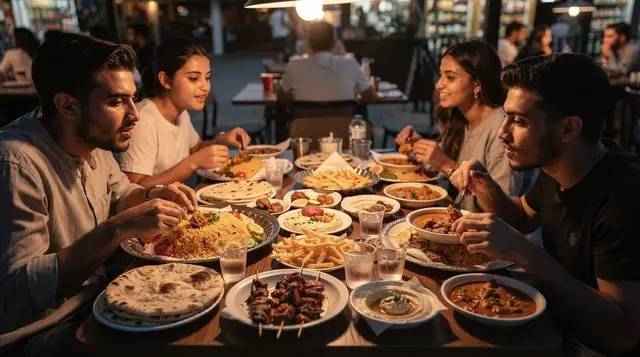
Dubai doesn’t have the rotating night-market street food culture found in Bangkok, Singapore or Mexico City — the climate (brutal heat for half the year) and municipal regulation both work against an outdoor, informal night-market format at scale. What it has instead is a dense, permanent scatter of small restaurants, roadside karak stalls and shawarma counters concentrated in specific working-class neighborhoods, feeding the city’s large South Asian, Filipino and Iranian population rather than performing for tourists. This guide maps where that scene actually clusters, plus the one seasonal event that does resemble a street-food market.
| Where | Al Rigga (Deira), Al Diyafah St (Satwa), Karama |
| Cost | Karak AED 2-4, shawarma AED 6-12, full meal AED 25-45 |
| Time needed | 2-4 hours for one neighborhood crawl |
| Getting there | Al Rigga has its own metro stop; Satwa/Karama need a taxi |
| Best time | Evenings, November-March; avoid midday June-September |
Karak chai: the closest thing to a street-food ritual
Karak — strong black tea brewed with condensed milk, cardamom and sometimes ginger or saffron — is sold from small roadside stalls across the city for AED 2-4 (0.50-1 USD) a cup, and it’s genuinely the closest thing Dubai has to a universal street-food habit. Stalls stay busy at almost any hour, and a karak stop is as much a social pause as a caffeine one — construction workers, taxi drivers, and office staff on a break all use the same stalls. Al Rigga in Deira and Karama both have reliable clusters worth seeking out specifically for this rather than assuming any nearby stall will do; quality and freshness vary more than the low price suggests.
Al Rigga: Deira’s street food core
Al Rigga, a commercial strip in Deira, is one of the densest concentrations of small, cheap restaurants and stalls in the city — Filipino carinderia-style counters, Indian and Pakistani grills, Iranian kebab spots, and karak stalls within a few blocks of each other. It’s not curated for tourists in any way, which is exactly the appeal; prices and quality both reflect a neighborhood feeding its own residents rather than a captive visitor market.
Al Diyafah Street and Ravi Restaurant
Al Diyafah Street in Satwa carries a similar density to Al Rigga, and it’s home to Dubai’s single most famous cheap-eats institution: Ravi Restaurant, open since 1978, serving Pakistani curries, grills and fresh naan to a genuine cross-section of the city. A full meal runs AED 25-45 (7-12 USD) per person. Al Mallah, also on Al Diyafah Street, does shawarma and fresh juice at similarly low prices and stays busy late into the night — a reliable stop after a night out. The full best restaurants guide covers both in more detail alongside the city’s higher-end options.
Shawarma: everywhere, quality varies enormously
Shawarma is sold on nearly every commercial street in Dubai, and the quality gap between a good stall and a mediocre one is larger than the price gap — a well-run stall with high turnover, fresh-cut meat and a busy grill costs the same AED 6-12 (2-3 USD) as a mediocre one reheating pre-cooked meat from a slow morning. Busy, visibly popular stalls are the reliable signal here, more than any specific brand name or location. Zaroob, a modern Lebanese street-food chain with multiple branches, offers a more consistent, slightly pricier alternative if you’d rather not gamble on an unfamiliar independent stall.
Karama: food streets and pure-vegetarian options
Karama, a dense residential and commercial district, hosts a genuinely strong food scene skewed toward South Asian cooking, including several pure-vegetarian Indian restaurants serving thali-style meals that outperform much of what’s marketed to tourists elsewhere in the city. It’s also one of the more reliable areas for very cheap, filling meals under AED 20 (5 USD), and a natural pairing with Karama’s market for a half-day out combining food and shopping.
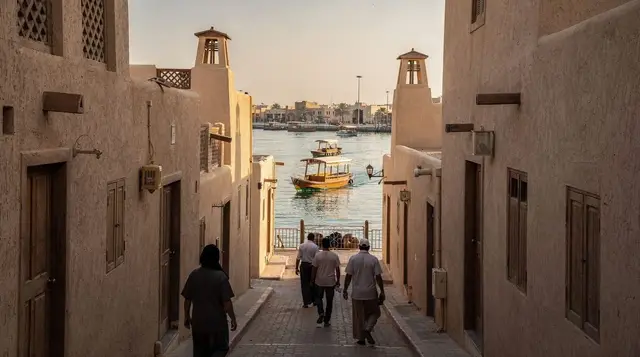
This Old Dubai souks and street food walking tour with abra crossing covers a curated version of this scene in Old Dubai specifically, useful if navigating unfamiliar side streets alone feels like more effort than it’s worth.
Global Village: the closest thing to a food market
Global Village, open seasonally from October through April, is a different format entirely — dozens of country-themed pavilions, each with its own food stalls, spread across a large walkable site. It’s the closest experience in Dubai to a genuine international street-food market, with Indian chaat, Turkish ice cream, Emirati sweets and dozens of other cuisines represented in one visit. It’s more tourist-facing than Al Rigga or Karama, and pricing reflects that, but the sheer variety in one site is genuinely unmatched elsewhere in the city.
This Global Village entry ticket is the standard way to access the food pavilions alongside the wider cultural and shopping village.
Old Dubai: souks, abra crossings and food together
Old Dubai — Al Fahidi, Bur Dubai and the Creek together — pairs its historic souks with a genuinely good, walkable street food scene, including the AED 1 abra crossing that doubles as sightseeing between food stops. The Old Dubai walking guide and abra guide cover the sightseeing side; layering a food stop at each stage of the walk (a karak break on one bank, a shawarma or biryani lunch on the other) makes for one of the better half-day combinations in the city.
This guided Old Dubai souks and abra walking tour combines the historic sightseeing and street food stops into a single planned route.
Kebabs and grills beyond shawarma
Persian and Afghan grill houses, concentrated in Bur Dubai and parts of Karama, serve skewered kebabs, grilled chicken and lamb chops alongside saffron rice, usually for AED 20-40 (5-11 USD) per person — a step up from shawarma in both price and format while still firmly in street-food territory. Al Ustad Special Kabab, open since 1978 in Bur Dubai, is the best-known example and a useful benchmark for what a good version of this style should taste like.
Sweets, desserts and fruit juice stalls
Luqaimat — small fried dumplings drizzled in date syrup — appear at both dedicated Emirati restaurants and informal stalls, especially around Ramadan and at Global Village, for a few dirhams a portion. Fresh fruit juice stalls, ubiquitous across Satwa, Karama and Deira, blend mango, pomegranate, and combination juices to order for AED 8-15 (2-4 USD), a genuinely refreshing and healthy counterpoint to the heavier fried and grilled street food, especially useful during the hotter months.
Filipino and Southeast Asian street food corners
Dubai’s large Filipino population supports a strong, somewhat under-the-radar scene of carinderia-style Filipino eateries, concentrated around Al Rigga and parts of Bur Dubai, serving adobo, sinigang and halo-halo at prices similarly low to the South Asian stalls nearby. It’s one of the less internationally documented corners of the city’s street food scene and worth specifically seeking out if Filipino food isn’t already on your radar as a Dubai option.
How to order without overthinking it
Most stalls and small restaurants in these neighborhoods don’t run English-language menus with photos the way tourist-facing restaurants do — pointing at what looks good, asking “what’s popular today,” or simply ordering what the person ahead of you ordered all work fine, and staff are generally used to visitors doing exactly this. Cash remains more reliable than card at the smallest stalls, so carry small denominations rather than assuming a card machine will be on hand.
Combining street food with souk shopping
A street food crawl through Al Rigga or Karama pairs naturally with a shopping stop at the nearby Gold Souk or Spice Souk in Deira, or Karama’s own market — both a short walk from the food clusters described above, making it easy to build a single half-day out of eating and browsing without much extra transport.
Food safety at stalls and small restaurants
Dubai Municipality inspects and grades food establishments, including small stalls, and a visible letter-grade sticker is usually posted near the counter — a quick, useful check if you’re unfamiliar with a specific spot. Beyond that, standard travel sense applies: a busy stall with high turnover and food cooked to order is a safer bet than a quiet one with food sitting out, regardless of how official-looking the storefront is.
Vegetarian options within the street food scene
Karama’s pure-vegetarian Indian restaurants aside, most street food stalls default to meat-forward dishes, but vegetarian options — vegetable samosas, dal, paneer wraps, falafel — are rarely hard to find once you know to ask. The vegetarian and vegan guide covers dedicated venues if plant-based eating is more than an occasional preference.
Ramadan and street food
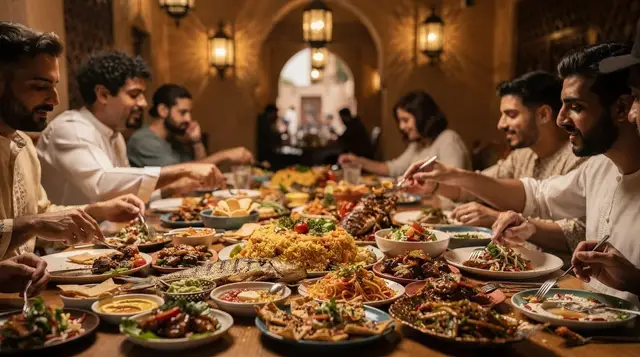
During Ramadan, eating and drinking in public during daylight hours is against local custom and, in places, regulation, and most street stalls either close during the day or operate discreetly, reopening in force for iftar (sunset fast-breaking) with special, often heavily discounted spreads. It’s a genuinely good time to explore the street food scene specifically, timed around sunset rather than the daytime hours. See the Ramadan guide for the practical details.
When to go, and the heat problem
Street food exploration on foot is genuinely unpleasant during the peak heat of June through September, when daytime temperatures regularly exceed 40°C — plan any walking food tour of Al Rigga, Karama or Old Dubai for the November-March cooler season, or shift to a late evening timing if visiting during summer. The best time to visit guide covers the wider seasonal picture.
Photography and etiquette at stalls
Most stall owners are happy to be photographed cooking, and a friendly ask beforehand is appreciated rather than required — this is a working neighborhood, not a staged tourist attraction, and treating it with the same courtesy you’d extend to a small family business anywhere else goes a long way. Avoid filming customers without asking, and keep in mind that many of the workers running these stalls are themselves far from home, often on long shifts — a warm interaction matters more here than a perfect shot.
Street food and dietary caution beyond the basics
Cross-contamination on a shared grill or fryer is a real consideration for anyone with a serious allergy — street stalls, unlike larger restaurants, rarely have separate prep areas for different ingredients. If you have a significant allergy, it’s more reliable to ask directly and simply than to assume a menu description is complete, since translation and simplification for a quick transaction is the norm rather than the exception at this price point and pace of service.
Why this scene doesn’t show up in most travel guides
Most Dubai travel content defaults to the skyline, the malls and the brunches, because that’s what the destination markets itself on and what most sponsored content covers. The street food scene described here isn’t hidden exactly — millions of residents eat this way daily — but it doesn’t fit neatly into a luxury-destination narrative, so it’s genuinely underrepresented relative to how good and how cheap it actually is. Visitors willing to take a taxi to Al Rigga or Karama rather than staying within the Downtown-Marina-JBR triangle see a meaningfully different, and arguably more interesting, side of the city’s food culture.
A one-day street food route
A workable single day: start with karak chai and an egg paratha breakfast in Karama, walk the Karama food streets and market through late morning, take a taxi to Old Dubai for lunch near the souks and an abra crossing over Dubai Creek, then finish the evening in Al Rigga or Satwa for shawarma, kebabs and a final karak. It’s a genuinely full day of eating for well under AED 100 (27 USD) per person, transport included, and covers more distinct food cultures than a single sit-down restaurant meal ever could.
Getting to the street food neighborhoods
Al Rigga has its own Dubai Metro Red Line station, making it one of the easiest street food areas to reach without a taxi. Satwa and Karama are a short taxi or Careem ride from Downtown or the Marina, and neither is well served by a direct metro stop, so budget a bit more for transport than the food itself will cost. The metro guide covers the wider network if you’re building a food-focused day around public transport.
Street food as a budget strategy, not just a novelty
For visitors watching a daily budget, leaning on this scene rather than tourist-zone restaurants isn’t a compromise on quality — it’s frequently the better meal at a fraction of the price, which makes it worth building into a trip for practical reasons as much as culinary curiosity. A traveler eating two street-food-style meals a day in Al Rigga, Karama or Satwa, with one nicer restaurant meal reserved for a special evening, can comfortably keep total food spend under AED 100-150 (27-41 USD) per day even in a genuinely expensive city. See the cheap eats guide for the fuller budget breakdown across all of Dubai’s low-cost dining options, not just the street-level ones covered here.
What to skip
A handful of “street food market” pop-ups aimed squarely at tourists have appeared in recent years near major attractions, charging several times the price of the genuine neighborhood stalls for a curated, sanitized version of the same food. These aren’t scams exactly, but they’re a manufactured experience rather than the real thing, and the money is better spent either at an actual neighborhood stall or, if a curated format is genuinely what you want, at Global Village, which at least offers real variety and scale in exchange for the tourist-facing pricing.
A reasonable rule of thumb: if a street food setup is inside or immediately outside a major attraction and charges close to restaurant prices for stall-style food, it’s built for one-time visitors rather than repeat local custom, and the genuine version of whatever it’s selling is almost always a short taxi ride away at a fraction of the cost. Treat proximity to a major attraction as a warning sign rather than a convenience whenever street food specifically, rather than a sit-down restaurant, is what you’re after.
Neighborhood comparison for a first crawl
Choosing between Al Rigga, Satwa and Karama comes down to what’s nearby and how much walking you want to do. This table lines up the three against each other for a first-time visitor deciding where to start.
| Area | Best for | Getting there | Typical spend |
|---|---|---|---|
| Al Rigga (Deira) | Filipino, Indian, Pakistani, karak | Metro Red Line, own station | AED 20-40/person |
| Al Diyafah St (Satwa) | Ravi Restaurant, late-night shawarma | Taxi from Downtown, ~15 min | AED 25-45/person |
| Karama | Pure-vegetarian thalis, market combo | Taxi from Downtown/Marina, ~15 min | Under AED 20/person |
Drinks to go with the food
Karak isn’t the only stall-side drink worth seeking out. Fresh sugarcane juice, pressed to order at small carts around Karama and Deira, is a genuinely refreshing counterpoint to fried and grilled food, usually AED 5-10 (1.4-2.7 USD) a glass. Laban (a savory, salted yogurt drink) appears alongside grilled meats at Persian and Emirati-leaning stalls, and is worth trying if the sweeter mango and pomegranate juices feel like too much on a hot day. None of these require seeking out a dedicated juice bar — they’re sold from the same stalls and small shops clustered around the food streets already covered above, so ordering one alongside a meal rather than as a separate stop is the natural approach.
A realistic budget for a street-food-focused day
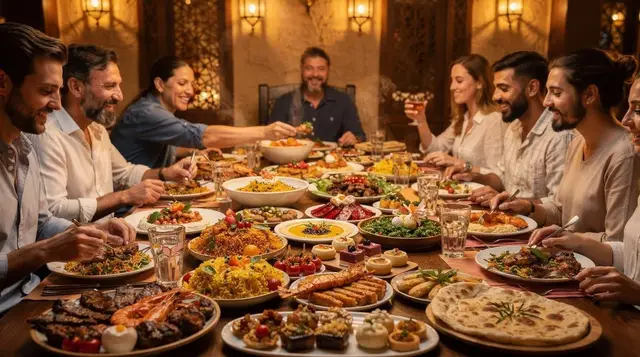
Building an entire day around this scene rather than a single meal is a genuinely good budget strategy, not just a novelty crawl. A visitor eating breakfast (karak and paratha, roughly AED 10-15), lunch (a Karama thali or Al Rigga grill plate, AED 20-30) and dinner (Ravi Restaurant or Al Mallah shawarma, AED 25-45) spends roughly AED 55-90 (15-25 USD) total for three genuinely good meals plus drinks — a fraction of what a single mid-range restaurant meal in Downtown or the Marina costs. Factoring in a taxi or two between neighborhoods adds another AED 20-40 depending on how far you range across the city.
Frequently asked questions about Dubai street food
What is karak chai?
A strong, sweet, cardamom-spiced tea sold at roadside stalls for AED 2-4 (0.50-1 USD). It’s Dubai’s closest thing to a street-food ritual.
Is street food in Dubai safe to eat?
Generally yes — Dubai Municipality grades food stalls with a visible sticker. Pick busy, high-turnover stalls over quiet ones.
Does Dubai have night markets like Bangkok or Singapore?
Not really. Street food here is a permanent neighborhood scatter (Al Rigga, Karama, Satwa) rather than a rotating night market, except for seasonal Global Village.
What does street food cost in Dubai?
Karak AED 2-4 (0.50-1 USD), shawarma AED 6-12 (2-3 USD), a full stall meal rarely exceeds AED 25-35 (7-10 USD).
Where does Ravi Restaurant fit in?
It’s a sit-down restaurant, not a stall, but shares the same cheap, unpretentious spirit — open since 1978 on Al Diyafah Street.
Is it acceptable to eat street food in public during the day?
Yes, except during Ramadan, when public daytime eating and drinking is against local custom and, in places, regulation.
Can I combine a street food crawl with sightseeing?
Yes — Al Rigga and Karama both sit close to souk shopping and, for Old Dubai, an abra crossing and historic walking route, so a food-focused half-day easily doubles as a sightseeing one without extra transport.
Is tipping expected at street food stalls?
No — it isn’t a deeply embedded custom at this price point, and rounding up to the nearest few dirhams is appreciated but never expected.
Top experiences
Bookable activities with verified prices and instant confirmation on GetYourGuide.