Dubai Gold Souk guide: bargaining, buying gold honestly, and what to skip
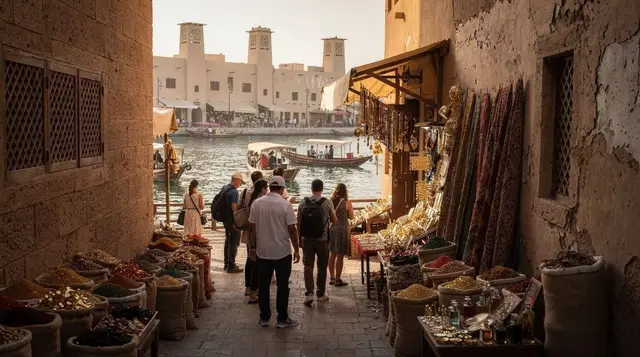
Dubai: old town, souks, street food, guided tour & abra ride
Duration: 3-4 hours
Is it actually worth buying gold at Dubai's Gold Souk?
Yes, if you understand the pricing structure. Gold is priced by weight against the day's international gold rate plus a workmanship charge, both of which are municipally regulated for transparency and both of which are negotiable, especially the workmanship charge. It's genuinely one of the more reliable places in the world to buy gold at a fair price, provided you compare a few shops and negotiate rather than accepting the first quote.
What the Gold Souk actually is
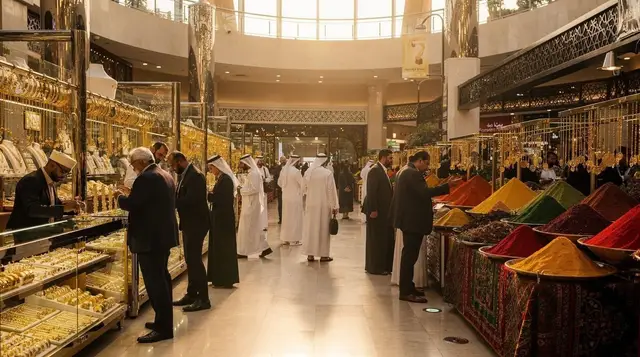
Deira’s Gold Souk is a covered arcade of several hundred independent jewelers packed into a compact grid of narrow lanes, their windows stacked floor to ceiling with gold jewelry — necklaces, bangles, rings, and increasingly diamond and gemstone pieces alongside pure gold work. It’s been a serious trading hub since well before Dubai’s oil-era transformation, built on the city’s historic role as a low-tariff trading port, and it remains a genuinely functioning market rather than a tourist recreation — residents, expatriates, and visitors from across the region shop here for real jewelry at real, comparison-shoppable prices, not a curated souvenir experience.
| Where | Deira, near Al Ras Metro Station (Green Line) |
| Pricing | Daily gold rate + negotiable making charge |
| Time needed | 45-90 minutes for a proper comparison-and-buy visit |
| Best time | Late afternoon to early evening (4-7pm) |
| Getting there | Metro to Al Ras, or taxi/Careem (15-30 min) |
How gold pricing actually works
Every legitimate shop prices gold using the same two-part formula: the piece’s weight in grams multiplied by the current international gold rate (published daily and standardized across licensed Dubai jewelers via the Dubai Gold & Jewellery Group), plus a separate “making charge” that covers the craftsmanship and design of the specific piece. The gold rate itself isn’t something to negotiate — it’s the same number at every honest shop on a given day, and any shop quoting a rate meaningfully different from the published one is worth walking away from.
The making charge is where the real negotiation happens, and it varies significantly by design complexity: a simple, mass-produced bangle carries a low making charge, while an intricate, handcrafted piece carries a much higher one.
Karats and what they mean
The souk sells gold across several purity grades: 24K (99.9% pure, soft, mainly for bars and simple investment pieces), 22K (the traditional standard for South Asian and Middle Eastern jewelry design, a common default at the souk), 21K, and 18K (harder, more durable, closer to Western jewelry norms, often used for pieces set with diamonds or gemstones). Higher karat isn’t automatically “better” — it depends what you want: 24K is the purest but too soft for daily-wear rings, while 18K holds up better to everyday knocks at the cost of purity. Ask specifically which karat you’re looking at before comparing prices between shops, since a lower price on a lower-karat piece isn’t actually a better deal.
Real bargaining tactics that work here
Get an initial quote, then counter meaningfully lower — 20-30% below the first number is a normal, expected opening move, not an insult. Compare the same or a similar piece across three or four shops before committing; prices for comparable designs and karats vary more between shops than most first-time visitors expect, purely based on each shop’s overhead and how eager they are for that day’s sale. Buying multiple pieces from a single shop gives real leverage to push the making charge down further, since the shop values closing a larger single sale. Walking away — literally leaving the shop after a firm “no” on price — is a standard, non-rude tactic that frequently produces a better follow-up offer as you’re heading out the door.
None of this feels natural to visitors from fixed-price retail cultures, but it’s simply how this specific market operates, and vendors expect and enjoy the exchange rather than finding it adversarial.
Checking authenticity and hallmarking
UAE regulation requires gold sold through licensed jewelers to carry a hallmark indicating karat purity, and reputable Gold Souk shops display this openly and will show you the stamp under a jeweler’s loupe on request. A shop reluctant to show hallmarking, or a piece with no visible stamp at all, is a clear signal to walk away regardless of how attractive the price looks. Established shops also display their commercial trade license, generally near the entrance or counter — worth a glance if you’re making a significant purchase, since it’s a quick, free way to confirm you’re dealing with a licensed business rather than an informal seller.
What a fair making charge actually looks like
Making charges vary widely by design complexity, but as a rough honest benchmark: simple, machine-made chains and bangles typically carry a making charge in the low tens of percent above the raw gold value, while intricate, handcrafted, or gemstone-set pieces can carry making charges well above that, sometimes exceeding the gold value itself for genuinely elaborate work. There’s no single “correct” number, which is exactly why comparing several shops for a similar design matters more than memorizing a target percentage — the honest approach is relative comparison, not an absolute rule.
Diamonds and gemstones: a different calculation
The Gold Souk area (and the adjacent Dubai Diamond District in some cases) also sells diamond and gemstone-set jewelry, where pricing is far less standardized than pure gold, since diamond quality (the “4 Cs” — cut, color, clarity, carat) varies enormously between individual stones in ways gold’s weight-based pricing doesn’t. If a diamond purchase is genuinely on your list, ask for a grading certificate from a recognized lab (GIA is the most internationally trusted) rather than relying on a shop’s own verbal assurance about quality — this matters far more for diamonds than it does for straightforward gold purchases, where the hallmark system does most of the verification work for you.
Common overpricing tactics to watch for
A small minority of shops (not the norm, but worth knowing) quote an inflated “starting” gold rate hoping a visitor won’t know the real published rate, then look reasonable when they “discount” back down to a price that’s still above fair market value. Checking the day’s actual gold rate — widely available via a quick search before you go — closes this gap immediately, since you can simply state the correct rate and watch the conversation adjust. Another tactic is steering buyers toward heavier, higher-making-charge pieces than requested by emphasizing how “popular” or “special” they are; staying firm on the weight and style you actually want avoids this.
Is it actually cheaper than buying gold at home?
Often, yes, particularly for larger purchases. Dubai applies no VAT on investment-grade gold and generally lower duties and overheads than many home markets, and the souk’s dense, competitive shop-to-shop environment keeps making charges more compressed than a single boutique jeweler back home would typically offer. The advantage shrinks on small, low-weight pieces, where making charges (a relatively fixed cost regardless of piece size) eat proportionally more into any rate savings — a small pendant may not be meaningfully cheaper here than at a reputable jeweler at home, even though a substantial bangle or necklace likely will be.
Bringing gold home: customs realities
Most visitors bring souk purchases home for personal use without issue, but every country sets its own duty-free allowance for gold and jewelry brought in by returning travelers, and exceeding it without declaring can mean penalties beyond just paying the duty owed. Keep the itemized receipt every legitimate shop provides — it states weight, karat, and price, and is exactly what customs officials ask to see if a declaration is required. Checking your specific home country’s allowance before a large purchase is a five-minute task worth doing rather than assuming it’ll be fine.
Gold Souk versus mall-based jewelers
Dubai’s malls, including Dubai Mall, house plenty of established jewelry chains selling gold at fixed, no-negotiation prices in air-conditioned comfort. The trade-off against the souk is straightforward: mall shops are faster, less effort, and arguably less intimidating for a first-time buyer unfamiliar with bargaining, but they typically build a larger margin into the price precisely because they don’t expect (or allow) negotiation. If time and comfort matter more than squeezing out the best possible price, a mall jeweler is a completely reasonable choice. If getting the best price for a meaningful purchase matters more, the souk’s negotiation culture, given a bit of patience, generally wins out.
Is the Gold Souk overhyped as a tourist attraction?
Partially, but less than most souvenir-market comparisons suggest. Unlike a market built primarily for tourism, the Gold Souk continues to function as a genuine trading hub for residents and regional buyers, which keeps its pricing honest in a way a purely tourist-facing market wouldn’t be under the same competitive pressure. Where the tourist-trap reputation has some truth is in a handful of shops nearer the souk’s edges that lean more heavily on tourist foot traffic and are less rigorous about hallmarking or fair making charges — sticking to shops deeper inside the main arcade, which cater more to serious local and regional buyers, tends to avoid this.
The honest tourist traps guide covers where the Gold Souk sits relative to Dubai’s more clear-cut overpriced attractions.
Etiquette while browsing
Dress modestly, as anywhere in Old Dubai — shoulders and knees covered is the practical norm, covered in full in the dress code guide. Vendors expect browsing without buying and won’t pressure a polite “just looking,” though a friendly, unhurried manner goes further here than a rushed, dismissive one — this is a relationship-based trading culture, and shopkeepers remember (and treat better) visitors who engage respectfully even if they don’t buy that visit. Photography of the display windows and general scene is fine; ask before photographing an individual vendor directly.
Combining a Gold Souk visit with the rest of Old Dubai
The Gold Souk sits a short walk from the Spice Souk in Deira, and both are commonly visited together as part of a broader Old Dubai walking route that also takes in an abra crossing and Al Fahidi on the opposite bank. The souks overview guide compares the Gold Souk against Deira’s other markets and the newer, fixed-price Souk Madinat Jumeirah for anyone deciding where to prioritize their time.
The Dubai gold shopping guide covers gold buying more broadly across the city, including mall-based jewelers as an alternative to the souk experience.
This Old Dubai walking tour through the souks, an abra crossing, and street food stops is a practical way to pair a Gold Souk visit with the rest of the historic Deira and Bur Dubai area in a single guided outing.
Where to stay for easy access
Staying in Deira puts the Gold Souk within easy walking distance, an advantage for anyone planning multiple visits to compare shops across different days or times. Staying elsewhere in the city — Downtown, Marina, or Jumeirah — still makes a single dedicated visit easy via metro or a short taxi ride, and most visitors treat the Gold Souk as a one-time stop within a broader Old Dubai day rather than something requiring a nearby hotel base. See where to stay in Dubai for how this factors into a broader accommodation decision.
Getting there
The Gold Souk sits a short walk from Al Ras Metro Station on the Green Line, and it’s easily reached by taxi or Careem (15-30 minutes) from most parts of the city. There’s no dedicated parking directly at the souk; drivers typically use nearby public parking and walk the last few minutes.
What a first-time buyer should actually do, step by step
Check the day’s published gold rate before leaving your hotel. Walk the arcade for 10-15 minutes without buying anything, noting two or three shops with designs you like and prices that seem reasonable relative to weight and karat. Ask each shortlisted shop for their best price on the specific piece, including the making charge broken out separately from the gold value. Compare, then return to your preferred shop and negotiate the making charge specifically, using the other quotes as leverage if useful. Confirm the hallmark, ask for an itemized receipt, and pay by card if the amount is significant.
This whole process, done properly, takes 45-90 minutes rather than the 10-minute impulse stop many first-time visitors default to — and it’s the difference between a fair price and an overpaid one.
Timing your visit
Late afternoon into early evening (roughly 4-7pm) is the sweet spot — shops are reliably open, the day’s gold rate has been set and published, and it avoids both the worst daytime heat outside and the risk of a shop being mid-afternoon-closed on an older schedule some smaller stalls still keep. Fridays see a later opening at some shops given the day’s prayer and rest patterns; plan around late morning if visiting on a Friday specifically.
The Gold Souk’s famous ring
A frequently photographed landmark just outside the souk’s covered arcade is a large decorative ring structure, a popular photo stop even for visitors with no intention of buying anything. It’s a useful orientation point too — if you get turned around in the arcade’s lanes, heading back toward it re-orients you toward the main entrance and the walk toward the Spice Souk.
Who should actually buy here versus just browse
Serious buyers with a specific piece or investment purchase in mind get the most value from the souk’s competitive pricing and comparison-shopping culture — it rewards patience and a willingness to visit several shops. Casual visitors just wanting to look and photograph the display windows get a genuinely striking visual experience regardless of buying anything, and there’s no pressure to purchase simply for browsing respectfully. Where the souk suits fewer people well is impulse buyers wanting a single quick, no-negotiation purchase — that experience is better served by a fixed-price mall jeweler, covered in the broader gold shopping guide.
Insurance and resale value
Gold bought at the souk holds resale value roughly in line with its gold content minus the making charge you paid, which is worth knowing before treating a purchase as a pure investment — the making charge is effectively a one-time cost you won’t fully recoup if reselling shortly after. For higher-value pieces intended as an investment rather than jewelry to wear, ask specifically about resale or buy-back policies before committing, since some Gold Souk shops offer a buy-back arrangement at the prevailing gold rate on pieces they sold, which is worth confirming in writing rather than assuming applies universally.
Travel insurance covering valuables, if you hold it, is worth checking against a significant gold purchase too, particularly if you plan to wear it during the rest of your trip.
The bottom line
The Gold Souk rewards a bit of homework — knowing the day’s gold rate, understanding the karat you’re looking at, and being willing to compare a few shops and negotiate the making charge. Done that way, it’s a genuinely fair and often better-value place to buy gold than most alternatives worldwide. Skipped entirely and treated as a five-minute impulse stop, it’s easy to overpay without realizing it, since the pricing structure isn’t obvious to first-time visitors from fixed-price retail markets.
Buying gold as a gift versus for yourself
Gift purchases carry a slightly different calculation than buying for yourself, since resale value and long-term wearability matter less than presentation and the recipient’s likely taste. A simpler, well-made piece in a karat and style common to the recipient’s own culture or region often lands better than an elaborate, high-making-charge design chosen purely because it looked impressive in the shop window. If the gift is for someone in a country with a specific duty-free allowance for gold brought back by a traveler, it’s worth checking that allowance before committing to a larger, more expensive piece, since it affects both the recipient and whoever is physically carrying it through customs.
Karat comparison at a glance
| Karat | Purity | Best for |
|---|---|---|
| 24K | 99.9% pure | Investment bars, simple pieces |
| 22K | Traditional South Asian/Middle Eastern standard | Most souk jewelry |
| 21K | Slightly less pure than 22K | Regional design pieces |
| 18K | Harder, more durable | Everyday-wear rings, diamond settings |
Gold Souk versus mall jewelers: quick comparison
| Gold Souk | Mall jeweler | |
|---|---|---|
| Pricing | Negotiable making charge | Fixed, no negotiation |
| Effort | Requires comparison shopping | Fast, low-effort |
| Best value | For meaningful purchases with time to negotiate | For a quick, stress-free buy |
| Atmosphere | Traditional arcade, relationship-based | Air-conditioned, standard retail |
| Best for | Serious buyers | Casual or impulse buyers |
Frequently asked questions about the Gold Souk
How is gold priced at the Dubai Gold Souk?
Weight multiplied by the daily published gold rate, plus a negotiable making charge for craftsmanship.
Can I negotiate the price?
The gold rate itself is fixed daily; the making charge is negotiable, often reducible by 10-30% with reasonable back-and-forth.
How do I know if gold is genuine?
Look for a hallmark stamp indicating karat purity, required by UAE regulation, and ask to see it under magnification.
What’s the best time to visit?
Late afternoon to early evening, when shops are fully open and the day’s gold rate is set.
Is gold cheaper in Dubai than at home?
Often, especially on larger purchases, due to lower duties and no VAT on investment-grade gold.
Can I bring gold home without customs issues?
Generally yes for personal amounts, but check your home country’s duty-free allowance and keep the itemized receipt.
Is it safe to carry cash for a large purchase?
Most shops accept cards, which is safer than carrying large cash sums; withdraw only what’s needed if paying cash.
Should I buy gold at the souk or a mall jeweler?
The souk for a meaningful purchase where negotiation and comparison-shopping matter; a mall jeweler for a quick, stress-free, fixed-price buy.
How do I get to the Gold Souk without a car?
Take the metro to Al Ras Station on the Green Line, a short walk from the arcade, or a taxi or Careem ride of 15-30 minutes from most parts of the city.