Shopping the Dubai souks: how bargaining actually works
Dubai: old town, souks, street food, guided tour & abra ride
Duration: 3-4 hours
How do you bargain at the Dubai souks?
Start friendly and unhurried, counter-offer roughly 40-50% below the initial asking price for non-gold goods, and be willing to walk away — vendors frequently call you back with a better price. Gold pricing works differently, tied to the daily international gold rate plus a negotiable making charge rather than a flat asking price. Never accept the first price offered; it's set expecting negotiation.
What the souks actually are
For a city so strongly associated with its ultra-modern skyline, the souks offer a genuine counterpoint, and visitors who skip them in favor of another mall visit often come away feeling they missed the side of Dubai that actually predates the tourism boom.
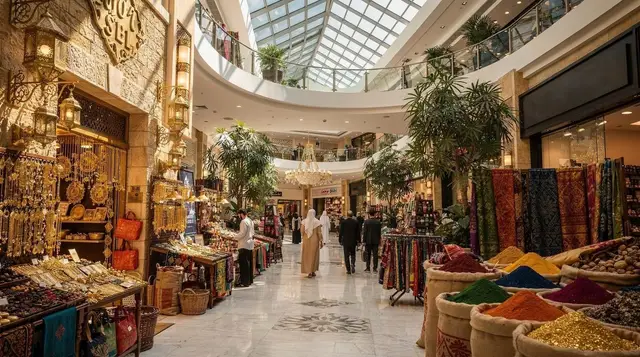
Dubai’s souks — traditional covered or semi-covered markets, concentrated in Deira and along Old Dubai’s Bur Dubai side of the Creek — are the closest thing the city has to a shopping experience unchanged in spirit from before Dubai’s modern skyline existed. Narrow lanes lined with small, family-run stalls sell gold, spices, textiles, and souvenirs, and unlike the malls’ fixed pricing, nearly everything here is open to negotiation. It’s a genuinely different retail experience from anywhere else in the city, and for many visitors, one of the most memorable few hours of a Dubai trip.
This guide covers which souk sells what, how bargaining actually works in practice, honest price expectations, and the common mistakes worth avoiding.
| Opening counter-offer | 40-50% below asking price (non-gold) |
| Best time | Shortly after 9-10am opening, or evening after 4pm |
| Time needed | 2-3 hours for Gold + Spice + abra; half a day with Textile Souk |
| Payment | Cash preferred, cards widely accepted |
| Getting there | Metro to Al Ras/Baniyas Square, or 1 AED abra crossing |
The Gold Souk
There’s a reason this specific market has become synonymous with Dubai shopping worldwide, and understanding how the pricing actually works before you go changes the whole experience from intimidating to genuinely approachable.
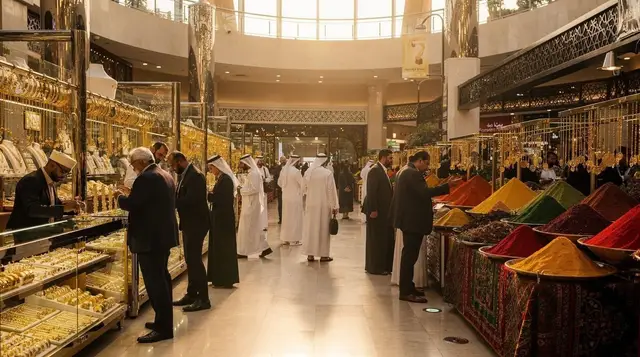
The Gold Souk, Dubai’s most famous single shopping destination, is a dense cluster of gold and jewelry retailers in Deira, their windows packed with gold jewelry displayed by weight and design. Pricing here follows the daily international gold rate (published and generally displayed by reputable dealers) plus a “making charge” reflecting design complexity — the making charge, not the gold price itself, is where negotiation actually happens. See the gold shopping guide for the full mechanics of buying gold here, including hallmarks and how to avoid overpaying.
The Spice Souk
If the Gold Souk is Dubai’s most famous market, the Spice Souk is arguably its most sensory, and it’s the stop most visitors remember most vividly after their trip has ended.
A short walk from the Gold Souk, the Spice Souk sells the full range of regional spices, dried fruits, nuts, and dates in open sacks and bins, with the mingled aromas alone making it worth a walk-through even without buying anything. Prices here are generally reasonable even before bargaining, and dates in particular — a genuine Emirati specialty available in dozens of varieties — are one of the most reliably good-value purchases in the entire city, often vacuum-packed on request for easier travel.
The Textile Souk
Less photographed than its Gold and Spice counterparts, the Textile Souk rewards a slower, more deliberate visit, particularly for anyone with a specific tailoring or fabric need rather than casual browsing.
Across the Creek in Bur Dubai, the Textile Souk sells fabric by the meter, ready-made garments, and a scattering of carpet and rug dealers. It’s less visually striking than the Gold or Spice Souks but worth a stop for anyone interested in fabric, tailoring (several shops offer same- or next-day custom tailoring), or carpets, which reward careful comparison across several dealers rather than a purchase from the first stall.
How bargaining actually works
This is the single skill that determines whether your souk visit feels like a genuine cultural exchange or an overpriced tourist trap, and it’s worth taking seriously rather than treating as an awkward formality to get through quickly.
Bargaining is expected and part of the normal transaction, not an awkward imposition on the vendor. A workable approach: ask the price, counter with an offer roughly 40-50% below it, and negotiate toward a middle ground with a friendly, unhurried tone rather than an aggressive one. Vendors expect this back-and-forth and often enjoy it as part of doing business — showing genuine interest in a specific item while staying relaxed about walking away if the price doesn’t move gets consistently better results than either paying the first price offered or being visibly desperate to buy.
Walking away as a negotiating tool
If a vendor won’t move on price, walking away — even just a few steps toward the next stall — is a genuine and often effective tactic, since many vendors will call out a better offer rather than lose the sale entirely. This only works if you’re genuinely willing to walk, though; using it as a bluff while clearly wanting the specific item undermines your position if the vendor senses you’re not serious about leaving.
What not to do when bargaining
A handful of avoidable habits separate a smooth, enjoyable negotiation from one that leaves both sides frustrated, and most of them come down to reading the room rather than following a rigid script.
Don’t reveal how much you love a specific item before negotiating — visible enthusiasm weakens your bargaining position considerably. Don’t compare prices out loud with a companion in a way the vendor can hear and use against you. Don’t accept the very first counter-offer without at least one more round of negotiation, since vendors typically build in room to come down further than their first counter suggests. And don’t bargain aggressively or rudely — a firm but friendly tone gets better results than pressure or irritation.
A guided introduction to souk shopping
For a first souk visit, having a local guide explain the layout, the bargaining norms, and which stalls are worth stopping at removes much of the initial uncertainty. This guided old town, souks, and street food tour with an abra ride covers the Gold and Spice Souks alongside the historic Creek crossing and Al Fahidi’s heritage lanes, giving useful context before you’re bargaining solo. This walking tour of old Dubai’s souks and abra crossing offers a similar guided introduction focused specifically on the souk district and the traditional water crossing.
The abra crossing
The abra — a small traditional wooden water taxi — crosses Dubai Creek between Deira and Bur Dubai for a flat 1 AED fare, and it’s worth taking specifically as an experience in its own right, not just a way to get between the souks on either bank. This old town, Creek, abra, and souks guided walking tour builds the crossing directly into a souk-focused itinerary, useful if you want the full historic-district experience covered in one booking. See the abra guide for the crossing route and practical detail.
Quality and authenticity concerns
As with any dense, tourist-facing market anywhere in the world, a small minority of vendors are less scrupulous than the majority, and a little healthy skepticism goes a long way toward a satisfying purchase rather than a regretted one.
The souks are generally safe and well-regulated, but as with any dense tourist-facing market, quality and authenticity can vary between stalls — some souvenir items sold as handmade or locally produced are mass-manufactured, and gold or jewelry pieces should always be checked for a proper hallmark. Buying from established, visibly long-running stalls with clear signage, rather than the most aggressive street tout, generally reduces this risk. For textiles and carpets specifically, asking directly about origin and material composition is a reasonable, expected question that a legitimate dealer will answer without hesitation.
Best time of day to visit the souks
Timing your visit well makes a genuine difference to how enjoyable the experience feels, since the souks’ character shifts noticeably between a quiet morning browse and a busier, livelier evening atmosphere.
Morning, shortly after the souks open around 9-10am, is the most comfortable time to visit — cooler temperatures, thinner crowds, and vendors generally more willing to negotiate before the day gets busy. The souks traditionally close for a few hours in the early afternoon before reopening from around 4pm into the evening, a split-shift pattern worth planning around rather than assuming continuous daytime opening. Evening visits have their own appeal, with a livelier atmosphere and cooler temperatures, particularly outside the winter peak season.
What to wear and bring
A little preparation before setting out makes the actual shopping and bargaining process noticeably smoother, and it costs nothing beyond a few minutes of forethought before leaving your hotel.
Modest dress — shoulders and knees covered — is the sensible default in the souks, consistent with general Dubai norms rather than a strict requirement specific to this district. Bring cash in small denominations, since bargaining is easier and quicker when you can produce close to your target price rather than needing change from a large note, and comfortable shoes for the uneven, sometimes crowded lanes. See the dress code guide for the broader context.
Combining souk shopping with Old Dubai sightseeing
The souks sit within easy walking distance of Al Fahidi Historical District’s wind-tower architecture and heritage houses, making it straightforward to combine a souk shopping session with a broader Old Dubai walking tour covering the historic district’s museums and lanes on the same outing, rather than treating the souks as an isolated shopping stop disconnected from the surrounding heritage area.
Are the souks worth it if you’re not planning to buy anything?
This is a question worth answering honestly, since not every visitor arrives at the souks intending to spend money, and the district’s value shouldn’t be measured purely in transactions completed.
Yes — even for visitors with no shopping intent, walking through the Gold Souk’s glittering window displays and the Spice Souk’s stacked, aromatic bins is a genuinely worthwhile sensory experience distinct from anything else in Dubai’s modern skyline-focused image. Pair it with the abra crossing and a walk through Al Fahidi, and the souks earn their place on a Dubai itinerary as a heritage and atmosphere destination, not solely a shopping one.
Photography etiquette in the souks
Photographing the souks’ visually striking displays — stacked spice bins, gold window arrangements — is generally welcomed and expected, but it’s courteous to ask before photographing individual vendors directly, particularly if they’re in the middle of a transaction with another customer. Most vendors are relaxed about photography of their stalls and displays, recognizing it as part of the tourist experience, but a quick nod or gesture asking permission before photographing a specific person is a small courtesy that’s always appreciated.
What souvenirs to skip
Not every item sold at the souks is worth buying: mass-produced keyrings and magnets carry a significant markup relative to their actual production cost and are available more cheaply elsewhere (including at the airport, ironically, sometimes cheaper due to duty-free pricing structures). Genuinely distinctive purchases — real dates, proper hallmarked gold, hand-blended oud perfume, an actual hand-knotted carpet from a reputable dealer — reward the extra research and negotiation effort involved far more than a generic souvenir would.
Payment methods at the souks
Most souk vendors accept both cash and card, though cash — specifically UAE dirhams — tends to make bargaining smoother and is sometimes rewarded with a slightly better price, since card payments carry a processing fee some smaller vendors would rather avoid passing on. Carrying a mix of small and larger denomination notes covers both quick, low-value purchases (spices, small souvenirs) and larger negotiated items (gold, carpets) without needing to break a large note mid-negotiation, which can awkwardly reveal your maximum budget to the vendor.
Shipping and taking purchases home
For bulkier purchases — carpets, large quantities of spices, fragile items — ask the vendor directly about shipping options, since many souk dealers, particularly in textiles and carpets, are experienced in arranging international shipping for tourists and can handle the paperwork and packing themselves. This is worth arranging on the spot rather than assuming you’ll figure out shipping logistics independently afterward, since the vendor’s established shipping relationships are usually more reliable and often cheaper than a generic courier arranged separately.
Sharjah’s Blue Souk as an alternative or add-on
For visitors interested in a broader souk experience beyond Dubai proper, Sharjah’s Blue Souk, roughly 30-45 minutes from central Dubai, offers a different, more architecturally distinctive market experience with a similar range of goods but noticeably fewer tourists and a more local shopping atmosphere. It’s a worthwhile add-on for visitors doing a Sharjah day trip who want to compare the souk experience against Deira’s more tourist-oriented version.
Common tourist mistakes at the souks
The most common mistake is simply not bargaining at all — paying the first quoted price wastes the entire negotiating opportunity the souks are built around. The second most common mistake is bargaining too aggressively or rudely, which sours the interaction without necessarily getting a better price than a friendly, patient approach would have. A third common mistake is buying gold without checking the hallmark or confirming the day’s gold rate, which the gold shopping guide covers in detail. Avoiding these three mistakes covers most of what separates a satisfying souk experience from a frustrating or regretted one.
How much time to budget
A proper souk visit, covering the Gold Souk, Spice Souk, and an abra crossing, realistically takes two to three hours at an unhurried pace that allows time for browsing and bargaining rather than rushing through. Adding the Textile Souk and a walk through Al Fahidi extends this to a half day, a reasonable investment given how much of Old Dubai’s character is concentrated in this specific area. Rushing the souks defeats much of their purpose, since the bargaining process itself rewards a relaxed, unhurried pace more than almost any other activity in Dubai.
Souks versus malls: setting the right expectations
It’s worth entering the souks with different expectations than a mall visit: the souks are smaller in scale, less air-conditioned (though covered lanes provide shade), and rely on personal interaction with individual vendors rather than the anonymous, fixed-price browsing of a mall. Visitors expecting a mall-like experience with clearly marked prices and no negotiation will find the souks disorienting at first; visitors who embrace the bargaining and personal interaction tend to rate the souks among their favorite Dubai experiences. See the shopping guide for how the souks compare against the mall experience more broadly.
Bargaining in a group versus alone
Shopping with a companion changes the dynamic slightly: a second person can hold back and appear less interested while the other negotiates, a mild but genuinely useful tactic since visible enthusiasm from either party weakens the position. Solo shoppers lose this option but generally find vendors just as willing to negotiate one-on-one — the pace simply becomes a bit more direct without a second opinion to defer to mid-negotiation. Either way, keeping any price comparisons or reactions quiet rather than audible to the vendor matters more than group size itself.
Bargaining stages at a glance
| Stage | What to do | What to avoid |
|---|---|---|
| 1. Ask the price | Show mild, not enthusiastic, interest | Revealing you love the item |
| 2. Counter-offer | 40-50% below the asking price, friendly tone | Aggressive or rude negotiating |
| 3. Middle ground | One more round beyond the first counter | Accepting the first counter-offer |
| 4. Walk away if stuck | A few genuine steps toward the next stall | Bluffing if you’re not actually willing to leave |
| 5. Close | Ask for an itemized receipt on gold/valuable items | Paying in a large note that reveals your budget |
Frequently asked questions about shopping the Dubai souks
Which souks should I visit in Dubai?
The Gold Souk and Spice Souk in Deira are the must-visits, both walkable from each other and reachable via an abra crossing from Bur Dubai.
Is bargaining rude in Dubai souks?
No, it’s expected and normal — vendors set opening prices anticipating negotiation.
How much should I offer at a Dubai souk?
For non-gold goods, 40-50% below the asking price is a reasonable opening counter-offer. Gold follows the daily gold rate plus a negotiable making charge.
Are the Dubai souks safe for tourists?
Yes, they’re safe and well-trafficked. The main risk is overpaying by not bargaining, or occasionally lower-quality goods misrepresented as premium.
How do I get to the Deira souks?
By Metro to Al Ras or Baniyas Square, by taxi or Careem, or via a 1 AED abra crossing from Bur Dubai.
What time do the Dubai souks open?
Around 9-10am, closing for a few hours in the afternoon, then reopening from around 4pm until 10-11pm.
Can I bargain in the Spice Souk the same way as the Gold Souk?
Yes, but the range is narrower — spices and dates are already reasonably priced, so expect a smaller percentage discount than the deeper negotiation typical at the Gold Souk’s higher-value items.
Is it rude to walk away mid-negotiation if the price doesn’t move?
No, it’s a normal and often effective tactic — many vendors call out a better offer rather than lose the sale, though it only works if you’re genuinely willing to leave rather than using it as an empty bluff.
Top experiences
Bookable activities with verified prices and instant confirmation on GetYourGuide.