Dubai dress code guide: what to wear where
From Dubai: Abu Dhabi Sheikh Zayed Mosque guided tour
Duration: 5-7 hours
What's the dress code in Dubai?
There's no citywide legal dress code for tourists, but strong social norms apply. Shoulders and knees covered is the practical baseline for malls, souks and most public places. Swimwear is fine at beaches and hotel pools only, never in a mall or on the street. Mosques require headscarves for women and full coverage for both sexes — Sheikh Zayed Grand Mosque provides free abayas for women who need one.
Dress codes in Dubai are mostly social, not legal
Dubai doesn’t have a single written dress code that applies uniformly across the city, and there’s no fine waiting for a tourist in shorts at the Dubai Mall. What exists instead is a set of strong, fairly consistent social expectations that shift by location — modest in malls and souks, fully covered in mosques, relaxed at the beach and pool, and increasingly conservative during Ramadan. Getting this right isn’t about avoiding legal trouble in most cases, it’s about not standing out for the wrong reasons and showing basic respect in a country where the majority religion and culture have specific modesty norms.
The one meaningful exception is Sheikh Zayed Grand Mosque, where a dress code is enforced at the entrance rather than just socially expected — more on that below.
| Malls & souks | Shoulders and knees covered |
| Beach & pool | Standard swimwear, water’s edge only |
| Mosques | Full coverage; headscarf for women |
| Business | Suit/collared shirt; modest attire for women |
| Ramadan | More conservative across the board |
Malls and souks: shoulders and knees is the practical rule
Shopping malls are where most visitors spend a large share of their trip, and the norm across almost all of them — Dubai Mall, Mall of the Emirates, and the smaller neighborhood malls alike — is shoulders and knees covered. This isn’t written on a sign at the entrance and no one will stop you for wearing a tank top, but it’s the baseline that locals and long-term residents actually follow, and dressing well below it (very short shorts, crop tops, exposed midriffs) tends to draw stares in a way that a more covered outfit doesn’t.
The same logic applies in the souks of Old Dubai — the Gold Souk, Spice Souk, and the narrow lanes around Al Fahidi — where the surrounding neighborhood is older, more traditional, and the shopkeepers themselves generally dress conservatively. A loose t-shirt or shirt and knee-length shorts or trousers works fine for both men and women in these areas, and it’s genuinely more comfortable in the heat than tight, skin-baring clothing anyway — breathable, looser fabric moves air rather than trapping it.
Beaches and pools: swimwear is fine, but only there
Public beaches, hotel beaches, and hotel or resort pools are the one context where standard swimwear is completely normal and expected — bikinis, swim trunks, one-pieces, all fine. The rule is strictly geographic: appropriate at the water’s edge, not appropriate the moment you leave it. Walking from the pool through a hotel lobby in just a swimsuit, or wandering off a public beach onto the street still in beachwear, reads as out of place and occasionally draws a comment from hotel staff. Packing a light cover-up or sarong to throw on between the beach and anywhere indoors solves this without adding real weight to a suitcase.
JBR beach and the public beaches along the coast are genuinely relaxed about standard swimwear, more so than some visitors expect going in, though some beaches (particularly during Ramadan, covered below) may see comparatively more conservative swimwear norms among the wider beachgoing public even where nothing is formally required.
Visiting a mosque: this is where the dress code is enforced
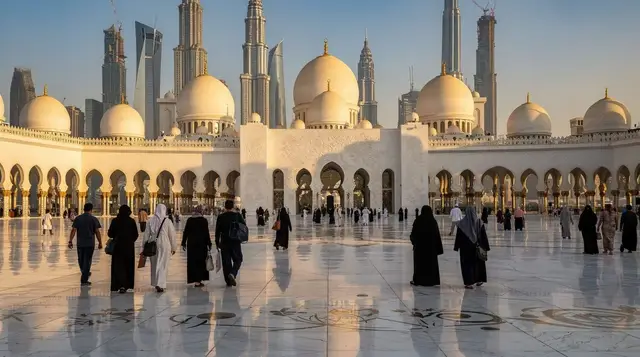
Mosques open to non-Muslim visitors are the clearest case of an actually-enforced dress code rather than a social suggestion. Women need a headscarf covering the hair, and both men and women need shoulders and knees covered — no shorts, no sleeveless tops, no exposed midriffs. Sheikh Zayed Grand Mosque in Abu Dhabi, one of the most visited sites in the country and easily combined with a day trip from Dubai, provides free full-length abayas at the entrance for any woman who arrives without appropriate coverage, along with headscarves — so it’s genuinely not necessary to own or pack a full abaya just to visit.
Men are asked to wear long trousers and a sleeved shirt; men in shorts are typically turned away or asked to rent or borrow cover-up clothing on site.
Jumeirah Mosque in Dubai itself runs guided visits for non-Muslims through the Sheikh Mohammed Centre for Cultural Understanding and applies a similar standard, with loaner abayas available at the door. If a mosque visit is on your itinerary, wearing appropriately covering clothing from the outset (rather than relying on a loaner) is more comfortable and means less waiting at the entrance, though the loaner system exists precisely because it’s understood tourists don’t always plan ahead for this.
A combined Grand Mosque and Qasr Al Watan heritage tour is a practical way to see both sites in one outing if a full day in Abu Dhabi is on your plan.
Street wear and everyday sightseeing
Away from malls, souks and mosques — walking Dubai Marina’s waterfront promenade, visiting Downtown Dubai, or exploring JBR — dress norms relax considerably, especially in these more cosmopolitan, tourist- and expat-heavy areas. Shorts, t-shirts, sundresses and standard casual travel clothing are all completely normal daytime wear. The dress code tightens again the closer you get to older, more traditional neighborhoods like Deira or Bur Dubai, and loosens again in the newer waterfront and downtown districts built around an international, tourist-heavy population.
Evenings out for dinner or drinks generally call for smart-casual at minimum — most restaurants and virtually all rooftop bars and lounges enforce a no-shorts, no-flip-flops policy for men in the evening, worth knowing before showing up to a nicer dinner reservation in beach sandals.
Business and formal contexts
Business settings in Dubai lean more formal than the city’s casual tourist image suggests. Men typically wear a full suit or at minimum trousers, a collared shirt and closed shoes for meetings; women wear business attire that’s professional and modest — covered shoulders, hemlines at or below the knee, nothing sheer or particularly fitted. This applies whether the meeting is with an Emirati-owned company or an international one based in Dubai, since business culture across sectors here trends conservative regardless of the individual company’s background. If your trip includes any work meetings alongside sightseeing, packing at least one business-appropriate outfit separate from your sightseeing wardrobe avoids an awkward wardrobe scramble.
Ramadan: everything gets more conservative
During Ramadan, the dress code — and behavior expectations more broadly, covered in more detail in the Ramadan guide — shifts toward greater modesty across the board, not just at mosques. Looser, more covering clothing than you’d otherwise wear on the street or in a mall is the respectful default during this period, and dressing more conservatively than the rest of the year is worth doing even in tourist zones. Public eating, drinking and smoking during fasting daylight hours is also restricted or discouraged outside licensed venues, which runs alongside the dress expectations as part of the same broader shift in public behavior during the month.
Evening dress for iftar (the sunset meal breaking the fast) tends to be a notch smarter than a typical casual dinner, since iftar gatherings — at hotels, restaurants and private homes alike — carry more cultural weight than an average evening meal.
Footwear: more relevant than most guides mention
Footwear rarely gets attention in dress-code advice, but it’s practically significant in Dubai for reasons beyond style. Flip-flops and very casual sandals are fine for the beach, pool and casual daytime wandering, but many restaurants, rooftop bars and lounges enforce a no-flip-flops policy in the evening as part of a broader smart-casual dress requirement, and turning up in beach sandals to a dinner reservation is a genuinely common reason for being asked to wait or change. Closed shoes or smarter sandals are the safer default for any evening plan beyond a casual meal.
Separately, a lot of walking in Dubai happens across hot pavement, tiled mall floors, and sandy or uneven ground at desert or heritage sites, so footwear chosen purely for how it looks tends to become impractical fast. Comfortable closed-toe walking shoes for daytime sightseeing, with a smarter pair packed separately for evenings, covers both needs without compromising on either.
What Emiratis themselves wear, for context
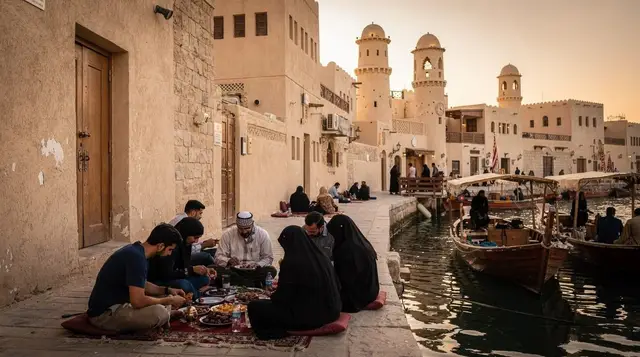
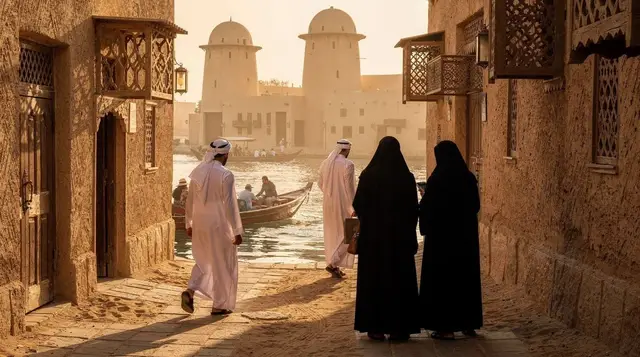
It’s worth understanding, rather than imitating, what Emirati nationals wear day to day, since it explains a lot of the surrounding social norm. Emirati men typically wear a kandura, a full-length white (or seasonally darker) robe, often paired with a ghutra headscarf. Emirati women typically wear an abaya, a loose black robe, frequently with a shayla headscarf. This is everyday national dress, not religious costume, and it’s worn consistently in government offices, malls, restaurants and social occasions alike. Tourists are not expected to adopt this dress, and doing so as a costume rather than out of genuine cultural practice can actually read as somewhat tone-deaf rather than respectful.
Understanding it does help explain why the ambient modesty norm in shared public spaces sits where it does — you’re moving through a society where a meaningful share of the people around you are dressed conservatively as a matter of course, and dressing moderately yourself fits that shared context rather than standing apart from it.
Buying modest clothing locally if you need to
If you land and realize your packing didn’t account for the modesty norm as much as it should have, this is an easy problem to fix on the ground. Malls across the city, including Dubai Mall and Mall of the Emirates, carry a wide range of affordable, appropriately modest clothing from international fast-fashion chains as well as dedicated abaya and modest-wear boutiques, and prices are generally reasonable — a lightweight long-sleeve top or a loose maxi dress typically runs somewhere in the AED 60-150 (16-41 USD) range depending on the brand.
This is a genuinely common fix for visitors who realize mid-trip that a mosque visit or a more traditional neighborhood calls for something different from what’s in their suitcase, and it’s not an unusual or awkward thing to do.
Hotel pools and beach clubs versus public beaches
There’s a small but real distinction worth understanding between public beaches, hotel-attached beaches, and members-style beach clubs. All three treat standard swimwear as normal, but beach clubs and higher-end hotel pools sometimes lean toward a more resort-glamorous dress norm for swimwear itself — expect to see more designer swimwear and less basic beachwear at a place like a Palm Jumeirah resort pool compared with a public stretch of JBR beach, though nothing about this is enforced, it’s simply the ambient style of the crowd. Public beaches remain the most relaxed and unpretentious option, and are perfectly comfortable for entirely ordinary swimwear and beach gear without needing to think about it further.
What not to wear, and where
A short list is more useful here than a long one. Avoid short shorts, crop tops, and sheer or very fitted clothing in malls, souks and any older or more traditional neighborhood. Avoid swimwear anywhere except the beach or pool, including the walk between them and your hotel room. Avoid sleeveless tops and shorts inside any mosque, for both men and women. Avoid overly casual gym wear, flip-flops and tank tops at business meetings and most evening restaurants. None of this is about avoiding punishment — it’s about not being the person who visibly misjudged the room, which is a bigger practical concern in Dubai than most first-time visitors expect.
Packing for the climate versus packing for modesty
Dubai’s heat, particularly from June through September when daytime temperatures commonly run 40-48°C, creates a real tension with modest dress — long sleeves and long trousers in that heat sound uncomfortable, and would be, in heavy fabric. The practical answer is lightweight, breathable, loose-fitting natural fibers: linen, lightweight cotton, and technical travel fabrics that cover more skin without trapping heat the way tight synthetic clothing does. A loose linen shirt over trousers is markedly cooler in Gulf heat than a tight cotton t-shirt, counterintuitive as that sounds to visitors used to thinking “less fabric equals cooler.”
During the more temperate November-to-March travel season, when daytime temperatures run a manageable 20-30°C, the same modest-but-breathable principle still applies for malls, souks and mosques, but the heat pressure is lower, making it easier to layer a light cardigan or scarf for mosque visits without discomfort. Whatever the season, packing at least one lightweight long-sleeve top and a scarf or shawl — useful for both mosque visits and the aggressive air conditioning found in most malls and restaurants — is a small addition that solves several dress-code situations at once.
LGBTQ+ travelers and dress considerations
Dubai’s dress-code norms apply the same way to LGBTQ+ visitors as to any other traveler, but it’s worth knowing that public displays of affection are treated conservatively regardless of the couple involved, and this extends to clothing choices that might otherwise be read as making a statement rather than simply dressing casually. Keeping affection discreet in public and dressing within the general modesty norms covered throughout this guide avoids drawing unwanted attention, a piece of practical advice worth pairing with the wider travel tips guide for context beyond dress specifically.
Dress code for water sports and adventure beyond the beach
Beyond standard beach swimwear, water sports like jet skiing, parasailing, and yacht days generally follow the same beach-adjacent norm — swimwear plus a rash guard or cover-up is standard and expected, since these activities happen at or near the water’s edge rather than in a mall or street setting. The dress consideration shifts once you’re back on land at the departure marina, where a light cover-up for walking from the boat to a car or waiting area is worth having on hand, similar to the beach-to-hotel transition covered above.
Dress code on desert safaris and adventure activities
A specific case worth calling out separately: desert excursions and adventure activities have their own practical dress logic layered on top of the general modesty norm. Sand, sun exposure and vehicle dust make loose, covering clothing genuinely more comfortable than minimal clothing on a desert safari, regardless of the social-norm question — closed shoes rather than sandals, long trousers or a longer skirt, and a light scarf that doubles as sun and dust protection.
The desert safari what to wear guide goes into more specific detail on this, but the short version is that practical desert dress and modest dress point in the same direction here, which makes it one of the easier dress-code contexts to get right without much extra thought.
Dress code at the airport and on arrival
Dubai International Airport itself doesn’t enforce a strict dress code, but landing in shorts and a tank top after a long flight, then heading straight into a taxi toward a hotel through more mixed neighborhoods, is a reasonable moment to have a light cover-up accessible in carry-on luggage rather than packed away in checked baggage. This matters less for a direct hotel transfer than for any stop along the way — a quick errand, a SIM card purchase, or a taxi change — where you’re briefly in a more public, mixed setting straight off a long-haul flight.
Dress code for desert safari camps in the evening
Beyond the practical desert-dress logic already covered for the activity itself, the evening camp setting carries its own light social expectation — most guests dress in the same loose, practical daytime clothing worn for the dune-bashing and camel segments rather than changing into anything smarter for dinner, since the venue itself is a casual, sand-floored setting regardless of how polished the camp’s other amenities are. There’s no need to pack a separate outfit specifically for the camp dinner; whatever you wore for the activity itself works fine through the evening portion too.
When in doubt, default to more coverage
If there’s one piece of practical advice that resolves most dress-code uncertainty in Dubai, it’s that erring toward more coverage rather than less rarely goes wrong, while the reverse sometimes does. A traveler who packs a couple of loose, breathable long-sleeve tops, a scarf, and knee-length or longer bottoms as their default wardrobe will be appropriately dressed for the overwhelming majority of situations they’ll actually encounter — malls, souks, restaurants, mosques with a scarf added, and even most business-adjacent situations — while still being able to switch into swimwear at the beach or pool without needing to think about it further.
This approach also solves the practical heat problem, since the breathable-fabric version of modest dress is genuinely more comfortable in Gulf heat than tighter, more revealing alternatives, not less.
Frequently asked questions about dress code in Dubai
Can women wear shorts and tank tops in Dubai malls?
There’s no law against it and you won’t be stopped, but it goes against the strong social norm. Shoulders and knees covered is the more respectful and more common baseline in malls and souks.
Do I have to cover my hair in Dubai as a tourist?
No, not in general public spaces. The exception is inside mosques open to visitors, where women wear a headscarf — provided free at sites like Sheikh Zayed Grand Mosque if you don’t bring your own.
Can I wear a bikini at my hotel pool in Dubai?
Yes, standard swimwear is completely normal at hotel pools and beaches. It’s not appropriate away from the water’s edge, including hotel lobbies or the street.
What should men wear in Dubai?
Shorts and t-shirts work for casual sightseeing in most areas; knee-length shorts read better than very short ones in malls and souks. Business settings expect trousers, a collared shirt, and closed shoes.
What’s the dress code for visiting a mosque in Dubai?
Shoulders and knees covered for both sexes, plus a headscarf for women. Sheikh Zayed Grand Mosque provides free abayas and headscarves for women and asks men to wear long trousers and sleeved shirts.
Does the dress code change during Ramadan?
Yes, modesty expectations increase across public settings, not just at mosques. Looser, more covering clothing is the respectful default throughout the month.
Is there an actual law requiring modest dress in Dubai?
For most public tourist areas it’s social convention, not an enforced law. Sheikh Zayed Grand Mosque enforces its dress code at entry, and separate public indecency laws cover extreme cases, but everyday modest dress is about respect rather than legal risk.
Do I need special clothes for a desert safari camp dinner?
No — the same loose, practical clothing worn for dune bashing and camel riding works fine through the evening camp dinner; there’s no separate dress expectation for that portion.
What should I wear for water sports like jet skiing or a yacht day?
Swimwear plus a rash guard or cover-up, the same general norm as the beach — pack a light cover-up for the walk between the boat and a car or waiting area afterward.
What should I pack in my carry-on for the flight into Dubai?
A light cover-up accessible before checked baggage is collected, useful if you land in shorts and a tank top and need to make a stop before reaching your hotel.
Top experiences
Bookable activities with verified prices and instant confirmation on GetYourGuide.