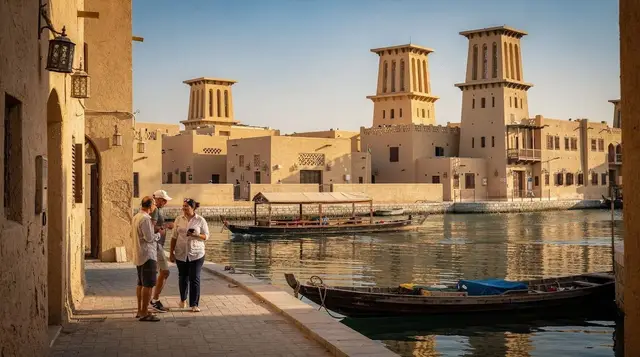
Deira neighborhood guide: Gold Souk, Spice Souk and the Creek
Dubai: old town, souks, street food, guided tour & abra ride
Duration: 3-4 hours
Is Deira worth staying in or just visiting?
Deira works well as a half-day or full-day visit for the Gold and Spice Souks and the Creek wharfage, and it's also a legitimate budget base — hotel prices run roughly half those of Downtown or the Marina. It suits budget and culture-focused travelers more than visitors prioritizing polish, beach access, or nightlife.
What Deira actually is
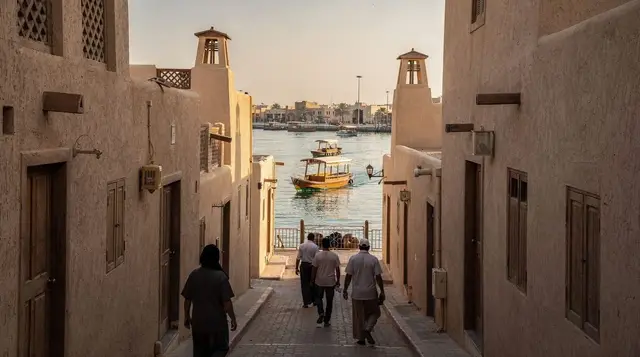
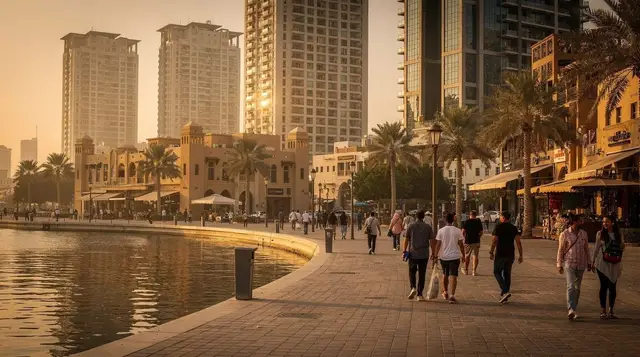
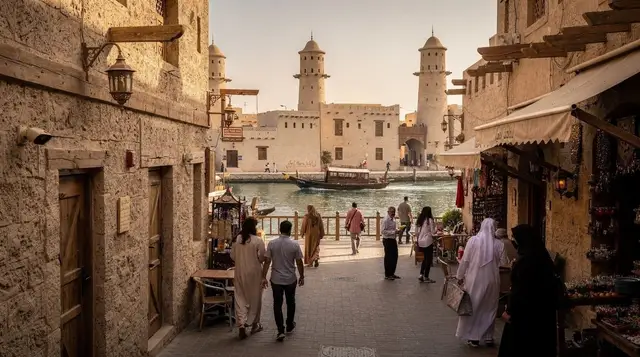
Deira sits on the north bank of Dubai Creek, opposite Bur Dubai, and it’s the older of Dubai’s two historic trading districts, still functioning today largely as a working commercial area rather than a district built for tourism. Its defining features are the Gold Souk and Spice Souk, both covered markets that have operated in some form for generations, and the Creek wharfage, where wooden cargo dhows still load and unload goods bound for ports across the Gulf, the Indian subcontinent, and East Africa. Deira is denser, busier, and rougher around the edges than Downtown or the Marina, and that’s precisely its appeal for visitors wanting to see a side of Dubai that predates the skyscraper era.
| Where | North bank of Dubai Creek |
| Cost to explore | Free; abra crossing around AED 1 (0.30 USD) |
| Time needed | Half-day for the souks and wharfage |
| Getting there | Green Line metro: Al Ras, Baniyas Square, Palm Deira |
| Best time | Early morning or after 4pm, cooler and quieter |
For where Deira fits among Dubai’s other districts, see the neighborhoods overview.
The Gold Souk
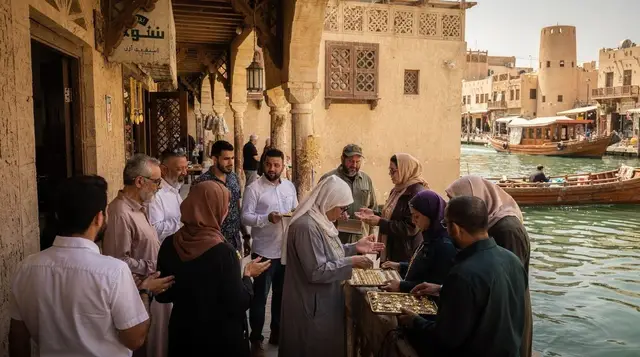
Deira’s Gold Souk is a covered market lined with hundreds of jewelry shops, their windows packed with gold jewelry displayed in a density that’s genuinely striking even if you have no intention of buying. Prices are typically quoted based on the day’s gold rate plus a workmanship charge that varies by design complexity, and bargaining on that workmanship charge is standard practice — shops expect it, and walking away is a legitimate negotiating tactic if a price feels too high. Even without buying, browsing the Gold Souk’s window displays and its ornate central arcade is worth the visit on its own. The Gold Souk guide covers bargaining tactics and what to look for in more detail.
The Spice Souk
A short walk from the Gold Souk, the Spice Souk is smaller and more atmospheric, with open sacks of spices, dried fruits, nuts, and incense lining narrow covered lanes, and the smell alone is often described as one of the more memorable sensory experiences in the city. Vendors here are generally more low-key about sales pitches than in the Gold Souk, making it an easier browse for visitors who’d rather not negotiate. It’s also one of the better spots in the city for picking up saffron, dried limes, and frankincense at prices well below tourist-shop markups elsewhere. See the Spice Souk guide for what to buy and typical prices.
The Creek and the dhow wharfage
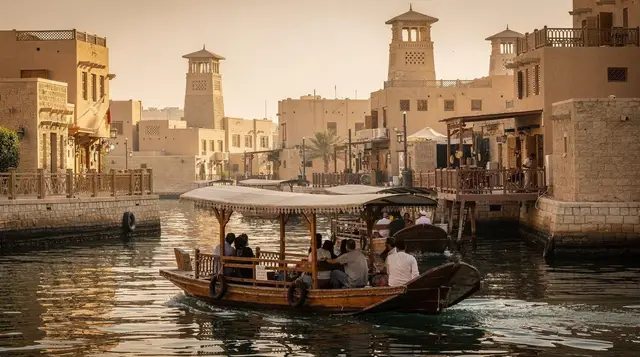
Dubai Creek splits Deira from Bur Dubai, and its Deira-side wharfage remains a working port for wooden dhows, loaded by hand with everything from air conditioners to tires bound for regional trade routes — a genuinely unusual sight for a city otherwise defined by its ultra-modern skyline. Walking the wharfage is free and one of the more distinctive photography opportunities in Dubai, particularly in the late afternoon light. Crossing to Bur Dubai by abra — a small traditional wooden boat — costs around AED 1 (0.30 USD) shared, one of the cheapest experiences anywhere in the city. The abra crossing guide covers the crossing points and how the shared versus private options differ.
Guided options for Deira and the Creek
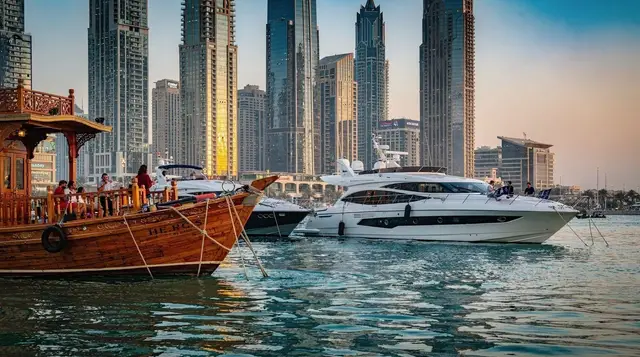
For visitors who’d rather have context and bargaining help built in, a guided old town, souks, street food and abra ride tour covers both the Gold and Spice Souks alongside an abra crossing and food stops, typically running 3-4 hours. In the evening, a dhow dinner cruise along Dubai Creek offers a slower, more atmospheric way to see the wharfage and both banks from the water rather than on foot.
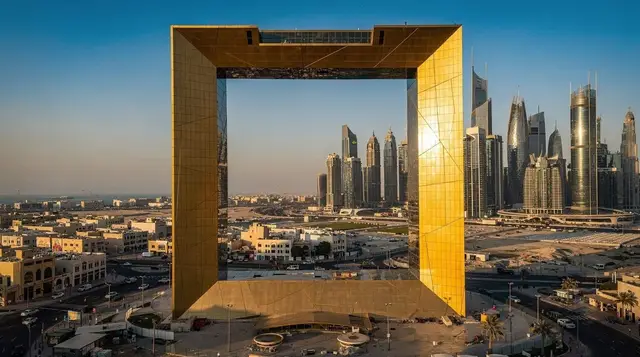
A combined Frame, Creek, souks and Blue Mosque guided tour bundles Deira’s Creek-side sights with the Dubai Frame and Jumeirah Mosque for visitors covering more ground in a single guided day.
Food in Deira
Deira holds some of Dubai’s most authentic and least expensive food, reflecting the district’s large South Asian and Iranian resident population — expect strong, cheap Pakistani, Indian, and Iranian restaurants alongside street-side snack stalls near the souks. A full meal here can cost a fraction of an equivalent dish in Downtown or the Marina, and the quality is often genuinely excellent rather than a budget compromise. The Dubai cheap eats guide and Dubai street food guide both cover specific Deira recommendations.
Where the hotels sit and what they cost
Deira’s hotel stock skews budget, typically AED 180-400/night (50-110 USD), among the lowest price bands anywhere in central Dubai. The trade-off is standard rather than luxury quality — expect functional, clean mid-range hotels rather than the polish of a five-star Downtown property — and a location that’s further from the Burj Khalifa, Marina, and beach districts, requiring a metro ride or taxi to reach any of them. For budget travelers prioritizing cost savings over proximity to newer attractions, Deira remains one of the better value bases in the city.
Getting around Deira
The Green Line metro serves Deira directly, with Al Ras, Baniyas Square, and Palm Deira stations covering the district’s main areas, including both souks within a short walk of Al Ras station. An abra crossing links Deira to Bur Dubai for about AED 1 (0.30 USD), often faster than a taxi given Creek-crossing traffic at busy times. Reaching Downtown or the Marina requires a metro transfer at Union station or a direct taxi, typically 15-25 minutes to Downtown and 30-40 minutes to the Marina. See getting around Dubai for the fuller network.
Is Deira worth a dedicated visit?
Yes, even for visitors based elsewhere in the city — the Gold Souk, Spice Souk, and Creek wharfage together offer a genuinely different side of Dubai from the skyline-and-mall experience most visitors default to, and the whole visit can be covered in half a day without major cost. As a base for an entire trip, Deira suits budget-conscious and culture-focused travelers well, but visitors prioritizing beach access, nightlife, or proximity to the Burj Khalifa will find Downtown or the Marina a more convenient fit despite the higher cost.
Deira during the day versus evening
Deira’s souk lanes are largely open-air or lightly covered, so early morning or after 4pm generally offers a more comfortable temperature for browsing, particularly outside the cooler November-to-March season. Evenings bring out more of the wharfage’s working activity along with a livelier food scene, while midday in summer (June-September) can be genuinely uncomfortable given the limited shade in parts of the souk lanes. See Dubai in summer for broader guidance on timing outdoor visits around the heat.
Common misconceptions about Deira
A frequent assumption is that Deira is unsafe or run-down simply because it’s older and denser than Downtown — in practice, it’s as safe as anywhere else in the city, just visually and atmospherically different, with narrower lanes, heavier foot traffic, and a working-port feel rather than a polished tourist district. Another misconception is that bargaining in the Gold Souk is aggressive or uncomfortable; in reality it’s a routine, low-pressure part of the transaction that both sides expect, and walking away without buying carries no social cost.
A third is assuming a Deira hotel automatically means a poor overall trip — for budget travelers willing to take a slightly longer metro ride to reach Downtown or the Marina, the savings are substantial without meaningfully compromising trip quality.
Deira’s role in Dubai’s trading history
Long before oil transformed Dubai’s economy, Deira was the commercial heart of the settlement, its position on the Creek giving direct access to Gulf trade routes that connected the city to India, Iran, and East Africa. Pearling, and later gold and textile trading, built much of Deira’s early wealth, and the wharfage you see today loading cargo dhows is a continuous thread back to that same trading function rather than a recreation for visitors. This history is part of why Deira feels functionally different from Downtown or the Marina — it wasn’t planned as a destination, it grew organically as a working port and market district, and that history still shapes its narrow lanes and covered souk arcades today.
The old Dubai walking guide traces this history in more depth across both banks of the Creek.
Deira beyond the souks
While the Gold and Spice Souks draw the most visitor attention, Deira extends well beyond them into a dense residential and commercial district that most tourists never explore. Naif Road and the surrounding lanes hold a mix of textile shops, budget electronics retailers, and small restaurants serving the district’s large South Asian and Iranian population, offering a more everyday, less curated look at how the area actually functions day to day. Al Ras and Baniyas Square, the metro stations serving the district, sit within walking distance of both this wider commercial stretch and the more tourist-focused souks, making it easy to wander further afield if time allows.
Shopping etiquette specific to Deira
Beyond the expected bargaining in the Gold Souk, a few practical habits make shopping here smoother. Carrying small notes helps with quick purchases in the Spice Souk, where vendors selling smaller quantities may not always have change for larger bills. In the Gold Souk, asking to see a shop’s current gold rate sheet before negotiating gives a clearer baseline for the workmanship markup being charged. Dress modestly — shoulders and knees covered — as a matter of practical comfort and local norm, even though the souks themselves aren’t religious sites. The dubai souks guide covers bargaining etiquette across all of Dubai’s markets, not just Deira’s.
Deira for a longer stay
Visitors basing a full trip in Deira, rather than just visiting for an afternoon, will find the district well-suited to a slower, more immersive style of travel — cheap, excellent food, an easy metro connection to the rest of the city, and a genuinely different daily rhythm than the newer coastal districts. It’s less suited to visitors wanting resort-style amenities, a pool, or beach access directly from their hotel, none of which Deira’s hotel stock typically offers. Pairing a Deira base with day trips to the Marina or Downtown for beach and landmark time is a reasonable way to combine budget savings with access to the newer districts’ attractions.
Deira Creek by night
The Creek and its wharfage take on a different character after dark, with strings of lights along both banks reflecting on the water and the dhows moored for the night rather than actively loading cargo. A dhow dinner cruise is the most comfortable way to experience this, drifting past both Deira’s and Bur Dubai’s waterfronts while dinner and live entertainment are served on board, avoiding the daytime heat entirely. For visitors who’d rather stay on land, walking the Deira-side Creek promenade after sunset is free and offers many of the same views, particularly around the areas near the abra stations where the boat traffic continues into the evening.
Combining Deira with a broader Old Dubai day
Because Deira and Bur Dubai sit directly across the Creek from each other, most visitors combine both into a single day trip rather than visiting Deira in isolation. A typical route starts on one bank, crosses by abra, and finishes on the other, covering the Gold and Spice Souks on the Deira side and Al Fahidi and the Textile Souk on the Bur Dubai side within a single half-day to full-day outing. The Bur Dubai guide covers the south-bank half of this combined visit in the same level of detail as this guide covers Deira, making the two a natural pair for planning purposes.
Who should skip Deira
Visitors on a very short trip — a 24 or 48-hour layover, for instance — with a fixed priority list of the Burj Khalifa, a desert safari, and little else, can reasonably deprioritize Deira without missing anything considered essential to a first Dubai visit. Visitors specifically seeking a resort-style stay with a pool and beach access should also look elsewhere, since Deira’s hotel stock is built around budget functionality rather than leisure amenities. That said, even a two-hour detour to the Gold Souk and the Creek wharfage from a Downtown or Marina base captures most of what makes Deira distinctive, so completely skipping it means missing a genuinely different side of the city rather than just an optional add-on.
What to wear and bring to Deira
Modest dress — shoulders and knees covered — is the practical norm throughout the souks, both out of respect for local custom and for comfort, since the covered lanes offer limited airflow. Comfortable, closed-toe shoes help on the uneven, sometimes wet flooring near the wharfage and abra crossing points. Carrying cash in smaller denominations makes both bargaining and casual purchases easier, since not every souk stall accepts cards, and having a rough sense of the day’s gold rate beforehand gives useful leverage if buying anything from the Gold Souk specifically.
Deira during Ramadan and Friday
Deira’s souks and food stalls shift noticeably during Ramadan, with many closing during the earliest fasting hours and reopening with extended evening hours after iftar at sunset, when the district’s atmosphere turns notably lively as families and traders break the fast together. Friday follows its own pattern year-round — Jummah prayer draws heavy midday foot traffic near the district’s mosques, and several souk stalls open later than on other days as a result. Visitors planning a Deira visit around either Ramadan or a Friday should expect a shifted schedule rather than the standard weekday rhythm described elsewhere in this guide.
Shopping the Gold Souk without overspending
Beyond the general bargaining etiquette covered above, a few extra habits help visitors avoid overpaying specifically in the Gold Souk. Checking the day’s international gold rate before arriving — widely available online — gives a clear baseline for negotiating the workmanship charge, which is the actual variable shops adjust rather than the underlying gold price itself. Visiting two or three shops before committing to a purchase, rather than buying at the first stall, is standard practice among savvy shoppers and carries no social cost in a market built around comparison and negotiation. Asking for a receipt itemizing gold weight, purity, and workmanship charge separately also protects against any later dispute about what was actually purchased, particularly for higher-value pieces, and is worth keeping for customs purposes if traveling onward with the item.
Deira vs Bur Dubai: which side to prioritize
Given both sit directly across the Creek from each other, most visitors compare them directly when deciding where to spend more time or which to base in.
| Deira | Bur Dubai | |
|---|---|---|
| Character | Working souks (Gold, Spice), Creek wharfage | Heritage quarter (Al Fahidi), Meena Bazaar shopping |
| Hotel prices | AED 180-400/night (50-110 USD) | AED 200-450/night (55-125 USD) |
| Best for | Bargaining, spices, dhow photography | Museums, wind-tower architecture |
| Airport distance | 15-20 minutes by taxi | 20-25 minutes by taxi |
Deira edges out on price and working-port atmosphere; Bur Dubai edges out on quiet heritage sites. Most visitors cover both via the short abra crossing rather than choosing one exclusively — see the Bur Dubai guide for the south-bank half of this comparison.
A half-day route through Deira’s souks
For visitors with roughly three to four hours, a practical sequence starts at Al Ras Metro Station and moves through the Gold Souk first while the morning light and temperature are both manageable, allowing 30-45 minutes for browsing and any bargaining. From there, the short walk to the Spice Souk takes 20-30 minutes to properly take in the sacks of spices and dried goods, before finishing at the Creek wharfage for photography and, if continuing to Bur Dubai, the abra crossing itself. This order keeps the more exposed wharfage stretch for later in the walk, once the initial morning heat has settled but before the midday peak.
Frequently asked questions about Deira
Is it worth staying in Deira instead of Downtown?
For budget-focused travelers, yes — the roughly 50% hotel cost saving is significant, and Deira sits within a reasonable metro ride of Downtown and the rest of the city.
Can you bargain everywhere in Deira, not just the Gold Souk?
Bargaining is expected in the souks specifically; fixed-price shops and restaurants outside the souk lanes generally don’t negotiate the same way.
How do I get from Deira to the airport?
Deira sits close to Dubai International Airport, typically a 15-20 minute taxi ride outside peak traffic, among the shortest airport connections of any Dubai district.
Is Deira good for photography?
Yes, particularly the Creek wharfage and the covered souk arcades, both offering atmospheric, less staged scenes than most of Dubai’s newer, more manicured districts.
What should I buy in the Spice Souk?
Saffron, dried limes, frankincense, and dried fruits are common picks, generally priced well below equivalent tourist-shop markups found elsewhere in the city.
Is Deira connected to the metro?
Yes, the Green Line serves Deira directly via Al Ras, Baniyas Square, and Palm Deira stations, all within walking distance of the main souk areas.
Is Deira better than Bur Dubai for a first-time visitor?
Neither is objectively better — they’re complementary; Deira suits visitors wanting working souks and bargaining, while Bur Dubai suits those wanting a quieter heritage quarter, and most first-timers combine both in one day.
How much time should I budget for Deira alone?
Half a day covers the Gold Souk, Spice Souk, and Creek wharfage at an unhurried pace; a full day allows time to cross to Bur Dubai as well.
Top experiences
Bookable activities with verified prices and instant confirmation on GetYourGuide.