Dubai Spice Souk guide: what's real, what's for tourists, and how to buy
Dubai: old town, souks, street food, guided tour & abra ride
Duration: 3-4 hours
Is the Dubai Spice Souk worth visiting, and what should I buy?
Yes — it's a small, easy, low-pressure stop that takes 15-30 minutes and costs almost nothing to browse. Genuine saffron, dried limes (loomi), frankincense resin, and dates are the standout buys; skip pre-packaged 'gift box' spice sets aimed squarely at tourists, since they're usually lower quality and overpriced relative to buying the same items loose.
What the Spice Souk is
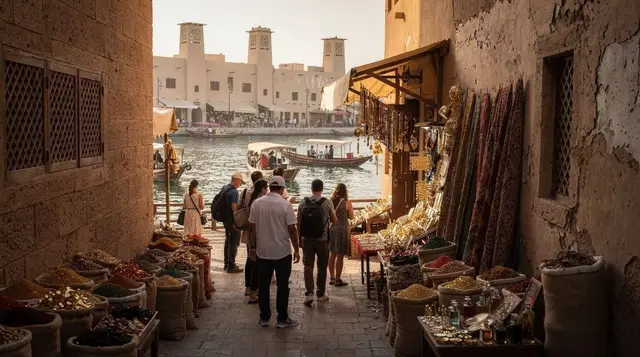
Deira’s Spice Souk is a small, dense cluster of shopfronts a short walk from the Gold Souk, where open sacks and burlap bags of spices, dried fruit, nuts, and incense spill out onto narrow lanes, filling the air with a mix of cardamom, cinnamon, and dried lime that’s genuinely distinctive even by souk standards. It’s the most casual, lowest-pressure of Deira’s traditional markets — easy to browse for a few minutes without feeling obligated to buy, and small enough that a first-time visitor won’t get lost the way they might in the larger Gold Souk arcade.
| Where | Deira, near Al Ras Metro Station, Green Line |
| Cost | Free to browse; spices sold by weight, low stakes |
| Time needed | 15-30 minutes |
| Getting there | Metro (Green Line) or taxi (15-30 min from most areas) |
| Best time | Late afternoon to early evening (4-7pm) |
What’s genuinely worth buying
Saffron is the headline item, though it deserves the caution covered below given how often it’s cut or substituted at the lower end of the price range. Dried limes (loomi) — black, wrinkled, sun-dried limes used whole or ground in Gulf and Persian cooking — are a distinctive, easy-to-pack souvenir most visitors have never encountered before and are genuinely useful if you cook. Frankincense and myrrh resin, burned as incense (traditionally on a small charcoal burner called a mabkhara), connect directly to the region’s historic incense trade and make an atmospheric, inexpensive souvenir. Dates, sold loose or in simple packaging, range from everyday varieties to premium types like the soft, caramel-like Medjool.
Whole spices — cardamom pods, sumac, za’atar blends, dried rose petals — are sold by weight at prices generally well below equivalent packaged spices at home.
What to skip
Pre-packaged “gift box” spice sets, stacked attractively near shop entrances specifically to catch a passing eye, are almost always a worse deal than buying the same items loose by weight — you’re paying for packaging and a curated assortment rather than quality, and the individual spices inside are often lower grade than what’s sold loose elsewhere in the same shop. Very cheap saffron is a clear signal of dilution or substitution rather than a bargain (see below). Souvenir-shaped items — small decorative tins, oversized “display” spice jars meant for a shelf rather than a kitchen — are priced for tourists specifically and worth skipping unless the display value itself is what you want.
The saffron problem, honestly
Genuine saffron is one of the most expensive spices in the world by weight, a fact rooted in how labor-intensive it is to harvest (each flower yields only a few thin stigmas, hand-picked). Because of that price, saffron is also one of the most commonly adulterated spices globally, and Dubai’s Spice Souk is not immune to lower-quality or cut product being sold at a discount to unsuspecting tourists.
Real saffron threads are a deep, uniform red with slightly paler tips, have a distinct sweet, hay-like aroma (not a generic “spicy” smell), and when steeped in warm water, color it a golden yellow gradually rather than an immediate, deep red-orange — the latter is a common sign of added dye (sometimes safflower, sometimes synthetic colorants) rather than genuine saffron. If a vendor’s saffron price is dramatically below what you’d expect to pay for the real thing at home, that’s the clearest signal something’s off, not a genuine bargain. Buying from an established shop rather than an informal street-side stall, and asking to see the threads closely before purchase, reduces this risk considerably.
A brief history of the spice trade here
Deira’s role as a spice trading point predates Dubai’s modern development by well over a century, tied to its position on trade routes connecting the Indian subcontinent, Persia, and East Africa to the wider Gulf. Spices, along with pearls and textiles, were among the goods that made Deira’s waterfront a genuine commercial hub long before oil transformed the city’s economy, and the current Spice Souk — while its physical shopfronts are newer than that history — continues a trading pattern rooted in that period rather than one manufactured recently for tourism.
Vendors here, many from families with generations of experience in the trade, generally know their stock in real depth, which is worth remembering if you have genuine questions about origin or quality — asking is usually welcomed, not brushed off.
Weighing scales and trusting the transaction
Spices and dried goods are sold by weight, and honest shops weigh openly on a visible scale rather than out of sight — watching your purchase weighed is normal practice, not a suspicious request. If a shop is reluctant to weigh in front of you or the scale isn’t clearly visible, that’s a reasonable signal to take your business to one of the many neighboring stalls instead. Given how compact the Spice Souk is, an unsatisfying experience at one stall costs you almost nothing in time to simply move to the next one.
Incense and how it’s traditionally used
Frankincense and myrrh resin, sold in small clear bags by weight, are traditionally burned on hot charcoal in a small ornamental burner (a mabkhara) rather than lit directly like a stick of incense — buying resin without a burner and charcoal disc means you’ll need to source those separately (available at the same souk) to actually use it the traditional way. Burning incense to scent the home and clothing is a genuine, everyday Emirati and wider Gulf custom, not a tourism-only novelty, and it’s commonly done ahead of receiving guests — buying a small burner and resin set makes a more complete, usable souvenir than resin alone.
Bargaining at the Spice Souk
The stakes here are lower than the Gold Souk simply because purchase amounts are smaller, but the same basic bargaining culture applies: counter the first quoted price by 20-30%, and expect a bit of back-and-forth before landing somewhere in the middle. Buying in slightly larger quantities — a few different spices from one vendor rather than a single small bag — gives a bit more room to negotiate the total. None of this needs to feel adversarial; most Spice Souk vendors treat the exchange as a normal, friendly part of doing business rather than a serious negotiation.
How the Spice Souk fits into an Old Dubai visit
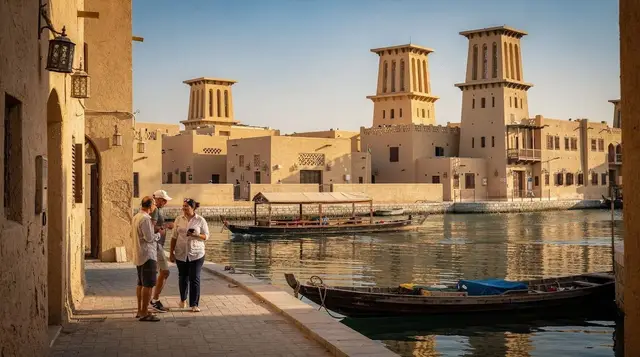
The Spice Souk sits a short walk from the Gold Souk, and both are commonly visited together, often as part of a longer Old Dubai walking route that also includes an abra crossing to Al Fahidi on the opposite bank. The souks overview guide compares it against Deira’s other markets and the newer, fixed-price Souk Madinat Jumeirah for context on where it fits among Dubai’s shopping options generally.
Photography at the Spice Souk
This is one of the most photogenic stops in Old Dubai — stacked burlap sacks of colorful spices, dried fruit displays, and incense burners create genuinely striking compositions with minimal effort. Shooting the general scene, stacked goods, and shopfronts is uncontroversial and something vendors are used to; ask before photographing an individual vendor’s face directly, the same courtesy that applies throughout the souks and wider Old Dubai. Morning light tends to be softer here than the harsher midday sun that can wash out the colors of the spice displays.
Comparing prices before you buy
It’s worth a quick mental benchmark before negotiating: a small bag of good-quality cardamom might run AED 15-25 (4-7 USD), dried limes considerably less, and a gram of genuine saffron somewhere in the range of AED 15-25 (4-7 USD) depending on grade and the day’s market rate — genuine saffron priced at a fraction of that per gram is the clearest sign of dilution covered above. These aren’t fixed rules, since quality and vendor pricing vary, but having a rough sense of reasonable ranges before you start negotiating puts you in a stronger position than walking in with no reference point at all.
Getting there and timing
The Spice Souk is a short walk from Al Ras Metro Station on the Green Line, and equally easy to reach by taxi or Careem from most parts of the city (15-30 minutes depending on starting point and traffic). Late afternoon to early evening (4-7pm) tends to hit the best balance of open shops, manageable heat, and decent light for photos, though the souk is generally pleasant to visit any time it’s open given its smaller, more contained size compared to the Gold Souk.
Food stalls and street food nearby
The area around the Spice Souk has a scattering of small, inexpensive food stalls and simple restaurants serving South Asian and Middle Eastern dishes, reflecting Deira’s historically diverse trading-community population. It’s a reasonable, budget-friendly place to grab a quick bite after browsing, and prices here run noticeably lower than restaurants in the newer parts of the city. See the Dubai street food guide for more on this style of eating across the city, and the Deira neighborhood guide for a fuller picture of dining and staying in this specific area.
Buying quantities and packing for travel
Most spices and dried goods purchased here pack easily into checked luggage without special handling — sealed in the plastic or paper bags shops provide, they hold up fine for the flight home. If buying a meaningful quantity of anything (a kilo of saffron threads would be an extraordinary and extraordinarily expensive purchase, but more modest quantities of dates or dried limes are common), consider a slightly more robust container than the thin plastic bags offered by default, since spillage inside a suitcase is a genuinely unpleasant cleanup.
Customs rules on bringing dried spices and food items vary by destination country — most allow modest personal-use quantities without issue, but it’s worth a quick check for your specific home country if buying in bulk.
Combining with the Textile and Perfume Souks
Beyond spices, Deira’s nearby Perfume Souk sells oud oil and traditional Arabic perfumes, worth a stop on the same walk if fragrance interests you as much as food — covered in the souks overview guide alongside the Textile Souk on the opposite Creek bank, reachable by the same abra crossing used to reach Al Fahidi.
Visiting with kids and as a family
The Spice Souk tends to be one of the more kid-friendly stops in Old Dubai — the colors, textures, and smells are genuinely engaging for children even without buying anything, and the compact layout means there’s little risk of losing track of kids the way a larger market might pose. Vendors are generally warm toward browsing families. It’s a good, short stop to pair with an abra ride, which most kids find more memorable than the shopping itself.
Pairing the Spice Souk with a Creek dhow cruise
Evening dhow cruises along the Creek pass close to the Spice Souk and the wider Deira waterfront after dark, giving a different, lit-up perspective on the same area you might browse during the day. It’s a natural pairing for a single day in Old Dubai — see the dhow cruise guide and the Creek versus Marina cruise comparison for how to structure an afternoon souk visit around an evening cruise.
Is the Spice Souk a tourist trap?
Less so than its reputation might suggest. Because purchase amounts are small and the core inventory (spices, dates, dried limes, resin) is genuinely useful rather than purely decorative, the incentive to aggressively overcharge tourists is weaker here than at markets dealing in higher-value goods. The main tourist-trap risk is narrower and specific: the pre-packaged gift boxes and diluted saffron covered above, both avoidable with a bit of awareness. The honest tourist traps guide covers where genuinely overpriced Dubai attractions sit relative to a stop like this one, which comes out looking fairly reasonable by comparison.
Gift shopping versus everyday use
Splitting a Spice Souk visit mentally into “gifts to bring home” versus “things I’ll actually cook with” tends to produce better purchases than browsing without a plan. Gift-oriented buys — a small frankincense burner set, a decorative tin of dried rose petals, a modest quantity of saffron with a clear explanation of what makes it genuine — travel well and read as thoughtful rather than generic. Everyday-use buys — a larger bag of cardamom, dried limes for a Persian or Gulf recipe, a bulk quantity of a specific spice blend — are better value bought loose in larger quantities than the smaller “sampler” portions aimed at one-off tourist purchases.
Extending the trip: Sharjah’s spice and heritage markets
Visitors extending beyond Dubai to Sharjah will find a comparable, if smaller, spice-trading tradition within its Central Souk and surrounding heritage district, covered in the Sharjah culture guide. It’s a reasonable half-day addition for anyone who found Deira’s Spice Souk interesting and wants a slightly different, less tourist-trafficked version of the same market culture.
Who gets the most out of the Spice Souk
Cooks and anyone genuinely interested in ingredients get the most value here, since the quality and variety of whole spices, dried fruit, and specialty items like loomi genuinely exceed what’s easily found in most home markets at comparable prices. Casual visitors get a quick, low-pressure sensory experience even without buying much — the sights and smells alone justify the short detour. Where it suits fewer people is as a serious souvenir-shopping destination for anything beyond food; for that, the Gold Souk, Textile Souk, or Dubai’s malls serve better.
A short shopping list for first-time visitors
If you’re unsure where to start, a reasonable first-time Spice Souk basket looks something like: a small bag of cardamom pods (used widely in Arabic coffee and tea), a bag of dried limes, a small quantity of sumac or za’atar if you cook Middle Eastern food at home, a modest amount of saffron from an established vendor who’ll let you inspect it closely, and a small frankincense resin and burner set as a gift. This combination covers cooking, gifting, and a genuine sensory souvenir without requiring a large budget or extensive haggling experience.
A guided way to see it with the wider souks
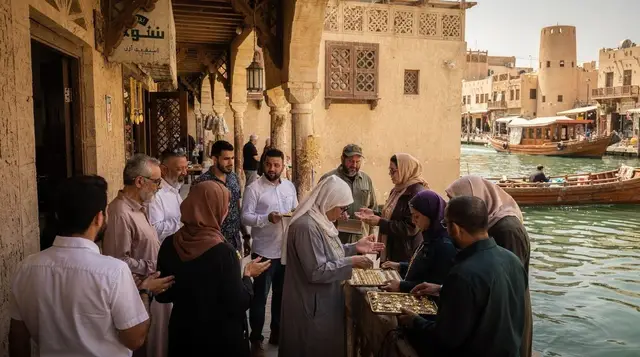
For visitors who’d rather not navigate Deira’s souk lanes solo, this old town souks and street food walking tour with an abra ride covers the Spice Souk alongside the Gold Souk, Textile Souk, and a Creek crossing with a guide who can point out genuinely good vendors versus tourist-aimed ones — useful if the saffron-quality question above feels like more risk assessment than you want to do alone. This walking tour of Old Dubai’s souks and abra crossing is a similar option worth comparing on inclusions and timing before booking.
Vendors and language
Most Spice Souk vendors speak functional English alongside Arabic, Hindi, or Urdu, reflecting Deira’s historically South Asian and Gulf Arab trading community, and communication around price, weight, and product questions is rarely a barrier. Vendors are generally happy to explain the origin or intended use of an unfamiliar spice if asked directly, and this kind of question is welcomed rather than seen as a distraction from the sale — a genuine point of pride for many stallholders with long family histories in the trade.
Seasonal variation in stock
While the Spice Souk’s core inventory (saffron, dried limes, dates, whole spices) stays fairly constant year-round, fresh date varieties and quality shift seasonally, with the freshest and widest selection typically available in the months following the UAE date harvest in late summer and early autumn. Outside that window, dates sold are generally still good quality but drawn more from stored stock than the same-season freshness available closer to harvest time — not a reason to avoid buying at other times of year, but worth knowing if date freshness specifically matters to you.
The bottom line
The Spice Souk is a quick, cheap, low-stakes stop that rewards a little product knowledge — knowing what genuine saffron looks and smells like, and knowing to skip the pre-packaged gift boxes aimed at tourists — over blind trust in whatever’s presented first. Fifteen to thirty minutes here, paired with the adjacent Gold Souk and a Creek crossing, is one of the better-value half-hours in Dubai.
Frequently asked questions about the Spice Souk
Where exactly is the Spice Souk?
In Deira, on the Creek’s north bank, a short walk from the Gold Souk and the Deira abra station.
What’s genuinely worth buying?
Saffron (with caution), dried limes, frankincense resin, dates, and loose whole spices like cardamom and sumac.
How do I know if saffron is real?
Genuine saffron is expensive, deep red with paler tips, smells sweet and hay-like, and turns water golden yellow gradually rather than deep red-orange instantly.
Is bargaining expected?
Yes, though at lower stakes than the Gold Souk — a 20-30% counteroffer is normal and expected.
Can I bring spices home through customs?
Most dried spices and dates travel fine for personal use, but check your home country’s food import rules for larger quantities.
How long should I spend here?
15-30 minutes covers a thorough browse and purchase for most visitors.
Can I visit the Spice Souk as part of a guided tour?
Yes — guided old town souks tours typically bundle the Spice Souk with the Gold Souk, Textile Souk, and a Creek abra crossing, useful if you’d rather have a guide flag quality vendors than assess it yourself.
Is there a best day of the week to visit?
Any day works, since the souk operates on standard shop hours throughout the week, though it tends to feel slightly calmer on weekday afternoons than on Fridays and weekends when local shopping traffic picks up.