Dubai tourist traps: what to skip and what to book instead
Dubai: desert safari with BBQ dinner in a Bedouin camp
What are the biggest tourist traps in Dubai?
Unlicensed beach photo-op camels and henna sellers charging tourist-only prices with no fixed rate, restaurants directly facing the Dubai Fountain charging a premium for mediocre food, gold and souvenir shops in heavy-tourist-traffic zones (versus the actual Gold Souk) with inflated 'making charges,' and generic desert safari operators cramming too many people into an overcrowded, rushed camp experience. None of these ruin a trip, but knowing which to skip and which specific alternative to book instead saves real money and time.
Why this list exists
Dubai’s tourism economy is enormous and largely well-run, but like any major destination it has a handful of predictable spots where prices inflate, quality drops, or the “experience” doesn’t match the marketing, specifically because a constant stream of first-time visitors doesn’t know better. None of what follows should scare you off visiting — Dubai is genuinely worth the trip — but knowing which specific things to skip, and what to book instead, saves real money and avoids the mild but avoidable disappointment of realizing afterward you overpaid for something mediocre.
| Trap | Why it’s a trap | Better alternative |
|---|---|---|
| Beach camel photos and henna | Unlicensed, no fixed price | Licensed desert safari with camel riding |
| Fountain-facing restaurants | Premium price, mediocre food | Fountain boardwalk ticket, eat elsewhere in Dubai Mall |
| Tourist-zone souvenir shops | Marked-up non-gold items | Actual Gold Souk or Spice Souk |
| Rock-bottom desert safaris | Overcrowded vehicles and camps | Mid-priced operator with visible recent reviews |
| Airport SIM kiosks | Real premium vs an eSIM | eSIM activated before landing |
Beach photo-op camels and henna sellers
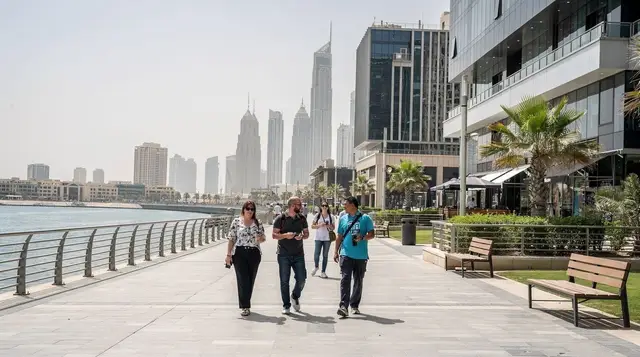
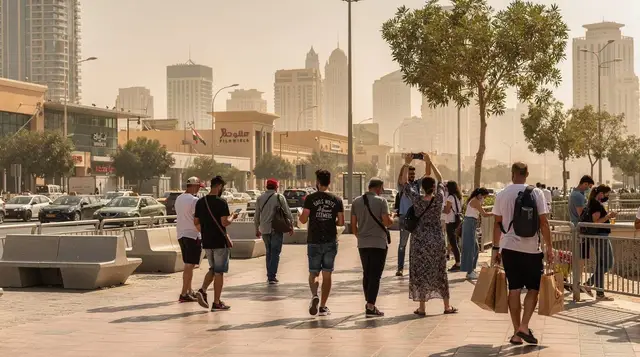
Walk along JBR Beach or Marina Walk for more than a few minutes and you’ll likely be approached by someone offering a camel photo, a henna tattoo, or a “traditional” souvenir at an unclear, on-the-spot price. These informal operators aren’t licensed tour providers, prices are negotiated in the moment with no fixed rate (and tend to be significantly inflated for obvious tourists), and the quality — particularly of henna, which can fade unevenly or use lower-quality dye — is inconsistent.
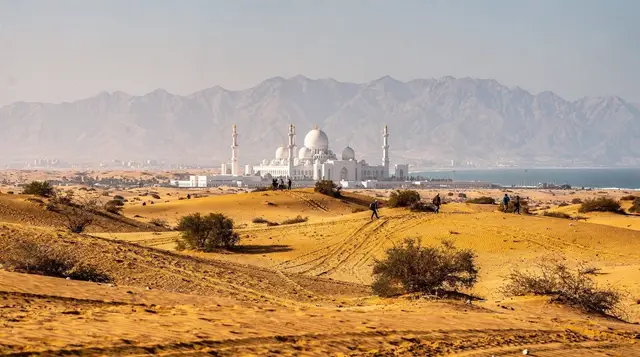
If a camel experience or henna is actually on your list, a proper desert safari with a Bedouin camp evening includes camel riding as part of a fairly-priced, licensed package, and Global Village and organized cultural events typically have vetted, fixed-price henna artists.
Fountain-facing restaurants charging a view premium
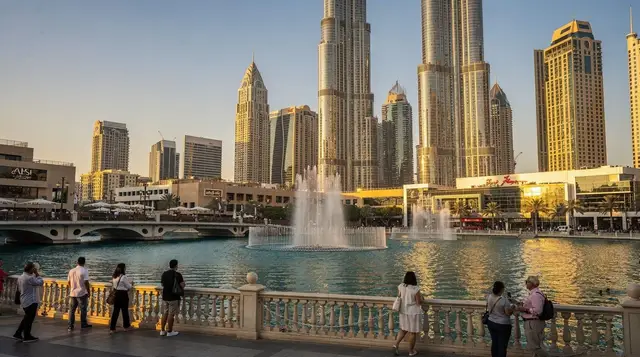
The Dubai Fountain show itself — the choreographed water, light, and music display in front of Burj Khalifa — is genuinely one of Dubai’s best free attractions, viewable from the public boardwalk at no cost. The trap is the restaurants with terraces directly facing the fountain, which routinely charge a significant markup on food and drink quality that doesn’t match the price, purely for the view during a show slot.
A Dubai Fountain boardwalk ticket for a closer, elevated vantage point costs a fraction of a fountain-view dinner and delivers a genuinely better view of the show itself — eat somewhere else in Dubai Mall or nearby and treat the fountain viewing as its own separate, mostly free activity.
Tourist-zone souvenir and jewelry shops vs the actual Gold Souk
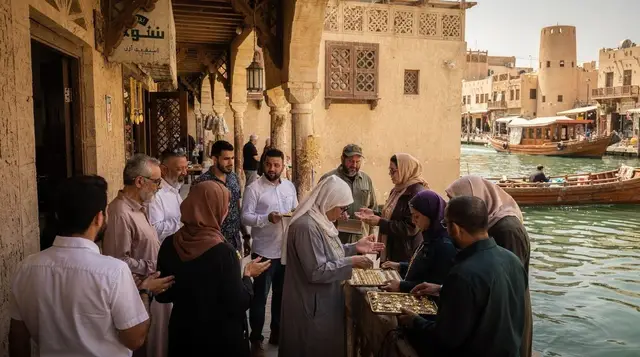
The real Gold Souk in Deira has transparent, genuinely competitive gold pricing, since gold itself is priced daily against the international gold rate with a negotiable making charge layered on top — there’s very little room for a shop to seriously overcharge on the metal itself, though making charges and bargaining skill affect the final price. The trap is souvenir and costume-jewelry shops in heavy-tourist-traffic corridors — some beachfront strips, certain mall zones — that mark up non-gold souvenirs, keychains, and fashion jewelry well above what the same items cost at a market stall or a shop slightly off the main tourist path.
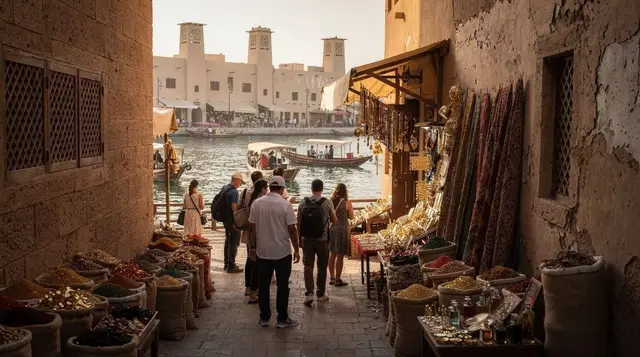
If gold specifically is the goal, go to the actual Gold Souk; for general souvenirs, the Spice Souk and general markets typically offer better value than beachfront kiosks.
Overcrowded budget desert safaris
Not all desert safaris deliver the same experience even at similar price points. The cheapest operators sometimes overbook their vehicles and evening camps, resulting in long waits for the buffet, a rushed or skipped entertainment segment, and a camp that feels more like a crowded cafeteria than the atmospheric desert evening advertised in the photos. This isn’t universal — plenty of budget-friendly operators run a perfectly good evening — but it’s worth reading recent reviews specifically for complaints about overcrowding or long waits rather than choosing purely on price. The desert safari scams and honest guide goes deeper into specific red flags to watch for when booking.
Vague “scenic tour” helicopter and speedboat listings
Aerial and water-based photo tours over Palm Jumeirah and the Marina skyline can be genuinely spectacular, but “scenic tour” listings with vague duration and route descriptions sometimes deliver a shorter or less direct flight path than a competing listing at a similar price. Comparing the specific published duration and route (does it explicitly include Palm Jumeirah, Burj Al Arab, and the Marina, or just a generic loop) before booking avoids paying premium pricing for a shorter or less scenic version of the same basic product.
Bargaining: know when it applies
A genuine point of confusion for first-time visitors is not knowing where bargaining is expected. In traditional souks — Gold, Spice, Textile — haggling is completely normal, and initial asking prices are often 30-50% above what a seller will ultimately accept, so walking away from a too-high price is a legitimate and effective negotiating tactic. In fixed-price malls, chain stores, and licensed attraction ticket counters, bargaining isn’t expected or generally possible — trying to haggle over a ticket price at a major attraction wastes time rather than saving money.
Unofficial “tour guides” outside major attractions
Around busy attractions like the Gold Souk, Al Fahidi, or outside Burj Khalifa, individuals sometimes offer unsolicited guided tours or “skip the line” assistance for cash, unaffiliated with any licensed tour company. These aren’t necessarily scams in the sense of taking your money and disappearing, but the quality and value are inconsistent and unregulated compared to booking a proper guided tour through an established platform in advance.
Tipping pressure
Tipping in Dubai is customary rather than mandatory — roughly 10-15% at restaurants where a service charge isn’t already included, and a reasonable gesture for tour guides and drivers who’ve done a good job. Occasionally, in touristy settings, you’ll encounter pressure for an unusually high tip presented as though it’s obligatory (sometimes from an unlicensed guide or informal service provider covered above) — it’s fine to tip what feels fair for genuinely good service and push back on pressure to tip more.
What isn’t a tourist trap, despite the price
It’s worth being clear that expensive doesn’t automatically mean a trap — the Burj Khalifa, a proper dhow dinner cruise, and a well-reviewed desert safari all charge real money because they deliver a genuine, well-executed experience, not because they’re overcharging tourists. The worth-it-honest guide breaks down specifically which higher-priced attractions earn their cost and which don’t.
The general pattern behind Dubai’s tourist traps
Almost every trap on this list shares the same structure: an informal or opportunistic operator positioned directly in a high-tourist-traffic area, charging an unclear or inflated price for something a licensed, properly-priced alternative delivers better a short distance away. Spotting that pattern — informal seller, no fixed price, prime tourist-foot-traffic location — is a more useful general skill than memorizing every specific trap, since new variations pop up as the tourism landscape shifts.
A quick pre-trip checklist
Before you go, it’s worth having a rough sense of fair pricing for the handful of things you’ll actually be offered on the street — a camel photo, a henna tattoo, a “special price today only” souvenir — so that a clearly inflated on-the-spot offer registers immediately rather than after the fact. Booking your major activities (desert safari, cruises, tickets) in advance through a reputable platform with visible recent reviews, rather than accepting a walk-up offer from a stranger, handles most of this automatically.
Airport taxi and transfer overcharging
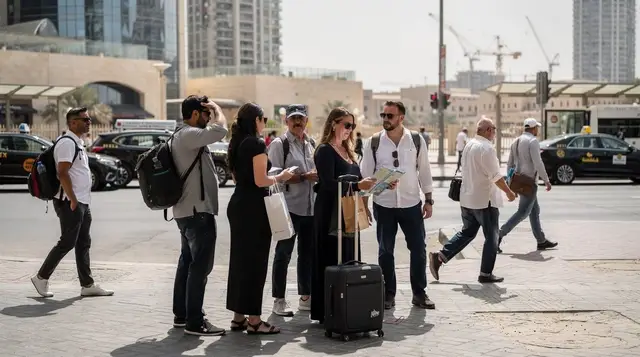
Arriving at Dubai International Airport, some unlicensed drivers approach arriving passengers offering a “taxi” or “transfer” at a flat, unclear cash price, unaffiliated with the official metered taxi rank or a pre-booked transfer. The official taxi queue, clearly marked and metered, and pre-booked hotel or app-based transfers (Careem or similar) both offer transparent, fair pricing by comparison — walking past an unsolicited offer straight to the official rank is the simplest way to avoid this specific trap entirely.
Currency exchange at tourist-heavy locations
Currency exchange counters located directly inside major tourist attractions, hotel lobbies, or at the airport itself typically offer noticeably worse rates than dedicated exchange houses a short distance away in regular commercial areas, or than simply using a bank card with reasonable foreign transaction terms. If a hotel or airport exchange is the only option in the moment, exchanging a small amount to cover immediate needs and doing any larger currency exchange at a proper exchange house later avoids paying the convenience premium on your full trip budget.
Overpriced airport SIM cards versus an eSIM
Kiosks at the airport selling tourist SIM cards often price data packages at a real premium compared to buying a SIM at a proper telecom store in the city, or using an eSIM purchased before arrival. An eSIM activated before landing (Airalo’s UAE plans are a common option) sidesteps the airport premium entirely and gets you connected the moment you land rather than waiting at a kiosk queue, avoiding both the price markup and the arrival-hall queue in one move.
Restaurant menus without visible prices
Occasionally, particularly in touristy waterfront or old-town areas, a restaurant presents a menu without clear pricing, or with pricing that differs from what’s displayed outside once the bill arrives. Confirming prices before ordering, particularly for anything priced “by weight” or “market price” (common with seafood), and checking the final bill against what was quoted avoids an unpleasant surprise at the end of the meal. This is far from universal across Dubai’s restaurant scene, but it’s worth the extra thirty seconds of confirmation in any restaurant that doesn’t clearly display prices upfront.
Counterfeit goods sold as genuine
Some markets and informal vendors sell counterfeit designer goods, electronics, or “authentic” local crafts that aren’t actually what they claim to be, particularly in areas with heavy tourist foot traffic. This isn’t unique to Dubai, but it’s worth knowing that a genuinely deep discount on a recognizable luxury brand item, sold outside an authorized retailer, is very unlikely to be authentic regardless of how convincing the seller’s claim is. For gold and jewelry specifically, sticking to licensed shops in the Gold Souk or established retailers avoids this issue almost entirely, since gold pricing there is transparent and tied to the daily rate.
Photography fees and restrictions at certain sites
A handful of attractions and some private property (certain hotel lobbies, for instance) restrict photography or charge a separate fee for it, something visitors don’t always expect going in. Checking a specific attraction’s photography policy ahead of a planned photo-focused visit avoids the frustration of arriving with a plan that isn’t actually permitted, or an unexpected extra charge for something assumed to be included in the entry ticket.
”Free” gifts tied to a sales pitch
Occasionally, particularly around malls and tourist zones, someone offers a “free” gift, sample, or ticket that turns out to be an entry point into a timeshare presentation or an aggressive sales pitch for perfume, rugs, or similar goods at a private showroom. These aren’t illegal, but the “free” framing obscures a real time commitment and sales pressure that most visitors would rather avoid. Politely declining any unsolicited “free” offer from a stranger on the street, rather than assuming it’s genuinely no-strings-attached, sidesteps this fairly reliably.
Overpriced parking and valet at busy attractions
Some private valet services near popular attractions and restaurants charge considerably more than standard mall or public parking rates, particularly during busy evening hours when demand is highest. Checking whether a destination has standard self-park options, often just a short walk further, before defaulting to the first valet stand offered avoids this specific markup, which can add up meaningfully across a multi-day trip involving a rental car.
Inflated “skip the line” reseller tickets
Third-party ticket resellers, sometimes operating informally near major attractions, occasionally sell “skip the line” tickets at a significant markup over the official ticket price, sometimes for a queue-skip benefit that the standard ticket already includes when booked through an official channel in advance. Booking directly through a reputable platform ahead of your visit typically secures the same or better queue treatment at the correct price, making these informal resellers largely unnecessary regardless of how convincing their pitch sounds in the moment.
Overpriced water and snacks at major attractions
Bottled water and snacks sold inside major paid attractions and near landmark photo spots often carry a real markup compared to a nearby supermarket or convenience store, a pattern familiar from tourist destinations worldwide rather than something Dubai-specific. Carrying a refillable water bottle, particularly important given the climate covered in the weather guide, and picking up snacks from a regular grocery or convenience store before a full day out avoids paying attraction-adjacent prices for basic items.
Unlicensed “VIP fast-track” sellers outside major attractions
Outside Burj Khalifa, Dubai Mall, and other high-traffic attractions, individuals sometimes offer a “VIP fast-track” or “skip the queue” pass for cash, implying a special arrangement that doesn’t actually exist through the attraction itself. These are unaffiliated with the venue and typically just resell a standard ticket at a markup, occasionally with no queue benefit at all beyond what a pre-booked online ticket already provides. Booking a Burj Khalifa ticket directly through an official or reputable platform in advance gets the same or better access at the correct price, without needing to trust an unsolicited street offer.
Third-party sites showing fake urgency on hotel and tour bookings
Some third-party booking sites and resellers display artificial urgency messaging — “only 1 room left,” “3 people viewing this now” — that doesn’t reflect genuine availability, pressuring a faster decision than the situation actually warrants. This isn’t unique to Dubai, but it shows up often enough on unofficial listings for attractions and desert safaris that it’s worth recognizing for what it is: a sales tactic, not a real scarcity signal. Booking through an established platform with visible, verified recent reviews, and taking the extra few minutes to compare a couple of listings before committing, sidesteps most of the pressure entirely.
Unofficial nightlife table and promoter offers
Around Dubai Marina and Downtown’s nightlife districts, promoters sometimes approach visitors offering “free” club entry or a discounted table, which frequently comes with a minimum-spend requirement or a bottle-service upsell only disclosed once you’re seated. This isn’t illegal, but the “free” or “discounted” framing rarely matches what actually gets charged at the end of the night. Booking a table or entry directly through the venue or a reputable platform, and confirming the minimum spend in writing before arriving, avoids the surprise. The Dubai nightlife guide and Dubai rooftop bars guide both cover venues with transparent, published pricing.
Why none of this should discourage a trip
It’s worth stepping back and being clear that every item on this list is a minor, avoidable pitfall rather than a sign that Dubai’s tourism industry is unusually predatory — if anything, Dubai’s major licensed attractions, hotels, and tour operators are generally well-run, transparently priced, and heavily regulated by comparison with many destinations. The traps described here cluster specifically around informal, unlicensed operators exploiting the gap between confident tourists and unclear local pricing norms, and avoiding them is mostly a matter of defaulting to licensed, established options over informal street-level offers.
A short pre-departure checklist
Before your trip, it’s worth setting a rough mental budget for the few things you’ll likely be offered informally — a camel photo, a henna tattoo, a currency exchange, a taxi from the airport — so a clearly inflated on-the-spot price registers immediately as worth declining rather than something to negotiate up from.
Pairing that awareness with booking your major activities through an established platform with visible, recent reviews handles the majority of what’s covered on this page automatically, leaving you free to enjoy the parts of Dubai that fully earn their reputation without the small, avoidable frustrations that come from an unplanned encounter with any of the traps above — none of which are dealbreakers, but all of which are easy to sidestep once you know roughly what to expect.
First-time visitors tend to run into the most of these traps in the first day or two, before they’ve calibrated to fair local pricing — worth keeping in mind if your itinerary front-loads the Marina, Downtown, or Old Dubai’s busiest tourist corridors early in the trip, since that’s exactly where the informal sellers covered above concentrate.
Frequently asked questions about Dubai tourist traps
Are the camels on Dubai’s beaches legitimate?
No — they’re unlicensed, on-the-spot-priced operators. A proper desert safari with camel riding is the fairly-priced alternative.
Is the Dubai Fountain area a tourist trap?
The free show itself isn’t, but fountain-facing restaurants charging a steep premium for average food are worth skipping.
Should I buy souvenirs in the Gold Souk or elsewhere?
The actual Gold Souk has transparent, competitive gold pricing. Tourist-zone souvenir shops elsewhere often mark up non-gold items heavily.
Are all desert safaris the same quality?
No — budget operators sometimes overcrowd vehicles and camps. Check recent reviews for overcrowding complaints before booking on price alone.
Is bargaining expected in Dubai souks?
Yes, in traditional souks, not in fixed-price malls or at attraction ticket counters.
Are helicopter and speedboat photo tours worth it?
Yes if you compare specific published duration and route rather than booking a vague “scenic tour” listing.
Do I need to tip in Dubai?
It’s customary, not mandatory — roughly 10-15% at restaurants without an included service charge, and fair amounts for guides and drivers.
Are “VIP fast-track” tickets sold outside attractions legitimate?
Usually not a special arrangement — they’re typically a standard ticket resold at a markup. Booking directly through an official or reputable platform in advance gets the same access at the correct price.
How do I avoid overpaying for a desert safari specifically?
Avoid the absolute cheapest listing, read recent reviews for overcrowding complaints, and confirm the specific inclusions (BBQ, live shows, camel riding) rather than assuming all safaris at a similar price deliver the same evening.
Top experiences
Bookable activities with verified prices and instant confirmation on GetYourGuide.