Deira — Gold Souk, Spice Souk and the old trading Creek
Deira guide: the Gold Souk, Spice Souk, Creek dhow wharfage, the abra crossing, cheap eats, and honest advice on whether it's worth the trip.
Dubai: old town, souks, street food, guided tour & abra ride
Duration: 3-4 hours
Quick facts
- Location
- North bank of Dubai Creek, opposite Bur Dubai
- Metro line
- Green Line (Al Ras, Baniyas Square, Palm Deira stations)
- Abra crossing
- AED 1 (0.30 USD) shared to Bur Dubai
- Best for
- Souk shopping, cheap food, working port atmosphere
- Typical hotel price
- AED 180–400/night (50–110 USD)
What Deira actually is
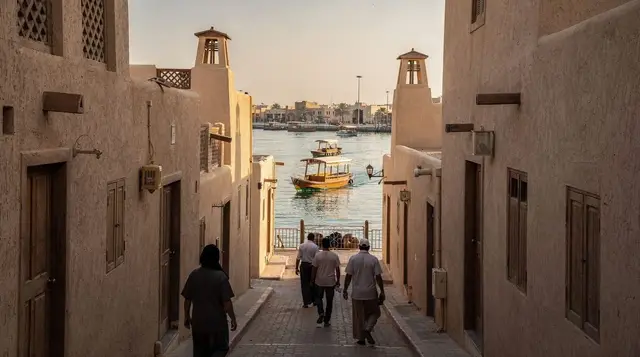
Deira is the north-bank half of what most visitors call Old Dubai, and it’s the part of the city that was trading gold, spices, and textiles decades before the first skyscraper went up along Sheikh Zayed Road. It sits directly across Dubai Creek from Bur Dubai, connected by bridges, a metro crossing, and the AED 1 abra boats that have run this route for longer than any of the modern infrastructure has existed. Unlike Downtown or the Marina, Deira isn’t dressed up for tourism — the souks are working markets, the waterfront is a functioning port, and the restaurants serve the communities who actually live and work here.
Most itineraries pair a Deira visit with Bur Dubai on the opposite bank, treating the pair as a single half-day or full-day excursion — see the old Dubai walking guide for a route that covers both sides via the abra. Deira on its own rewards a slower visit than most first-timers give it, particularly if you’re interested in the wharfage and the less-touristed streets beyond the Gold Souk.
| Where | North bank of Dubai Creek, opposite Bur Dubai |
| Cost | Souks free to browse; biryani meal AED 15–30 (4–8 USD) |
| Time needed | Half a day for the souks, a full day with the wharfage and a sit-down meal |
| Getting there | Green Line metro (Al Ras, Baniyas Square), or AED 1 abra from Bur Dubai |
| Best time | Early morning or after 4pm, year-round |
The Gold Souk
Deira’s Gold Souk is a covered arcade lined with jewelry shops, their windows stacked floor to ceiling with 22- and 24-karat gold in styles ranging from traditional Emirati and Indian designs to simpler Western pieces. Prices track the daily gold rate, published and posted, plus a workmanship charge that’s genuinely negotiable — expect to talk that charge down by 20 to 30 percent from the first quote, though the gold rate itself won’t move. The Gold Souk guide breaks down how that pricing structure works so you’re not negotiating blind, and the wider Dubai souks guide covers bargaining etiquette across every market in the city.
Visit before 10am if you want a quieter browse, or after sunset when the arcade’s lighting reflects off the display windows and the lane fills with a mix of shoppers and browsers — evenings are livelier but also busier and warmer if it’s summer. A guided version bundling the Gold Souk with Bur Dubai’s Al Fahidi lanes and an abra crossing is available through Old Town souks, street food and abra tour, which covers both banks in one guided session rather than requiring you to navigate the connections yourself.
The Spice Souk
A short walk from the Gold Souk, the Spice Souk is smaller, more atmospheric, and considerably less polished — sacks of saffron, dried limes, frankincense resin, cardamom, and turmeric spill out into the lane, and the smell alone is worth the detour even if you’re not buying. Vendors here are generally more relaxed than in the Gold Souk about letting you smell and handle items without committing to a purchase. It’s one of the better spots in the city for cheap, packable souvenirs, though saffron in particular is frequently sold as a higher grade than it actually is — buy from a stall with visible turnover rather than the first person who waves you in. The Spice Souk guide covers what’s genuinely good value.
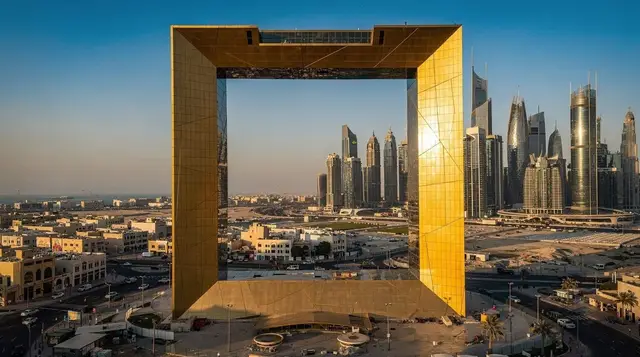
For a version that pairs the Spice Souk with the Dubai Frame and Jumeirah’s mosque area on the same half-day, Dubai Frame, Creek souks and Blue Mosque guided tour covers a wider arc of the old and new city in a single guided outing.
The Creek and dhow wharfage
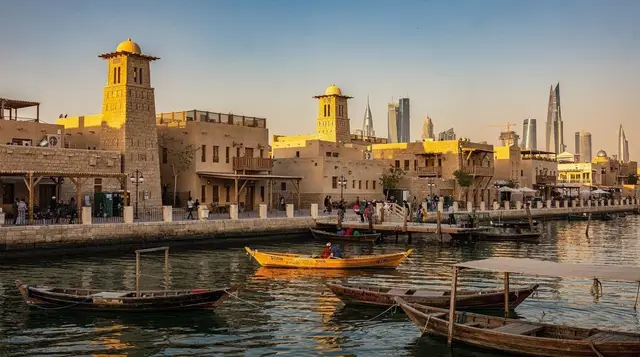
Deira’s waterfront along the Creek is a working dhow wharfage — traditional wooden cargo boats, still loaded by hand with goods bound for Iran, Somalia, and other trading partners across the Gulf, docked two and three deep along the quay. It’s a genuinely functioning part of the port rather than a re-creation, and walking the wharfage at dusk, as loading continues under work lights, is one of the more underrated free things to do in this part of the city. See the Dubai Creek destination guide and the abra Dubai Creek guide for the full crossing and wharfage route.
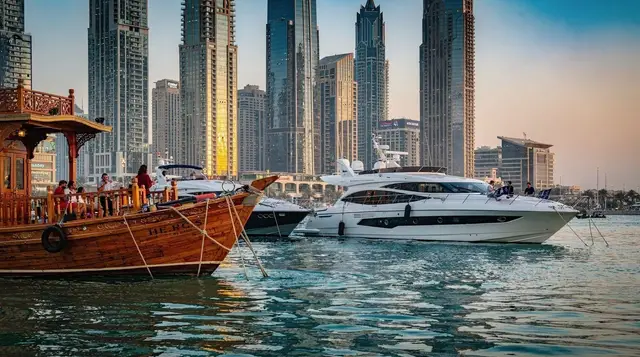
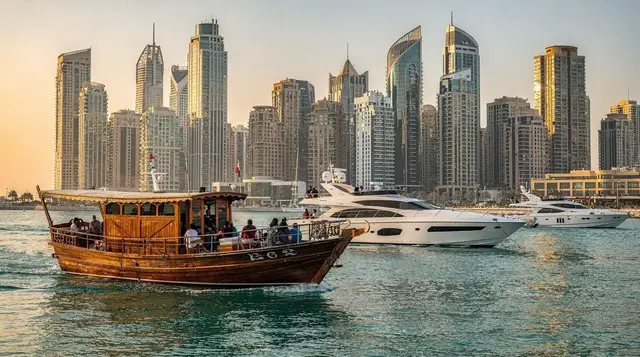
In the evening, dinner dhow cruises depart from docks near here and loop the Creek rather than the Marina — a quieter, more traditional alternative to the Marina’s larger dinner-cruise fleet. Dhow dinner cruise along Dubai Creek is the standard buffet-and-entertainment version, while Dubai Creek dhow cruise with unlimited pizza is a shorter, more casual option that’s better suited to families or anyone not wanting a full multi-course dinner cruise.
The Perfume Souk and Naif Souk
Sandwiched between the Gold and Spice Souks, Deira’s smaller Perfume Souk deals in concentrated Arabic oud and attar oils rather than the alcohol-based Western perfumes sold in malls — shops here will often blend a scent to order while you wait, layering base, heart, and top notes from bottles lined floor to ceiling behind the counter. Prices vary enormously by ingredient quality, particularly for oud, which can range from cheap synthetic versions to genuinely expensive aged agarwood oil, so ask for a demonstration on a testing strip before committing to a bottle rather than buying on scent alone in a shop thick with competing fragrances.
A few streets back from the Gold Souk, Naif Souk is a different kind of market entirely — textiles, household goods, and clothing aimed squarely at residents rather than tourists, with prices to match. It’s a useful contrast if you want to see how this part of the city actually shops day to day, away from the souvenir-oriented stalls closer to the Creek, though there’s little here specifically aimed at a one-time visitor.
Wider Deira: beyond the souks
Deira extends well past its tourist core into a dense residential and commercial grid that most visitors never see. The relocated Deira Fish Market, in a modern covered facility near the Corniche, is worth an early visit — before 8am — to watch the wholesale trade in fresh catch, from local hammour and kingfish to imported salmon and prawns, with the option to have a stall grill your pick at an attached restaurant for a small fee. It’s one of the few genuinely unstaged working markets left in the city center, and photography is generally welcome as long as you’re not blocking the trading floor during peak hours.
Deira’s Corniche, a waterfront promenade running along the Creek’s mouth toward the Gulf, gives a different vantage on the wharfage than the souk-side quay, with joggers and families using the paved path in the cooler morning and evening hours. It’s a quieter, more residential stretch than the tourist-heavy souk lanes, and a reasonable spot for a slower walk if you want to see how Deira functions as a neighborhood rather than a market district. See the Deira neighborhood guide for a fuller map of the area beyond the two headline souks.
Deira and Dubai International Airport
One practical advantage Deira has over almost every other district covered in this guide is proximity to Dubai International Airport (DXB) — Terminal 1 and 3 sit only 10 to 15 minutes away by taxi, and the Green Line metro connects directly to Airport Terminal 1 and 3 stations without a transfer. This makes Deira a genuinely sensible base for a short layover or an early-departure final night, letting you fit in a souk visit or a Creek dinner cruise without the longer transfer times Downtown or the Marina would require. See the Dubai airport to city guide and the 24-hour Dubai layover itinerary for how a short Deira stop fits into a tight connection.
Practical budgeting for a Deira day
A realistic full-day Deira budget covering souk browsing, two meals, an abra crossing, and metro fares runs roughly AED 80–150 (22–41 USD) per person before any gold, spice, or souvenir purchases — among the cheapest full days available anywhere in the city. This makes Deira a genuinely strong value option for travelers watching a Dubai budget closely, especially compared to a comparable day spent in Downtown or the Marina, where food and transport alone can easily double that figure.
Getting there and where to stay
The Green Line metro serves Deira directly, with Al Ras and Baniyas Square the closest stations to the souks and Palm Deira further along the waterfront. From Downtown or the Marina, budget 25–35 minutes by metro with one change, or a 20–25 minute taxi ride for AED 30–40 (8–11 USD). A Nol card covers the full network.
Deira is one of the best-value places in Dubai to sleep, with mid-range hotels running AED 180–400/night (50–110 USD), noticeably cheaper than Downtown or Marina equivalents, and still only 20–30 minutes by metro from the Burj Khalifa. See the Deira neighborhood guide and where to stay in Dubai for specific hotel picks and how this area compares to Bur Dubai across the Creek.
Food in Deira
Deira has one of the strongest concentrations of cheap, authentic food anywhere in Dubai, built around the Iranian, Pakistani, Afghan, and Indian communities who’ve worked this part of the city for generations. A full biryani or karahi meal runs AED 15–30 (4–8 USD) with generous portions, and several waterfront restaurants along the Creek serve grilled fish with a view of the wharfage for AED 60–100 (16–27 USD) per person. The Dubai street food guide and Dubai cheap eats guide draw heavily on this district, since it’s where the city’s working food culture is concentrated rather than the mall and resort dining that dominates newer areas.
Etiquette and practical notes
| Season | Months | Daytime temp | Souk and wharfage comfort |
|---|---|---|---|
| Cool | November–March | 20–30°C | Best — the open-air lanes and wharfage are comfortable most of the day |
| Shoulder | April, October | 30–36°C | Fine early morning or evening; midday grows uncomfortable |
| Peak heat | June–September | 38–45°C+ | Early morning or after 4pm only; the covered Gold Souk arcade offers some shade |
Deira’s souks and streets are more conservative in practice than Downtown or the Marina — shoulders and knees covered is a stronger expectation here, and photographing people directly without asking, particularly women, is both a courtesy issue and something that can draw a sharp reaction from vendors or bystanders. Photographing the boats, stalls, and buildings themselves is fine and expected. Vendors are more assertive than in a mall environment; being called into a shop is a normal part of the retail culture here, not a sign of a scam, and a polite decline while continuing to walk works fine if you’re not interested.
Deira for shopping beyond gold and spice
Beyond the two headline souks, Deira has developed a parallel identity as a budget electronics and general-goods shopping hub, particularly around the streets near Al Sabkha and the older shopping arcades close to the Gold Souk. Prices for electronics, luggage, and household items here are generally lower than in Downtown’s malls, though quality and warranty coverage vary more between vendors, so stick to shops with a visible storefront and generic Dubai municipality trade license posted rather than informal stalls if you’re buying anything with a warranty claim attached. This isn’t a headline tourist activity, but it’s a genuine reason some visitors extend a souk trip into a longer Deira shopping afternoon.
See the Dubai shopping guide for how Deira’s shopping scene compares to Downtown’s malls and the Dubai Outlet Mall.
Deira City Centre and modern retail
Beyond the souks, Deira City Centre is one of Dubai’s older established malls, a full air-conditioned retail and dining complex with international chains, a cinema, and a supermarket, offering a genuinely different, thoroughly modern counterpoint to the traditional souk experience a short taxi ride away. It’s a reasonable stop if the heat calls for an indoor break between souk visits, or if you need standard travel essentials the souks themselves don’t stock, though it’s not a specific reason to visit Deira on its own — most visitors treat it as a practical add-on rather than a destination.
A typical Deira half-day
A workable Deira route starts at the Gold Souk in the mid-morning once the heat has eased from the earliest hours, moves to the Spice and Perfume Souks a short walk away, and finishes at the Creek-side quay for an abra crossing or a wharfage walk before lunch. Building in a stop at a Deira restaurant for biryani or grilled fish rounds out a genuinely full half-day without needing a car or extensive planning — everything described here sits within a 15-to-20-minute walk of the Gold Souk itself. Travelers with a full day can extend this route with the Deira Fish Market in the early morning before the souks open, or a Corniche walk in the evening after the heat breaks.
Deira versus Bur Dubai
Both sides of the Creek get lumped together as “Old Dubai,” but they offer genuinely different things:
| Deira | Bur Dubai | |
|---|---|---|
| Signature draw | Gold Souk, Spice Souk, dhow wharfage | Al Fahidi’s heritage houses, Dubai Museum |
| Atmosphere | Working market, more commercial | Restored heritage quarter, more museum-like |
| Food | Cheap, authentic South Asian and Iranian | Similar range, slightly more tourist-oriented cafes |
| Best for | Shopping and the wharfage | History and architecture |
Most visitors get the fuller picture combining both banks via the abra rather than choosing one over the other — see the old Dubai walking guide for a route covering both.
Combining Deira with the rest of the Creek
Because Deira sits at one end of the wider Creek corridor, it pairs naturally with a visit to Dubai Creek Harbour further upstream and the Ras Al Khor Wildlife Sanctuary’s flamingo hides beyond that — a single day tracing the Creek from Deira’s old wharfage through to the newer waterfront developments gives a clear sense of how the city grew outward from this exact spot. See the Dubai Creek destination guide for how that fuller Creek day fits together, and the 3-day Dubai itinerary for where Deira typically slots into a broader trip.
Is Deira worth a dedicated trip?
Yes, if you have more than a rushed hour to give it — Deira rewards a slower visit more than almost any other district in the city, precisely because it isn’t built for tourism the way Downtown or the Marina are. The souks are functioning markets, the wharfage is real working infrastructure, and the food is both cheaper and, for many dishes, better than what you’ll find in the glossier parts of town. The honest caveat is the heat: most of Deira’s core sights are outdoors or in open-air arcades, so a midday summer visit is genuinely unpleasant compared to Downtown’s air-conditioned malls. Plan around early morning or evening, and pair it with Bur Dubai across the Creek to make the most of the trip.
Frequently asked questions about Deira
Is Deira safe to walk around?
Yes, it’s a low-key, generally safe part of the city, though it can feel crowded and chaotic in the souk lanes during busy evening hours — keep bags zipped in dense crowds as routine precaution.
How do I get from Deira to Bur Dubai?
The AED 1 abra crossing is the fastest option, taking about five minutes across the Creek. Metro and taxi both work too but involve a longer route around via the nearest bridge or crossing station.
Is the Gold Souk in Deira or Bur Dubai?
Deira. The Gold Souk and Spice Souk are both on the north (Deira) bank of the Creek, while Al Fahidi’s historic quarter is on the south (Bur Dubai) side.
Can I bargain in the Deira souks?
Yes, particularly on the workmanship charge in the Gold Souk and on most goods in the Spice Souk — start around 40–50% of the asking price and expect to settle around 20–30% off.
What’s the best time of day to visit Deira’s souks?
Early morning before 10am or after 4pm, once the midday heat eases in these largely open-air lanes; the wharfage is also more active with loading work in the early morning and evening.
Is Deira a good place to stay for a budget trip?
Yes — hotel prices here run well below Downtown or Marina equivalents, food is markedly cheaper, and the metro connects Deira to the rest of the city in 20–30 minutes.
Is Deira worth visiting if I’ve already done Bur Dubai’s Al Fahidi district?
Yes — the Gold Souk, Spice Souk, and dhow wharfage are distinct from Al Fahidi’s museums and heritage houses, and the two sides of the Creek complement rather than duplicate each other.
What should I buy in Deira that’s actually good value?
Spices, dried limes, and gold workmanship on pieces you’d buy regardless of the gold price are the strongest value categories; avoid souvenir “antiques” and pashminas sold as cashmere, which are almost always synthetic.
Is Deira close to Dubai International Airport?
Yes, closer than any other district covered in this guide — Terminal 1 and 3 are roughly 10 to 15 minutes away by taxi, with a direct Green Line metro connection to the airport stations.
How do I test perfume oil quality in the Perfume Souk?
Ask the vendor for a demonstration on a testing strip rather than directly on your skin, and let it sit for a few minutes before judging, since Arabic attar and oud oils develop and change scent over time in a way alcohol-based perfumes don’t.
Is the Deira Fish Market worth visiting if I’m not interested in seafood?
Yes, as a piece of unstaged working city life — the trading floor and auction atmosphere are worth seeing even if you don’t plan to buy or eat there, though go before 8am to catch it at its most active.
Does Deira have any beaches?
No — Deira faces the Creek rather than the open Gulf, so there’s no beach access here; the nearest public beaches are in Jumeirah or at the Marina/JBR, both a taxi ride away.
Is there a modern mall in Deira alongside the souks?
Yes — Deira City Centre is a full air-conditioned mall with international retail, a cinema, and dining, a useful indoor break between souk visits though not a specific reason to visit Deira on its own.
How much does a Deira souk visit typically cost?
Browsing the souks themselves is free; budget AED 15–30 (4–8 USD) for a full meal and whatever you choose to spend on gold, spices, or perfume oils, which vary enormously by item and negotiation.
Should I visit Deira or Bur Dubai first?
Either order works well since the abra connects them in five minutes; some visitors prefer starting in Deira’s souks while fresh and finishing in Bur Dubai’s quieter, more museum-like Al Fahidi quarter.
Is a full day in Deira and Bur Dubai combined too much?
Not for most visitors — the souks, wharfage, an abra crossing, and Al Fahidi’s heritage houses fit comfortably into a single day if you start early and pace the midday heat with an indoor break.
Top experiences
Bookable activities with verified prices and instant confirmation on GetYourGuide.