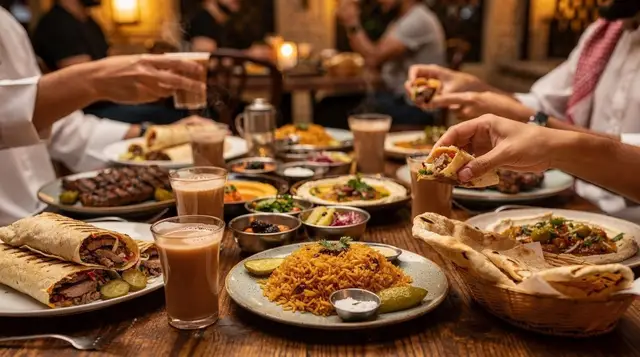
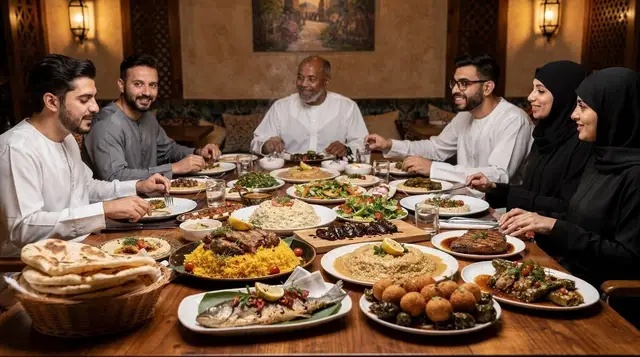
Best restaurants in Dubai: standout picks across every budget
Dubai: the luxury yacht tour with live BBQ option and drinks
What's the single best restaurant in Dubai?
There isn't one — the city's strength is range, not a single peak. For a genuinely excellent, independently recognized meal, Orfali Bros Bistro (named the Middle East and North Africa's best restaurant by the World's 50 Best organization) leads the fine-dining tier. For unpretentious, reliably great food at a fraction of the price, Bu Qtair's seafood shack and Ravi Restaurant's Pakistani grill outperform most restaurants costing five times as much.
Why there’s no single “best” restaurant in Dubai
Dubai’s restaurant scene is wide rather than deep at any one point — genuinely excellent food exists at every price point, and the “best” restaurant depends entirely on what you’re optimizing for. This guide names specific, real restaurants across the price range rather than a single ranked list, because a AED 30 plate at a 1978 Iranian kebab house and a AED 900 tasting menu at a World’s 50 Best-recognized restaurant aren’t competing for the same slot on your itinerary.
It’s also worth setting expectations about what “best” means in a city this transient. A large share of Dubai’s population turns over every few years, and restaurant trends move quickly as a result — a restaurant that was the talk of the city eighteen months ago can quietly close or slide in quality once the initial wave of interest passes. The names in this guide lean toward restaurants with a genuine multi-year track record rather than the current opening-week buzz, precisely because that track record is the best available signal of consistency in a market this fast-moving.
| Range | AED 10 (karak & paratha) to AED 900+ (tasting menus) |
| No reservation needed | Ravi, Al Ustad, Al Mallah, Bu Qtair |
| Book ahead | Orfali Bros, Trèsind Studio, Zuma, Pierchic — 1-3 weeks in peak season |
| Best value tier | AED 25-45/person (Ravi, Al Ustad) |
| Best splurge | Orfali Bros Bistro (MENA’s best restaurant, World’s 50 Best) |
Price tier comparison
| Tier | Price/person | Named picks | Reservation needed? |
|---|---|---|---|
| Budget | AED 10-50 ($3-14) | Ravi, Al Ustad, Al Mallah | No |
| Mid-range | AED 60-200 ($16-54) | Bu Qtair, Zaroob, Automatic Restaurant | Rarely |
| Steakhouse/international | AED 350-700+ ($95-191+) | Nobu, Bread Street Kitchen, CUT | Yes, ahead |
| Fine dining | AED 400-900+ ($109-245+) | Orfali Bros, Trèsind Studio, Pierchic | Yes, 1-3 weeks ahead in peak season |
Budget tier: eating well under AED 50
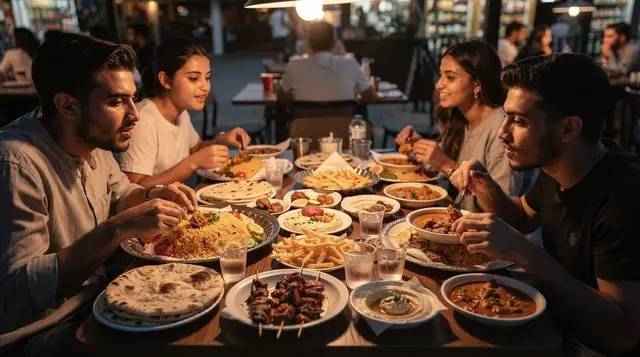
Ravi Restaurant, on Al Diyafah Street in Satwa and open since 1978, is Dubai’s most famous budget institution — Pakistani curries, grilled meats and fresh naan served to a genuine cross-section of the city, taxi drivers alongside tourists who’ve read about it online. A full meal runs AED 25-45 (7-12 USD) per person. Al Ustad Special Kabab in Bur Dubai, also operating since 1978, does the same for Iranian kebabs — simple, consistent, and cheap. Al Mallah on Al Diyafah Street covers shawarma and fresh juice at similarly low prices, a reliable late-night stop after a night out.
The mid-range sweet spot
Bu Qtair, a no-frills seafood shack near Jumeirah, is the closest thing Dubai has to a cult-favorite restaurant — pick your fish from the display, it’s fried or grilled to order, plastic chairs and cash-friendly pricing throughout. It’s genuinely excellent and genuinely unpretentious, and a meal for two rarely exceeds AED 150-200 (41-54 USD) even ordering generously. Zaroob, a modern Lebanese street-food chain with multiple branches across the city, and Automatic Restaurant, an older Lebanese institution, both deliver reliably good mezze and grills in the AED 60-120 (16-33 USD) per person range.
Fine dining: where the reputation is earned
Orfali Bros Bistro, run by three Syrian-Emirati brothers reworking Levantine and Emirati ingredients into a modern tasting format, was named the best restaurant in the Middle East and North Africa by the World’s 50 Best organization in consecutive years — a genuine, independently judged accolade rather than a marketing claim, and worth the premium if you’re allocating one splurge meal to your trip. Trèsind Studio, an ambitious Indian tasting-menu restaurant, has drawn Michelin recognition and is another standout for a food-focused evening. See the fine dining guide for the fuller landscape, including Zuma, Nobu, La Petite Maison and Pierchic.
Restaurants with a view, and the honest tradeoff
At.mosphere, on the 122nd floor of the Burj Khalifa, holds the distinction of being among the world’s highest restaurants — and it charges accordingly, with mains and set menus that reflect the setting more than the cooking. This isn’t a criticism unique to At.mosphere; nearly every restaurant with a direct Burj Khalifa or Dubai Fountain view, including those lining Souk Al Bahar, prices in a view premium. Book these for the experience and the photos, not expecting the food to compete with a dedicated fine-dining kitchen at the same price.
This private yacht tour with food and drinks is a genuine alternative for a skyline view paired with a meal, on the water rather than up a tower.
Seafood beyond Bu Qtair
Pierchic, an overwater fine-dining restaurant at Madinat Jumeirah with a direct view of the Burj Al Arab, is the polished, high-price counterpart to Bu Qtair’s shack — genuinely excellent seafood, considerably more expensive, and worth it for a special-occasion dinner rather than a casual meal. Between these two poles sits a wide middle ground of solid, unremarkable seafood restaurants across the Marina and JBR that charge mid-range prices without particularly earning them — worth being selective rather than picking the first waterfront seafood spot you pass.
Steakhouses and the international heavy-hitters
Dubai has imported a genuine cluster of internationally branded steakhouses and celebrity-chef restaurants — Nobu at Atlantis The Palm, Gordon Ramsay’s Bread Street Kitchen, CUT by Wolfgang Puck among them — that deliver a reliably excellent, internationally consistent meal at a price that reflects the brand as much as the specific execution. These are a safe, if unadventurous, choice for a group with mixed tastes or a special occasion where consistency matters more than discovering something distinctly local. Expect AED 350-700+ (95-191+ USD) per person at this tier, drinks excluded.
Breakfast and brunch outside the Friday brunch format
Not every good breakfast in Dubai is a bottomless Friday brunch. A strong independent cafe scene, covered in the coffee shops and cafes guide, serves excellent weekday breakfasts and lunches at a fraction of hotel brunch pricing — useful on days when a multi-hour buffet event doesn’t fit the schedule. Karak chai and a simple egg paratha from a Deira or Karama stall, for around AED 10-20 (3-5 USD), remains one of the best-value breakfasts in the city regardless of how many five-star hotel breakfasts you compare it against.
Ghost kitchens and delivery-only brands
A meaningful share of Dubai’s newer food brands operate as delivery-only “ghost kitchens” with no physical dining room, reachable only through Talabat, Careem NOW or Deliveroo. Quality varies as widely as it does for sit-down restaurants, and reviews on the delivery app itself are usually the most reliable signal, since these brands have no storefront reputation to fall back on. Worth knowing mainly so a delivery-only listing on a map app doesn’t get mistaken for a restaurant you can walk into.
Emirati and regional standouts
Al Fanar Restaurant & Cafe, with multiple branches including Al Seef, is the most consistent source of proper Emirati cooking — machboos, harees, luqaimat — served in a deliberately old-fashioned setting. The Emirati cuisine guide covers this and the SMCCU cultural meal option in Al Fahidi in full detail, including what to expect from the format beyond just the food itself.
Indian and Pakistani standouts beyond the budget tier
Karama and Bur Dubai host a genuinely strong cluster of Indian and Pakistani restaurants spanning the full price range — from pure-vegetarian South Indian thali houses to more polished modern Indian kitchens serving a Dubai clientele that takes the cuisine seriously rather than treating it as a novelty. This is one of the city’s most consistently underrated categories relative to its international restaurant marketing, and worth prioritizing over a generic hotel Indian restaurant if the cuisine interests you.
Restaurants worth being skeptical of
Any restaurant with a tout physically inviting you in from the street — common around Souk Al Bahar, the Marina Walk tourist strip and parts of Old Dubai closest to major attractions — is optimized for one-time transient customers rather than repeat business, and pricing and quality reflect that. This isn’t universal (some legitimately good restaurants sit in these same strips) but it’s a reliable enough pattern to warrant checking recent reviews before committing, rather than walking in on the strength of a menu board alone. The honest tourist traps guide names specific repeat offenders.
Restaurants for a special occasion
Beyond Pierchic and Orfali Bros, a private dining or yacht-based option is worth considering for milestone occasions specifically because it sidesteps the crowd and noise that even excellent fixed restaurants can’t avoid on a busy weekend evening.
This private VIP luxury yacht tour with BBQ and drinks delivers a chef-prepared spread for your group alone rather than a shared dining room, a genuinely different format worth weighing against a traditional restaurant booking.
Family-friendly picks
Zaroob, Al Fanar, and most mid-range mall restaurants handle children comfortably as a matter of course, reflecting Dubai’s large resident family population — high chairs and tolerance for noise are standard, not exceptional. Bu Qtair, despite its no-frills setting, works well for families willing to sit at shared tables and let kids pick their own fish. Fine-dining venues, particularly evening tasting-menu formats at Orfali Bros or Trèsind Studio, are a poorer fit and several explicitly restrict very young children in the evening.
Vegetarian and vegan options among these picks
Several restaurants named in this guide handle vegetarian diners well without being dedicated vegetarian restaurants — Zaroob’s mezze spread and Karama’s South Indian thali houses in particular. True vegan cooking is a narrower slice, concentrated in a small but growing cluster of dedicated cafes rather than spread across mainstream restaurants. The vegetarian and vegan guide covers dedicated venues in depth if plant-based eating is a priority rather than an occasional need.
Where fine dining and street food overlap
A few of Dubai’s most interesting food experiences sit deliberately between the fine-dining and street-food categories — modern restaurants elevating a shawarma, karak, or machboos recipe into a plated, sit-down format without pretending it’s something other than what it is. This crossover category is worth seeking out specifically if a purely fine-dining trip feels disconnected from what the city actually eats day to day. The street food guide covers the more traditional end of the same spectrum.
Rooftop dining beyond the pure view premium
Not every elevated restaurant in Dubai is purely coasting on its view — several rooftop and high-floor venues pair a genuinely competent kitchen with the skyline setting, rather than treating the food as an afterthought to the photo opportunity. The rooftop bars guide separates the venues worth visiting for both food and view from those worth visiting for the view alone.
Reservations: when you actually need one
Ravi, Al Ustad, Al Mallah and Bu Qtair don’t take reservations and rarely need them outside the busiest dinner hours. Orfali Bros, Trèsind Studio, Zuma and Pierchic are a different story — book at least a week ahead during the November-March peak season, and two to three weeks ahead for the most in-demand tasting-menu slots. If a specific fine-dining restaurant is central to your trip, book it before flights and hotels are finalized around it, not after.
Neighborhoods that overperform for restaurants
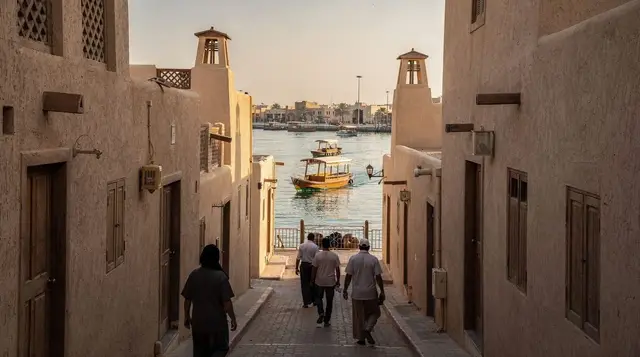
Old Dubai (Bur Dubai and Deira together) punches well above its tourist profile for restaurant quality relative to price, largely because it feeds a resident population rather than a visitor one. DIFC and Downtown Dubai carry the highest concentration of fine dining, at correspondingly higher prices. Jumeirah mixes Bu Qtair’s budget shack with Pierchic’s fine dining within a few kilometers of each other — a useful reminder that geography in Dubai rarely predicts price tier as reliably as it does in most cities.
Service charge, tipping, and the bill
Most mid-range and upscale Dubai restaurants add a service charge (typically 10 percent) plus VAT (5 percent) directly to the bill, both clearly itemized — worth checking before adding an additional tip on top, since the automatic service charge doesn’t always reach staff the way a direct cash tip does. Budget restaurants like Ravi and Al Ustad rarely add a service charge, and a small cash tip (AED 5-10) is appreciated but not expected. At fine dining, an additional 5-10 percent beyond the automatic service charge is a reasonable gesture for genuinely good service, though far from obligatory.
New openings versus long-standing institutions
Dubai’s restaurant scene sees a constant churn of high-profile openings, many backed by significant marketing budgets and influencer campaigns before a single dish has proven itself over time. Treat opening buzz as a data point, not a verdict — waiting a few months for the initial reviews to normalize, rather than booking a table in the first two weeks based on social media alone, generally leads to a more honest sense of whether a new restaurant will earn a place on a list like this one. The restaurants named throughout this guide have mostly cleared that bar already, which is exactly why they’re named rather than this year’s opening-week favorite.
How this fits into a trip
Spreading restaurant choices across a trip rather than clustering them in one neighborhood shows a genuinely wider range of what Dubai’s food scene actually offers. The 3-day itinerary and 5-day itinerary both have natural slots for one budget meal, one mid-range meal, and one fine-dining or special-occasion dinner without the food side ever feeling repetitive.
Dress code across the tiers
Budget and mid-range restaurants have essentially no dress code beyond general modesty expected across the city — shoulders and knees covered is a reasonable default in most public settings, though restaurant interiors are more relaxed than mosques or malls. Fine dining is a different matter: smart casual is the usual minimum, and some of the higher-end hotel restaurants enforce a stricter policy in the evening (closed shoes, no shorts or flip-flops for men, no swimwear or beachwear regardless of proximity to a pool or beach). Checking a specific restaurant’s dress code ahead of a reservation avoids an awkward turn-away at the door, which does happen at the stricter fine-dining venues.
A final word on trusting this list
Every restaurant named here reflects a genuine, sustained reputation rather than a single good visit or a marketing partnership — Ravi and Al Ustad have operated since 1978, Orfali Bros has an independently judged international award behind it, and Bu Qtair’s reputation has built organically over years rather than a single viral moment. That’s a deliberately higher bar than “currently trending,” and it’s the reason this list stays relatively stable even as new restaurants open across the city every month. Use it as a starting shortlist rather than an exhaustive one, and treat recent reviews on any specific listing as the final check before booking, since even a well-established kitchen has an occasional off night.
Frequently asked questions about Dubai’s best restaurants
What is Dubai’s most famous cheap restaurant?
Ravi Restaurant on Al Diyafah Street, open since 1978. A full Pakistani meal runs AED 25-45 (7-12 USD).
Is Bu Qtair worth the hype?
Yes — genuinely fresh seafood in a no-frills setting, authentic rather than staged, and a fixture on food-focused itineraries for good reason.
What’s Dubai’s best fine-dining restaurant?
Orfali Bros Bistro, named the Middle East and North Africa’s best restaurant by the World’s 50 Best organization. Trèsind Studio is another top pick.
Should I eat at a restaurant with a Burj Khalifa view?
Only for the view itself — At.mosphere and similar venues charge a premium that reflects the setting more than the cooking.
Are Dubai’s best restaurants expensive?
Not necessarily. Bu Qtair, Ravi and Al Ustad cost under AED 50 (14 USD) per person; fine dining runs AED 400-900+ (109-245+ USD).
Do I need reservations for Dubai’s best restaurants?
Yes for fine dining — book a week or more ahead in peak season. Budget favorites like Bu Qtair and Ravi don’t take reservations.
What’s a fair budget for one really good meal in Dubai?
AED 150-250 ($41-68) per person covers a genuinely excellent mid-range meal at somewhere like Bu Qtair or Zaroob; save AED 400-900+ for a single fine-dining splurge if your trip has room for one.
Are hotel restaurants worth it, or should I eat outside hotels?
Both have a place — hotel restaurants concentrate most of Dubai’s fine dining and steakhouses, while some of the city’s best food (Ravi, Bu Qtair, Karama’s Indian and Pakistani kitchens) sits well outside hotel property entirely and shouldn’t be skipped in favor of convenience alone.
Building a food-focused day around these picks
For a single day that samples across the range, a realistic sequence is a budget breakfast (karak chai and egg paratha from a Deira or Karama stall), a mid-range lunch at Zaroob or Bu Qtair, and a fine-dining or special-occasion dinner if the trip has room for one splurge. Spreading meals across Old Dubai, Jumeirah, and Downtown Dubai rather than clustering them in one neighborhood also means less repetition in setting, not just cuisine.
Top experiences
Bookable activities with verified prices and instant confirmation on GetYourGuide.