Museum of the Future guide: tickets, what's inside, is it worth it
Dubai: Museum of the Future admission ticket
Duration: 1.5 hours
What is the Museum of the Future and is it worth visiting?
It's an immersive experience museum on Sheikh Zayed Road exploring space, health, and ecosystems decades ahead, inside a distinctive torus-shaped, calligraphy-clad building. Entry costs around AED 169 ($46). It's worth it for the building and the OSS Hope space station floor; less so if you dislike crowded, screen-heavy exhibits.
What the Museum of the Future actually is
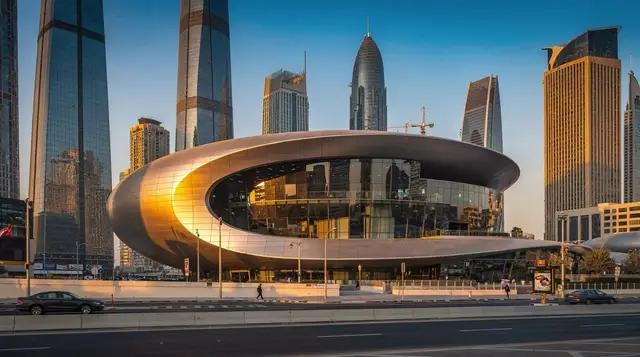
The Museum of the Future opened in February 2022 on Sheikh Zayed Road, and its building alone has become one of Dubai’s most photographed modern structures — a seamless torus shape wrapped in stainless steel and glass, inscribed with large-scale Arabic calligraphy quoting Sheikh Mohammed bin Rashid Al Maktoum on the future. Unlike a traditional museum built around historical artifacts, it’s an immersive-experience venue: multiple themed floors combining set design, projection, and interactive elements to imagine specific aspects of life decades ahead — space travel, health and biotechnology, and planetary ecosystems chief among them.
It sits close to Business Bay and the Downtown skyline, making it a natural pairing with a Burj Khalifa or Dubai Frame day, and its distinctive silhouette has become almost as recognizable in skyline photos of the city as the Burj Khalifa itself.
| Where | Sheikh Zayed Road, near DIFC |
| Cost | Around AED 169 (46 USD) standard adult entry |
| Time needed | 1.5-2 hours |
| Getting there | Emirates Towers metro station, Red Line, walkable |
| Best time | Weekday mornings, first slots of the day |
Tickets and pricing
Museum of the Future admission ticket runs around AED 169 (46 USD) for standard adult entry, positioning it above the Dubai Frame but below the Burj Khalifa’s higher tiers in Dubai’s landmark-pricing hierarchy. A simpler Museum of the Future entry ticket covers the base visit as well. Reduced child pricing applies within a set age bracket, and time slots are sold in fixed windows throughout the day — booking ahead matters more here than at some other attractions, since daily capacity is genuinely limited by the building’s floor design rather than sold loosely.
What’s actually inside
After an introductory pre-show sequence, visitors move through several themed floors. The most talked-about is OSS Hope, a recreated space station environment imagining humanity’s off-world future, with detailed set design and interactive elements exploring space agriculture and habitat concepts. Al Waha is a calmer wellness-focused floor centered on meditation and mental health themes. The Vault presents a more abstract, sometimes unsettling narrative sequence around ecosystem collapse and recovery. Later floors, including a section aimed at younger visitors with hands-on building activities, wrap up the visit before exiting through the gift shop and a café area.
The pacing moves you through in a mostly linear route, so there’s little choice in order, but each floor is distinct enough that the visit doesn’t feel repetitive.
Is it worth it?
Here’s the honest breakdown: the building itself is worth seeing even from outside, and the OSS Hope space station floor is genuinely well executed and worth the ticket price on its own for most visitors. Some of the later floors lean more toward polished, branded showcase content than deep substantive experience, and a handful of past visitors have found parts of the visit shorter or shallower than the ticket price and hype suggested.
On balance, most first-time visitors report it as a worthwhile, memorable couple of hours, particularly compared to a standard museum visit — but it’s not universally rated as essential the way the Burj Khalifa is for a first Dubai trip, and if your budget is tight, it’s reasonable to treat it as optional rather than mandatory. See Dubai observation decks compared and the broader Dubai tourist traps guide for how this stacks up against other paid attractions competing for the same sightseeing budget.
How long to budget
Plan for 1.5 to 2 hours to move through the full route at a comfortable pace, including the initial pre-show and the gift shop area at the end. Weekend and evening slots tend to move slightly slower due to higher visitor volume in each themed room, so if efficiency matters more than atmosphere, a weekday morning slot is the better choice.
Getting there
The museum sits on Sheikh Zayed Road near the Dubai International Financial Centre, within walking distance of the Emirates Towers metro station on the Red Line — a genuinely walkable connection unlike some of Dubai’s more car-dependent landmarks. By taxi from Downtown or the Marina, expect 10-20 minutes depending on traffic and starting point. See getting around Dubai for the wider transit context and the Nol card guide for metro fare details.
Combining with nearby landmarks
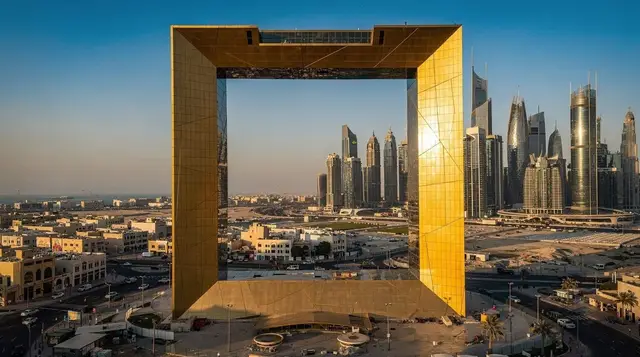
Given its central Sheikh Zayed Road location, the Museum of the Future pairs naturally with a Downtown day covering the Burj Khalifa and Dubai Frame, all reachable within a short taxi ride of each other. A combined Future Museum, Burj Al Arab, and Dubai Frame tour bundles all three landmarks into a single guided outing for visitors who’d rather not plan transfers between them independently. For a broader first-time visitor framework, see the Dubai first time guide for where this fits relative to other must-see stops.
Photography at the building
Even without a ticket, the exterior is one of the more rewarding photography subjects in the city, particularly at dusk when the calligraphy facade is illuminated against the darkening sky and the Downtown skyline behind it. The best angles are typically from the pedestrian bridge and park areas surrounding the building rather than directly underneath, where the torus shape is harder to read in a single frame. See Dubai skyline photo spots for other vantage points worth combining with this one on a photography-focused day.
What to wear and bring
Comfortable, closed-toe footwear is worth prioritizing, since the route involves a fair amount of standing and some sections have uneven or textured flooring built into the immersive set design. Light layers work well — the air conditioning inside runs noticeably cooler than the outdoor heat most of the year, a welcome contrast in summer but worth planning for if you’re moving directly from an outdoor activity beforehand. Cameras and phones are welcome throughout most of the route, though bulky bags and large backpacks are better left at the cloakroom near the entrance, both for comfort moving through narrower transition spaces and because some rooms restrict oversized items for safety reasons.
Who should prioritize this visit
Visitors with a genuine interest in design, architecture, or speculative technology themes tend to get the most out of the Museum of the Future, more so than visitors purely chasing a checklist of “iconic Dubai landmarks.” Families with older children and teenagers, particularly those interested in space or science themes, also tend to respond well to the OSS Hope floor specifically. Visitors on a tight one or two-day itinerary with limited landmark budget are better served prioritizing the Burj Khalifa first, and adding this only if time and budget allow — see how many days in Dubai for how a landmark-heavy day typically gets planned.
Solo travelers and couples generally move through the route at a similar pace to families, though without children to manage, the interactive elements can be engaged with more fully rather than rushed past, which is worth knowing if you’re weighing whether a solo visit will feel worthwhile — see Dubai solo travel for broader guidance on building a solo itinerary around Downtown-area landmarks like this one.
The building itself: how it was constructed
The torus shape — a doughnut-like ring with no visible right angles or straight structural lines — made the Museum of the Future one of the more technically demanding buildings completed in Dubai in recent years, requiring a diagrid steel structure wrapped in a stainless-steel exterior with the calligraphy openings cut directly into the cladding using computer-controlled fabrication. The three quotes inscribed across the facade, drawn from Sheikh Mohammed bin Rashid Al Maktoum’s writing on the future, were translated into large-format Arabic calligraphy by a UAE-based artist, then used both as decorative facade element and as window openings that let daylight into specific interior spaces.
The building sits on an elevated green mound rather than at street level, intentionally separating it visually from the office towers lining the rest of Sheikh Zayed Road, which is part of why it reads as a standalone landmark rather than another addition to the skyline.
A closer look at each floor
The pre-show sequence sets the narrative frame before you reach OSS Hope, the space station floor, which recreates a fictional orbital habitat in fine physical and sensory detail — the ambient sound design and lighting shift noticeably as you move between different simulated station modules, from a communications hub to a hydroponics bay. Al Waha, the wellness floor, slows the pace deliberately, using softer lighting and guided reflection prompts around mental health and mindfulness, a contrast to the higher-energy space station sequence before it.
The Vault leans into a more cinematic, occasionally intense narrative about ecosystem collapse and genetic engineering, using large-scale projection and physical set pieces rather than static displays. The final floors shift toward a children’s innovation lab with hands-on building stations, before the route concludes through a retail area. Each section runs at its own pace, and staff at transition points help keep the overall flow moving without feeling rushed.
Addressing the criticism directly
Because this is a positioning built on honest, no-hype reviews, it’s worth naming the specific criticisms that come up most often: some visitors feel the ticket price is high relative to the actual time spent in the more substantive sections, since a meaningful portion of the route involves transitions, queuing between rooms, and shorter interactive segments than the marketing suggests. Others note that the deeper conceptual content leans more toward mood and atmosphere than genuinely novel ideas about the future, which can leave visitors expecting a rigorous science-exhibition experience feeling that it undersells its own premise.
These aren’t universal complaints — plenty of visitors rate the visit highly — but they’re common enough, and specific enough, to mention here rather than pretending the museum is uniformly beloved. Going in expecting an atmospheric, design-forward experience rather than an information-dense one sets the right expectations.
Accessibility and practical logistics
The museum is fully accessible, with elevators serving all levels and wide pathways designed into the immersive-route layout from the outset, unlike some experience-based attractions retrofitted for accessibility after the fact. Bag storage and cloakroom facilities are available near the entrance, useful given that some sections restrict bulky bags or backpacks for safety and flow reasons. Restrooms are available at set points along the route rather than continuously, so using facilities before starting is worth doing if the full 1.5-2 hour visit is a concern.
Gift shop and takeaways
The exit routes through a retail area selling museum-branded merchandise and design-forward gift items, generally priced at a premium reflecting the venue’s branding rather than standard souvenir pricing found elsewhere in the city. It’s worth browsing if design objects and futurist-themed merchandise appeal to you, but it’s not an essential stop, and skipping it entirely doesn’t diminish the value of the ticketed experience itself.
Best time to visit
Weekday mornings, particularly the first slot or two of the day, offer the calmest pacing through each floor, since the immersive rooms are capacity-limited and larger crowds mean more waiting between transitions. Weekend afternoons and evenings draw the heaviest visitor volume, both from tourists and UAE residents treating it as a leisure outing, so if a smoother, less crowded pace matters more than scheduling flexibility, avoid Friday evening and Saturday slots specifically.
Unlike outdoor attractions, weather and season don’t meaningfully affect the visit itself, since the entire experience is climate-controlled and indoors — the only seasonal consideration is that summer’s heat makes the venue’s air-conditioned interior an appealing midday retreat if you’re also spending the day at nearby outdoor spots.
Visiting solo or as a couple
Solo travelers and couples move through the route comfortably, and without children to manage, the interactive elements can be engaged with more fully rather than rushed past. A weekday morning slot suits solo visitors particularly well, since the calmer pacing lets you linger at OSS Hope or Al Waha without feeling like you’re holding up a group. See Dubai solo travel for how a Museum of the Future stop fits into a broader solo Downtown itinerary.
Comparing it to other Dubai experience-museums
Dubai has added several immersive, experience-driven attractions in recent years, and the Museum of the Future set something of a template that others have followed with varying success. Compared to more straightforward observation decks like the Dubai Frame or The View at the Palm, it demands more of the visitor’s time and attention — this is a themed narrative experience rather than a walk-up-and-look viewpoint, which is worth factoring in if you’re deciding between the two categories for a limited sightseeing day.
Visitors who enjoyed immersive, set-design-heavy attractions elsewhere in the world tend to know quickly whether this format appeals to them, and that prior preference is often a better predictor of satisfaction here than any specific review.
Booking ahead and confirming your time slot
Because daily capacity is genuinely limited by the building’s floor design rather than sold loosely, booking your preferred time slot online several days ahead is worth doing for any weekend or holiday-period visit rather than hoping for walk-up availability. Online pricing generally matches or beats counter purchase, and the confirmed entry window removes the uncertainty of arriving and finding your preferred slot already sold out. If your schedule is flexible, a first-thing weekday morning slot is both the easiest to book and the calmest pacing through each themed floor.
Museum of the Future vs Louvre Abu Dhabi
Visitors deciding between a Dubai or Abu Dhabi museum day are often comparing two genuinely different formats.
| Museum of the Future | Louvre Abu Dhabi | |
|---|---|---|
| Format | Immersive experience venue | Traditional fine-art and history museum |
| Cost | Around AED 169 ($46) | Around AED 63 ($17) |
| Time needed | 1.5-2 hours | 2.5-4 hours |
| Best for | Design, technology, space themes | Genuine art and history interest |
Both are worth doing on a longer trip, but a single tight day should pick based on which format actually appeals rather than trying to fit both alongside other Downtown or Saadiyat sightseeing.
Frequently asked questions about the Museum of the Future
Is the Museum of the Future an actual museum with artifacts?
No, it’s an immersive-experience venue built around set design, projection, and interactive elements rather than a traditional collection of historical or scientific artifacts.
Can I skip floors if I’m short on time?
The route is largely linear by design, so skipping floors entirely isn’t straightforward, though you can move through less engaging sections more quickly to save time overall.
Is photography allowed inside?
Yes, photography is generally permitted throughout, though some areas restrict flash or tripods to avoid disrupting the immersive lighting design.
Does the museum have a café or restaurant?
Yes, a café area is available near the exit, suitable for a coffee or light snack after the visit rather than a full meal.
Is the Museum of the Future included in any Dubai attraction passes?
Some multi-attraction passes include it as an option; check the specific pass terms, since inclusion and value vary by provider and package.
What language are the exhibits in?
Exhibits are presented primarily in English and Arabic, with some multimedia content using minimal or no text at all, relying instead on visual and audio storytelling.
Is there an age restriction for entry?
No formal age restriction exists, but content and pacing suit children roughly age 8 and older better than toddlers or very young children.
Can I buy tickets at the entrance on the day?
Walk-up tickets are sometimes available, but given daily capacity limits, popular time slots frequently sell out in advance, so booking ahead removes the risk of being turned away or facing a long wait for a later slot.
Does the visit involve much walking or standing?
The route is largely flat and paced through set transitions rather than long corridors, but expect a fair amount of standing during the more immersive room sequences, so comfortable footwear is worth wearing.
Is there a discount for booking online versus at the venue?
Online booking generally offers the same or lower pricing than in-person purchase, plus the advantage of securing a preferred time slot rather than taking whatever remains on arrival.
How does the Museum of the Future compare to Louvre Abu Dhabi for a day trip?
They’re quite different experiences — Louvre Abu Dhabi is a traditional fine-art museum with a significant permanent collection, while the Museum of the Future is a shorter, immersive, design-and-technology-focused experience; see the Louvre Abu Dhabi guide if you’re deciding between a Dubai or Abu Dhabi museum day.
Is the Museum of the Future good for a rainy or extremely hot day?
Yes — since the entire experience is indoors and climate-controlled, it’s one of the more reliable options for the hottest stretches of summer or the rare rainy day, when outdoor sightseeing plans need a backup.
Is the Museum of the Future cheaper than the Burj Khalifa?
Yes, generally — its roughly AED 169 ($46) standard admission sits below the Burj Khalifa’s higher observation-deck tiers, though above the Dubai Frame’s entry price.
Can I visit the Museum of the Future and Louvre Abu Dhabi on the same trip?
Yes, though not comfortably on the same day given the drive to Abu Dhabi — most visitors treat them as separate days, one in Dubai and one on a dedicated Abu Dhabi trip.
Top experiences
Bookable activities with verified prices and instant confirmation on GetYourGuide.