Is Dubai worth visiting? An honest answer
Dubai: half-day desert safari, camel ride & quad bike option
Is Dubai worth visiting?
For most travelers who want modern infrastructure, guaranteed sunshine outside summer, and a wide menu of one-off experiences (desert, skyline, beach, theme parks) within a short drive of each other, yes. Travelers looking for historic old-city atmosphere, budget travel, or a laid-back low-consumption trip will likely be disappointed.
What people actually mean when they ask this
“Is Dubai worth it” usually collapses two different questions into one: is Dubai worth visiting at all, and is Dubai worth the specific price tag attached to a given trip length. The honest answer to the first is yes for a wide range of travelers, for reasons that hold up under scrutiny rather than marketing. The honest answer to the second depends entirely on how you spend your money once you’re there — a five-day trip built around premium desert camps, tower-top dining, and Downtown hotels costs meaningfully more, and delivers meaningfully less per dollar, than a trip that mixes one or two splurges with free beaches, the metro, and Old Dubai.
This guide separates what Dubai genuinely delivers from what’s overpriced or oversold, so you can decide which category your trip falls into before you book it.
| Best fit | Modern comfort, safety, curated variety, short-haul stopovers |
| Weakest fit | Historic old-city atmosphere, budget travel, unstructured wandering |
| Best time | Nov-Mar for reliable outdoor weather |
| Realistic budget | around AED 300-500/day (budget) to AED 2,000+/day (luxury) |
| Minimum to judge fit | 3 days covering skyline, desert/beach, and Old Dubai |
What Dubai genuinely delivers
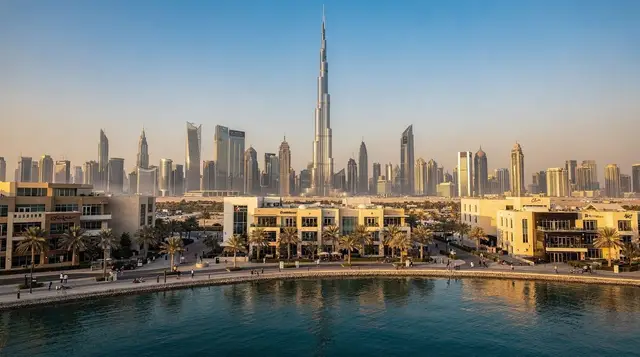
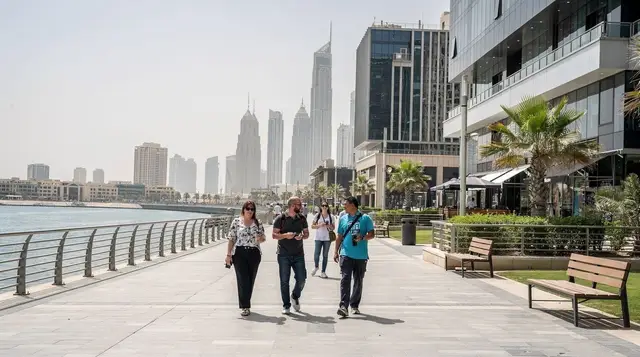
Three things hold up regardless of how skeptical you go in. First, safety: violent crime is rare by international standards, and walking around at night in Downtown, the Marina, or JBR carries none of the wariness that’s routine in many major cities. Second, ease of travel: the airport is efficient, the metro is clean and cheap, taxis and Careem are plentiful and reasonably priced, and English is the default working language almost everywhere. Third, variety within a short radius — you can genuinely do a desert safari, a beach afternoon, an indoor ski session, and a 124th-floor viewing deck within the same three days without long transfers between them, which is unusual density for a single destination.
The weather argument is real but conditional. November through March delivers close to guaranteed sunshine with highs of 20-30°C, which is a legitimate draw for travelers escaping a northern winter, and it’s the main reason December and January are the busiest, priciest months. Connectivity as a stopover hub is also a genuine strength — a lot of visitors end up here almost by accident on a layover, and a well-run 24-hour layover itinerary or 48-hour layover can turn a connection into a legitimate short trip rather than dead airport time.
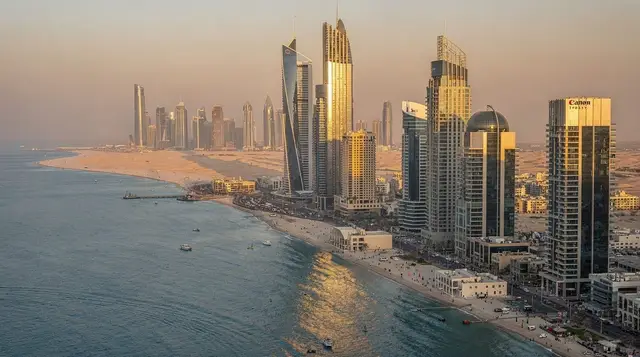
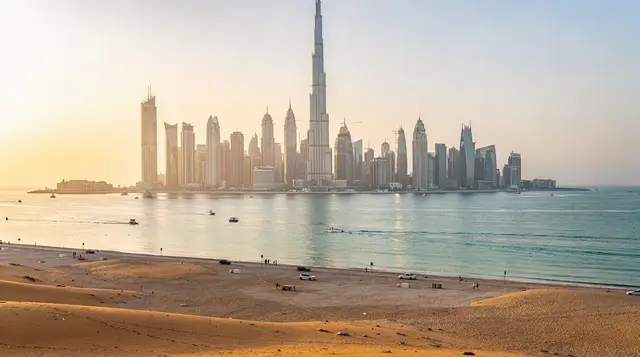
The Burj Khalifa observation decks, the Dubai Fountain shows, and the desert dune landscape are all things you can’t easily replicate elsewhere, and they’re the closest Dubai comes to must-see rather than nice-to-have. A half-day desert safari with camel riding and quad biking shows a side of the country that the skyline photos don’t hint at, and it’s consistently one of the better value-for-price experiences in the city precisely because the desert itself doesn’t need embellishment to be worth seeing.
Where the real downsides are
Cost is the first honest downside. A Downtown or Marina hotel room routinely runs AED 600-1,500 (163-408 USD) a night in peak season, attraction tickets stack up quickly, and dining in tourist zones is priced closer to a major Western European city than to the regional average. None of that is a scam — it’s simply the price level Dubai has chosen to operate at — but travelers expecting Southeast Asia-style value will be caught off guard.
Heat is the second, and it’s more disqualifying than most guides admit. From June through September, daytime highs of 40-48°C make outdoor activity genuinely unpleasant rather than just warm — walking between attractions, waiting for a desert pickup, or sitting on a beach becomes something to endure rather than enjoy, and it pushes almost everything indoors into malls and air-conditioned attractions. If your trip only fits in these months, weigh that seriously rather than assuming “it’s just hot.”
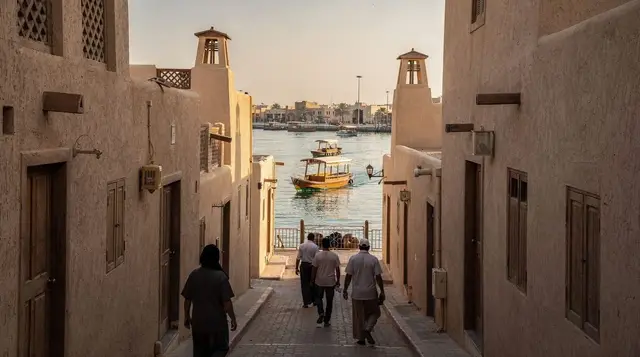
Artificiality is the third, and it’s a matter of what you seek out. A trip confined to Downtown, the Marina, and the malls will feel manufactured — glass towers, branded retail, and curated photo spots, with very little that feels lived-in or old. That’s a fair criticism of the default tourist experience. It’s less fair as a criticism of the city overall, because Old Dubai and Deira, with their creek-side abra crossings and working souks, have real texture — most visitors simply never get there because it isn’t what’s marketed.
Traffic on Sheikh Zayed Road at peak hours, some attractions being priced well above what they deliver (more on that below), and a general lack of the “old world” charm that draws people to cities like Rome or Istanbul round out the realistic downside list.
Attractions that are genuinely overpriced or overhyped
Not every headline Dubai experience earns its price tag, and a consumer-focused guide should say so plainly. Some Friday brunches — the weekend buffet tradition tied to the city’s Friday-Sunday culture — charge AED 400-600+ (109-163+ USD) per person for what amounts to an unremarkable hotel buffet with unlimited drinks; a handful are genuinely excellent, but the median one is riding on the concept rather than the execution, and it’s worth checking recent reviews before committing to a specific venue rather than assuming the format guarantees quality.
Certain observation decks also lean on branding more than on differentiated experience once you’ve already seen one. If you’ve done the Burj Khalifa, a second and third viewing deck elsewhere in the city adds diminishing returns unless the specific vantage point (over water, over the Palm, at a different time of day) genuinely differs — see the comparison of Dubai’s observation decks before buying more than one.
Overpriced desert “safari” packages sold by unlicensed street touts in tourist zones are another trap: the honest guide to desert safari scams covers how to tell a legitimate operator from one that will crowd you into an oversold, underdelivered camp.
What a realistic trip costs, by style
The gap between a cheap Dubai trip and an expensive one is wider than in most destinations, because the city genuinely offers both extremes side by side. A budget trip — a hotel in Old Dubai or Deira at AED 150-300 (41-82 USD) a night, metro and walking rather than taxis, food from local cafeterias and shawarma counters at AED 15-30 (4-8 USD) a meal, and one paid attraction like the Burj Khalifa — can run AED 300-500 (82-136 USD) per person per day including the room. A mid-range trip with a Downtown or Marina three-star to four-star hotel, a mix of taxis and metro, casual restaurant dining, and two or three paid activities lands closer to AED 700-1,200 (191-327 USD) per person per day.
A luxury trip — five-star Downtown or Palm Jumeirah hotels, private tours, fine dining, and premium desert or yacht experiences — starts around AED 2,000 (545 USD) per person per day and has no real ceiling.
| Style | Roughly per person/day | Typical choices |
|---|---|---|
| Budget | AED 300-500 | Old Dubai/Deira hotel, metro, local cafeterias |
| Mid-range | AED 700-1,200 | Downtown/Marina 3-4 star, mixed taxi/metro, casual dining |
| Luxury | AED 2,000+ | Downtown/Palm 5-star, private tours, fine dining |
None of these numbers make Dubai unusual by itself; most major cities have a similar spread. What’s specific to Dubai is how much the default tourist trajectory pulls toward the top of that range without the traveler necessarily choosing it — Downtown and Marina hotels dominate search results and marketing, taxis are the path of least resistance once you’re staying somewhere spread out, and mall food courts and hotel restaurants are the easiest dining option near most tourist accommodation.
Deliberately choosing the cheaper version of each decision, rather than defaulting to convenience, is what actually determines which end of that range a trip lands on — the budget guide goes through those decisions in more detail.
What first-time visitors get wrong when planning
The most common planning mistake is booking too few days and trying to compress the whole city into 48 hours. Dubai’s attractions are spread across districts that are 20-40 minutes apart by car, and a rushed itinerary spends a disproportionate amount of the trip in transit rather than at the things worth seeing. A three-day itinerary or longer gives enough slack to do Downtown, the desert, and Old Dubai without feeling like a checklist sprint.
The second mistake is booking the desert safari or a Friday brunch on the first night after a long flight, when jet lag and fatigue make it hard to appreciate either. A better sequence puts the highest-effort activities — desert safaris, full-day tours, theme parks — on day two or three, once the traveler has adjusted, and reserves arrival day for something low-key like a Marina walk or an early Dubai Fountain show.
The third mistake is treating every price as fixed. Hotel rates, and to a lesser extent some tour prices, shift substantially between peak season (December-January) and shoulder months (October-November, March-April), and even more between peak season and summer. A trip that’s flexible by even a few weeks can land meaningfully lower prices without sacrificing much in terms of weather, particularly at the edges of the cooler season. The fourth mistake is assuming every attraction needs a full day — several, including the Dubai Frame and the Museum of the Future’s public exhibits, take one to two hours and pair naturally with something else nearby the same day rather than deserving their own dedicated day on the itinerary.
Common misconceptions about Dubai
A few assumptions shape expectations before people arrive, and most of them don’t survive contact with the actual city. The first is that Dubai is all sand and skyscrapers with nothing historic — untrue, though the historic parts (the Al Fahidi district, the Creek, the older souks) are a small fraction of the city’s footprint and require deliberately going to Bur Dubai or Deira rather than staying Downtown. The second is that the city is unsafe because of its reputation for wealth and excess — the opposite is closer to true, since violent and opportunistic crime rates are low and the “excess” is mostly confined to a few visibly branded experiences rather than reflecting daily life or risk.
The third misconception is that everything is unaffordable. Headline experiences — the priciest hotels, tower-top dining, private yacht charters — are unaffordable for most travelers and are the ones that get photographed and shared, which skews perception. Day-to-day costs for food, transport, and mid-range activities are closer to a major European city than to the ultra-luxury image the skyline suggests.
The fourth misconception cuts the other way: some travelers assume Dubai will be effortless and glossy throughout, and are surprised by traffic congestion on Sheikh Zayed Road during rush hour, inconsistent service quality at lower-tier tour operators, and how much of the city outside the tourist core is fairly ordinary suburban infrastructure rather than architectural spectacle.
Who Dubai is genuinely a good fit for
Dubai suits travelers who want a short-haul, high-comfort trip with guaranteed logistics — families who value cleanliness and predictability, couples wanting a mix of luxury and adventure without much planning risk, and stopover travelers with 24-48 hours who want a curated slice of a destination rather than deep immersion. It’s also a strong fit for anyone drawn specifically to modern architecture and engineering as a genre of sightseeing — the Burj Khalifa and attractions like it are best understood as that kind of draw rather than as cultural sites. Solo travelers who prioritize safety over nightlife variety also tend to do well here.
Who’s likely to be disappointed
Travelers chasing centuries-old architecture, a strong café-and-arts scene, or a city that rewards aimless wandering will find Dubai thin in those areas — it’s a 60-year-old city built around commerce and tourism, not a place with layered urban history to discover on foot. Budget travelers expecting Southeast Asia- or Central America-level costs will find the default trip expensive, though it’s not impossible to keep costs down with the right choices. And anyone who wants an unrestrained nightlife or public-affection-tolerant atmosphere should adjust expectations — the alcohol rules confine drinking to licensed venues, and public conduct norms are more conservative than in most Western capitals.
A short overview of the most frequent slip-ups — overpaying an unlicensed taxi, assuming a “free” desert tour upsell is really free, or booking a hotel room without checking whether it’s actually within walking distance of a metro stop — is worth a quick read before the trip regardless of budget, since the same handful of avoidable errors account for most complaints travelers have afterward.
Comparing the experience to what marketing promises
A meaningful gap exists between how Dubai markets itself and what a typical trip actually delivers, and being honest about that gap upfront tends to produce a more satisfying trip than going in with inflated expectations. Marketing leans heavily on record-breaking superlatives — tallest building, biggest mall, largest indoor ski slope — which are all genuinely true but represent a narrow slice of what a several-day visit actually involves; most of a real trip is spent on transit, meals, and ordinary logistics rather than superlative-chasing. Influencer content in particular tends to compress a curated highlight reel from a much longer, more mundane trip into something that looks effortlessly glamorous throughout, which sets an unrealistic bar for pacing and cost that a typical visitor’s actual days rarely match.
The gap cuts both ways, though — visitors expecting a soulless, entirely artificial city are often surprised by how much genuine warmth and hospitality they encounter from Emirati hosts, especially through structured cultural programs like SMCCU’s mosque and heritage tours, which don’t feature heavily in the skyline-and-luxury marketing that dominates most pre-trip research.
What returning visitors say changed their mind
Travelers who initially wrote Dubai off after a single rushed trip, then returned years later with a different approach, consistently point to the same handful of adjustments: staying in Old Dubai or Deira instead of Downtown, booking fewer big-ticket attractions and more time in the souks and along the Creek, and treating the desert as a genuine highlight rather than a box-ticking add-on squeezed into a single evening. The pattern that emerges from this feedback is less about Dubai itself changing and more about a first-trip visitor’s understandable tendency to default to the most-marketed version of the city rather than seeking out its quieter, more textured side from the outset.
This is worth taking seriously even on a first trip: front-loading a little research into Old Dubai and a couple of lower-key districts, rather than defaulting entirely to the Downtown-and-Marina highlight reel, tends to produce a more balanced impression the first time around rather than requiring a second trip to discover it.
How to actually decide
The clearest test is to look at your last two or three trips and ask what you valued about them. If the answer involves modern comfort, variety of curated experiences, and minimal logistical risk, Dubai will likely deliver on its reputation. If the answer involves discovering an old neighborhood on foot, eating cheaply and adventurously, or a slower unstructured pace, Dubai can still work, but it takes more deliberate effort — basing yourself in Old Dubai or Deira rather than Downtown, prioritizing the Creek and souks over the malls, and treating the desert and skyline as the one or two splurges rather than the whole trip.
Either way, a Old Dubai souks and street food tour with an abra ride is a useful low-cost way to test, on day one, whether the less-marketed side of the city appeals to you before you commit the rest of the trip to the glossier version.
Frequently asked questions about whether Dubai is worth visiting
Is Dubai worth visiting for first-time travelers?
Yes, with realistic expectations set in advance — treat it as a modern, safety-forward, experience-dense destination rather than a historic or budget one, and pick a trip length (see how many days in Dubai) that matches what you actually want to do.
Is Dubai worth visiting in summer?
It’s the weakest time to go. June through September heat of 40-48°C makes most outdoor activity genuinely unpleasant, and while hotel and attraction pricing drops during these months, the tradeoff is real — plan around indoor attractions if summer is your only window.
Is three days enough to decide if Dubai is worth it?
Yes. Three days covering the skyline and Downtown, a desert or beach day, and Old Dubai gives a representative sample of both the polished and the low-key sides of the city, which is enough to judge fit.
Is Dubai worth it if I don’t drink alcohol or go to nightclubs?
Arguably more so — alcohol is restricted to licensed venues, and Dubai’s daytime and family-oriented attractions (desert, malls, theme parks, beaches) don’t depend on a drinking culture, so travelers who don’t drink lose little of what the city offers.
Is Dubai worth visiting compared to other Gulf cities?
It has more built-out tourist infrastructure and a wider range of attractions than most regional competitors, at a comparable or sometimes lower price point than Abu Dhabi’s premium end — the two are close enough that many trips combine both in a single week.
Is Dubai worth it on a tight budget?
It’s harder than in many destinations but not impossible — basing in Old Dubai, using the metro, eating at local spots rather than mall food courts, and leaning on free attractions like the Dubai Fountain can bring daily costs down substantially.
Is Dubai overrated?
Partially. The skyline, safety, and logistics live up to the reputation. The idea that it’s a culturally deep, walkable, or budget-friendly destination is oversold by marketing and influencer content — see the overrated versus underrated breakdown for a fuller list on both sides.
Is Dubai worth visiting for a second time?
Yes for most travelers, but the second trip works best with a different focus than the first — a northern-emirates day trip, a deeper Old Dubai visit, or a specific splurge like a yacht or premium desert camp, rather than repeating the same Downtown-and-desert-safari highlights.
How does Dubai compare to Abu Dhabi for a first trip?
They’re complementary rather than competing — Abu Dhabi has the Sheikh Zayed Grand Mosque and Louvre Abu Dhabi with a calmer pace, while Dubai has more density of attractions and nightlife. Most first-time visitors do well combining both in one week rather than choosing only one.
Top experiences
Bookable activities with verified prices and instant confirmation on GetYourGuide.