Ajman — the UAE's smallest emirate, 30 minutes from Dubai
Ajman guide: the beach and corniche, fort-museum, traditional dhow-building yard, and how a half-day trip from Dubai or Sharjah actually plays out.
Half day Sharjah and Ajman city sightseeing tour from Dubai
Quick facts
- Distance from Dubai
- ~30–40 minutes by car via E11
- Size
- Smallest of the seven emirates by area
- Best for
- A quiet beach afternoon, a fort museum, budget accommodation
- Currency
- AED (same as Dubai)
- Typical half-day cost
- AED 60–150 (16–41 USD) excluding tours
The smallest emirate in the UAE
Ajman is the smallest of the UAE’s seven emirates by land area — small enough that its entire coastline can be walked in an afternoon — wedged along the coast between Sharjah and Umm Al Quwain and close enough to both, and to Dubai, that its urban fabric runs together with Sharjah’s without any clear break. It’s roughly 30–40 minutes from central Dubai, making it one of the easiest northern-emirates add-ons for a half-day trip, and it’s genuinely modest in scope: a beach, a corniche, a fort-turned-museum, and a working dhow yard cover the realistic list of things to actually do here.
That modesty is also Ajman’s appeal for a particular kind of traveler — it’s cheaper to sleep in than Dubai or Sharjah, quieter than either, and close enough to both that a stay here doesn’t meaningfully limit access to their attractions.
| Where | Ajman, northern emirates coast, ~30–40 min from Dubai via E11 |
| Cost | AED 60–150 (16–41 USD) for a half-day, excluding guided tours |
| Time needed | Half a day |
| Getting there | Taxi, Careem, RTA intercity bus, or a guided Sharjah+Ajman tour |
| Best time | November–March for the beach and corniche |
Ajman Beach and corniche
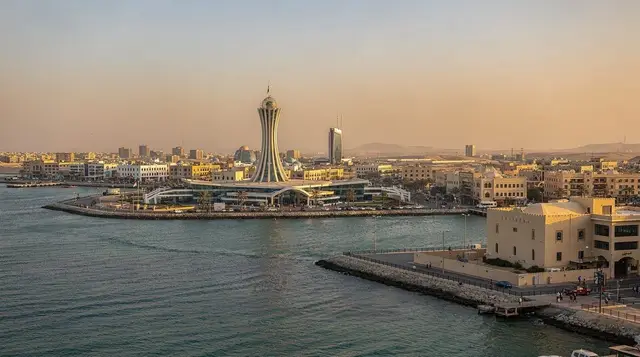
Ajman’s beach runs along a clean, gently sloping stretch of coast backed by a well-maintained corniche promenade, generally far less crowded than anything comparable in Dubai even during peak winter season. Public beach access is straightforward and free, with a scattering of casual beachside cafes along the corniche rather than the resort-club scene that dominates Dubai’s Marina and JBR beaches. City Centre Ajman, a mid-size mall a short distance inland, covers shopping and air-conditioned downtime if the heat or a midday break calls for it.
The corniche itself is a pleasant walking stretch in the cooler months, popular with local families in the evenings, and one of the more genuinely relaxed public beach environments in the northern emirates precisely because it hasn’t been built up into a resort district the way Ajman’s larger neighbors have done with their own coastlines.
Ajman Museum and fort
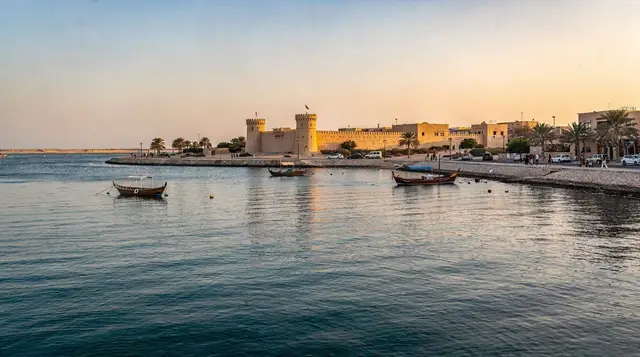
Ajman Museum occupies the emirate’s old fort, an 18th-century structure that served as the ruling family’s residence and seat of government before more modern facilities were built, and it’s a genuinely well-curated small museum rather than a token heritage stop. Exhibits cover traditional Emirati weaponry, a reconstructed traditional courtyard house, pearl-diving equipment, and a small ethnographic collection on pre-oil daily life, all within a compact enough space that a visit takes well under two hours even at an unhurried pace.
Its scale is part of the appeal — where Sharjah’s museum district takes a half or full day to work through properly, Ajman Museum delivers a focused, digestible introduction to the same broad themes (pearling, Bedouin life, pre-federation governance) without requiring the same time commitment. See Dubai’s museums guide for how it compares to options elsewhere in the country.
The traditional dhow yard
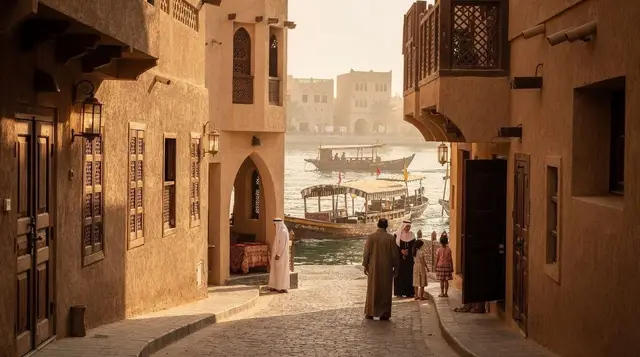
Along Ajman Creek, a working dhow-building yard continues a craft that’s largely disappeared elsewhere in the Gulf: shipwrights still construct traditional wooden dhows by hand, using techniques passed down through generations rather than industrial boatbuilding methods, for use in fishing, cargo, and increasingly tourism and leisure. Visitors can watch the process from the creek-side road without needing a formal tour or ticket, though timing matters — active construction depends on current orders, and there may be more or less visible work happening depending on when you visit.
It’s one of the few places in the UAE where this craft remains an active, ongoing trade rather than a museum reconstruction, and it’s worth the short stop even for visitors without a particular interest in boatbuilding, simply as a rare working glimpse of pre-oil Gulf maritime culture still functioning in the present.
A brief history: pearling village to modern port town
Ajman’s pre-oil economy, like the rest of the Trucial Coast, centered on pearling, fishing, and small-scale maritime trade, and its ruling Al Nuaimi family has governed the emirate for generations, with a lineage often cited locally as one of the longest-standing in the region. Ajman joined the UAE federation in 1971 as one of the founding six emirates, alongside Dubai, Abu Dhabi, Sharjah, Fujairah, and Umm Al Quwain (Ras Al Khaimah joined the following year).
Its small size meant it never developed the oil-driven wealth of Abu Dhabi or the trade-and-tourism boom of Dubai, and its modern economy leans instead on manufacturing, a free trade zone, and — relevant to the dhow yard still active today — a genuinely significant modern shipbuilding and repair industry. Beyond the traditional wooden dhow craft visible on the creek, Ajman is also home to modern dry docks and ship-repair yards serving commercial vessels from across the Gulf, a less picturesque but economically far larger maritime industry than the tourist-facing traditional dhow yard suggests on its own.
Weather and when to visit
Ajman follows the same seasonal pattern as the rest of the UAE’s Gulf coast: extreme heat and humidity from June through September, with daytime temperatures regularly exceeding 40°C, and comfortable, dry conditions from November through March that make the beach and corniche genuinely pleasant to spend time on. Because so much of what Ajman offers is outdoor — the beach, the corniche walk, viewing the dhow yard — the seasonal swing matters more here than in a destination with more indoor attractions. See best time to visit Dubai for how the wider region’s seasons apply.
| Season | Months | Daytime temp | Beach and corniche comfort |
|---|---|---|---|
| Cool | November–March | 20–28°C | Best — the corniche is genuinely pleasant to walk all day |
| Shoulder | April, October | 28–34°C | Fine in the morning or evening; midday grows uncomfortable |
| Peak heat | June–September | 35–42°C+ | Beach and corniche only viable early morning or after sunset |
Al Zorah Nature Reserve
On Ajman’s northern edge, Al Zorah is a mangrove and wetland reserve integrated into a larger golf and residential development, offering kayaking through the mangrove channels and a reasonable chance of spotting flamingos and other wading birds, particularly in the cooler months. It’s less wild and more managed than similar mangrove areas elsewhere in the country, but it’s an easy, low-effort way to add a nature component to an otherwise beach-and-museum Ajman visit. See mangrove kayaking in the UAE for how it compares to other mangrove sites across the northern emirates.
Getting to Ajman
By car, Ajman is roughly 30–40 minutes from central Dubai via the E11, and traffic on this stretch shares the same rush-hour congestion pattern as the Dubai–Sharjah corridor, since Ajman and Sharjah both serve as lower-cost residential areas for people commuting into Dubai. There’s no metro connection; RTA intercity buses run between Dubai and Ajman, and taxis or Careem cover the distance for a moderate fare.
A guided half-day Sharjah and Ajman sightseeing tour combines both emirates in a single organized outing, useful if you’d rather not coordinate transport and timing between two separate destinations yourself, or the Dubai city tour with an Italian, Spanish, or Chinese-speaking guide covering Ajman and Sharjah is worth considering for travelers who’d prefer commentary in one of those languages rather than English.
Ajman Port and the Free Zone
Alongside the traditional dhow yard, Ajman’s modern port and free trade zone employ a substantial share of the emirate’s workforce, drawing manufacturing and light-industrial companies attracted by lower setup costs and rents than Dubai’s equivalent free zones offer. It’s not a visitor attraction in any conventional sense, but it’s worth understanding as context for why Ajman, despite its small size and modest tourist profile, functions as a genuinely busy, economically active place rather than a sleepy backwater — the contrast between its quiet beach and corniche and its working port and industrial zone is part of what makes the emirate an interesting, if brief, stop.
Where to stay and eat
Ajman’s hotel rates generally undercut both Dubai and Sharjah for comparable quality, which is the main reason some budget-conscious travelers base themselves here for a Dubai-area trip and commute in for sightseeing rather than paying Dubai’s accommodation premium — worth weighing against the added 30–40 minute commute each way if Dubai’s landmarks are your primary focus. Dining is modest and largely casual: corniche cafes, mall food courts at City Centre Ajman, and simple Emirati and South Asian restaurants serving the local population rather than a dedicated tourist dining scene. Budget AED 30–70 (8–19 USD) per person for a casual meal.
Ajman versus Sharjah and Umm Al Quwain
Deciding how much time to give Ajman relative to its two nearest neighbors comes down to what you’re after:
| Ajman | Sharjah | Umm Al Quwain | |
|---|---|---|---|
| Strength | Beach, corniche, dhow yard | Museums, heritage district, Blue Souk | Lagoon, watersports, quiet old town |
| Time needed | Half a day | A full day | Half a day |
| Alcohol | Licensed venues only | Total ban | Licensed venues only |
| Best for | A relaxed beach break | Culture and heritage depth | Nature and watersports |
None of the three works well as a full standalone day trip from Dubai on its own except Sharjah; Ajman and Umm Al Quwain are best combined with each other or with Sharjah rather than visited in isolation. See the Sharjah destination guide and Umm Al Quwain destination guide for the full picture of each.
Combining Ajman with a northern emirates loop
Ajman’s position between Sharjah and Umm Al Quwain makes it a natural midpoint stop on a longer northern-emirates road trip rather than a destination to reach and return from separately. A practical loop for travelers with a full day: start with Sharjah’s museum district and Blue Souk in the morning, continue roughly 20 minutes to Ajman for the beach, fort museum, and dhow yard around midday, then either turn back to Dubai in the afternoon or continue another 20–30 minutes to Umm Al Quwain for its lagoon and quieter old town before heading back. This kind of combined day makes considerably more efficient use of the drive north than treating each emirate as a separate round trip from Dubai.
See best day trips from Dubai for how a combined northern-emirates day compares to other single-destination options.
Practical logistics for a half-day visit
Parking near Ajman’s corniche and museum is generally straightforward and free, unlike the paid, congested parking common around Dubai’s major attractions — one of the small, genuine conveniences of visiting a less-trafficked emirate. The museum, dhow yard, and corniche sit close enough together that a rental car or taxi can cover all three with short hops between them rather than requiring extensive driving within Ajman itself; the town’s compact size, generally a drawback for residents seeking more amenities, works in a visitor’s favor by keeping everything within a tight, easy-to-navigate area.
Is Ajman worth visiting?
As a standalone destination, Ajman is modest — a pleasant half-day rather than a trip-defining stop, and most visitors are well served treating it as a short addition to a Sharjah day rather than a separate journey from Dubai. Its real value is as a lower-cost accommodation base for travelers on a tight budget who don’t mind the commute, or as an easy, uncrowded beach and museum stop for anyone already road-tripping through the northern emirates toward Umm Al Quwain or Ras Al Khaimah. See Dubai on a budget for how a lower-cost Ajman base might fit into an overall trip budget.
Shopping and everyday Ajman
Beyond the tourist-facing sights, Ajman is worth a mention as a genuine slice of everyday, non-touristy UAE life — City Centre Ajman and the surrounding streets serve a resident population going about ordinary errands rather than a visitor economy, and the souks and small shops around the older parts of town sell goods at prices aimed at locals rather than tourists. For visitors who’ve spent several days in Dubai’s more curated, visitor-oriented environments, a couple of hours in Ajman’s more ordinary commercial streets offers a useful contrast and a more accurate sense of daily Emirati and expatriate life in a smaller emirate.
A typical half-day in Ajman
For visitors covering Ajman as a standalone half-day rather than a Sharjah add-on, a workable structure runs: start at Ajman Museum in the fort while the morning is still cool, walk 10 minutes to the creek-side road to watch the dhow yard, then continue to the beach and corniche for the remainder of the morning or an early lunch at a corniche cafe. Afternoon is best spent either at City Centre Ajman if the heat calls for air conditioning, or heading onward to Sharjah or Umm Al Quwain if extending the day into a longer northern-emirates loop. This sequencing front-loads the walking-heavy stops into the cooler hours and treats the beach as flexible depending on how much of the day remains.
Ajman with kids
The beach and corniche are easy, low-effort options for families, and Ajman Museum’s compact size and hands-on exhibits (reconstructed rooms, weaponry displays) tend to hold children’s attention better than larger, denser museums elsewhere in the country — see Dubai with kids for broader family-trip planning that applies to an Ajman add-on. The dhow yard is a genuinely interesting stop for curious kids who enjoy seeing something being built by hand, though there’s no formal program or guide there — it’s a drive-by or walk-by observation rather than an interactive exhibit.
Frequently asked questions about Ajman
How far is Ajman from Dubai?
Roughly 30–40 minutes by car via the E11, similar to the drive time to Sharjah, since the two emirates’ urban areas run together.
Is Ajman worth a dedicated day trip from Dubai?
On its own, not really — it’s better combined with Sharjah in a single half-day or full-day outing, since both are close together and Ajman alone has a fairly short list of sights.
Is Ajman cheaper than Dubai for accommodation?
Yes, generally noticeably so, which is why some budget travelers base themselves in Ajman and commute into Dubai for sightseeing rather than paying Dubai’s higher hotel rates.
Can I watch dhows being built in Ajman?
Yes — the traditional dhow yard along Ajman Creek is visible from the creek-side road without needing a ticket or formal tour, though the amount of active work visible varies with current orders.
Is Ajman Museum worth visiting if I’ve already seen Sharjah’s museums?
Yes, if time allows — it covers similar themes at a smaller, faster-to-visit scale, and the fort building itself is worth seeing on its own merits.
Does Ajman have alcohol available like Dubai?
Yes — unlike Sharjah’s total ban, Ajman follows the licensed-venue model, so hotels and licensed restaurants can serve alcohol, though the selection and scene are far smaller than in Dubai.
Is Al Zorah worth visiting for a short trip?
If mangrove kayaking or birdwatching genuinely interests you and you have transport, yes; otherwise it’s a lower priority than the beach, museum, and dhow yard for a first Ajman visit.
Is parking easy to find in Ajman?
Yes, noticeably easier than in Dubai — parking around the corniche, museum, and dhow yard is generally free and uncongested, one of the practical upsides of visiting a less-trafficked emirate.
How many founding emirates joined the UAE in 1971, and was Ajman one of them?
Six emirates joined the federation on its founding in December 1971 — Abu Dhabi, Dubai, Sharjah, Ajman, Fujairah, and Umm Al Quwain — with Ras Al Khaimah joining separately in early 1972.
Does Ajman have a significant modern shipping industry beyond the traditional dhow yard?
Yes — alongside the traditional wooden dhow-building craft visible on the creek, Ajman has a genuinely sizeable modern ship-repair and dry-dock industry serving commercial vessels from across the Gulf, a much larger part of its economy than the tourist-facing traditional yard suggests.
Is Ajman a good base for exploring both Dubai and Sharjah?
It can work for budget-focused travelers comfortable with a 30–40 minute commute in either direction, since Ajman sits roughly between the two. It’s a less convenient choice for anyone prioritizing evening access to Dubai’s nightlife or dining scene, given the drive time back each night.
What’s the difference between Ajman’s traditional dhow yard and its modern port?
The traditional dhow yard on the creek is a small-scale, hand-craft operation building wooden vessels using historical techniques; Ajman’s separate modern port and free trade zone is a much larger, industrial commercial operation with no direct connection to the traditional craft beyond sharing the same coastline.
Is a rental car necessary for a half-day trip to Ajman?
Not strictly — a taxi, Careem, or a guided tour covers a half-day visit comfortably given how close together the beach, museum, and dhow yard sit. A rental car mainly helps if you’re combining Ajman with a longer self-drive loop through Sharjah and Umm Al Quwain the same day.
What language is spoken in Ajman, and will English get me by?
Arabic is the official language, but English is widely understood in hotels, shops, and tourist-facing businesses, much as it is throughout the rest of the UAE — you shouldn’t expect any communication difficulty as a visitor.
Is Ajman a good add-on if I’m already visiting Umm Al Quwain?
Yes — the two sit roughly 20–30 minutes apart, making it easy to combine Ajman’s beach and museum with Umm Al Quwain’s lagoon and old town in a single longer day trip from Dubai.
How much does a half-day trip to Ajman cost?
Budget AED 60–150 (16–41 USD) per person for food and incidentals if self-driving or taking a taxi; a guided Sharjah-and-Ajman half-day tour typically adds AED 150–250 (41–68 USD) per person for transport and commentary.
What’s the best order to see Ajman’s sights in a half-day?
Start at the fort museum and dhow yard in the cooler morning hours, then move to the beach and corniche, saving City Centre Ajman’s air conditioning for the hottest part of the afternoon if needed.
How does Ajman compare to Sharjah for a first northern-emirates trip?
Sharjah has the deeper museum and heritage offering and is worth a full day on its own; Ajman is a lighter, beach-and-fort half-day that works best tacked onto a Sharjah itinerary rather than visited as a separate trip.
Is Ajman worth visiting for its beach alone if I’ve already seen Dubai’s coastline?
If you specifically want a quieter, less crowded, free public beach without the resort-club scene of Dubai’s Marina and JBR beaches, yes; otherwise it’s a modest upgrade over what Dubai already offers.
Top experiences
Bookable activities with verified prices and instant confirmation on GetYourGuide.