Burj Al Arab guide: the '7-star' hotel, and how to actually see it up close
Dubai: Marina, Atlantis, Palm & Burj Al Arab speedboat tour
Duration: 1.5 hours
Can I visit the Burj Al Arab without staying there, and what does it cost?
Not as a walk-in visitor — the hotel is restricted to guests, and non-guests can only enter with a paid restaurant or afternoon-tea reservation, which typically starts around AED 500-750 ($135-205) per person and must be booked in advance. For most visitors, the better options are a jet ski or speedboat tour past the hotel, or free photography from Jumeirah Beach Park and Kite Beach.
What the Burj Al Arab actually is
Opened in 1999 on its own artificial island off Jumeirah beach, the Burj Al Arab is a sail-shaped hotel that became one of Dubai’s defining architectural symbols years before the Burj Khalifa or Palm Jumeirah existed. It’s routinely described as the world’s only “7-star” hotel, a label with no official basis in any global hotel-rating system, but one that stuck after early journalistic coverage of its scale and opulence and has become permanently attached to the property’s marketing and popular reputation ever since.
Here’s the honest, practical part most guides skip: unless you’re staying there or have booked a restaurant reservation, you cannot walk in and look around — this guide covers exactly how the access restrictions work and the realistic ways to actually experience or see the hotel.
| Where | Its own island off Jumeirah beach |
| Walk-in access | None — reservation or hotel stay only |
| Afternoon tea | Around AED 500-750 ($135-205) per person |
| Free viewing | Jumeirah Beach Park, Kite Beach, Umm Suqeim |
| Booking | Directly through the hotel, well in advance |
The most important thing to know: it’s not open to visitors
The Burj Al Arab sits on its own island, connected to the mainland by a private curved causeway with a security checkpoint that only lets through confirmed hotel guests and people with a verified restaurant or spa reservation. There is no general admission, no lobby tour, and no way to simply drive or walk up and enter — this is the single most misunderstood fact about the hotel among first-time visitors, and it’s worth internalizing before planning around it. If seeing the building’s famous interior atrium is the goal, a paid reservation is the only route in.
How to get inside: reservations
Non-guests can access the hotel through a confirmed dining or afternoon-tea reservation, most commonly at the Skyview Bar, which sits at the top of the building and includes access to the reception atrium en route. Afternoon tea typically runs AED 500-750 ($135-205) per person depending on seating time and package, and reservations should be booked directly through the hotel’s own booking channels well ahead of your visit, since popular time slots — particularly weekend afternoons — fill up fast. Some of the hotel’s restaurants also accept walk-in-adjacent bookings for dinner, though the same advance-reservation logic applies.
This is a legitimate way to see the building’s interior, including its famous gold-accented atrium and the aquarium wall in the lobby, if the cost fits your budget.
Seeing it from the water
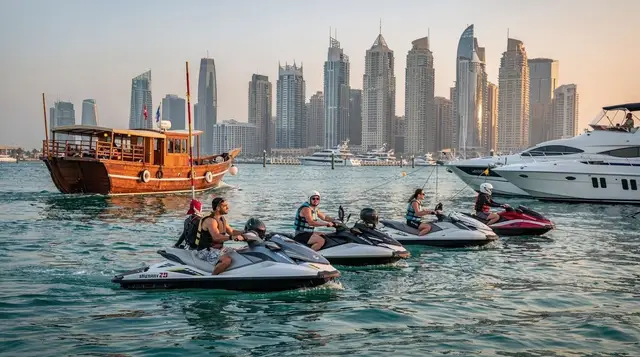
For a view without a restaurant reservation, several boat tours depart from Dubai Marina and pass close to the hotel’s island, giving a genuinely closer vantage point than any shore-based public spot. A Marina, Atlantis, Palm and Burj Al Arab speedboat tour combines a pass by the Burj Al Arab with several of the coastline’s other landmarks in a single roughly 90-minute outing.
For something more active, a jet ski tour to Atlantis and Burj Al Arab lets you drive yourself close to the hotel on a self-piloted route, or a dedicated jet ski tour of Burj Al Arab with photos focuses specifically on getting a strong photo close to the building. These water-based options are the closest most visitors will get to the hotel without a restaurant booking.
Free viewing spots from the shore
Jumeirah Beach Park and the nearby Kite Beach both offer clear, unobstructed public views of the Burj Al Arab from the mainland, at no cost, and remain the most reliable free options for photography — particularly at sunset, when the building’s silhouette is lit against the sky. Umm Suqeim Beach, closer still, offers an even nearer vantage point directly across the water from the hotel’s island. None of these require any booking or entry fee, making them the default recommendation for visitors who mainly want a solid photo rather than an interior visit. See Dubai’s skyline photo spots for the best specific angles and timing at each of these beaches.
Is the “7-star” label real?
No — no globally recognized hotel classification system, including those used across Europe and the wider Gulf region, issues a 7-star rating. The label traces back to early international press coverage describing the hotel’s scale and service level as beyond the standard 5-star maximum, and it was never formally awarded by any accreditation body. The hotel itself doesn’t officially claim the rating in its own materials, though the nickname has become permanently attached to its identity in popular usage and continues to shape expectations for first-time visitors.
What a stay actually costs
Every room in the Burj Al Arab is configured as a multi-level suite rather than a standard hotel room, and rates reflect that positioning — suite rates start around AED 6,000-8,000 ($1,635-2,180) per night in shoulder season, climbing well beyond that during peak winter weeks and around major holidays. Stays typically include a chauffeured Rolls-Royce airport transfer and a dedicated butler service as standard inclusions, part of what the pricing is built around. For visitors weighing whether this level of spend fits their trip, see the Dubai luxury guide for how it compares against other high-end stay options in the city, including Atlantis and Downtown’s five-star towers.
Combining a Burj Al Arab visit with other landmarks
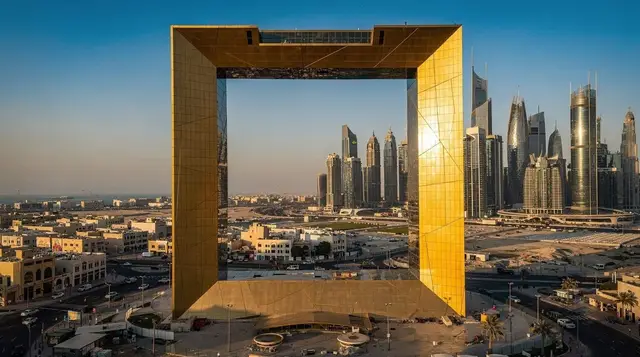
A combined Future Museum, Burj Al Arab, and Dubai Frame tour pairs a drive-by view of the hotel with two of Downtown’s other headline landmarks in a single guided outing, useful for visitors who want to cover multiple iconic stops without arranging separate transport between each. See the Museum of the Future guide and the Dubai Frame guide for what each of those stops involves on its own.
Photography tips
Sunset offers the strongest light for shore-based photography, with the hotel’s sail silhouette catching the fading light against the sky from Jumeirah Beach Park or Kite Beach. From the water, midday light tends to be harsher and flatter, so if a boat or jet ski tour offers flexible timing, a late-afternoon slot generally produces better photos than midday. A zoom lens or phone with strong digital zoom helps considerably from the shore-based spots, since the causeway and island add real distance between the public beach and the building itself.
Who should prioritize seeing it
Visitors with a strong interest in Dubai’s architectural history, or those planning a genuine luxury splurge on afternoon tea or a stay, get the most value from prioritizing an actual visit. For visitors mainly checking off a well-known landmark for photos, the free shore-based viewpoints or a short boat tour deliver a satisfying result without the cost of a reservation. See is Dubai worth visiting for how a stop like this weighs against the city’s other paid and free landmark experiences.
How it was built
Construction began in 1994 and took roughly five years, requiring an artificial island built 280 meters offshore specifically to give the building room to stand apart from the coastline, a deliberate design choice rather than a site constraint. Piling the foundation into the seabed took nearly two years on its own before the tower itself could rise, and the building’s sail-shaped structure, engineered to withstand strong coastal winds, remains one of the more technically ambitious hotel projects completed anywhere in the world at the time. It opened in December 1999, positioning it as one of the earliest of Dubai’s now-famous skyline landmarks, well before the Burj Khalifa or Palm Jumeirah existed.
Inside the atrium: what reservation holders actually see
For those who do secure a dining or tea reservation, the interior is built around a vast atrium rising the full height of the building’s inner sail, finished in gold leaf detailing, a large aquarium wall in the lobby, and a color-changing fountain feature at its base. It’s a genuinely striking, maximalist interior distinct from the more restrained design language most luxury hotels favor today, and it’s part of why the hotel remains a bucket-list stop for design and architecture enthusiasts despite the strict access rules.
The helipad’s famous moments
The Burj Al Arab’s helipad, cantilevered near the top of the building, has hosted a handful of widely publicized stunts and photo shoots over the years, including a tennis exhibition and a golf drive staged on a platform built out over the pad. These moments were carefully arranged marketing exercises rather than something replicable by visitors, but they’re part of why the building’s silhouette carries such strong brand recognition even among people who’ve never been to Dubai.
Beach and pool access options
Beyond overnight stays, the hotel occasionally offers day-access packages bundling pool, beach, and a dining credit for non-guests, though availability and terms vary by season and should be confirmed directly with the hotel rather than assumed. These packages, when available, tend to be priced closer to a hotel stay than a simple restaurant reservation, reflecting the private beach and pool access included.
How it compares to other Dubai ultra-luxury stays
Within Dubai’s ultra-luxury tier, the Burj Al Arab competes most directly with Atlantis The Royal and a handful of Palm Jumeirah beachfront resorts, though its stand-alone island setting and sail-shaped design give it a distinct identity none of the newer properties fully replicate. See Atlantis The Palm guide for how that resort’s day-pass-accessible attractions differ meaningfully from the Burj Al Arab’s guests-and-reservations-only model.
Booking a reservation: practical tips
Reservations for the Skyview Bar’s afternoon tea or the hotel’s restaurants should be made directly through the Burj Al Arab’s own booking channels rather than third-party platforms, since availability and confirmation are managed centrally by the hotel. Confirm the current dress code and any ID or booking-confirmation requirements at the causeway checkpoint before traveling, since arriving without a printed or digital confirmation can cause delays at the security gate.
Why the access restrictions exist
Unlike most luxury hotels that welcome curious non-guests into public lobby areas freely, the Burj Al Arab’s causeway-and-checkpoint model reflects both a genuine security consideration (it’s hosted numerous heads of state and high-profile guests over the years) and a deliberate exclusivity strategy that’s arguably part of the brand’s appeal itself. The hotel has maintained this model consistently since opening in 1999, and it’s unlikely to change given how central the sense of restricted access is to its overall positioning as one of the most exclusive stays in the world.
Managing expectations if you’re not booking a reservation
If a paid reservation isn’t in your budget for this trip, it’s worth reframing the Burj Al Arab as a photography subject rather than a place you’ll walk through — the free shoreline views genuinely deliver a strong, recognizable shot, and treating the building as a landmark to admire from a distance rather than a missed opportunity tends to leave visitors more satisfied than fixating on the interior they won’t see. Many visitors who do eventually book a reservation on a return trip say the anticipation built from an earlier distant view made the eventual visit feel more special rather than less.
The Skyview Bar and Sahn Eddar experiences compared
Non-guests booking a reservation typically choose between the Skyview Bar, positioned near the top of the building with panoramic views over the Gulf and the surrounding coastline, and Sahn Eddar, a ground-floor lounge beneath the full-height atrium offering a closer look at the building’s interior architecture rather than an external view. The Skyview Bar suits visitors prioritizing the view and the novelty of the height itself, while Sahn Eddar suits those more interested in the atrium’s design and a calmer, lower-key afternoon tea setting. Both require the same advance-reservation approach and carry broadly similar pricing, so the choice comes down to which experience — view or architecture — matters more to you.
A note on how the hotel is marketed versus experienced
Because the “7-star” nickname and decades of associated media coverage have built up such a specific set of expectations, some visitors who do secure a reservation report the experience as excellent but not quite matching the almost mythical image built up beforehand — a reasonable outcome given how much cultural weight the building’s reputation now carries independent of the actual visitor experience. Going in expecting a genuinely excellent, opulent afternoon rather than some indefinable beyond-5-star transformation tends to leave visitors more satisfied with what is, by any honest measure, still one of the most striking hotel experiences available anywhere.
The tennis court and other engineering curiosities
Beyond the famous helipad stunts, the building incorporates several other engineering curiosities built specifically for headline-grabbing moments rather than everyday guest use, reflecting the same publicity-driven design philosophy that shaped much of the hotel’s early marketing. These features rarely factor into a standard guest or reservation-holder’s actual visit, but they’re part of the wider cultural story that turned the building into a recognizable global icon well beyond the borders of the UAE itself.
If you’re only passing through Dubai briefly
For visitors on a short layover or a single-day stop in Dubai, the Burj Al Arab is realistically a drive-by or beach-viewpoint stop rather than a destination requiring a dedicated multi-hour block of time, given the reservation-only access model. Pairing a quick photo stop at Jumeirah Beach Park with a longer visit elsewhere in the city makes far better use of limited time than attempting to secure a same-day reservation, which — even when available — typically requires more advance planning than a short layover allows.
Transport and drop-off logistics for reservation holders
Guests with a confirmed reservation should arrive by taxi or private car directly to the causeway checkpoint, where identification and booking confirmation are verified before proceeding onto the island itself; self-driving is possible but less convenient given the limited, valet-managed parking available at the checkpoint. Allowing extra buffer time before your reservation slot, particularly during Dubai’s busier traffic periods in the late afternoon, helps avoid arriving later than the security and check-in process comfortably allows.
What locals and repeat visitors actually recommend
Dubai residents and repeat visitors who’ve done both the free shoreline route and a paid reservation tend to give similar advice: treat the first visit to Dubai as a shoreline-photo trip, and save the reservation for a return visit once the novelty of the skyline itself has worn off and a genuine splurge feels more deliberate. This isn’t a hard rule, but it reflects a common pattern — first-time visitors often have a long list of must-see landmarks competing for both time and budget, and the Burj Al Arab’s reservation cost is easier to justify once other priorities, like the Burj Khalifa or a desert safari, are already checked off.
For visitors staying elsewhere in Jumeirah or along the coast specifically to be near the hotel, it’s worth noting that proximity doesn’t change the access rules — even a beachfront hotel next door still requires the same reservation or checkpoint process as visitors coming from Downtown or the Marina.
Four ways to see the Burj Al Arab, compared
There’s no single “right” way to experience the hotel — the right option depends on budget and whether an interior visit actually matters to you.
| Option | Cost | How close | Booking needed |
|---|---|---|---|
| Afternoon tea / dining reservation | AED 500-750 ($135-205)+ | Inside the building | Yes, well ahead |
| Jet ski or speedboat tour | Tour price, mid-range | Close offshore, water level | Yes |
| Overnight stay | AED 6,000-8,000 ($1,635-2,180)+/night | Inside, full access | Yes, far ahead for good rates |
| Shore viewpoint (Jumeirah Beach Park, Kite Beach) | Free | Distant, mainland | No |
For most first-time visitors mainly wanting a solid photo rather than an interior look, the free shore option delivers the best value by a wide margin; the water-based tours are the natural middle ground for anyone who wants to get closer without the cost of a reservation.
Nearby Jumeirah sights worth combining with a visit
Because the Burj Al Arab sits within Jumeirah, most visitors fold a stop here into a wider morning or afternoon along the coast rather than making a single dedicated trip. The Jumeirah Mosque, one of the few mosques in Dubai open to non-Muslim visitors on a guided tour, sits a short drive away and pairs naturally with a Burj Al Arab photo stop given both are on the same stretch of coastline. Kite Beach itself, beyond being a free viewing spot for the hotel, is also a genuinely pleasant beach destination in its own right, with food trucks and water-sports rentals worth building extra time around rather than treating purely as a photo-stop detour.
For visitors also chasing other Dubai landmarks the same day, Dubai’s best viewpoints situates the Burj Al Arab’s shoreline vantage points alongside the city’s other panoramic spots, useful for planning a single photography-focused half-day along the coast.
Frequently asked questions about the Burj Al Arab
Can I book a hotel tour of the Burj Al Arab?
No formal walk-through tour exists — the only way inside as a non-guest is through a paid restaurant, bar, or afternoon-tea reservation.
Is the Burj Al Arab actually on an island?
Yes, a small artificial island roughly 280 meters offshore, connected to the mainland exclusively by a private, guarded causeway.
What is the dress code for afternoon tea at the Burj Al Arab?
Smart-casual to formal attire is expected; shorts, flip-flops, and beachwear are not permitted for reservation holders entering the hotel.
Can I see the Burj Al Arab from the Palm Jumeirah?
Yes, partially, though Jumeirah Beach Park and Kite Beach on the mainland offer a more direct, closer sightline than most vantage points on the Palm.
Is the Burj Al Arab taller than the Burj Khalifa?
No — at 321 meters, it’s considerably shorter than the 828-meter Burj Khalifa; the two are unrelated structures despite the similar name.
Do jet ski tours let you get very close to the hotel?
They approach close enough for strong photos while respecting a safety buffer around the private island, close enough to feel genuinely near the building rather than a distant silhouette.
Is the Burj Al Arab worth visiting on a budget trip?
Not as a paid reservation — the free shoreline viewpoints deliver a satisfying photo opportunity at no cost, making a paid visit worth reserving specifically for travelers with room in their budget for a genuine splurge experience.
Can I combine a Burj Al Arab photo stop with the Jumeirah Mosque?
Yes — both sit along the same Jumeirah coastline, and combining a shoreline photo stop with a guided Jumeirah Mosque visit makes for an efficient half-day without much added transit.
Is it worth visiting the Burj Al Arab at all if I can’t afford a reservation?
Yes — most visitors who see it only from Jumeirah Beach Park or Kite Beach still come away with a strong, recognizable photo, and treating it as a photography subject rather than a missed interior visit tends to be the more satisfying mindset.
Top experiences
Bookable activities with verified prices and instant confirmation on GetYourGuide.