Dubai on a luxury budget: what's genuinely worth it
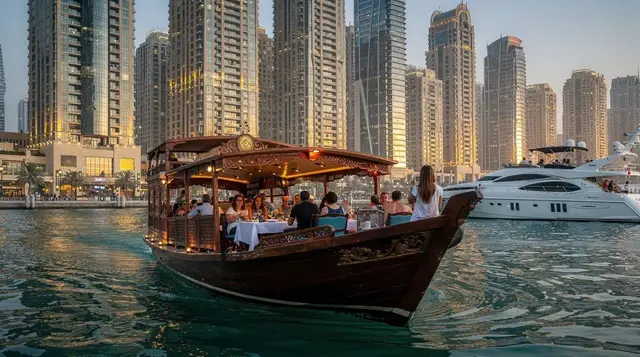
Dubai: Marina private luxury yacht tour
What's actually worth the money in luxury Dubai?
Five-star beachfront resorts with real service standards, a small number of fine-dining restaurants with genuine culinary credentials, and private desert or yacht experiences that solve real logistical problems (space, privacy, timing) are worth the premium. Branded experiences sold mainly on Instagram appeal — some gold-leaf food items, the priciest observation-deck tiers, and several Burj Al Arab add-ons — deliver less than their price suggests.
Where the premium actually buys something
Dubai markets itself on superlatives, and a meaningful share of what’s sold as luxury here is priced for the marketing rather than the substance behind it. That’s not a reason to skip the high end of the city — some of it is genuinely excellent and worth the premium — but it does mean the usual assumption that “expensive equals good” fails more often here than in most destinations, because branding, novelty, and Instagram appeal are themselves being sold as part of the product.
Two nearly identical experiences — a private yacht charter from one operator and another, a desert camp described in almost the same marketing language — can differ by a factor of two in price without a proportional difference in what’s actually delivered, and the traveler has no easy way to tell which is which from the listing photos alone. This guide goes category by category through hotels, dining, tours, and shopping, flagging where the extra cost buys real quality and where it buys mostly a photo opportunity.
| Entry-tier luxury hotel | AED 800-1,500/night (218-408 USD) |
| Beachfront resort tier | AED 1,800-4,000/night (490-1,090 USD) |
| Fine-dining tasting menu | AED 400-800/person (109-218 USD) |
| Best-value season | Oct, Nov, Mar, Apr (near-peak comfort, lower rates) |
| Clearest value category | Private tours (yacht, helicopter, desert safari) |
Luxury hotels, tier by tier
The entry tier of Dubai luxury is a solid five-star business hotel in Downtown Dubai or Dubai Marina — AED 800-1,500 (218-408 USD) a night, reliable service, a rooftop pool, and walkable or short-taxi access to the Burj Khalifa, Dubai Mall, or the Marina waterfront. This tier delivers close to what it promises: professional service standards, comfortable rooms, and genuine convenience, and it’s the right choice for travelers who want luxury without paying for beachfront real estate they won’t use much.
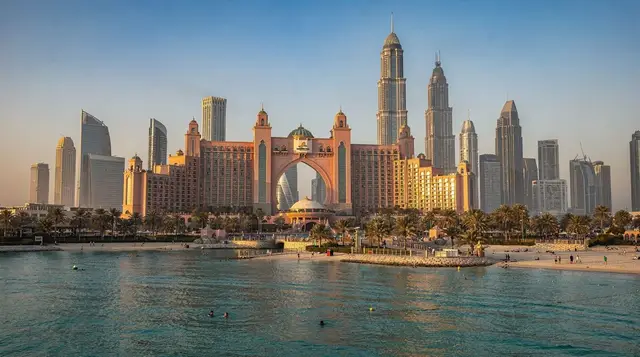
The next tier is beachfront resorts on Palm Jumeirah or Jumeirah Beach Road — AED 1,800-4,000 (490-1,090 USD) a night — where the premium buys private beach access, larger rooms, and resort-style grounds. This is where the money is best spent if beach time is a priority, because the difference between a beachfront resort and a city hotel with a rooftop pool is substantial in a way that’s hard to replicate with a day pass. Atlantis The Palm sits at the upper end of this tier and includes access to its own waterpark, which meaningfully changes the value calculation for families.
At the top is a small handful of ultra-luxury properties — private villas, butler service, and rates from AED 5,000 (1,362 USD) a night upward — where much of the premium above the beachfront-resort tier is genuinely about privacy and personalization rather than a proportionally better physical product. That’s a legitimate thing to pay for if privacy matters to you specifically, but it’s worth being clear-eyed that the marginal improvement in room quality, food, or service between a very good beachfront resort and an ultra-luxury villa is smaller than the price gap suggests.
The Burj Al Arab, honestly assessed
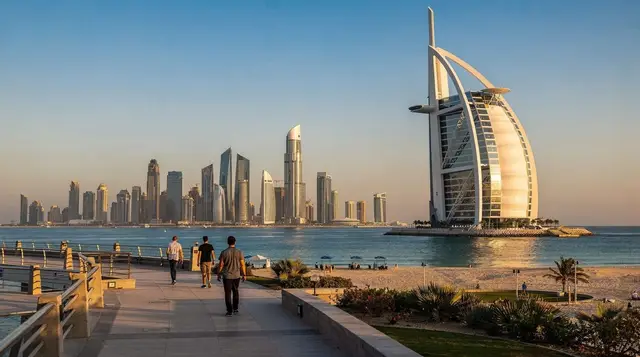
The Burj Al Arab remains the single most recognizable luxury symbol in Dubai, and its status as a design and engineering landmark is deserved — the sail-shaped structure, the interior scale, and the sheer novelty of a stand-alone artificial-island hotel are genuinely distinctive. Non-guests can experience it through afternoon tea or a restaurant reservation, typically AED 500-750+ (136-204+ USD) per person, which is the accessible way to see the interior without booking a room.
Judged purely as food and service, though, the value proposition is mixed. The afternoon tea and most restaurant experiences are good rather than exceptional relative to their price — you are paying substantially for the building and the exclusivity of access, not for food that would stand out on its own merits at a fraction of the cost elsewhere in the city. That’s a fair trade for many visitors who want the specific experience of having been inside the Burj Al Arab once, and it’s worth doing once for that reason. It’s a poor trade for anyone expecting the meal itself to be the best in Dubai, which it usually isn’t.
Fine dining: where the premium is earned
Dubai’s fine-dining scene has matured substantially, concentrated in Downtown towers, Dubai Marina, and a handful of hotel-anchored restaurants. The restaurants with real culinary credentials — chef-led kitchens with an actual point of view, sourcing that shows up on the plate, and service that’s attentive without being theatrical — genuinely justify AED 400-800 (109-218 USD) per person tasting menus, and this is one of the categories where the Dubai premium is closest to fairly earned. The fine dining guide has specific recommendations by neighborhood and cuisine.
The category to be more skeptical of is the venue that leads with a view or a novelty (gold-leaf desserts, a rooftop with a Burj Khalifa sightline, a “world’s highest” claim) rather than with the kitchen. These can be worth doing once for the setting, but the food is frequently the weakest part of the meal relative to the bill, and a diner optimizing purely for quality per dirham will do better at a less scenery-driven restaurant one tier down in visibility.
Friday brunches fall into a similar pattern at the very top of the price range — a handful of hotel brunches at AED 500-800+ (136-218+ USD) per person are genuinely excellent and worth the splurge, but the median brunch at that price is an unremarkable buffet riding on the concept, and reading recent reviews of the specific venue matters more than trusting the price tag.
Private tours, yachts, and helicopters
This is the category where luxury spending buys the clearest, least ambiguous value, because what’s being purchased is space, privacy, and time rather than a marginally nicer version of a shared product. A private luxury yacht charter from Dubai Marina gives a group exclusive use of the boat and route flexibility that a shared cruise can’t match — for a family or group of six to ten, splitting the cost per person often lands closer to a mid-range shared tour price while delivering a materially better experience.
The same logic applies to a 25-minute helicopter tour over the city, which is worth the premium specifically for the aerial photography of Palm Jumeirah and the coastline that no ground-level tour or observation deck can replicate — it’s a poor substitute for general sightseeing, since you cover ground faster than you can absorb it, but as a photography and novelty experience it delivers on its promise.
A luxury desert safari with dune bashing, BBQ, and quad biking is where the upgrade from a standard shared safari is most clearly worth paying for — smaller groups, better vehicles, and a private or semi-private camp meaningfully change the experience compared to a crowded 150-person shared camp, which is the single biggest quality variable in desert safaris generally. Where the marginal value drops off is moving from a good private safari to an ultra-premium one with additional add-ons — the jump from shared to private matters far more than any further upgrade within the private tier.
The VIP level 152 lounge access at the Burj Khalifa is a genuine step up from standard level 124-125 entry — a quieter, less crowded viewing experience with a lounge and refreshments — and worth it for anyone who found standard entry crowded on a previous visit or who wants to avoid the queue entirely. It’s a smaller jump in absolute experience than the yacht or helicopter categories, since the underlying view from a few floors lower is already very good, so treat it as a comfort upgrade rather than an essential one.
Luxury shopping: gold, malls, and where prices actually differ
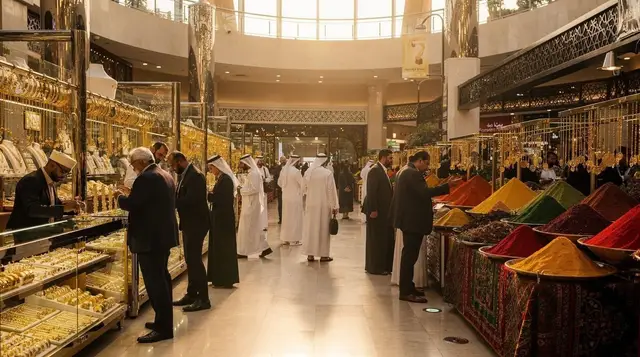
The Gold Souk in Deira is the most genuinely distinctive luxury shopping experience in Dubai, and one of the few categories where the local price advantage is real and quantifiable rather than a marketing claim. The UAE has no import duty on gold, and pieces are priced by weight against the daily international gold rate plus a transparent making charge that’s often negotiable — a buyer who checks the day’s gold rate before shopping and negotiates the making charge can genuinely get a better price than at home, particularly for simpler, higher-purity pieces.
The showroom-style high-end jewelers along the same strip sell more elaborate, designer-branded pieces at correspondingly higher making charges, which is a fair trade for the design work but a smaller relative discount versus home-market prices.
International luxury fashion brands in Dubai Mall and Mall of the Emirates are priced comparably to, or slightly above, home-market prices once currency conversion is factored in, with the main exception being the annual Dubai Shopping Festival, when genuine markdowns appear across many stores. Buying international designer goods in Dubai purely for the sake of doing it in Dubai rarely saves money; the appeal is the shopping experience and the mall architecture rather than the price.
Luxury desert experiences beyond the safari
Beyond the private desert safari, a handful of experiences push further upmarket: overnight stays in fixed luxury desert camps with private plunge pools, sunrise hot air balloon flights over the desert with a champagne breakfast on landing, and multi-hour private falconry or off-roading sessions with a dedicated guide. The hot air balloon experience is genuinely worth the premium over a standard sunrise balloon flight if a private basket and a slower, more personalized pace matter to you — the view itself over the dunes and, on clear mornings, toward the mountains near Hatta, is the same regardless of tier, so the extra cost buys privacy and pacing rather than a different view.
Fixed luxury camps with overnight stays are a step beyond the standard overnight desert camp format, trading the communal Bedouin-tent experience for private accommodation with hotel-level amenities in a desert setting. This suits couples or families wanting privacy over atmosphere, though travelers who specifically want the shared, communal feel of a traditional camp will find the standard overnight format more true to that experience despite costing less.
Spa and wellness: a genuine strength
Spa culture is one of the more consistently strong parts of luxury Dubai, and it’s less prone to the branding-over-substance problem than dining or shopping. Five-star resort spas, particularly on Palm Jumeirah and along Jumeirah Beach Road, typically run AED 500-1,200 (136-327 USD) for a two-hour treatment and deliver a genuinely high standard — well-trained therapists, quality facilities including steam rooms and outdoor relaxation areas, and treatment menus that draw credibly on regional traditions like hammam-style scrubs rather than generic international spa formats.
This is a category where the price largely tracks the quality of the actual service, since a bad spa treatment is immediately obvious to the guest in a way that a mediocre themed restaurant meal sometimes isn’t.
Standalone day spas outside hotel properties can offer similar quality at somewhat lower prices, though vetting matters more since the five-star hotel brand isn’t doing the quality assurance for you. For a luxury trip with any downtime built in, a half-day spa booking is a reliable way to spend money and reliably get value back, which isn’t true of every category in this guide.
How pricing scales with season
Luxury pricing in Dubai swings more with season than mid-range pricing does, because five-star hotels and premium tour operators have more room to discount during low-demand periods. December and January, the busiest and most expensive months, can see luxury hotel rates 30-50% above the same rooms in the June-through-September low season, even though summer heat makes some experiences (desert safaris shift to evening-only, beach time becomes early morning or late afternoon only) less pleasant.
Shoulder months — October, November, March, and April — often deliver close to peak-season weather at meaningfully lower luxury rates, and this is the highest-value window for a luxury trip specifically, since it minimizes the tradeoff between cost and comfort that exists at both extremes of the calendar. A traveler willing to shift a luxury trip by even a few weeks out of the December-January window can typically capture a noticeably better rate on the same hotel tier without meaningfully worse weather.
Luxury hotel loyalty programs and upgrades
Several international five-star chains with a strong Dubai presence run loyalty programs that can meaningfully change the value calculation at the top tier — a status-based room upgrade, late checkout, or executive lounge access adds real value without an equivalent price tag, and it’s worth checking your existing hotel loyalty status before booking a Dubai stay rather than assuming it doesn’t apply outside your home region. This matters more here than in many destinations, since Dubai’s five-star hotel market is dominated by a handful of major international chains rather than independent boutique properties, giving loyalty status a wider footprint to apply against.
Private guides and concierge-arranged experiences
Beyond the fixed private-tour categories covered above, a genuine private guide or concierge-arranged custom itinerary is a further luxury tier worth knowing about — a dedicated guide with vehicle and driver for a full day, built entirely around your specific interests rather than a fixed tour template, typically costs more than a shared or even a standard private tour but removes all planning and pacing decisions. This suits travelers with a narrow, specific interest (architecture, culinary history, a particular photography goal) better than the general sightseeing covered by private tours, and it’s one of the few luxury categories where the premium tracks fairly closely with the amount of custom planning actually delivered.
The honest verdict on luxury Dubai
The categories that consistently earn their premium are beachfront resorts, private tours that solve a real logistical problem (space, privacy, group size), and the small tier of genuinely chef-led fine dining. The categories where the premium is disproportionately about branding and novelty rather than substance include the priciest observation-deck upgrades beyond the first meaningful tier, gold-leaf food novelties, median-quality Friday brunches priced at the top of the market, and international designer shopping done purely for the sake of a Dubai price advantage that mostly doesn’t exist outside gold.
A luxury trip that spends deliberately in the first category and skips the second will feel materially better than one that spreads the same budget evenly across everything marketed as premium — see the luxury itinerary for a day-by-day structure built around that principle.
Frequently asked questions about luxury Dubai
Is Dubai a good luxury travel destination?
Yes, particularly for beach resorts, spa culture, and desert-based experiences, where the infrastructure genuinely matches five-star standards found anywhere. It’s a weaker fine-dining destination than cities with centuries of culinary tradition, though the top tier here is genuinely excellent.
Is the Burj Al Arab worth visiting if I’m not staying there?
Non-guests need a dining or afternoon tea reservation, typically AED 500-750 (136-204 USD) per person. Worth doing once for the building and the experience — the food itself rarely matches the price on culinary merit alone.
What’s the best luxury hotel area in Dubai?
Palm Jumeirah and Jumeirah Beach Road for beachfront resorts, Downtown Dubai for skyline views and walkability, and Dubai Marina for waterfront dining and nightlife. Each suits a different trip priority, and pairing the choice with the right season matters as much as the district — a beachfront resort in July loses much of its appeal when the pool deck is the only usable outdoor space after 10am.
Are luxury desert safaris worth the extra cost over a standard one?
Often yes — smaller groups, better vehicles, and private camps make a real, noticeable difference over a crowded shared camp. The jump from shared to private matters more than further upgrades within the private tier.
Is a helicopter tour over Dubai worth the price?
For photography of Palm Jumeirah and the coastline, yes — there’s no substitute for the aerial view. It’s a weaker choice for general sightseeing, since flights are too short to properly absorb what you’re seeing.
Is luxury shopping in Dubai actually cheaper than at home?
For gold, often yes, since the UAE has no import duty and pricing is transparent against the daily gold rate. For international fashion brands, prices are comparable to home-market rates outside of shopping-festival discounts.
What luxury experiences in Dubai are overrated?
Extremely expensive brunches sold mainly on price rather than food quality, gold-leaf food novelties, and the highest observation-deck tiers beyond the first meaningful upgrade. These lean on exclusivity messaging more than on a materially better experience.
Do I need a private guide or driver on a luxury Dubai trip?
It’s a convenience rather than a necessity, since taxis, Careem, and the metro are all functional and safe. It’s most worth arranging for families with young children or for a single day covering several far-apart stops.
Does hotel loyalty status matter for a Dubai luxury trip?
Yes, more than in many destinations — Dubai’s five-star hotel market is dominated by major international chains, so existing loyalty status can secure a genuine room upgrade or lounge access at no extra cost.
Is a private guide worth it over a standard private tour?
Only if you have a narrow, specific interest a fixed tour template doesn’t serve well — for general sightseeing, a standard private tour delivers similar value at a lower price.
Top experiences
Bookable activities with verified prices and instant confirmation on GetYourGuide.