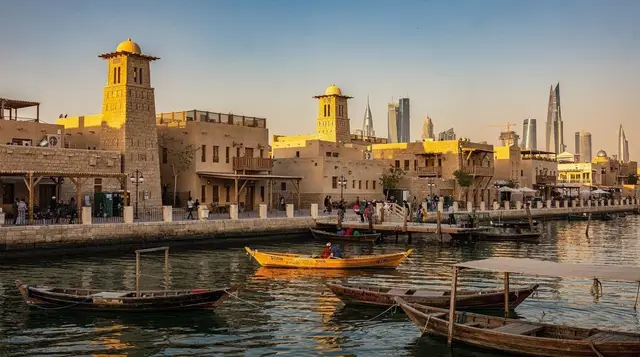
Hatta — Dubai's mountain exclave
Hatta guide: the Hatta Dam kayaking route, Hatta Wadi Hub mountain biking, the Heritage Village, and how to plan a day trip into Dubai's mountain exclave.
From Dubai: Hatta sightseeing tour with kayaking
Duration: 9 hours
Quick facts
- What it is
- Dubai exclave in the Hajar Mountains, surrounded by Oman
- Distance from Dubai
- Roughly 115km, 1.5–2 hours' drive from Downtown
- Landmark
- Hatta Dam turquoise reservoir, Hatta Wadi Hub adventure park
- Best for
- Kayaking, mountain biking, cooler-climate day trips
- Best time
- November–March for full-day activity; early morning year-round otherwise
What Hatta actually is
Hatta is a small, mountainous exclave of Dubai emirate, a genuine geographic anomaly physically separated from the rest of the city and surrounded on most sides by Oman’s Musandam and Ras Al Khaimah’s territory, sitting within the Hajar Mountains roughly 115 kilometers and a 1.5-to-2-hour drive from Downtown. It’s the closest thing Dubai has to a mountain getaway, with a genuinely different landscape and, thanks to the elevation, noticeably cooler temperatures than the coastal city — often 3 to 5 degrees Celsius lower, a real difference during the hotter months.
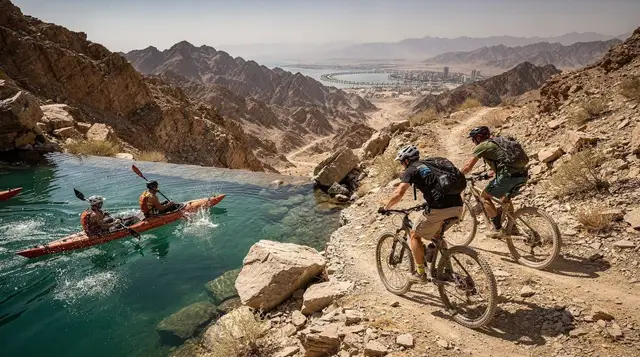
The area’s two headline draws are the turquoise Hatta Dam reservoir, popular for kayaking and stand-up paddleboarding against a mountain backdrop, and Hatta Wadi Hub, a purpose-built adventure park offering mountain biking, ziplining, and archery. Most visitors do Hatta as a single long day trip from Dubai, though the area also has a small number of hotels and eco-lodges for those wanting an overnight mountain escape. Its landscape is a genuine counterpoint to the flatter Dubai desert terrain covered elsewhere in this guide. See the Dubai to Hatta day trip guide for a full logistics breakdown.
Hatta Dam and kayaking
The Hatta Dam, completed in the 1990s for water storage, has become better known for its striking turquoise reservoir than its original utilitarian purpose, with the color coming from mineral sediment and the surrounding rock. Kayaking and paddleboarding here, gliding across still water framed by bare mountain slopes, is one of the more visually distinctive activities available anywhere near Dubai, and the cooler mountain air makes it genuinely comfortable even outside the November-to-March peak season, unlike most of the coast’s water activities in summer.
Hatta sightseeing tour with kayaking is the standard full-day option from Dubai, combining transport, a scenic mountain drive, and guided kayak time on the dam. Hatta discovery: unlimited kayak and honeybee adventure extends the water time with an unlimited kayaking format and adds a stop at a local honey farm, a genuinely worthwhile add-on given Hatta’s mountain apiaries. See the Hatta Dam kayak section of the mangrove kayak UAE guide for how the dam compares to Dubai’s coastal kayaking spots.
Hatta Wadi Hub and mountain biking
Hatta Wadi Hub, a government-developed adventure park at the base of the mountains, offers a genuinely well-built network of mountain biking trails across varying difficulty levels, from beginner loops to more technical rocky descents, alongside ziplining, archery, and a rope adventure course. Bike rental is available on-site for those without their own equipment, and the trail network is one of the few places in the UAE with purpose-built, maintained mountain biking infrastructure rather than informal desert tracks.
The Hatta adventures guide and the wider Dubai adventure sports guide cover trail difficulty ratings and how Hatta’s offerings compare to the city’s other thrill activities.
desert safari or Hatta tour with kayaking is a flexible option for travelers who want to combine a Hatta day with either the Heritage Village or additional kayak time depending on the specific itinerary offered.
Why Hatta feels so different from the rest of Dubai
Visitors arriving in Hatta after spending days in the coastal city often describe a genuine sense of disorientation at how different the landscape and pace feel — bare rock peaks instead of glass towers, quiet mountain roads instead of eight-lane highways, and a noticeably slower rhythm to daily life in the small settlements dotting the valley. This contrast is precisely what makes Hatta worth the drive for travelers who’ve already covered Dubai’s headline landmarks and want a genuinely different register for at least one day of their trip, rather than a variation on the same skyline-and-mall experience found elsewhere in the emirate.
Hatta Heritage Village
Hatta Heritage Village, a restored settlement of traditional stone-and-mud houses, watchtowers, and a mosque dating back centuries, gives a genuine sense of how mountain communities in this region lived before modern infrastructure reached them — a useful cultural counterpoint to the water and adventure activities that dominate most Hatta itineraries. The village includes a small museum with traditional tools and weaponry, and the surrounding falaj irrigation channels, an ancient gravity-fed water system, are still visible running through the site.
Hatta’s history as a Dubai exclave
Hatta’s status as a physically separate piece of Dubai territory, cut off from the main city by land belonging to Oman and the emirate of Ras Al Khaimah, dates back to historical boundary agreements made well before Dubai’s modern development began. This geographic quirk means the drive to Hatta briefly skirts (though generally does not require crossing into) Omani territory depending on the exact route taken, so carrying a passport is a sensible precaution even though the standard tourist route to Hatta’s main sites doesn’t require an official border crossing — see the Dubai safety guide for general precautions that apply to more remote day trips like this one.
The area’s isolation historically made it a strategically important mountain pass and settlement, and the Heritage Village’s fortifications reflect that defensive history rather than being purely decorative reconstructions.
Rock pools and hiking beyond the dam
Beyond the Hatta Dam’s reservoir, the surrounding wadis (dry riverbeds that fill seasonally) contain a series of natural rock pools that, following winter rains, hold clear, cool water framed by the mountain rock — a genuinely rewarding hike for visitors willing to venture beyond the more heavily visited dam viewpoint. These pools are seasonal and dependent on rainfall, so their condition varies considerably by the time of year and recent weather, and they’re best approached with a local guide or as part of a structured tour rather than independently, given the lack of clear signage on some of the access trails.
Hiking here also offers a rare chance in this part of the UAE to walk through a genuinely mountainous, rocky landscape rather than the flat desert or coastal terrain that dominates the rest of the emirate.
Getting there and where to stay
Hatta is reached by a scenic mountain road from Dubai, roughly 1.5 to 2 hours by car depending on traffic through the city outskirts, and a rental car or taxi is the standard way to get there independently, since there’s no public transport link — see getting around Dubai for how this compares to the metro-served districts covered elsewhere in this guide. The drive itself is a genuine part of the experience, with the flat highway giving way to increasingly dramatic mountain scenery in the final stretch — a standard sedan handles the main routes fine, though a 4x4 offers more flexibility if you want to explore any of the rougher side tracks toward the rock pools.
Most visitors without their own vehicle book a guided tour with transport included, given the distance and the value of a driver familiar with the mountain roads. See the Dubai car rental guide if you’re considering self-driving.
A small number of hotels and eco-lodges operate in and around Hatta for those wanting to stay overnight rather than making the full round trip in a single day — a genuinely worthwhile option if you want a slower pace, cooler evening temperatures, and time for both the dam and the Wadi Hub without rushing. These properties range from more basic mountain lodges to higher-end eco-resorts, generally at a lower nightly cost than equivalent coastal Dubai hotels given the area’s lower overall tourism density, and several are positioned specifically to take advantage of stargazing conditions that the mountain elevation and distance from city light pollution make genuinely excellent on a clear night.
Day-trippers should budget the full day, departing Dubai by mid-morning at the latest to make the most of the activities before the return drive.
Hatta honey and local produce
Hatta’s mountain microclimate supports a small but genuine local honey industry, with apiaries taking advantage of the area’s wildflowers and cooler temperatures compared to the coastal desert. The honey farm visit bundled into some kayaking tours offers a look at active hives and a tasting of different honey varieties — a small but memorable addition that ties into the area’s actual agricultural character rather than being purely staged for visitors. Local produce stalls near the Heritage Village and Wadi Hub occasionally sell this honey along with other mountain-grown goods, worth a stop for anyone looking for a souvenir with genuine local provenance rather than an imported gift-shop item.
Hatta Wadi Hub’s zipline and rope courses
Beyond mountain biking, Hatta Wadi Hub’s adventure offerings include a zipline course and rope adventure park set against the mountain backdrop, giving visitors an adrenaline option that doesn’t require prior mountain biking experience. These courses are generally rated by difficulty level and suitable for a range of ages and fitness levels, with staff providing safety briefings and equipment before each activity. Archery, also available at the Wadi Hub, rounds out a genuinely varied adventure park offering that distinguishes Hatta from the more singular desert-safari or beach-focused activities found elsewhere in the emirate.
Combined, a half-day at the Wadi Hub covering two or three of these activities is a reasonable standalone itinerary even without adding the dam or Heritage Village.
Hatta activities compared
| Activity | Typical duration | Typical price | Best for |
|---|---|---|---|
| Kayaking on Hatta Dam | 1–2 hours | AED 60–120 (16–33 USD) | Scenic, low-effort water time, all ages |
| Mountain biking at Wadi Hub | 1–3 hours | AED 100–250 (27–68 USD) incl. bike rental | Active travelers, varying skill levels |
| Ziplining and rope courses | 30–60 min | AED 80–150 (22–41 USD) | A quick adrenaline stop |
| Guided full-day tour from Dubai | Full day | AED 250–450 (68–123 USD) incl. transport | Visitors without a car |
Seasonal considerations for a Hatta visit
While Hatta’s mountain elevation provides some relief from coastal heat, summer visits still require care — daytime temperatures, while several degrees cooler than Dubai city, remain high enough to make extended outdoor activity like mountain biking or hiking genuinely demanding from late morning through mid-afternoon. Winter (November through March) remains the most comfortable season for a full day of outdoor activity, with cool mornings ideal for the drive up and pleasant afternoon temperatures for kayaking or biking.
Rainfall, while infrequent, does occur in the cooler months and can affect both road conditions on the mountain approach and the condition of the seasonal rock pools mentioned earlier — checking recent weather before a winter visit is a reasonable precaution given the mountain terrain.
Combining Hatta with other day trips
Because of its distance and the dedicated driving time required, Hatta is generally treated as a standalone day trip rather than combined with other destinations on the same day, unlike closer options such as Sharjah or Business Bay that pair naturally with a Downtown visit. Some tour operators do offer combined desert-safari-and-Hatta packages, alternating between the two on different days of a multi-day stay, which is a reasonable way to cover both major “outside the city” experiences without needing separate full-day commitments for each. See the best day trips from Dubai guide for how Hatta fits alongside Dubai’s other primary day-trip options.
Hatta with kids
The Wadi Hub’s varied activity levels and the calm, non-threatening kayaking on the dam make Hatta a reasonable family day trip, generally more engaging for older kids and teens who can handle the mountain biking or archery than for very young children, who’ll get the most out of a simple kayak paddle and the Heritage Village’s more passive sightseeing. The cooler mountain temperatures are also a genuine relief for families visiting outside the peak winter season, when the coast’s heat makes extended outdoor family activity harder to manage.
See the Dubai with kids guide and the Dubai family itinerary for how a Hatta day typically fits alongside the city’s other family-friendly stops.
Is Hatta worth the drive?
Yes, and it’s one of the more genuinely distinctive day trips available from Dubai precisely because it doesn’t try to replicate anything the city itself already offers — mountains, cooler air, and water activities against a landscape that looks nothing like the coastal skyline most visitors associate with Dubai. The honest tradeoff is the drive itself: at 1.5 to 2 hours each way, Hatta is a full-day commitment rather than a quick add-on, and travelers with only two or three days in Dubai are usually better served prioritizing the city’s core landmarks first. For anyone staying four days or longer, or specifically drawn to outdoor and adventure activities over shopping and landmarks, Hatta is a strong addition.
See the best day trips from Dubai guide for how it compares to Abu Dhabi and Sharjah as a day-trip option.
Camping and stargazing options
Beyond the small hotels and eco-lodges near the Wadi Hub, several designated and semi-formal camping areas near the dam and along the mountain roads let visitors pitch a tent for the night rather than booking a hotel room, a genuinely budget-friendly way to experience Hatta’s cooler evening temperatures and dark-sky stargazing without the cost of a lodge stay. Basic facilities exist at some sites, though standards vary, and self-sufficiency (water, food, and a proper sleeping setup for cool mountain nights) matters more here than at a managed campsite closer to the city. Checking current rules with the local municipality or a tour operator before pitching a tent independently is worth doing, since designated versus informal camping areas have shifted over time as visitor numbers have grown, similar to the pattern seen at Jebel Jais further north.
For visitors who’d rather not camp but still want the stargazing experience, some of the area’s eco-lodges run dedicated evening astronomy sessions or simply offer unobstructed viewing decks away from any artificial light, a lower-effort way to get a comparable experience without the logistics of an overnight tent stay.
Hatta’s dam viewpoints and photography
The most photographed vantage point over Hatta Dam sits at a small parking area on the road overlooking the reservoir, where the turquoise water against bare mountain rock is visible without needing to book a kayak session — a worthwhile five-minute stop even for travelers not planning to get on the water. Early morning light, before the sun is directly overhead, brings out the water’s color most vividly and avoids the midday haze that can flatten contrast in photos taken later in the day. A handful of elevated viewpoints along the approach road toward the Heritage Village offer a wider panorama that takes in both the dam and the surrounding peaks in a single frame, genuinely different from anything achievable on Dubai’s flat coastline.
For visitors specifically chasing photography, pairing an early kayak session — when the water is calmest and the light softest — with a later stop at the road-level viewpoints on the drive back covers both the close-up water shots and the wider landscape composition in a single visit.
Frequently asked questions about Hatta
How far is Hatta from Dubai?
Roughly 115 kilometers, about 1.5 to 2 hours by car from Downtown Dubai, depending on traffic through the city outskirts.
Do I need a passport to visit Hatta?
No — despite being surrounded by Omani territory, Hatta itself is part of Dubai emirate and doesn’t require crossing an international border for the standard tourist sites.
Is Hatta cooler than Dubai city?
Yes, typically 3 to 5 degrees Celsius cooler thanks to its mountain elevation, a genuine and noticeable difference, particularly in the warmer months.
Can I visit Hatta without a car?
Yes, guided day tours from Dubai include transport, which is the standard option for visitors without a rental car or who’d rather not navigate the mountain roads themselves.
Is kayaking on Hatta Dam suitable for beginners?
Yes, the reservoir is calm and sheltered, making it accessible for first-time kayakers, with guided tours providing basic instruction before you set out.
How long should I budget for a Hatta day trip?
A full day, departing Dubai by mid-morning and returning in the evening, to make the most of both the dam and Hatta Wadi Hub without rushing.
Is there accommodation in Hatta for an overnight stay?
Yes, a small number of hotels and eco-lodges operate in the area, a good option for travelers wanting a slower pace or cooler evening temperatures rather than a single long round trip.
What’s the best time of year to visit Hatta?
November through March for the most comfortable full-day outdoor activity, though the cooler mountain climate makes early-morning visits reasonable even in summer, unlike most of coastal Dubai.
Do I need a passport to drive to Hatta?
It’s a sensible precaution to carry one, since the route can skirt close to Omani territory depending on the exact road taken, even though the standard tourist route doesn’t require an official border crossing.
Are the rock pools near Hatta Dam always full of water?
No, they’re seasonal and depend on recent rainfall, so their condition varies through the year — they’re generally at their best following winter rain.
What adventure activities are available at Hatta Wadi Hub besides mountain biking?
Ziplining, rope adventure courses, and archery are all available, alongside the mountain biking trail network, making the Wadi Hub a varied half-day activity hub on its own.
Is Hatta honey worth buying as a souvenir?
Yes, it’s a genuine local product from mountain apiaries taking advantage of Hatta’s wildflowers and cooler climate, sold at stalls near the Heritage Village and Wadi Hub.
Can I combine a desert safari and a Hatta trip in the same visit?
Yes, though generally not on the same day given the driving distances involved — some operators offer combined packages covering both across separate days of a longer stay.
Is Hatta suitable for a first-time visitor with limited days in Dubai?
It’s a strong addition for trips of four days or longer, but travelers with only two or three days are usually better served prioritizing the city’s core landmarks before adding a full-day mountain excursion.
Does Hatta get busy with tourists?
It’s noticeably quieter than Dubai’s main coastal attractions even during peak winter season, since the distance and full-day commitment filter out the more casual, time-pressed visitors who stick to the city itself.
Top experiences
Bookable activities with verified prices and instant confirmation on GetYourGuide.