Dubai desert — Al Marmoom and the Desert Conservation Reserve
Dubai desert guide: Al Marmoom Conservation Reserve, safari types compared, Al Qudra Lakes wildlife, and honest advice on picking an operator.
Dubai: desert safari with BBQ dinner & quad biking options
Quick facts
- Main areas
- Al Marmoom Desert Conservation Reserve, Al Lahbab (red dunes)
- Distance from city
- 45–60 minutes' drive from Downtown or the Marina
- Best time
- November–March; sunrise or late-afternoon departures year-round
- Wildlife
- Arabian oryx, gazelle at Al Marmoom; flamingos at Al Qudra Lakes
- Typical safari price
- AED 150–400 (40–110 USD) shared; AED 500–1,200+ (135–325+ USD) private
What the Dubai desert covers
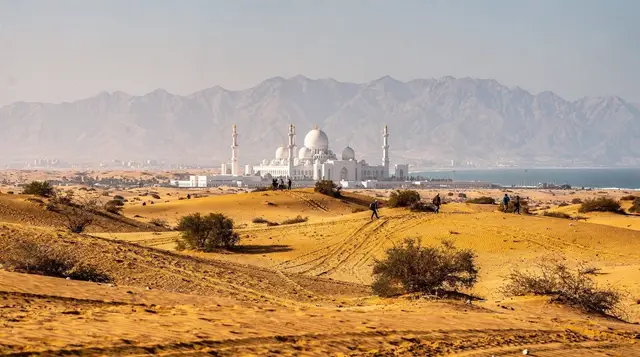
The desert that surrounds Dubai isn’t a single attraction but a working landscape divided between two main zones most visitors touch: Al Marmoom Desert Conservation Reserve, a protected area covering roughly 10% of Dubai’s total land area and home to the city’s Al Qudra Lakes cycling and birdwatching circuit, and the red-dune areas further out near Al Lahbab, which is where most commercial dune-bashing and quad-biking safaris actually operate. Both sit roughly 45 to 60 minutes by road from central Dubai, making a half-day or evening safari genuinely feasible without an overnight stay, though the fuller experience — sunrise photography, stargazing, an overnight camp — rewards more time.
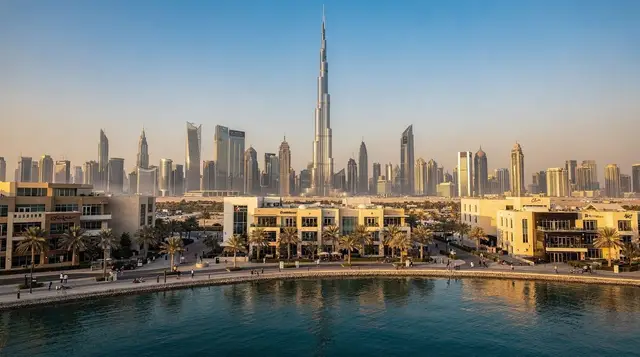
This is genuinely one of the most distinctive landscapes accessible from the city, and for many first-time visitors it delivers a starker contrast to Dubai’s skyline than any single indoor attraction can — bare, wind-sculpted dunes stretching to the horizon a 45-minute drive from towers like the Burj Khalifa. That contrast is a large part of why the desert safari category remains one of the most consistently booked activities among visitors of every budget level, from backpackers on a shared minibus tour to guests staying at five-star resorts booking a private overnight camp experience.
This is one of the most heavily marketed categories of activity in the city, with dozens of operators offering near-identical dune-bashing-plus-BBQ packages under different branding, which makes picking the right one for your interests more important than it might first appear. See the dune bashing guide and desert safari scams honest guide before booking, since pricing and vehicle quality vary more than the marketing photos suggest.
Desert safari types compared
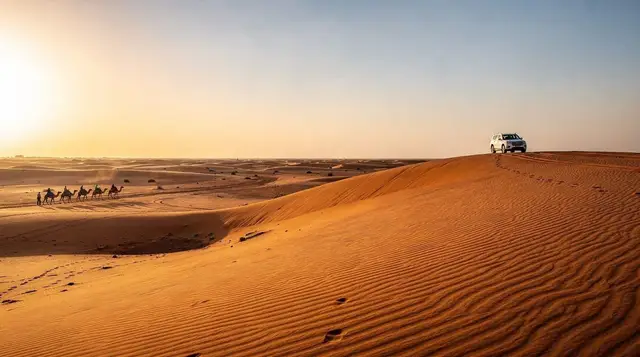
The standard evening desert safari combines dune bashing in a 4x4, a stop for camel photos and sandboarding, and a Bedouin-style camp dinner with entertainment — this is the most heavily booked format and the one most first-timers should start with. desert safari with BBQ and quad biking options covers this format, with camp size and whether quad biking is bundled or offered as an add-on varying between similar listings. See the evening vs morning desert safari guide for how the same drive and dune experience differs by time of day.
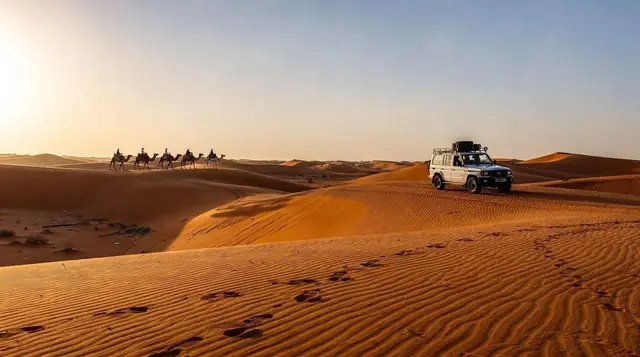
Morning safaris, generally cheaper and less crowded, skip the dinner camp in favor of a shorter dune-bashing and photo session, often paired with quad biking in the cooler early hours. red dunes morning desert quad, buggy or 4x4 ride is a standard option in this format, with several near-identical morning quad and buggy packages available from other operators at similar prices.
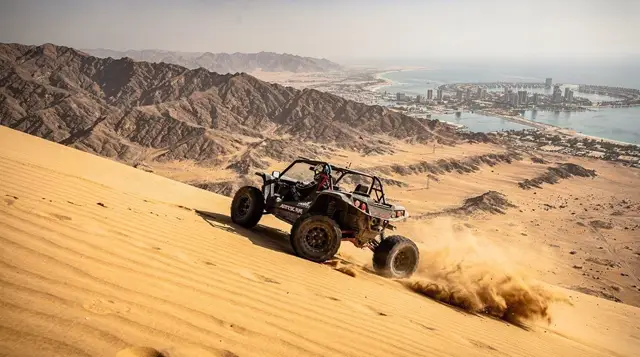
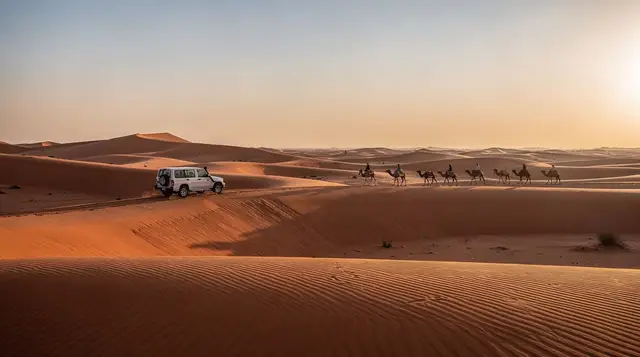
For those wanting to drive rather than ride, self-drive dune buggies let you pilot your own off-road vehicle across the dunes under guide supervision — a meaningfully different, more active experience than sitting in a 4x4 for the dune-bashing portion. self-drive dune buggy desert adventure covers this option. Hot air ballooning, launching before dawn to catch sunrise over the dunes, is the most expensive but arguably most photogenic option: hot air balloon tour over the desert covers the standard sunrise flight.
See the private vs shared desert safari guide and quad biking and dune buggy guide for a fuller comparison across all these formats.
For those wanting a longer, more remote outing, fossil, camel and rocks extreme desert safari with BBQ combines fossil-hunting terrain with the standard camel and BBQ format, and an overnight desert safari with BBQ in a Bedouin camp adds a night under the stars for travelers with a spare day.
Desert safari formats compared
| Format | Typical duration | Typical price (shared) | Best for |
|---|---|---|---|
| Evening safari (dune bashing + BBQ camp) | 5–6 hours | AED 150–250 (40–68 USD) | First-timers wanting the full package |
| Morning safari | 3–4 hours | AED 120–200 (33–55 USD) | Cheaper, cooler, less crowded |
| Self-drive dune buggy | 2–3 hours | AED 400–700 (110–190 USD) | Travelers who want to drive, not just ride |
| Hot air balloon at sunrise | 3–4 hours incl. transfer | AED 900–1,400+ (245–380+ USD) | Photographers and special occasions |
| Overnight camp | Afternoon to next morning | AED 350–700+ (95–190+ USD) | Stargazing, a slower pace, an extra day to spare |
Private versions of any of these formats generally run AED 500–1,200+ (135–325+ USD) per group rather than per person, since you’re paying for the vehicle and driver rather than a shared seat.
Al Qudra Lakes
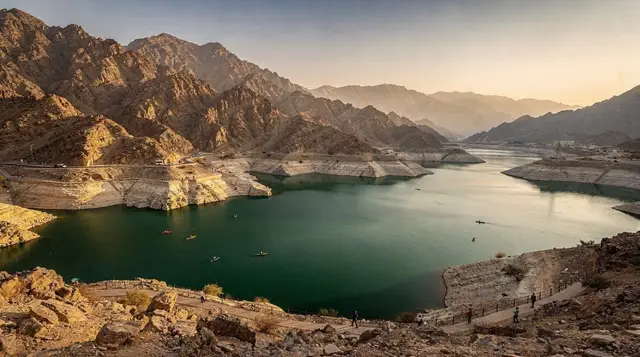
Within Al Marmoom, Al Qudra Lakes is a man-made freshwater lake system, created as part of the reserve’s broader habitat restoration efforts, that’s become one of the more popular free outdoor spots in Dubai for cycling, with a paved cycling track looping the lakes and rentable bikes available near the main entrance on weekends. It’s also a genuinely good birdwatching spot, drawing flamingos and other migratory species to the shallows, particularly in the cooler months.
Unlike the commercial dune-bashing zones, Al Qudra Lakes is free to visit and doesn’t require booking a tour — a self-drive or taxi trip out in the early morning or late afternoon, avoiding midday heat, is a reasonable independent alternative to a paid safari for anyone who’d rather explore at their own pace.
Al Marmoom’s cycling infrastructure
Beyond the lakes themselves, Al Marmoom’s cycling track has become a genuine destination for both casual visitors and serious cyclists, with the paved loop offering a rare stretch of dedicated, car-free cycling infrastructure in a city otherwise built around road traffic. Weekend mornings, particularly in the cooler months, see a meaningful community of local and resident cyclists using the track, and bike rental stalls near the main entrance make it accessible even for visitors without their own equipment. This is one of the few genuinely free, low-cost outdoor activities in the wider Dubai desert area that doesn’t require booking a commercial tour.
Wildlife and conservation
Al Marmoom is a genuine conservation area, home to Arabian oryx and gazelle populations managed as part of the UAE’s broader wildlife reintroduction efforts, alongside falconry demonstrations offered by some tour operators as a cultural add-on to standard safari packages. The reserve’s protected status means development is restricted here compared to the commercial dune-bashing areas further out, so wildlife sightings, while not guaranteed, are a real possibility on a quieter early-morning visit rather than a staged photo opportunity. The camel riding Dubai guide covers the most commonly offered wildlife-adjacent activity across most safari packages.
Fossil hunting and extreme safari formats
Beyond the standard formats, a handful of operators run specialized trips into more remote sections of the desert focused on fossil hunting — the region’s geology preserves marine fossils from when this entire area sat beneath a shallow sea millions of years ago, and finding shark teeth or shell fossils embedded in exposed rock is a genuinely engaging activity for visitors interested in something beyond the standard dune-bashing format. A fossil, camel, and rocks extreme desert safari with BBQ package combines this fossil-hunting element with the standard camel and BBQ format, covering more remote terrain than the typical red-dunes package.
Overnight and stargazing formats
For a genuinely different pace, overnight desert stays combine stargazing sessions — the desert’s distance from city light pollution makes this one of the best stargazing locations within reach of Dubai — with a sunrise view over the dunes the following morning. Packages here range from simple tented setups to more elaborate private-cabin arrangements. See the overnight desert camp guide and the best desert safari Dubai guide for how these overnight formats compare on price and comfort level, since “overnight camp” can mean anything from a shared tent with basic bedding to a heated private cabin with an attached bathroom depending on the operator and price tier.
Desert heat and seasonal planning
The desert experiences even more extreme summer heat than coastal Dubai, since it lacks the moderating effect of sea breeze — daytime temperatures from June through September regularly exceed 45°C in the exposed dune areas, making midday activity genuinely dangerous rather than simply uncomfortable. Nearly all commercial safari operators schedule their standard trips for late afternoon and evening specifically to work around this, departing city hotels in the mid-to-late afternoon so that the dune-bashing and camp portions happen as temperatures drop toward sunset. Morning safaris, by contrast, depart before sunrise or shortly after to catch the coolest hours of the day.
Understanding this scheduling logic explains why almost no safari products offer a midday departure time — it isn’t an oversight, it’s a genuine safety consideration given how quickly the desert heats up once the sun is fully up.
Choosing a safari operator
The single biggest variable across the dozens of near-identical safari listings is vehicle and driver quality — dune bashing is a genuinely fast, bouncy activity done by an experienced driver in a modified 4x4, and the difference between a good and mediocre operator shows up in ride comfort and perceived safety more than in the marketing photos, which look similar across almost every listing. Checking recent reviews for mentions of driving style, vehicle condition, and how crowded the camp gets is more useful than comparing photos of the BBQ spread, which tends to be similar across operators at a given price tier.
The best desert safari Dubai guide ranks options by these practical factors rather than marketing claims, and the desert safari with kids guide covers which formats suit families versus which lean toward a rowdier adult crowd.
Falconry and Bedouin culture demonstrations
Many desert camps incorporate a falconry demonstration as part of the standard evening package, showcasing a bird of prey handling tradition with genuine roots in Bedouin hunting culture across the Arabian Peninsula, rather than a purely tourist-invented novelty act. Camps also commonly offer henna painting, shisha (water pipe) smoking areas, and traditional dress photo opportunities alongside the BBQ dinner — these additions vary considerably in quality and authenticity between operators, with some camps treating them as a genuine cultural touchpoint and others as a quick photo-op assembly line.
Reading recent reviews for specific mentions of how rushed or genuine these cultural elements feel is a reasonable way to filter between otherwise similarly priced packages.
Desert photography and best viewpoints
The desert’s red-dune areas near Al Lahbab offer some of the most striking landscape photography accessible from Dubai, with the dune colors shifting dramatically depending on time of day — a deep, saturated red-orange at sunset, softer pastel tones just after sunrise. Photographers serious about capturing this should prioritize either a sunrise hot air balloon flight or a private safari with flexibility to stop for photos, since standard shared safaris move on a fixed schedule that doesn’t always allow for extended photo stops at the most scenic dune formations.
The Dubai skyline photo spots guide covers city vantage points, while the desert’s own photography value lies specifically in its landscape rather than skyline shots.
Overnight camping
For those wanting more than a single evening, an overnight stay at a desert camp adds stargazing (genuinely excellent given the distance from city light pollution) and a sunrise view over the dunes the following morning, typically with breakfast included before the return drive. This is a meaningfully different pace from the standard evening safari and suits travelers with an extra day to spare rather than those trying to fit the desert into a tight city-focused itinerary. See the overnight desert camp guide for what’s actually included at different price tiers, since “overnight camp” packages vary considerably in tent quality and crowding.
Is a desert safari worth it?
Yes, for most first-time visitors — the dune landscape is genuinely different from anything in the city itself, and a well-chosen evening safari delivers dune bashing, a camp dinner, and a clear sense of the desert that surrounds Dubai’s skyline in a single, well-packaged half-day. The honest caveat is that the standard evening format has become fairly commoditized, with camp entertainment and buffet quality varying more by operator than the marketing suggests, so reading recent reviews matters more here than for almost any other Dubai activity category.
For travelers who’ve already done a standard safari or want something more active, self-drive dune buggies or a morning quad-biking session offer a genuinely different experience rather than a repeat of the same format. See the Dubai desert and city itinerary for how a desert day typically pairs with the rest of a trip.
A sample evening safari timeline
Most standard evening safaris follow a similar rhythm, useful for setting expectations before you book. Pickup from your hotel typically runs 3–3:30pm, timed so the drive out and the dune-bashing portion happen as the afternoon heat eases. Dune bashing itself lasts 30–45 minutes, followed by a stop for sandboarding and camel photos as the sun gets lower. Arrival at camp is usually 5:30–6pm, with henna painting, shisha, and falconry demonstrations (where offered) running until the BBQ buffet opens around 7–7:30pm, followed by a Tanoura or belly dance show. Return to your hotel is generally 9–9:30pm. Private safaris can shift this timeline earlier or later on request, and self-drive buggy and hot air balloon formats follow entirely different schedules built around sunrise or a shorter, standalone activity window rather than the full evening arc.
Knowing this rough shape helps when comparing listings that look identical on price — a camp with a 6pm buffet slot and a live show for 200+ guests delivers a meaningfully different evening than a smaller camp with a later, less rushed dinner service, even if both are marketed as “premium.”
What to pack for a desert safari
Beyond the light, breathable clothing and closed shoes already covered above, a few smaller items make a genuine difference on the day. Sunglasses and a scarf or buff cut down on blown sand during dune bashing, particularly with the windows down or on an open-sided vehicle. A dry bag or waterproof phone pouch is worth bringing on any format that includes sandboarding, since sand finds its way into pockets and bags surprisingly fast. Cash in small AED notes covers tips for drivers and camp staff, since card payment isn’t always available at the camp itself. If you booked a morning quad bike ATV safari, closed-toe shoes are non-negotiable — sandals aren’t accepted by most operators for safety reasons.
Anyone prone to motion sickness should eat lightly beforehand rather than on an empty stomach, and mention it when booking, since some drivers will tone down the dune-bashing intensity on request. For the camel riding Dubai guide portion included in most packages, loose, non-restrictive clothing makes mounting and dismounting more comfortable than fitted jeans.
Frequently asked questions about the Dubai desert
How far is the desert from central Dubai?
Roughly 45 to 60 minutes’ drive from Downtown or the Marina, depending on which specific desert area the tour operates in.
What’s the difference between Al Marmoom and the dune-bashing areas?
Al Marmoom is a protected conservation reserve with Al Qudra Lakes and wildlife; most commercial dune-bashing safaris operate in separate red-dune areas near Al Lahbab, outside the strictly protected zone.
Is dune bashing safe?
Generally yes with an experienced operator and driver, though it’s a genuinely bumpy, fast-paced activity — mention motion sickness concerns when booking, since some operators offer gentler driving on request.
What should I wear on a desert safari?
Light, breathable clothing, closed shoes rather than sandals for the dune walking and camel/quad activities, and a light jacket for evening safaris once the temperature drops after sunset.
Can I visit Al Qudra Lakes without booking a tour?
Yes, it’s free and open to independent visitors by car or taxi, with cycling and birdwatching as the main self-guided activities.
Is a morning or evening desert safari better?
Morning safaris are generally cheaper, cooler, and less crowded but skip the dinner camp; evening safaris include the full camp dinner and entertainment experience most first-timers picture when they think “desert safari.”
Are desert safaris suitable for young children?
Many operators offer family-friendly packages that tone down the driving intensity, but check the specific listing, since some safaris market themselves toward a more adult, thrill-seeking crowd.
What wildlife might I actually see in the desert?
Arabian oryx and gazelle within the Al Marmoom reserve, and flamingos and other migratory birds at Al Qudra Lakes, particularly in the cooler months — sightings aren’t guaranteed but are a realistic possibility on a quieter visit.
Can I find fossils in the Dubai desert?
Yes, in certain areas — the region’s geology preserves marine fossils from an ancient shallow sea, and specialized fossil-hunting safaris cover terrain where finds like shark teeth and shell fossils are genuinely possible.
Why do desert safaris only run in the late afternoon or early morning?
Because midday summer heat in the exposed dune areas regularly exceeds 45°C, making activity genuinely dangerous rather than just uncomfortable — operators schedule around the coolest parts of the day for safety.
Is falconry part of every desert safari?
Not every package, but it’s a common add-on at many evening camps, alongside henna painting and shisha areas — check the specific listing if a cultural demonstration is a priority for you.
How much does a desert safari typically cost?
Shared evening safaris with BBQ typically run AED 150–400 (40–110 USD) per person; private safaris, self-drive dune buggies, and hot air balloon flights run considerably higher, from AED 500 to 1,200+ (135–325+ USD).
Is it worth paying more for a private desert safari?
If you want a smaller group, more flexible photo stops, and a driver who can adjust the pace to your comfort level, yes — shared safaris are cheaper but move on a fixed schedule with larger groups at each camp.
Do I need to book a desert safari in advance?
Booking at least a day ahead is recommended, particularly in peak winter season, since popular operators and time slots can fill up; last-minute bookings are sometimes possible but limit your choice of operator.
What should I bring on a desert safari that operators don’t always mention?
A light scarf or buff for dust protection during dune bashing, a portable phone charger since photo and video use drains batteries quickly, and motion sickness tablets if you’re prone to carsickness, since the driving style is intentionally jarring.
Top experiences
Bookable activities with verified prices and instant confirmation on GetYourGuide.
Dubai: desert safari with BBQ dinner & quad biking options
Dubai: desert safari with BBQ dinner in a Bedouin camp
Dubai: red dunes morning desert quad, buggy or 4x4 ride
Dubai: self-drive 4WD dune buggy guided desert adventure
Dubai: sunrise hot air balloon tour over the desert
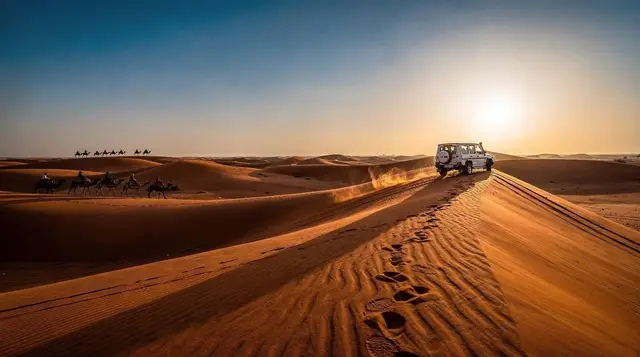
Dubai: quad bike (ATV) safari morning tour
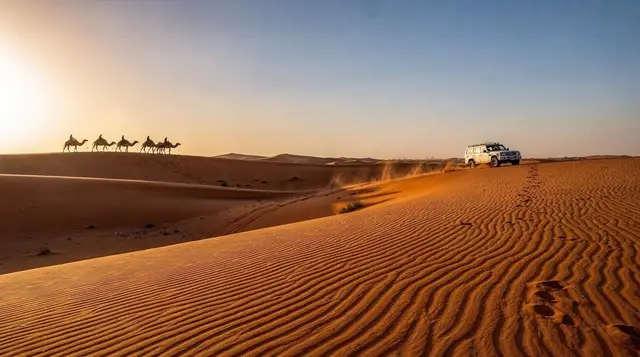
Dubai: desert safari with camp, dinner & optional overnight