Dune bashing in Dubai: what to expect
Dubai: red dunes evening desert safari with BBQ dinner
What is dune bashing and is it safe?
Dune bashing is a 20-30 minute 4x4 drive up, down, and across steep sand dunes, done by a trained driver in a deflated-tire Toyota Land Cruiser. It's safe with a licensed operator, but it's a genuinely physical, jolting ride — closer to a fairground ride than a scenic drive — and not suitable for pregnant travelers or anyone with a back, neck, or heart condition.
What dune bashing actually is
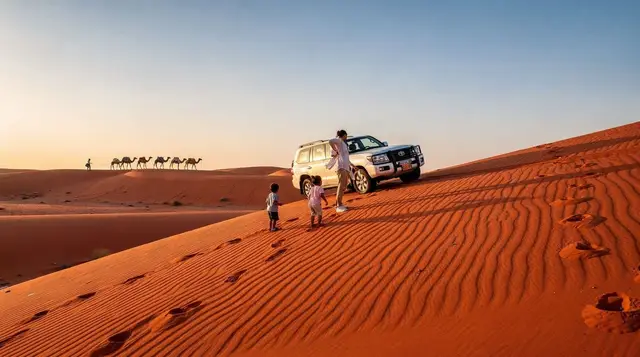
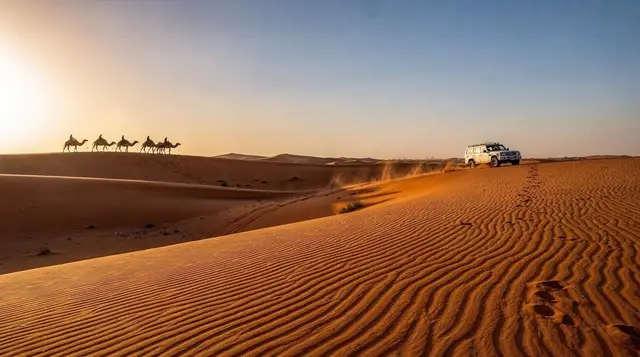
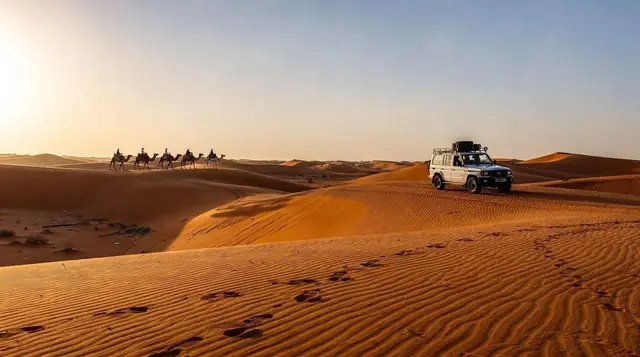
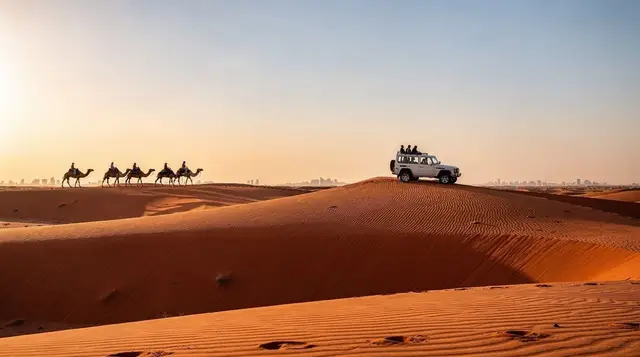
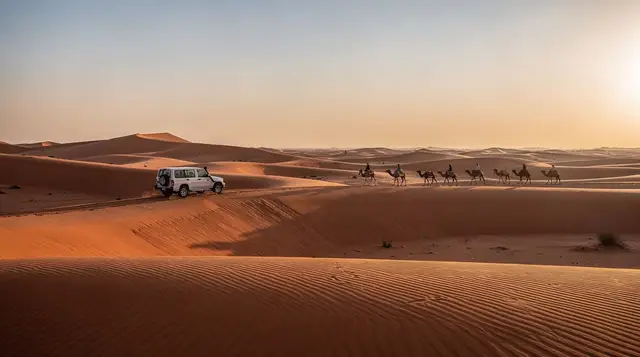
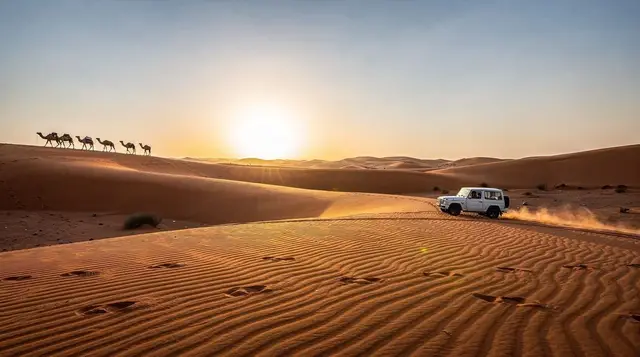
Of everything bundled into a Dubai desert safari, this is the segment that generates the most questions beforehand and, for most guests, the strongest memory afterward. Dune bashing is the core adrenaline element of a Dubai desert safari: a driver takes a purpose-adapted 4x4, usually a Toyota Land Cruiser with deflated, wide tires for grip, up steep dune faces, across ridgelines, and down the other side in a deliberate, practiced sequence designed to feel thrilling without ever actually losing control of the vehicle. It typically runs 20-30 minutes as part of a longer safari, sandwiched between the drive out to the Al Lahbab red dunes and the camel-and-sandboarding photo stop.
It’s the part of the safari that photos and marketing descriptions consistently undersell — it’s a genuinely physical ride, not a gentle scenic detour, and it’s worth knowing exactly what to expect before you climb in.
| Where | Al Lahbab red dunes, around 45-60 minutes from central Dubai |
| Duration | Around 20-30 minutes within a longer safari |
| Vehicle | Toyota Land Cruiser, deflated tires, trained driver |
| Cost | Included in most desert safari packages, from around AED 150-250 |
| Not suitable for | Pregnant travelers, back/neck/heart conditions |
What it feels like: the ride itself
Expect to be thrown side to side against your seatbelt as the vehicle banks through S-turns, and to feel a real drop in your stomach as it crests a dune and descends the far side at an angle steeper than it looks from outside the vehicle. Drivers work in a loose convoy with other vehicles, sometimes timing runs so passengers can see each other cresting dunes nearby — part of the spectacle. It’s closer in sensation to a fairground ride than a car journey, with the added element of genuine, if controlled, unpredictability from the shifting sand surface. Most guests describe the first five minutes as the most intense, with the body adjusting to the motion pattern afterward.
Motion sickness: a real risk and how to manage it
This is the single most common reason people have a bad experience with dune bashing, and it’s avoidable with basic preparation. If you’re prone to carsickness, ask to sit in the front passenger seat, since the motion is felt less intensely there than in the rear rows — most operators accommodate this if you ask before the drive starts. Avoid a heavy or greasy meal in the hours before the safari, keep your eyes on the horizon rather than a phone or camera screen during the bashing segment itself, and consider an over-the-counter motion sickness tablet taken 30-60 minutes beforehand if you have a known sensitivity.
Tell the driver immediately if you start to feel unwell — reputable drivers slow down, pause, or in genuine cases stop the dune-bashing segment early without treating it as an inconvenience.
Safety: vehicles, seatbelts, and driver training
Licensed operators use vehicles specifically adapted for dune terrain, with reduced tire pressure for traction and reinforced suspension for the repeated impact. Drivers hold specific desert-driving training beyond a standard UAE license, since the skill of reading dune faces, judging safe angles, and controlling a vehicle on shifting sand is genuinely different from road driving. Every seat should have a functioning seatbelt, and you should use it for the full duration of the dune-bashing segment — this is one of the few points in an otherwise low-risk activity where an unsecured passenger faces real injury risk from being thrown against a door or window during a hard bank.
If a vehicle looks overloaded beyond its stated capacity, or a driver refuses to slow down on request, that’s worth raising immediately with the tour operator rather than after the fact. The best desert safari Dubai guide covers how to identify a properly licensed, well-reviewed operator before you book.
How long dune bashing lasts, and what surrounds it
The bashing segment itself is relatively short — 20-30 minutes — within a much longer trip. A standard evening safari runs 5-6 hours total including hotel pickup, the drive to the dunes, dune bashing, the camel and sandboarding stop, and the camp dinner and entertainment. A morning safari without the camp dinner runs 3-4 hours. This red dunes evening safari with BBQ dinner follows the standard sequence, with dune bashing as the opening act before the photo stop and camp. See the evening vs morning desert safari comparison for how the full schedules differ.
Photography during dune bashing
Taking photos or video during the bashing segment itself is genuinely difficult — the vehicle’s motion makes handheld shots blurry, and holding a phone or camera up during a hard bank is also when it’s most likely to get knocked out of your hands. Most guests instead capture photos and video at the brief pauses between runs, when the vehicle stops at a ridge or dune crest for a moment, or rely on the driver-narrated highlights rather than trying to film continuously. Secure your phone with a wrist strap or keep it in a zipped pocket rather than holding it loosely, since a dropped phone in soft dune sand is genuinely hard to retrieve.
Who should skip it
Pregnant travelers should not do dune bashing under any circumstances — the repeated jolting poses real risk. The same applies to anyone with a recent back or neck injury or surgery, a diagnosed heart condition, or severe motion sickness that over-the-counter remedies don’t manage well. If this applies to you but you still want to see the desert and camp, ask the operator about a camp-only transfer option, which some (not all) provide — a calmer drive out that skips the bashing segment while still delivering the camel stop and dinner.
Children are generally permitted on standard tours, but very young children can find the sudden drops disorienting or frightening even without physical risk, so check age guidance with your specific operator, particularly for toddlers and children under about six.
Extreme options beyond standard dune bashing
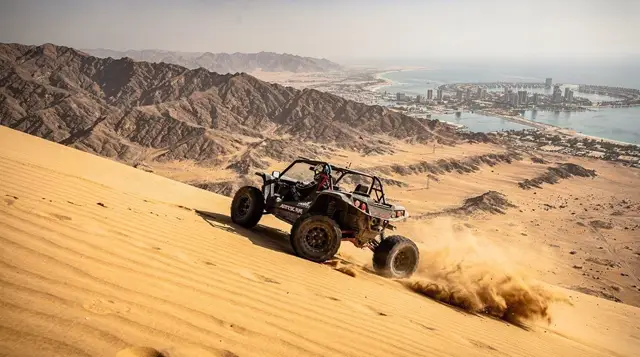
For travelers who’ve done standard dune bashing before and want more physical involvement, self-drive alternatives put you behind the wheel instead of in the passenger seat. This luxury desert safari with dune bashing, BBQ, and a quad bike bundles a self-driven quad segment on top of the standard passenger dune-bashing ride, giving a taste of both formats in one trip.
On the more extreme end, this desert safari through fossil rock terrain with camp and dinner covers rockier, more varied terrain than the standard red-dune route, a genuinely different (and more demanding) drive for guests who’ve found standard dune bashing too tame. The quad biking and dune buggy guide and dune buggy guide cover the self-drive formats in full detail, including license requirements and minimum ages.
What to wear and bring for dune bashing specifically
Loose, comfortable clothing handles the jolting better than tight activewear, and closed shoes are worth wearing rather than sandals, which can slip off during hard turns. Keep loose items — phones, sunglasses, water bottles — secured or in a bag rather than held loosely, since anything unsecured shifts around the vehicle during the ride. The full desert safari what to wear guide covers broader packing advice for the rest of the safari beyond the bashing segment itself.
Intensity levels: not every dune-bashing run is the same
Drivers vary in how aggressively they run the same route, and some operators explicitly market a gentler “family-friendly” pace alongside a more intense option for thrill-seekers — worth asking about at booking if you have a strong preference either way. Terrain also affects intensity: the standard red-dune route around Al Lahbab is generally softer and more forgiving than rockier terrain further from the city, where sharper drops and firmer surfaces make for a rougher, more jarring ride. If you’ve done a standard dune-bashing tour before and found it too mild, mentioning that when booking a repeat trip can get you paired with a more experienced or aggressive driver rather than the default pace used for first-timers and mixed groups.
The vehicles: what’s actually different about them
The Toyota Land Cruiser is the standard dune-bashing vehicle across nearly every Dubai operator, chosen for its four-wheel-drive capability, ground clearance, and proven reliability in sand. Before a run, drivers deflate tires to roughly 15-20 PSI (compared to a normal 30-35 PSI for road driving), which increases the tire’s contact surface with the sand and dramatically improves traction and control on soft dune faces — this is a genuine engineering adaptation, not a cosmetic detail, and it’s part of why an untrained driver in a regular rental 4x4 would be far less safe attempting the same terrain. Vehicles are re-inflated before returning to paved roads at the end of the trip.
What happens if something goes wrong
Genuine accidents during licensed, well-run dune-bashing tours are rare, but it’s worth knowing the basics: reputable operators carry insurance covering guests during the tour, and vehicles typically travel in a loose convoy so other drivers and staff are nearby if a vehicle gets stuck or a passenger needs assistance. Getting temporarily stuck in soft sand is a normal, low-drama occurrence that drivers are trained to resolve, usually by rocking the vehicle or briefly digging out a tire — not a sign of a serious problem.
If you have a private travel insurance policy, it’s worth confirming it covers adventure activities like off-road driving, since some basic policies exclude this category, though a soberly run dune-bashing tour on a professional operator’s vehicle is a lower-risk activity than the term “off-roading” might suggest to an insurer.
Combining dune bashing with other adventure activities
If dune bashing leaves you wanting more adrenaline during your Dubai trip, it pairs naturally with other adventure options covered elsewhere on this site — skydiving over Palm Jumeirah, the Jebel Jais zipline in Ras Al Khaimah (the world’s longest zipline), or a hot air balloon ride over the desert at dawn for a calmer aerial perspective on the same dune landscape you just drove across. None of these need to happen on the same day as your desert safari, but travelers building an adventure-focused Dubai itinerary often combine two or three across a longer trip.
Where dune bashing actually happens
Nearly all commercial dune-bashing tours operate in the Al Lahbab red dune area, roughly 45-60 minutes from central Dubai, rather than within the protected Dubai Desert Conservation Reserve, where motorized activity is banned to protect its resident Arabian oryx and gazelle population. This distinction matters if you’re choosing between a desert safari and a quieter wildlife-focused reserve experience — they’re genuinely different products in different locations, despite some marketing loosely referencing “the desert reserve” for both.
If you’re combining a desert day with a broader UAE trip, the far larger dune sea at Liwa in Abu Dhabi offers a different scale of dune bashing on higher, more dramatic dunes, covered in the Liwa Empty Quarter guide.
First-timer expectations vs reality
Most first-timers arrive expecting either a mild, scenic drive or, at the other extreme, something genuinely dangerous — the reality sits between those expectations. It’s more physical and jarring than a scenic drive, but far more controlled and safety-conscious than an unstructured off-road adventure. Reading a handful of recent reviews mentioning the driver’s skill and the intensity level before booking gives a more accurate expectation than the generic marketing description, which tends to undersell the physical intensity in service of making the whole safari sound universally comfortable and family-friendly.
Preparing your body beforehand
A few small habits meaningfully improve how dune bashing feels. Hydrate well in the hours before your safari rather than during it, since drinking a lot of water immediately before a jolting ride isn’t comfortable. If you wear glasses, consider a strap to keep them secure during hard turns, and remove dangling jewelry or accessories that could catch or swing uncomfortably.
Guests who’ve been on long flights recently sometimes find the combination of jet lag and the ride’s motion more disorienting than they expected — if you’ve just arrived in Dubai within the last day or two, easing into a milder activity first and scheduling your desert safari a day or two into the trip, once you’ve adjusted, tends to make for a more comfortable experience than doing it immediately off a long-haul flight.
Comparing the experience to other regional off-road tourism
Dune bashing as a tourism product isn’t unique to Dubai — Qatar, Oman, and Saudi Arabia all run similar dune-driving experiences in their own desert regions — but Dubai’s version benefits from the highest concentration of experienced operators and the most mature safety standards in the region, a product of decades of tourism volume. If you’re comparing a Dubai desert safari against a similar activity elsewhere on a broader Gulf trip, the fundamentals (vehicle type, tire deflation technique, driver training approach) are largely consistent, though group size and camp quality vary by destination and operator just as they do within Dubai itself.
A final honest note
Dune bashing is genuinely one of the more physically distinctive tourist experiences available anywhere, not just in Dubai, and it’s worth going in with accurate expectations rather than either the sanitized version marketing photos suggest or an exaggerated fear of danger. Prepared correctly — appropriate seating position if you’re prone to motion sickness, a secured phone, a licensed operator — it’s a controlled, well-practiced activity that the vast majority of guests, including many who were nervous beforehand, end up genuinely enjoying.
Booking with kids, teens, and multi-generational groups
Standard dune-bashing tours generally welcome children, but the honest advice for multi-generational or mixed-age groups is to be upfront with the operator about the youngest and oldest travelers before booking, since some operators run a gentler pace for family-heavy vehicles and a more aggressive one for groups without children flagged. Grandparents or anyone with joint issues who still want to see the dunes but skip the jolting should ask specifically about a camp-only transfer rather than assuming it isn’t offered — several operators quietly provide it on request even when it isn’t advertised as a standard package option. Splitting a larger family group across two vehicles by preference (one calmer, one more intense) is also a reasonable request most operators can accommodate with advance notice.
What it costs and what’s included
Dune bashing itself is almost never sold as a standalone product — it’s bundled into a wider desert safari package, so the honest cost question is really about the safari as a whole. A standard evening safari with BBQ dinner typically runs around AED 150-250 (41-68 USD) per person, including hotel pickup and drop-off, the dune-bashing segment, the camel and sandboarding photo stop, and camp dinner with entertainment. Morning safaris without the camp dinner run somewhat less. Premium packages with a quad-bike add-on, rockier fossil-rock terrain, or a private (rather than shared) vehicle push the price meaningfully higher, generally in the AED 300-500+ range depending on inclusions. Always check exactly what’s bundled before comparing prices across operators, since a cheaper listing sometimes excludes the camel ride or dinner that a slightly pricier one includes.
Standard versus extreme versus self-drive: a quick comparison
| Option | Terrain | Best for |
|---|---|---|
| Standard red-dune bashing | Al Lahbab, soft dunes | First-timers, families |
| Fossil-rock extreme safari | Rockier, more varied terrain | Repeat visitors wanting more intensity |
| Self-drive dune buggy | Marked off-road tracks | Guests wanting to drive themselves |
| Quad bike add-on | Marked tracks near camp | A taste of self-driving without a full buggy session |
Frequently asked questions about dune bashing
Is dune bashing scary?
It can feel intense for the first few minutes, but drivers operate within controlled, practiced limits. Most guests find it thrilling rather than genuinely frightening once they adjust to the motion.
Do I need to worry about motion sickness?
It’s a real risk for anyone prone to carsickness. Sit in the front seat if possible, avoid a heavy meal beforehand, and tell the driver early if you feel unwell.
How long does dune bashing last?
The dune-bashing segment itself typically runs 20-30 minutes within a longer 5-6 hour evening safari or a shorter 3-4 hour morning safari.
Who should not do dune bashing?
Pregnant travelers, anyone with a back, neck, or heart condition, and those highly prone to motion sickness should skip it or ask about a camp-only transfer.
Can I ask the driver to slow down?
Yes — reputable drivers adjust their pace on request and will stop if a passenger needs a break.
Is dune bashing safe for children?
Most operators allow children on standard tours, but check age recommendations, since very young children can find the motion disorienting even when it isn’t risky.
What’s the difference between dune bashing and a self-drive dune buggy?
Dune bashing is a passenger experience in a driver-operated 4x4. A self-drive dune buggy puts you behind the wheel of a smaller off-road vehicle, requiring a driving license and offering a more physically involved experience.
Does every desert safari include dune bashing?
Nearly all standard evening and morning safaris include it as the core segment, but camp-only transfer options exist with some operators for guests who need to skip it for health reasons.
How much does dune bashing cost?
It’s almost always bundled into a wider safari package rather than sold alone — a standard evening safari with BBQ dinner typically runs around AED 150-250 (41-68 USD) per person, with premium or extreme-terrain packages costing more.
Should I book a standard or extreme dune-bashing route?
First-timers and families are better served by the standard red-dune route around Al Lahbab. Repeat visitors who found it too mild can ask for a fossil-rock extreme safari or a more experienced driver.
Top experiences
Bookable activities with verified prices and instant confirmation on GetYourGuide.