Skydive Dubai: the complete tandem skydiving guide
Dubai: skydive experience at The Palm with photos & video
Duration: 3-4 hours
What does a Skydive Dubai tandem jump actually involve?
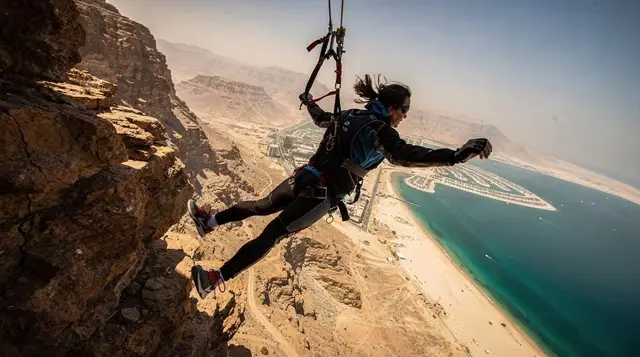
A small plane climbs to roughly 13,000 feet (4,000 meters), you free-fall strapped to a licensed instructor for about 60 seconds reaching speeds near 200 km/h, then glide under a parachute for 5-7 minutes back to the drop zone. The Palm Jumeirah drop zone adds views of the Palm and coastline; the desert campus jumps over open dunes. Expect to pay roughly AED 1,700-2,300 (US$460-630) depending on drop zone and video package, and to spend 3-4 hours total at the facility for a few minutes of actual freefall.
What Skydive Dubai actually is
Skydive Dubai is the umbrella name for the UAE’s commercial tandem skydiving operation, running two active drop zones: one beside Palm Jumeirah with freefall views over the artificial island and Marina skyline, and a second at a desert campus off the Al Ain road, over open dunes closer to the Dubai desert conservation area. Both operate as tandem-only facilities for tourists — you’re harnessed to a licensed instructor for the entire jump rather than jumping solo — and both use small fixed-wing aircraft to climb to altitude before the exit.
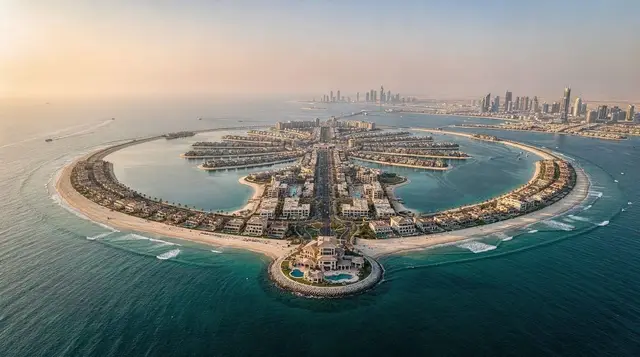
The appeal is straightforward: nowhere else pairs a genuine 13,000-foot freefall with a view of an island shaped like a palm tree from the air, and Skydive Dubai has built a real reputation around that specific shot. It’s one of the more expensive single activities on a Dubai trip, and one of the more physically intense, so it’s worth understanding what you’re actually paying for before booking either drop zone.
| Where | Palm Jumeirah drop zone or desert campus off Al Ain road |
| Cost | Around AED 1,700-2,300 ($460-630) incl. weight limits |
| Time needed | 3-4 hours total at the facility |
| Getting there | Taxi, Careem, or rental car (not metro-accessible) |
| Best time | November-March; book early in your trip for weather buffer |
Palm Drop Zone vs Desert Campus
The Palm Jumeirah drop zone sits on the trunk of the Palm, giving freefall and canopy views over the fronds, the Atlantis resort, and Dubai Marina’s skyline in the same frame — the reason most first-time visitors default to it despite the higher price. This skydive experience at The Palm with photos and video is the standard tandem package here, bundling the jump with a professional photo and video package rather than leaving it as an add-on decision at check-in.
The desert campus trades the skyline for a genuinely different backdrop — layered dunes and open desert stretching to the horizon — and tends to run slightly cheaper with shorter waits during peak city-side demand. Neither location is objectively superior; the honest answer is that Palm jumps sell the view, desert jumps sell a quieter, less crowded experience at a lower price point. This tandem skydive experience with views of the Palm is a second Palm-based option worth comparing against the first on price and inclusions before booking, since packages and add-ons vary between listings even at the same drop zone.
What happens on jump day
Check-in typically runs a full hour or more before you’re anywhere near the plane: a health declaration, weight verification, waiver signing, and a ground briefing covering exit position, the arch-back body shape you’ll hold in freefall, and how to handle the canopy landing. Groups then board a small aircraft and climb for roughly 15-20 minutes to jump altitude, during which most people describe a mix of nerves and boredom rather than adrenaline — the intensity comes later.
The freefall itself lasts around 60 seconds and covers most of the vertical distance, followed by 5-7 minutes under an open canopy, a noticeably calmer, quieter phase that gives time to actually look around and absorb the view rather than just react to the fall. Total time at the facility, including check-in, briefing, the flight up, and post-jump processing, runs 3-4 hours for a jump that’s over in a fraction of that window — a ratio worth setting expectations around before you arrive.
Freefall and canopy: what it actually feels like
Freefall from 13,000 feet reaches speeds approaching 200 km/h before terminal velocity and wind resistance level off, and most first-timers describe the sensation less as falling and more as being pushed by a constant, roaring wall of wind — the visual sense of falling registers more once the parachute opens and the ground stops rushing. The instructor handles the exit, the freefall body position, and the canopy deployment; your job is largely to follow the briefed arch position and let the harness and the professional attached to it do the actual work.
Ear pressure changes during descent, similar to a flight, and can be managed the same way — swallowing or a gentle jaw movement. Cold is a minor factor at altitude even in Dubai’s heat, since temperature drops with elevation, though the brief time at altitude means it’s rarely uncomfortable enough to need much beyond what you’re already wearing.
Price: what a tandem jump actually costs
Tandem jumps at the desert campus typically run AED 1,700-1,900 (roughly US$460-520), while Palm Jumeirah jumps run higher, around AED 2,000-2,300 (US$545-630), reflecting both the premium view and the more built-out facility. Video and photo packages, almost always sold as an add-on rather than automatically included, typically add AED 300-600 (US$80-165) depending on whether you want photos only, a full edited video, or both shot by a second camera-flyer diving alongside you.
These figures move with demand, season, and specific package inclusions, so treat them as a planning range rather than a locked quote — check the current listing at booking time. Given the price gap between drop zones, it’s worth deciding upfront whether the Palm skyline view is worth the premium over the desert campus, rather than defaulting to whichever comes up first in search results.
Age, weight, and health restrictions
The minimum age for tandem skydiving in Dubai is 18, with no upper age limit beyond a general fitness expectation and the same health declaration everyone completes. Weight limits are a genuine safety constraint tied to canopy load rather than a soft suggestion — most operators cap tandem jumpers around 90-100 kg (198-220 lb), with some centers allowing modest exceptions for a surcharge. If you’re close to the stated limit, confirm the current figure directly with the operator before paying, since policies vary slightly between the Palm and desert facilities.
Health exclusions are standard across the industry: pregnancy, heart conditions, epilepsy, recent surgery, significant back or neck problems, and a handful of other conditions disqualify a jump outright, checked via a written declaration at check-in rather than a medical exam. Answering honestly matters — a jump instructor strapped to a passenger who conceals a real medical risk isn’t a hypothetical problem, it’s the exact scenario the declaration exists to prevent.
Weather cancellations and rebooking
Wind is the single biggest disruptor of Dubai skydiving schedules. Tandem jumps need calm-enough surface winds for a controlled canopy landing, and the Gulf’s shamal wind events, along with routine gustier days, ground flights with little advance warning — sometimes the morning of, occasionally mid-check-in. The desert campus additionally closes during sandstorms, which arise more suddenly than most visitors expect from a destination otherwise associated with clear skies.
Reputable operators reschedule free of charge rather than forfeiting your payment when weather cancels a jump, but that only helps if your itinerary has spare days — booking a jump on your last full day in the UAE, with no buffer for a weather reschedule, is a common and avoidable mistake. If your schedule is tight, book earlier in your trip rather than treating it as a departure-day finale.
Video and photo packages
A tandem instructor’s built-in camera covers basic photos on some packages, but the more polished, cinematic footage — wide shots of the full freefall and canopy ride shot by a second skydiver flying alongside you with a helmet-mounted camera — is typically a separate, pricier add-on. The Palm skydive package with photos and video bundles this in rather than leaving it as a decision made under pressure at check-in, which is worth factoring into a price comparison against a cheaper listing that charges the camera-flyer separately.
Given the jump lasts only a handful of minutes, most first-timers who skip the video package end up regretting it — this is one of the few Dubai activities where the professional footage genuinely outperforms anything you could capture yourself, since your hands are occupied by the harness for the entire fall.
Indoor skydiving as practice or alternative
For travelers curious about the sensation without the altitude, aircraft, or health and weight thresholds a real tandem jump requires, indoor skydiving at iFly Dubai simulates freefall in a vertical wind tunnel at ground level. It’s a genuinely different product — no parachute, no view, a few minutes of tunnel time rather than a single freefall — but it’s a reasonable way to test comfort with the sensation beforehand, or a standalone option for anyone who can’t meet tandem skydiving’s restrictions.
Is it safe, and is it worth it
Commercial tandem skydiving at an established operation like Skydive Dubai carries the inherent risk of the sport, which no amount of licensing or equipment inspection eliminates entirely, but serious incidents at major commercial drop zones are rare relative to the volume of jumps run each year. For travelers comfortable with that baseline risk, it’s genuinely one of the standout experiences available anywhere in the UAE — the Palm Jumeirah freefall view in particular doesn’t have an equivalent anywhere else in the country, arguably the world.
It’s not a casual, low-stakes purchase given the price and the health screening involved, so it suits travelers planning around it as a dedicated activity day rather than squeezing it between other bookings.
Watching without jumping
Both drop zones welcome non-jumping companions, and it’s a reasonable way to split a group where some members want to jump and others don’t or can’t due to weight, age, or health restrictions. The desert campus has more open viewing space to watch planes climb and canopies descend; the Palm facility’s terrace overlooks the landing area with views back toward the Marina skyline, worth the visit even for spectators. Neither charges an entry fee just to watch, though check current facility rules before assuming, since policies occasionally change. Bringing non-jumping family members along also solves the practical problem of who holds bags, phones, and everyday items during the jump itself, since none of that comes with you on the plane.
Booking tips and getting there
Both drop zones sit outside central Dubai — the Palm facility is easily reached from Marina or Downtown hotels within 20-30 minutes, while the desert campus requires closer to 40-45 minutes by car. Neither is walkable or metro-accessible, so factor a taxi, Careem, or rental car into your morning, and check the getting around Dubai guide if you’re not self-driving. Arrive without alcohol in your system from the night before if possible — reputable operators can and do refuse jumpers who appear impaired — and wear closed shoes and clothing you don’t mind a harness cinched tightly over.
Booking a day or two ahead is usually enough outside peak season, but November through March, when demand across all of Dubai’s adventure activities peaks alongside the pleasant weather, slots can fill earlier. See the Dubai adventure sports overview for how a skydive fits alongside ziplining, ballooning, and other adrenaline activities if you’re planning more than one during your trip, and best time to visit Dubai for the broader seasonal context around outdoor activity scheduling.
What to pack for jump day
Bring a valid photo ID — check-in requires it alongside the waiver and health declaration, and staff won’t proceed without one. Closed, secure shoes are mandatory; sandals and flip-flops aren’t allowed under the harness rigging, and loose footwear can come off in freefall. Leave jewelry, loose scarves, and anything that could snag on harness straps at the hotel, and skip a heavy breakfast if you’re prone to nausea, since the plane ride up involves gentle circling that some jumpers find more unsettling than the jump itself. A change of clothes afterward is a reasonable idea in summer, since the desert campus and Palm facility both involve waiting outdoors in Dubai heat before and after the jump.
Sunglasses are useful for the ground wait but come off before boarding — most operators provide or require jump-specific goggles instead, since ordinary sunglasses can be ripped off by wind at freefall speed. If you wear prescription glasses, ask about strap options in advance rather than assuming standard goggles will accommodate them comfortably.
How it compares to Jebel Jais and other adrenaline options
Skydiving sits at the top of the UAE’s adventure price bracket and, for most travelers, its intensity ceiling as well — nothing else on a standard Dubai itinerary matches a 13,000-foot freefall for pure adrenaline. The Jebel Jais zipline guide covers the next tier down: a genuinely fast, high-adrenaline ride that doesn’t require the same health screening, weight limits, or price commitment, and suits travelers who want a thrill activity without booking an entire morning around it. Hot air ballooning sits at the opposite end of the spectrum entirely — same early wake-up call and desert setting, none of the adrenaline, built instead around a calm sunrise view.
Travelers assembling a full adventure itinerary rather than a single activity tend to pair a skydive with one lower-intensity option rather than stacking two extreme activities back to back, partly for budget reasons and partly because the health and logistics overlap — a skydive and a via ferrata session on the same trip, for instance, is entirely doable, but rarely on the same day given how much of a morning each one consumes. The Dubai adventure sports overview breaks down how skydiving, ziplining, ballooning, dune buggying, and the rest fit together across a multi-day trip built around thrill activities rather than the standard landmarks-and-malls itinerary.
First-timer nerves and what actually helps
Nerves in the plane on the way up are near-universal, even among people who booked the jump confidently weeks in advance, and instructors are well practiced at talking nervous first-timers through the final minutes before exit. What tends to help most: focusing on the briefed exit position rather than the view below, remembering the instructor is the one making every actual decision during the jump, and accepting that a racing pulse in the plane is normal rather than a sign you’ve made a mistake. Almost everyone who jumps describes the fear evaporating within the first few seconds of freefall, replaced by the sensory overload of the wind and view rather than continued anxiety.
Choosing between the two Palm Jumeirah listings
Because two nearly identical Palm-based tandem packages exist side by side, it’s worth reading the specific inclusions rather than assuming they’re interchangeable. Confirm whether the price you’re comparing includes the video and photo package or treats it as a separate add-on at check-in, whether hotel transfer is bundled in or arranged separately, and what the stated cancellation and weather-reschedule policy actually says — the difference between a full refund and a credit-only reschedule matters if your travel dates are tight. None of this makes one listing definitively better than the other; it just means the headline price isn’t always a fair basis for comparison on its own.
Palm Jumeirah vs desert campus, compared
| Palm Jumeirah drop zone | Desert campus | |
|---|---|---|
| Price | AED 2,000-2,300 ($545-630) | AED 1,700-1,900 ($460-520) |
| View | Palm, Atlantis, Marina skyline | Open dunes and horizon |
| Crowds | Busier, more built-out facility | Quieter, shorter waits at peak times |
| Getting there | 20-30 min from Marina/Downtown | 40-45 min by car |
Recovery and what to expect after landing
Most jumpers describe a rush of adrenaline and relief immediately after landing, followed by shaky legs or mild lightheadedness for a few minutes — normal and short-lived rather than a sign anything went wrong. Staff typically debrief you briefly, help unclip the harness, and point you toward the viewing terrace or check-in area where non-jumping companions are usually waiting. Most people feel back to normal within 15-20 minutes, though a light snack and water afterward help if you skipped breakfast beforehand. Plan a low-key rest of the day rather than stacking another intense activity immediately after — the adrenaline crash catches some first-timers off guard.
Combining a skydive with a Palm Jumeirah day
Because the Palm drop zone sits right on Palm Jumeirah, it pairs naturally with a broader day exploring the island — a morning jump followed by lunch and an afternoon at Atlantis The Palm or The View at The Palm makes for a full, high-energy day without much extra transit between stops. This sequencing also means non-jumping companions have plenty to do on the Palm while waiting rather than sitting through hours of check-in and jump logistics with nothing else nearby.
Frequently asked questions about Skydive Dubai
Is Skydive Dubai safe?
By the standards of the sport, yes. It’s a long-running, professionally regulated operation with licensed tandem instructors, though skydiving carries inherent risk no operator fully eliminates.
How much does a Skydive Dubai tandem jump cost?
Roughly AED 1,700-1,900 (US$460-520) at the desert campus and AED 2,000-2,300 (US$545-630) at Palm Jumeirah, plus AED 300-600 (US$80-165) for video and photo packages.
What’s the weight limit for tandem skydiving in Dubai?
Most operators cap jumpers around 90-100 kg (198-220 lb). Confirm the current figure directly with the operator if you’re close to it.
Can I skydive in Dubai if I’m pregnant or have a heart condition?
No — pregnancy, heart conditions, epilepsy, and recent surgery are standard exclusions checked via a health declaration at check-in.
Why do skydiving flights get cancelled in Dubai?
Mainly wind — tandem jumps need calm conditions for a safe canopy landing, and shamal winds or sandstorms can ground flights with little notice.
Which drop zone is better: Palm Jumeirah or the desert campus?
Palm Jumeirah offers skyline and coastline views at a higher price; the desert campus is cheaper with an open-dune backdrop. Neither is objectively better.
Do I need experience to tandem skydive?
No, tandem jumps require no prior training — you’re harnessed to a licensed instructor who controls the jump from exit to landing.
Is indoor skydiving a good substitute for the real thing?
It’s a different experience, not a substitute — a vertical wind tunnel simulates freefall with no altitude or parachute involved, useful as a preview or standalone option.
How long does recovery take after landing?
Most jumpers feel back to normal within 15-20 minutes, though mild shakiness or lightheadedness right after landing is common and short-lived. Plan a lower-key rest of the day rather than another intense activity immediately after.
Are nerves before the jump normal?
Yes — near-universal, even among confident bookers. Instructors are experienced at talking first-timers through it, and most fear evaporates within the first few seconds of freefall.
Top experiences
Bookable activities with verified prices and instant confirmation on GetYourGuide.