Evening vs morning desert safari: which to book
Dubai: evening red dunes desert safari with buffet dinner
Duration: 7 hours
Should I book an evening or morning desert safari in Dubai?
Evening is the better default: cooler temperatures, sunset dune photos, and the full BBQ camp with entertainment, for AED 150-250 (41-68 USD) per person. Morning safaris run shorter and cheaper (AED 100-180 / 27-49 USD), skip the camp dinner, and suit travelers with an evening flight, small kids who nap, or anyone wanting fewer crowds.
Evening vs morning desert safari at a glance
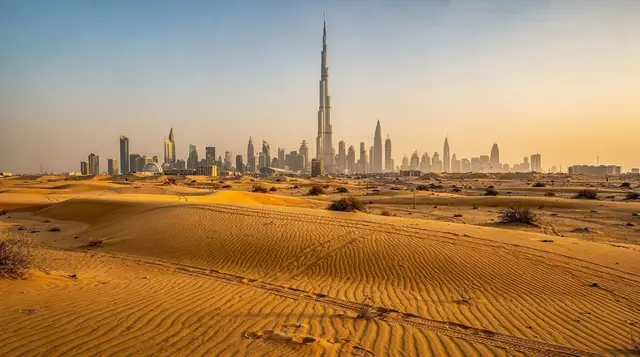
Both formats use the same dune-bashing route in the Al Lahbab red dunes outside Dubai and the same core vehicle and driver setup; the difference is what’s built around that core, not the fundamentals of the ride itself, which stays consistent regardless of what time you book. Evening safaris run 5-6 hours from hotel pickup to drop-off, include the full camp dinner and entertainment, and cost AED 150-250 (41-68 USD) per person on a shared tour. Morning safaris run 3-4 hours, skip the camp meal, and cost AED 100-180 (27-49 USD). Neither is objectively better — the right choice depends on your schedule, tolerance for heat, and whether you want the entertainment or just the dune-bashing thrill.
| Where | Al Lahbab red dunes, around 45-60 minutes from Dubai |
| Evening cost | around AED 150-250 / 41-68 USD per person |
| Morning cost | around AED 100-180 / 27-49 USD per person |
| Time needed | 5-6 hours (evening), 3-4 hours (morning) |
| Booking | 1-3 days ahead, more in Dec-Jan peak weekends |
What an evening safari includes
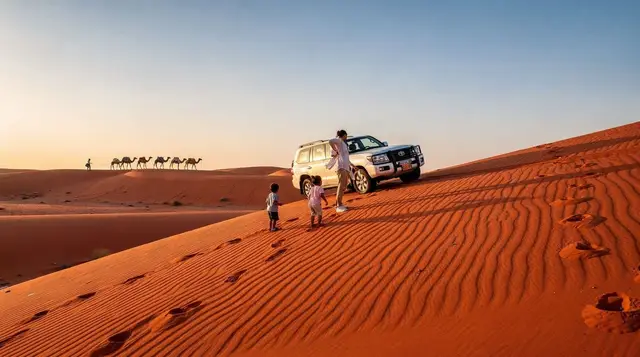
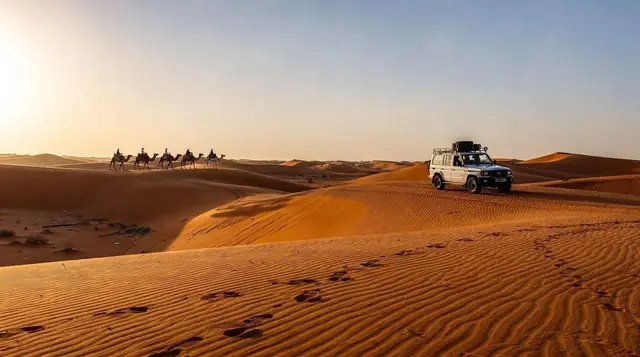
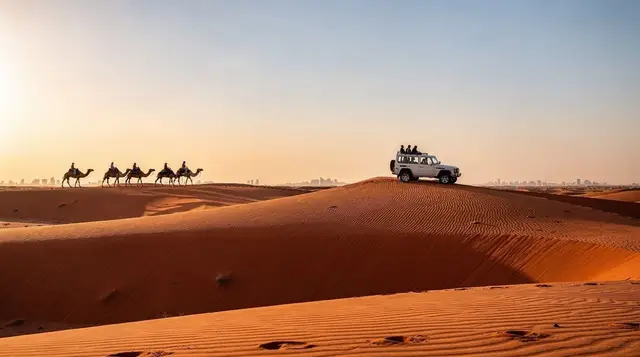
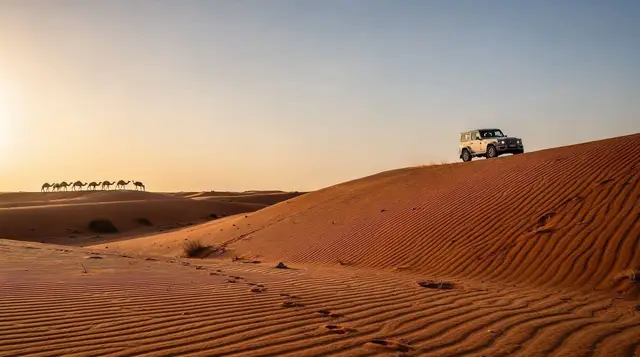
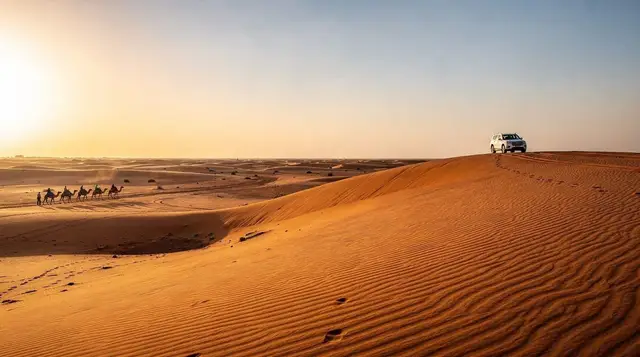
An evening safari is the default booking for a reason. Pickup happens in the mid-afternoon, timed so the convoy reaches the dunes as the worst heat eases and light turns golden for photos. After 20-30 minutes of dune bashing and the camel-and-sandboarding stop, the group heads to camp for a BBQ buffet, unlimited soft drinks and tea, henna painting, shisha, and a stage show — usually a tanoura spinning dance and a fire performance.
This evening red dunes safari with buffet dinner is a well-reviewed standard version of the format, and this red dunes evening safari with BBQ is a comparable alternative if the first is sold out on your date. Return to your hotel is typically between 9pm and 10pm.
The main tradeoff is crowding at the camp — evening is the busiest slot of the day, and popular camps can host well over 100 guests across multiple operators sharing one compound at peak season (November-March). See best desert safari Dubai for how to judge whether a specific listing runs a tighter, better camp than the mass-market average.
What a morning safari includes
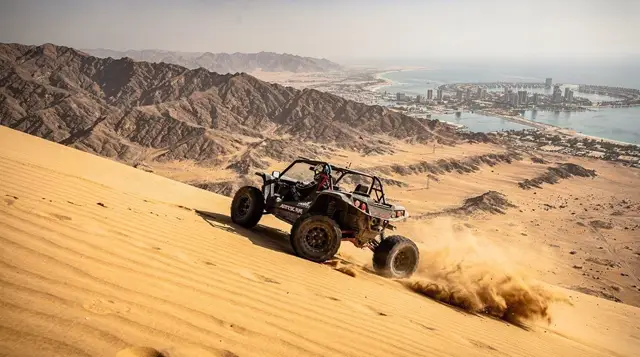
Morning safaris depart earlier — 7am-9am depending on season — and focus purely on the dune-bashing drive plus the photo stop, dropping guests back at their hotel by late morning or early afternoon with no camp dinner involved. This 4-hour morning red dunes desert safari is a straightforward, well-priced version of the format. Because there’s no camp dinner to coordinate, morning tours also run in smaller, tighter groups on average, which some travelers prefer if crowding is a concern.
The obvious gap is the camp experience itself — no BBQ, no entertainment, no shisha. If that’s the part of the desert safari you actually want, morning isn’t the right booking; pair it instead with a separate evening food or cultural experience elsewhere in the city.
Temperature and comfort differences
This is the practical crux of the decision. Dubai’s desert temperature swings hard across a single day: a November-March afternoon might sit at a comfortable 22-28°C by 4pm, dropping into the high teens after dark, while a June-September midday can hit 45-48°C in direct sun on exposed dune terrain. Morning safaris in summer are scheduled early specifically to beat the heat, finishing dune bashing before 10am when temperatures are still climbing. Evening safaris in summer benefit from the day’s heat easing as the sun drops, though the camp itself can still feel warm well after dark during peak summer months.
In winter, the calculation reverses slightly — an evening camp after sunset can feel genuinely cold without a jacket, something first-time visitors underestimate given Dubai’s reputation for heat. See Dubai in summer and the desert safari what to wear guide for the specific packing implications of each.
Price differences and what you’re paying for
The AED 30-70 gap between morning and evening safaris tracks almost exactly to the cost of the camp dinner, entertainment staff, and the extra hour or two of vehicle and driver time. There’s no meaningful quality difference in the dune-bashing portion itself between the two formats — the same vehicles and, often, the same drivers run both slots for a given operator. If your main goal is the dune-bashing thrill and you don’t care about the camp dinner, a morning safari delivers the core experience at a lower price with a shorter time commitment.
Which fits which traveler
Photographers often prefer evening for the sunset dune light during the drive out, but morning suits those wanting to avoid the crowd density of peak evening slots. Families with young children frequently do better with morning timing, since evening safaris finish close to a young child’s bedtime after an already long, stimulating day; check the desert safari with kids guide for age minimums on the camel and sandboarding elements either way. Travelers with a tight schedule — an evening flight, a late arrival the night before, or another commitment that evening — should default to morning, since it frees the rest of the day.
First-time visitors wanting the full cultural experience — BBQ, tanoura dance, shisha, henna — should book evening; it’s genuinely worth doing once per trip.
Overnight as a third option
If neither slot fully satisfies you, an overnight desert safari combines the evening format with a night in the desert and stargazing away from city light pollution, returning the following morning after breakfast. It costs more and takes a full 18-20 hours rather than 5-6, but it’s the only format that includes genuine dark-sky stargazing, which neither the standard evening nor morning safari offers given their earlier finish times. The overnight desert camp guide covers the sleeping arrangements, cost gap, and who it’s actually worth it for.
Solo travelers and couples
Solo travelers on a shared evening safari end up seated with strangers at camp, which some find genuinely fun — it’s a low-pressure way to meet other visitors over a shared meal — and others find awkward if they’d rather keep to themselves. Morning safaris, being shorter and dinner-free, sidestep that social dynamic entirely. Couples looking for a slightly more intimate version of either format without paying full private-tour prices sometimes book a smaller-capacity evening tour rather than the largest mass-market listing; group size isn’t always stated clearly, so it’s worth checking reviews for mentions of camp size before booking if this matters to you.
Group size and camp crowding compared
Because morning safaris don’t need to coordinate a camp dinner for dozens of guests, operators generally run them in smaller convoys — often two to four vehicles rather than the six to ten that a big evening operator might dispatch to the same camp site. That translates into a calmer dune-bashing stop and less queuing at the photo point for camels and sandboarding. Evening safaris, especially the cheapest shared listings, can feel like a production line at peak season: multiple operators funnel their groups into shared camp compounds, and a 6pm arrival might mean waiting behind three other tour groups for the same buffet line.
If crowding is your main concern rather than price, morning is the safer bet, or you can pay up for a private evening safari instead — see private vs shared desert safari for how that tradeoff works.
Dietary needs and special requests
Evening safaris built around a buffet dinner are generally easier for dietary accommodation than they first appear — most camps run halal meat, and vegetarian dishes (rice, salads, grilled vegetables, hummus and other mezze) are part of the standard spread rather than a special request. Guests with more specific restrictions (gluten-free, severe allergies) should flag this at booking rather than on arrival, since camp kitchens cook in batches earlier in the day and can’t easily improvise. Morning safaris sidestep the issue entirely since there’s no meal involved — worth factoring in if you’re traveling with someone who has a complex dietary restriction and would rather not test a shared buffet.
Combining a safari with the rest of your day
An evening safari’s mid-afternoon pickup means your morning and early afternoon in Dubai are free — workable for a half-day at the Dubai Mall or the Burj Khalifa before heading out to the dunes. A morning safari, by contrast, frees your afternoon and evening instead, which pairs well with a sunset dhow cruise or an evening at the Dubai Fountain the same day, since you’ll be back at your hotel with hours to spare. If you’re building a multi-day plan around the desert rather than squeezing it into a single day, the desert and city itinerary lays out how either format slots into a 3-5 day trip alongside the city’s other headline sights.
Cost breakdown in context
Set against the rest of a Dubai trip’s costs, the AED 30-70 gap between morning and evening safaris is modest — smaller than the price difference between a mid-range and luxury hotel night, and roughly in line with a single mid-range restaurant meal. That’s worth keeping in mind if you’re agonizing over which to book purely on price: the bigger cost lever is shared versus private, not morning versus evening. A private evening safari for a family of four will cost several times more than a shared morning tour for the same group, but delivers a materially different experience — your own vehicle, flexible pacing, and often a smaller dedicated camp area.
See the full Dubai budget guide for how a desert safari fits into a realistic daily spend.
What locals and repeat visitors choose
Long-term expats and repeat visitors who take friends or family out to the desert tend to favor morning slots specifically to dodge the tourist-heavy evening camps, sometimes pairing a private morning dune-bashing session with a separate, smaller dinner arranged independently rather than through a mass-market camp. That’s a useful data point if the camp entertainment isn’t the draw for you — the dune-bashing and photo-stop portion is genuinely the same experience regardless of the marketing packaging around it, and a morning slot delivers it with less overhead.
Booking timing tips
Evening slots sell out first in peak season (November-March), particularly Thursday and Friday nights when local weekend timing (Saturday-Sunday since 2022) pushes demand higher; book at least a day ahead, ideally two to three in December and January. Morning slots have more availability generally but fill up faster in summer, when the earlier 7am departure window is the only comfortable time to run the tour at all. Whichever you choose, confirm your exact pickup window the night before — convoy scheduling across multiple hotels shifts by 15-30 minutes depending on traffic and group size, and operators typically text or call with the final time.
Month-by-month: how the choice shifts across the year
November through March is peak season, and the choice comes down almost entirely to preference rather than comfort — both slots are pleasant, with daytime highs of 20-30°C easing into cooler evenings. This is also when evening camps are busiest and hardest to book last-minute, so morning becomes the practical fallback if your preferred evening date is sold out. April, May, and October are shoulder months: mornings stay comfortable, but afternoon heat builds enough that an evening safari’s mid-afternoon pickup can feel warm during the drive out, even if the camp itself cools down after dark.
June through September is when the gap matters most — morning safaris shift to a 7am-8am departure specifically to beat the heat, while evening safaris lean on the post-4pm cooling to make the dune-bashing portion tolerable; midday itself is avoided by every reputable operator regardless of season. See best time to visit Dubai for the fuller seasonal picture beyond just desert safaris.
Safety differences between the two slots
The core dune-bashing safety profile is identical between morning and evening — same vehicles, same trained drivers, same seatbelt requirement. The meaningful difference is visibility and heat exposure. Evening safaris finish their dune-bashing segment as light is fading, and a small number of operators push the timing close enough to dusk that visibility during the final minutes is reduced; ask your operator when the dune-bashing portion happens relative to sunset if this concerns you.
Morning safaris in summer carry more heat-exposure risk if an operator runs a later-than-ideal departure, since dune surface temperatures climb fast once the sun is fully up — a reputable operator’s early 7am-8am summer start exists specifically to manage this, and it’s a reasonable question to ask before booking a summer morning slot.
What repeat bookers actually change on their second safari
Travelers doing a second desert safari, whether on a return trip to Dubai or after trying one format earlier in the same visit, most commonly switch from evening to morning the second time around, specifically once the entertainment and camp dinner novelty has worn off and the dune-bashing drive itself becomes the actual draw. A smaller group deliberately splits the two: one evening safari early in the trip for the full experience, and a shorter, cheaper morning session later on if a second desert visit fits the schedule, rather than repeating the identical format twice. This pattern is a reasonable data point if you’re unsure which to prioritize on a first visit — start with evening, and treat morning as the natural second-visit choice rather than agonizing over getting the “wrong” one the first time.
Side-by-side comparison
| Evening safari | Morning safari | |
|---|---|---|
| Duration | 5-6 hours | 3-4 hours |
| Cost | AED 150-250 / 41-68 USD | AED 100-180 / 27-49 USD |
| Camp dinner | Included, full BBQ buffet | Not included |
| Entertainment | Tanoura dance, fire show, henna | None |
| Crowds | Busiest slot of the day | Smaller, tighter convoys |
| Best for | First-timers wanting the full experience | Tight schedules, early/late flights, heat-sensitive travelers |
| Temperature | Cools as sun sets | Cool start, warms by finish |
Seasonality: which slot to favor by month
| Months | Evening comfort | Morning comfort | Notes |
|---|---|---|---|
| Nov-Mar (peak) | Pleasant | Pleasant | Choice is preference; evening books out first |
| Apr, May, Oct (shoulder) | Warm during drive out | Comfortable | Mornings stay cooler as heat builds |
| Jun-Sep (summer) | Cools after 4pm | Best option, 7-8am start | Midday avoided by every reputable operator |
The bottom line
Neither format is a wrong choice — both cover the same dune-bashing core, and the decision mostly comes down to whether the camp dinner and entertainment matter to you, how sensitive you are to heat and crowds, and what the rest of your day looks like. If you’re only doing one desert activity on your entire trip and want the fullest picture of what a Dubai desert safari offers, book evening. If you’re short on time, traveling with an early or late flight, or simply want the dune-bashing thrill without the production around it, morning delivers the same core experience for less money and in less time.
Either way, book through a reviewed, licensed operator rather than the cheapest unnamed listing you find — the best desert safari Dubai guide covers how to tell the difference before you pay a deposit.
Frequently asked questions about evening vs morning desert safaris
Which is cheaper, evening or morning desert safari?
Morning is usually AED 30-70 (8-19 USD) per person cheaper, since it excludes the BBQ dinner and camp entertainment.
Is it too hot for a morning desert safari in summer?
Reputable operators shift summer morning departures earlier, often 7am-8am, to finish dune bashing before the worst heat arrives. A late-morning start advertised for June-September is worth double-checking with the operator.
Can I do both an evening and a morning safari on the same trip?
Yes — some travelers book a morning safari for the dune-bashing thrill and photos without crowds, then a separate evening safari later in the trip for the camp dinner and entertainment.
Does the morning safari include the camel ride?
Most morning packages include the same photo-stop camel and sandboarding element as evening safaris; only the camp dinner and entertainment are dropped.
Which is better for photography?
Evening wins for sunset dune shots during the drive out; morning avoids the crowd density of peak evening camp slots and offers softer light for dune photos.
Which is better with young children?
Morning often works better logistically since it avoids clashing with bedtime, though the evening camp entertainment is genuinely enjoyable for kids old enough to stay up later.
Do both formats use the same desert location?
Yes — almost all commercial operators run both slots in the Al Lahbab red dune area outside Dubai, using the same route and often the same vehicles and drivers.
How far in advance should I book?
At least a day ahead in peak season (November-March), and two to three days ahead for evening slots in December and January when local demand is highest.
Is a morning safari worth it if I want the camp dinner too?
No — book evening for the camp dinner and entertainment, or book both a morning and a separate evening safari on different days if you want both without the crowding of a single combined slot.
Which is safer, evening or morning?
The dune-bashing safety profile is identical — same vehicles, drivers, and seatbelt requirement. Evening carries slightly more visibility risk as light fades; summer mornings carry more heat-exposure risk if departure is later than ideal.
Top experiences
Bookable activities with verified prices and instant confirmation on GetYourGuide.