Dubai in winter: peak season December-February
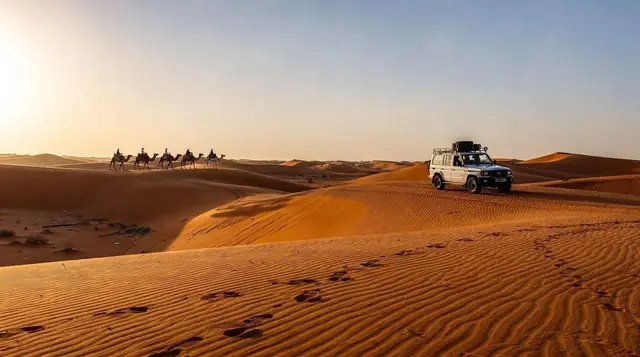
Dubai: desert safari with BBQ dinner in a Bedouin camp
What is Dubai like in winter?
Winter (December through February) is Dubai's peak season, with daytime temperatures typically 20-30°C (68-86°F), cool pleasant evenings, and occasional light rain, mostly in January and February. Every outdoor activity — desert safaris, beach days, dhow cruises, walking tours — is fully usable, which is exactly why it's also the busiest and most expensive time of year, especially the late-December to mid-January window around New Year's Eve.
Why winter is Dubai’s peak season
Winter in Dubai — December through February, with the comfortable window really stretching from November through March — is peak season for the simplest possible reason: the weather is genuinely good, with daytime highs typically 20-30°C (68-86°F), low humidity for much of the stretch, and evenings cool enough to enjoy outdoor dining or an evening desert camp without discomfort. Every activity that struggles in summer heat works without qualification in winter, which is exactly why hotel rates, flight prices, and crowd levels all peak at the same time as the weather does.
| Peak window | December-February (comfortable Nov-Mar) |
| Daytime temps | 20-30°C (68-86°F) |
| Rain | Occasional, mostly Jan-Feb, short bursts |
| Priciest week | Late Dec-early Jan (New Year’s Eve) |
| Booking lead time | 1-2 weeks for Dec 20-Jan 5; a few days otherwise |
The New Year’s Eve spike
Late December through the first week or two of January is winter’s most extreme pricing window, driven by New Year’s Eve specifically. Burj Khalifa’s fireworks and light show on December 31st is one of the largest and most-watched New Year’s displays anywhere, drawing enormous crowds to Downtown Dubai and pushing hotel rates in the surrounding area to their highest point of the year. Free public viewing spots around Downtown Dubai and along the Marina fill early, and anyone planning to be there specifically for the fireworks should expect to arrive hours ahead and accept significant crowding as part of the experience.
Outside that narrow window, prices ease noticeably even within the same winter season — see when Dubai is most expensive for the fuller pricing picture across the year.
What January and February actually feel like
January and February are winter’s two most reliably comfortable months, with the added note that they’re also when Dubai sees most of its (still limited) annual rainfall — typically short, heavy downpours rather than multi-day wet weather, occasionally strong enough to cause brief street flooding given the city’s limited drainage infrastructure for rain events, but rarely disruptive for more than a few hours. Outside of the New Year’s spike, this window offers some of the best weather-to-price value of the winter season, particularly the back half of January and all of February.
Desert safaris are at their best in winter
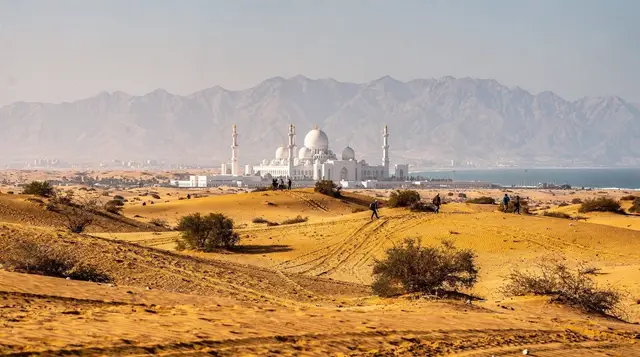
A desert safari genuinely performs differently in winter than in summer — evening temperatures in the desert drop further than in the city itself, but from a much more comfortable starting point, making the BBQ camp, the stargazing after dinner, and any add-on like a campfire or shisha lounge portion of the evening pleasant rather than rushed. This desert safari with BBQ dinner in a Bedouin camp and similar evening safaris run at full capacity through winter for exactly this reason, and booking a few days ahead rather than same-day is worth doing given the demand.
Global Village and Miracle Garden run their full season
Global Village and Dubai Miracle Garden both operate specifically within the cooler months, roughly October through April, and winter is when both are at their fullest and most active — Global Village’s cultural pavilions, shows, and market stalls, and Miracle Garden’s flower displays, are genuinely built around outdoor comfort that only exists in this window. A Global Village entry ticket is worth timing for an evening visit specifically, when temperatures are at their most comfortable and the site’s lighting and shows are at their best.
Beach and pool days work without qualification
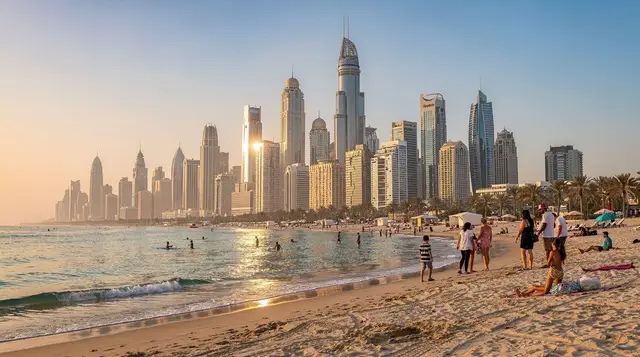
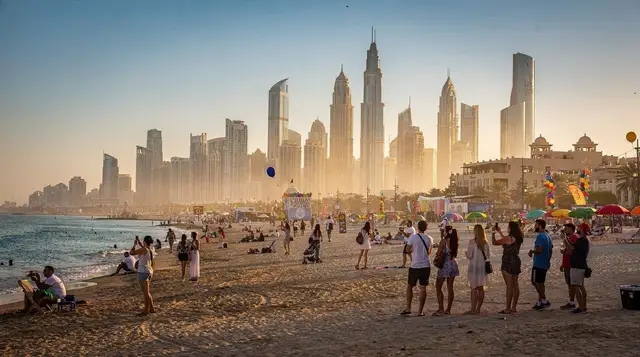
Unlike summer, when sea and pool water temperatures climb toward bathwater levels, winter sea temperatures stay genuinely refreshing, and a full day at JBR Beach or Kite Beach works at any hour rather than needing to dodge midday heat. Hotel pools are similarly comfortable throughout the day, making winter the season where a classic beach-resort-style Dubai stay performs best.
Evening cruises and outdoor dining shine
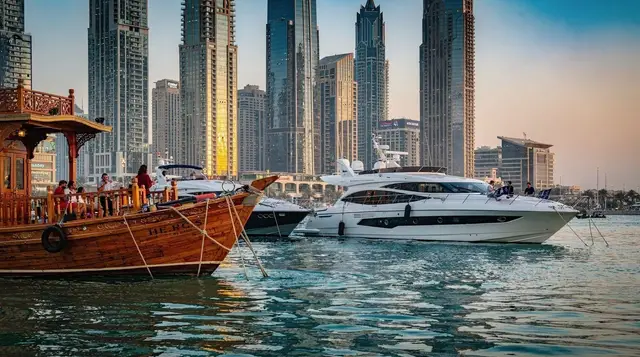
A Marina dhow dinner cruise or any rooftop restaurant booking is at its best in winter — the open-air deck of a dhow or a rooftop table isn’t fighting against heat or humidity, and the evening breeze off the water is a genuine highlight rather than something to endure. This is the season where Dubai’s outdoor dining scene, often overlooked in favor of indoor mall restaurants during hotter months, is worth prioritizing.
Crowds and booking timing
Major timed-entry attractions — Burj Khalifa, Museum of the Future, and premium desert safari slots — sell out days ahead during winter’s busiest stretches, particularly around Christmas, New Year’s, and any regional school holiday overlap. Booking a week or more ahead for December-January travel, and at minimum a few days ahead for the rest of winter, avoids the scramble of finding only unfavorable time slots (midday instead of sunset, for instance) on arrival.
Packing for a Dubai winter
The daytime wardrobe barely differs from summer — lightweight, breathable clothing remains the daytime standard — but a light jacket or cardigan genuinely earns its space in the suitcase for winter evenings and for the aggressive air conditioning that continues running indoors year-round regardless of the mild outdoor temperature. Modest coverage requirements for malls, souks, and mosques (shoulders and knees) apply identically to every season; winter changes the comfort level, not the dress code. The packing list guide covers the fuller list.
Winter and Dubai Shopping Festival often overlap
Dubai Shopping Festival typically runs from mid-December through the end of January, meaning its retail discounts and events overlap almost entirely with the winter peak season and New Year’s crowds. The shopping festival season guide covers what to expect if the timing lines up with your trip — worth knowing since it adds a further layer of crowding on top of the already-busy peak-season baseline.
Who should specifically target winter
Families wanting full-day outdoor flexibility without heat management, first-time visitors building a trip around the classic Dubai activity list, and beach-and-pool-focused travelers all get the strongest version of Dubai in winter. Budget-conscious travelers and anyone hoping to avoid crowds at major attractions are better served by shoulder-season months like October, April, or even a well-planned summer trip instead.
Sample five-day winter itinerary
Winter’s flexibility makes a fuller itinerary realistic without the heat-management constraints summer imposes.
A workable five-day structure: day one, Downtown — Burj Khalifa, Dubai Mall, and the evening Fountain show; day two, the Marina and JBR, including a full beach afternoon and an evening dhow cruise; day three, Old Dubai — Al Fahidi, the souks, and an abra crossing, comfortable for hours of walking in winter’s mild temperatures; day four, a full-day Abu Dhabi trip covering Sheikh Zayed Grand Mosque and Louvre Abu Dhabi; day five, an evening desert safari to close the trip.
Every outdoor-heavy day in this structure would need significant reshuffling in summer — in winter, it runs exactly as planned.
Why so many visitors specifically escape to Dubai in winter
A significant share of Dubai’s winter visitors are coming from genuinely cold Northern Hemisphere winters — the UK, Northern and Central Europe, parts of North America and East Asia — making Dubai’s 20-30°C winter days feel less like “mild” and more like an outright summer escape by comparison. This dynamic is a real driver of December-February demand beyond Dubai’s own merits as a destination: it’s one of the few places within a reasonable flight time from much of Europe offering guaranteed sun, warmth, and beach weather while it’s genuinely cold at home, which partly explains why the pricing premium during this window holds even against destinations with objectively similar weather.
Family travel specifics in winter
Winter is the strongest season for family trips to Dubai precisely because it removes the heat-management planning that dominates a summer family trip. Full days at Aquaventure or Wild Wadi, a beach afternoon that doesn’t need to end by mid-morning, and an evening desert safari without worrying about young kids in extreme heat all work without the extra planning summer requires. The trade-off is booking further ahead — family-friendly hotels and popular timed attractions fill up faster during winter school-holiday weeks than at almost any other point in the year, so securing dates and tickets well ahead matters more in winter than in the shoulder or summer seasons.
Winter’s effect on day trips beyond Abu Dhabi
Comfortable winter temperatures extend the day-trip radius meaningfully. Hatta’s mountain trails and kayaking, an Al Ain oasis walk, and a Sharjah museum-and-souk day all involve more outdoor walking time than a typical Dubai city day, and winter is when each of these destinations is at its most comfortable and enjoyable rather than something to rush through between air-conditioned stops. If a day trip beyond Abu Dhabi is on the itinerary, winter is genuinely the strongest season to schedule it.
A rough cost snapshot for winter versus other seasons
Winter’s premium pricing is real but worth quantifying roughly: a mid-range hotel that might run $120-150/night in July or August can reasonably command $200-280/night for the same room in a normal December-February week, and considerably more during the New Year’s spike specifically. Desert safaris, dhow cruises, and major attraction tickets don’t typically vary in price by season the way hotels do, so the overall cost difference for a winter trip comes mostly from accommodation and, to a lesser extent, flights, rather than from activities themselves. The budget guide covers the fuller cost breakdown across categories if you’re weighing a winter trip’s total cost against a shoulder-season alternative.
Events and the winter social calendar
Winter is also when Dubai and the wider UAE run most of their headline events — regional sporting fixtures, concerts, and cultural festivals cluster into this window for the same reason tourism does: the weather makes outdoor and evening events genuinely enjoyable rather than something to endure. UAE National Day on December 2nd brings citywide celebrations and fireworks, and the winter months generally see a denser calendar of concerts and pop-up events at venues like Coca-Cola Arena and outdoor spaces around the Marina and Downtown than any other season. If a specific event factors into your trip, it’s worth checking dates early given how quickly hotel availability near major venues can tighten around a popular fixture.
Morning versus evening planning in winter
Even though winter removes most of the heat-avoidance planning summer requires, a small version of the same logic still applies at the margins — January and February mornings can start cool enough (sometimes touching the low teens Celsius) that an early desert activity benefits from a light layer, while afternoons warm up to the point that a midday outdoor stretch is entirely comfortable rather than something to avoid. This is a mild, easy version of seasonal planning compared to summer, but it’s worth packing that light layer for morning starts rather than assuming winter means uniformly warm conditions around the clock.
How winter weather affects photography
Winter’s clearer air and lower humidity, especially in January and February, produce noticeably sharper long-distance photography than the hazier conditions common in summer, when heat and humidity create a visible atmospheric haze over the skyline in wide shots. A Marina or Palm Jumeirah skyline photo taken from a rooftop or an aerial vantage point in winter typically shows crisper detail and better color than the same shot attempted in July or August, which is worth knowing if a specific photography goal is part of the trip.
Booking strategy specific to winter’s price swings
Because winter pricing swings so much within the season itself — a modest premium in November and March versus a sharp spike around New Year’s — a useful strategy is to treat the season as three separate pricing tiers rather than one uniform “winter rate.” Early and late winter (November, most of March) offer close to shoulder-season value with full winter comfort; core winter (December through February, excluding the New Year’s fortnight) sits at a genuine but manageable premium; and the New Year’s fortnight itself commands the steepest rates of the entire year.
Choosing which of these three tiers to target, rather than thinking of winter as a single block, is the single most effective lever for controlling cost while still traveling in the comfortable season.
Winter and the wider UAE trip
Winter’s comfortable weather also makes a multi-emirate trip more realistic than it would be in summer, when travel time between destinations in a hot car and outdoor time at each stop both become harder to justify. A winter itinerary combining Dubai with Ras Al Khaimah for a Jebel Jais zipline day, or Fujairah for a coastal day trip, benefits from the same comfortable conditions that make the desert and Old Dubai so pleasant in this season. If your trip has room for more than a Dubai-and-Abu-Dhabi pairing, winter is the season that makes a wider Northern Emirates loop genuinely worthwhile rather than a heat-driven compromise.
Who should specifically avoid winter
Despite everything above, winter isn’t automatically the right season for every traveler. Anyone highly sensitive to crowds and prone to frustration at fully-booked restaurants, sold-out attraction slots, and premium pricing might find the December-February peak genuinely stressful rather than enjoyable, particularly around New Year’s. Budget-first travelers for whom hotel cost is the primary constraint on the trip overall will generally get more total value from a well-planned shoulder-season or summer trip than from squeezing a winter visit into a tight budget and compromising on hotel quality or location as a result.
The takeaway on winter timing
Winter delivers the fullest, most flexible version of a Dubai trip available at any point in the year, and for most first-time visitors it’s worth accepting the price premium as the genuine cost of that flexibility rather than looking for a way around it. The real decision isn’t whether winter is worth it — it almost always is — but which specific weeks within winter best balance your own tolerance for crowds and cost against your need for guaranteed good weather.
Winter month by month
The five-month comfortable stretch isn’t uniform — pricing, crowds, and weather each shift noticeably from November through March, and picking the right slice of it matters more than treating “winter” as one block.
| Month | Weather | Crowd level | Relative hotel pricing |
|---|---|---|---|
| November | Warm, dry, very comfortable | Moderate, rising | Close to shoulder-season value |
| December | Mild, occasional rain late-month | Highest (NYE spike) | Peak, steepest around Dec 25-Jan 5 |
| January | Coolest month, some rain | High, easing after New Year’s | High, easing mid-month |
| February | Cool mornings, mild days, some rain | Moderate-high | Genuine but manageable premium |
| March | Warming toward spring | Moderate, easing | Close to shoulder-season value |
November and March consistently offer the best ratio of winter-comfortable weather to reasonable pricing, which is worth weighing against the instinct to default straight to a December or January booking.
Renting a car for a winter trip
Winter is genuinely the most comfortable season to self-drive around the UAE, since the heat-management concerns that make a rental car less appealing in summer (a scorching parked interior, midday exposure at fuel stops) mostly disappear. A rental makes particular sense for a winter trip combining Dubai with a multi-stop Northern Emirates loop — Ras Al Khaimah, Fujairah, or Hatta — where public transport doesn’t reach and taxi costs add up quickly across several stops in one day. The car rental guide covers licensing requirements, typical daily rates, and which routes genuinely benefit from a self-drive itinerary versus a guided tour.
Winter’s effect on beach club and pool bookings
Beach clubs along Jumeirah and the Marina run at their fullest winter capacity, and the best day-bed and cabana slots at popular venues book out days ahead during peak weeks, a contrast with the more relaxed walk-up availability typical of summer’s low season. If a specific beach club day is a fixed part of your winter itinerary, particularly for a weekend, booking a slot in advance rather than assuming walk-up entry avoids arriving to a fully booked venue. The beach clubs guide covers specific venues and their typical booking windows.
Frequently asked questions about Dubai in winter
How cold does it get in Dubai in winter?
Not cold — daytime highs typically run 20-30°C (68-86°F) with overnight lows rarely below the low-to-mid teens Celsius (upper 50s Fahrenheit).
Does it rain in Dubai in winter?
Occasionally, mostly in January and February, usually as short heavy bursts rather than sustained rain, and rarely disruptive for more than a few hours.
Is Dubai worth visiting for New Year’s Eve?
Yes if crowds and premium prices don’t deter you — Burj Khalifa’s fireworks display is one of the largest in the world, but expect significant crowding and the year’s highest hotel rates.
What should I pack for Dubai in winter?
The same lightweight daytime wardrobe as any season, plus a light jacket for cool evenings and indoor air conditioning.
Is desert safari better in winter?
Yes — winter evenings in the desert are comfortable rather than merely tolerable, letting the full BBQ-camp-and-stargazing experience play out without heat cutting it short.
How far ahead should I book in Dubai winter?
Several weeks ahead for December 20-January 5 specifically; a few days to a week ahead for the rest of winter.
Is Dubai in winter good for families?
Yes, comfortable temperatures make outdoor family activities fully usable without the heat-planning summer requires, though booking ahead matters given school-holiday crowds.
Is November or March cheaper than December-February in Dubai?
Yes, generally — both months deliver close to peak-season weather at meaningfully lower hotel rates, making them the best value window for a winter-comfort trip without the December-January price spike.
Should I rent a car for a Dubai winter trip?
It’s worth considering specifically for multi-stop Northern Emirates day trips, since winter removes the heat that makes self-driving less appealing in summer. For a Dubai-only stay, metro and taxis cover most needs without a rental.
Top experiences
Bookable activities with verified prices and instant confirmation on GetYourGuide.