Al Ain — the UAE's oasis city
Al Ain guide: the UNESCO-listed oasis, the Jebel Hafeet mountain drive, Al Jahili Fort, and Green Mubazzarah, roughly 1.5 hours from Dubai.
Al Ain city tour: oasis, heritage & history landscapes
Duration: 10 hours
Quick facts
- Distance from Dubai
- ~1.5 hours by car
- Al Ain Oasis
- UNESCO World Heritage Site since 2011, free entry
- Jebel Hafeet
- UAE's second-highest peak, paved summit road
- Best for
- Culture and heritage, mountain drives, a quieter alternative day trip
- Nickname
- Garden City of the UAE
What Al Ain actually is
Al Ain sits inland on the UAE’s border with Oman, roughly 1.5 hours from both Dubai and Abu Dhabi, and it offers a genuinely different picture of the country than either coastal city: a historic oasis settlement that predates the UAE’s oil-era construction boom by millennia, with continuously irrigated date-palm groves, mudbrick forts, and one of the country’s few real mountains within driving distance. Known locally as the “Garden City” for its palm groves, tree-lined roundabouts, and public parks, it’s a quieter, less touristed day trip than Abu Dhabi proper, and it rewards visitors specifically interested in Emirati history and heritage over skyline photography or theme parks.
| Where | Al Ain, inland on the Oman border, ~1.5 hours from Dubai or Abu Dhabi |
| Cost | Oasis and fort free; guided full-day tours around AED 300–500 (82–136 USD) per person |
| Time needed | A full day, or an overnight for a Jebel Hafeet sunset |
| Getting there | Self-drive or guided tour; no practical public transport option |
| Best time | November–March |
Al Ain Oasis
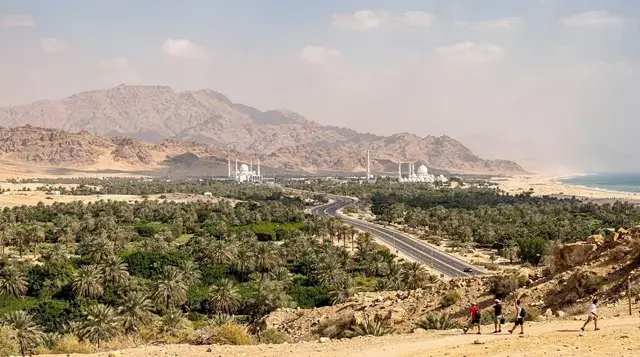
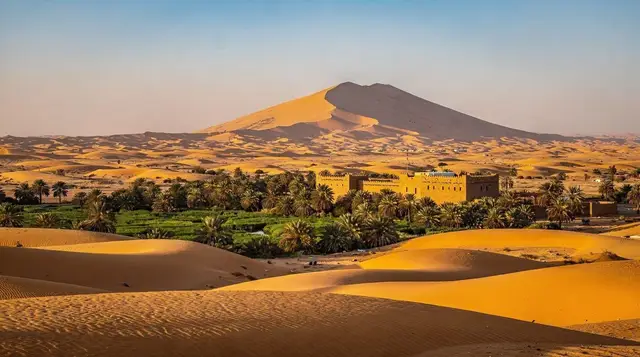
The centerpiece: Al Ain Oasis is one of the UAE’s oldest continuously inhabited areas, a working date-palm plantation covering over 1,200 hectares, irrigated by the falaj system — an ancient network of channels distributing water by gravity that dates back thousands of years and is still functioning today. It was inscribed as part of a wider UNESCO World Heritage listing in 2011 (alongside Al Ain’s archaeological sites), and entry to the oasis itself is free, with shaded walkways running between the palm groves that offer a genuine escape from the heat compared to anywhere in Dubai or central Abu Dhabi.
A visitor center near the entrance explains the falaj irrigation system and the oasis’s role in the region’s pre-oil economy, worth 15–20 minutes before or after walking the groves themselves.
Jebel Hafeet: the mountain drive
Just south of the city, Jebel Hafeet is the UAE’s second-highest peak at 1,240m, and the paved road to its summit is one of the best driving roads in the country — a smooth, well-engineered series of switchbacks climbing through genuinely dramatic desert-mountain scenery, with viewpoints along the way looking back over Al Ain and, on clear days, into Oman. The summit itself has restaurants and viewing areas, and sunset is the standout time to be up there, when the desert plain below takes on a genuinely striking golden color.
This is squarely a self-drive or guided-tour experience rather than something reachable by public transport — see the Dubai car rental guide if you’re planning to drive yourself, since the road itself is a legitimate highlight regardless of what else is on your Al Ain itinerary.
Al Jahili Fort
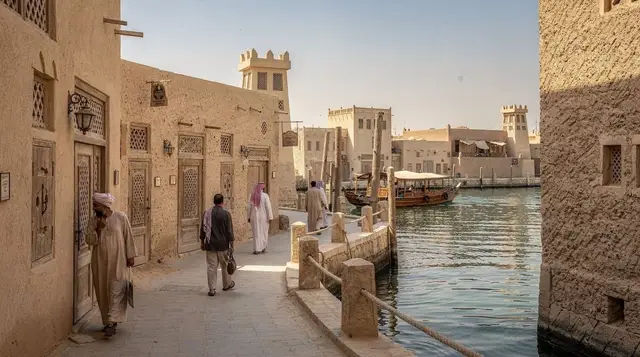
Built in the 1890s to protect the oasis and the town’s palm groves, Al Jahili Fort is one of the largest historic forts in the UAE and has been restored into a public heritage site with rotating exhibitions, including a permanent display on British explorer Wilfred Thesiger’s Empty Quarter crossings — a genuinely interesting tie-in if you’re also considering a trip to Liwa and the Empty Quarter further west. Entry is free, and the fort’s central tower and surrounding gardens are worth 45 minutes to an hour, less demanding on time than the oasis walk.
Green Mubazzarah
At the base of Jebel Hafeet, Green Mubazzarah is a public park built around natural hot and cold springs, with landscaped lawns, small lakes, and public pools fed by the springs — a popular local weekend spot as much as a tourist attraction, and a pleasant, low-key stop either before or after the Jebel Hafeet drive. It’s especially good with children, who can wade in the shallow spring-fed channels while adults rest in the shaded picnic areas.
Al Ain Zoo and the national museum
Beyond the oasis and its heritage sites, Al Ain Zoo is one of the largest and better-regarded zoos in the region, spread across a large desert-adapted site with a strong conservation focus, including breeding programs for Arabian wildlife such as the Arabian oryx — a species with deep ties to this part of the country, also central to the conservation story at Sir Bani Yas Island further west. It’s a reasonable half-day add-on for families traveling with children who might find a full day of forts and oases a bit slow-paced, though it does add meaningfully to an already packed single-day itinerary from Dubai.
The Al Ain National Museum, near the oasis and Al Jahili Fort, houses archaeological finds from the wider Al Ain region, including artifacts from Hili, a nearby Bronze Age archaeological site that predates most of what’s visible elsewhere in the UAE by thousands of years. It’s a compact museum, worth 30–45 minutes, and it helps contextualize just how long this specific area has been continuously inhabited compared with the coastal cities’ much more recent development.
Hili Archaeological Park
On the city’s northern edge, Hili Archaeological Park preserves the excavated remains that give the wider Al Ain area its claim to some of the oldest evidence of settled community life in the UAE, including a restored Bronze Age circular tomb and the foundations of mudbrick settlement structures dating back thousands of years. The park itself is landscaped with walking paths and shaded rest areas around the excavation sites, making it a considerably more relaxed visit than a typical archaeological dig, and entry is inexpensive. For most day-trippers with limited time, the Al Ain National Museum’s Hili artifacts cover the highlights more efficiently, but for visitors with a genuine interest in the region’s Bronze Age history, seeing the actual excavated tomb structures in place adds a dimension the museum display alone can’t replicate.
A short history of Al Ain
Archaeological evidence places continuous human settlement in the Al Ain area back over 5,000 years, with the Bronze Age tombs and settlement remains at Hili among the earliest evidence of organized community life anywhere in the UAE. The oasis itself developed as a cluster of six distinct settlements, each historically centered on its own falaj-irrigated palm groves, that gradually grew together into the modern city.
Al Ain also holds particular significance as the birthplace of Sheikh Zayed bin Sultan Al Nahyan, the UAE’s founding president, who served as the Al Ain region’s governor before leading the country’s 1971 unification — a fact that shapes the deep sense of heritage pride locals attach to the city, distinct from the more commercially driven identities of Dubai and even parts of Abu Dhabi.
Al Jahili Fort, built in the 1890s, was constructed specifically to protect the oasis and its date harvest from raids, a reminder that this area’s wealth for centuries was measured in palm groves and water rights rather than oil or trade, a genuinely different economic history from the coastal emirates.
Weather and what to pack
Being inland and away from the coast’s moderating humidity, Al Ain’s climate runs hotter during the day but can also feel drier and, at night, noticeably cooler than Dubai or Abu Dhabi, particularly in winter months when desert nights can dip into the low teens Celsius. If you’re planning a Jebel Ali summit visit around sunset, a light layer is worth carrying even in a UAE winter, since the elevation and desert night cooling combine for a genuinely brisk wait if you linger for photos after the sun goes down.
Comfortable walking shoes matter more here than in most of Dubai’s air-conditioned attractions, since the oasis paths, the fort grounds, and the zoo all involve considerably more walking on uneven or unshaded ground. Sun protection remains essential year-round given how exposed the oasis walkways and the Jebel Hafeet viewpoints both are.
| Season | Months | Daytime temp | Al Ain vs. coastal cities |
|---|---|---|---|
| Cool | November–March | 15–28°C | Best; nights can dip into the low teens, cooler than Dubai or Abu Dhabi |
| Shoulder | April, October | 30–36°C | Manageable with an early start and shade breaks |
| Peak heat | June–September | 40–47°C+ | Noticeably hotter than the coast; outdoor walking limited to early morning |
Getting there from Dubai
The most straightforward way to see Al Ain properly in a single day is via a guided Al Ain city tour covering the oasis and heritage sites, which handles the roughly 1.5-hour drive each way and typically bundles the oasis, a fort visit, and often a viewpoint stop into one organized day. For a version that adds Jebel Hafeet and a stop at the camel market, a day trip covering the oasis, camel market, museum and Jebel Hafeet covers more ground in a single guided day than most visitors would comfortably self-drive and plan solo.
If you’d rather go independently, a from Dubai Al Ain city tour offers a more flexible, lighter-structure alternative to the full heritage-and-mountain combination.
Self-driving is entirely feasible given the UAE’s well-maintained highway network, and it’s the only practical way to add a sunset stop at Jebel Hafeet’s summit to your own schedule rather than a fixed tour itinerary — see getting around Dubai and the Dubai to Al Ain day trip guide for route planning either way. Note there’s no meaningful public transport option that makes sense for a single-day visit combining multiple sites; a car, whether self-driven or via tour, is effectively required.
The best day trips from Dubai guide and the day trips without a car guide both cover how Al Ain compares to Sharjah, Abu Dhabi, and Hatta if you’re weighing several single-day options against each other.
Traditional souks and local markets
Al Ain retains a more traditional, less tourist-oriented market scene than Dubai’s souks, which have leaned increasingly into the tourist trade over recent decades. The city’s central souk area sells everyday goods, produce, and household items primarily aimed at local residents rather than visitors, giving a more authentic sense of daily commerce than the more curated, gold-and-spice-focused souks of Old Dubai. It’s not a must-see attraction in its own right, but worth a wander if you have extra time and want a contrast to the more polished retail experiences elsewhere on a Dubai trip.
The livestock and camel market on the city’s outskirts operates on a similar principle — a working market serving genuine agricultural and pastoral trade rather than a staged experience, which means it can feel raw or even slightly chaotic to visitors expecting a curated tourist stop. Early morning is the most active time if you want to see it functioning as intended, though most guided day trips schedule a visit at whatever time fits the broader day’s itinerary rather than specifically timing it for peak market activity.
Where to eat in Al Ain
Al Ain’s dining scene is modest compared to Dubai or Abu Dhabi, centered on Emirati and Gulf-cuisine restaurants alongside a strong South Asian food presence serving the local workforce, rather than a dedicated tourist restaurant district. Budget AED 40–90 (11–25 USD) per person for a casual sit-down meal, and treat lunch as an air-conditioned break between the oasis or fort and an afternoon at the zoo or Green Mubazzarah, since Al Ain’s inland heat makes a shaded, cooled midday stop more valuable here than in the coastal cities. Dates, grown throughout the oasis, are a genuine local specialty worth buying — small shops near the oasis entrance sell fresh and dried dates at prices well below what you’d pay in a Dubai supermarket or souvenir shop.
Honest take on Al Ain
Al Ain is the right call for travelers who’ve already done Dubai’s skyline sights and Abu Dhabi’s mosque-and-palace circuit and want a genuinely different UAE experience — real heritage sites, a working oasis, and a mountain drive, rather than more modern architecture. It’s a weaker choice as a first or only day trip if your time is limited to 3–4 days total, since Abu Dhabi itself delivers more universally appealing sights (the Grand Mosque especially) per hour invested. For a longer trip or for travelers with a specific interest in Emirati heritage and falaj irrigation systems, though, Al Ain rewards the extra distance in a way few other UAE day trips do.
If you’re building a multi-stop UAE itinerary, the Dubai and Abu Dhabi combined itinerary can be adapted to add an Al Ain leg for travelers with 5+ days total.
Suggested one-day itinerary
For visitors doing Al Ain as a single day trip from Dubai, a workable structure runs roughly as follows: leave Dubai by 7:30–8am to arrive by mid-morning, start at Al Ain Oasis while the morning air is still cool enough for a relaxed walk through the palm groves, then move to Al Jahili Fort and the National Museum for the late morning before the midday heat sets in fully. Break for lunch, ideally somewhere air-conditioned given Al Ain’s inland heat, before an afternoon at Al Ain Zoo if traveling with children, or a more leisurely visit to Green Mubazzarah if not. Save the Jebel Hafeet drive for last, timed to reach the summit for sunset, then head back to Dubai for the 1.5-hour evening drive.
This sequencing front-loads the more exposed, walking-heavy stops (the oasis, the fort) into the cooler morning hours and saves the vehicle-based mountain drive, which requires far less physical exertion in the heat, for the end of the day when temperatures are at their most extreme. Adjust the order if visiting in winter, when the heat constraint matters far less and a more flexible schedule works fine.
Frequently asked questions about Al Ain
How far is Al Ain from Dubai?
Roughly 1.5 hours by car, similar to the drive time to central Abu Dhabi, though Al Ain sits further inland near the Oman border rather than on the coast.
Is Al Ain Oasis free to visit?
Yes, entry to the oasis itself is free, including the shaded palm-grove walkways and the small visitor center explaining the falaj irrigation system.
Do I need a car to visit Jebel Hafeet?
Effectively yes — there’s no public transport to the summit, and self-driving or a guided tour are the only realistic ways to reach the viewpoints along the mountain road.
Is Al Ain worth visiting if I’ve already been to Abu Dhabi?
Yes, if heritage and a different pace than Abu Dhabi’s mosque-and-palace circuit interest you — Al Ain offers oasis walks, a historic fort, and a mountain drive not replicated anywhere else in the country.
What is the falaj irrigation system?
An ancient gravity-fed water channel network still used today to irrigate Al Ain’s date-palm groves, predating the UAE’s modern infrastructure by centuries and recognized as part of the oasis’s UNESCO listing.
Is Al Ain hotter than Dubai or Abu Dhabi?
Being inland and away from the moderating effect of the coast, Al Ain runs noticeably hotter in summer, making November–March visits significantly more comfortable than the coastal cities during the same months.
Can I do Al Ain as a day trip from Abu Dhabi instead of Dubai?
Yes — Al Ain is roughly equidistant from both cities, so travelers based in Abu Dhabi can visit just as easily, often with a shorter overall drive depending on which part of Abu Dhabi they’re starting from.
Is there a camel market in Al Ain?
Yes, and it’s included in some guided day trips alongside the oasis and Jebel Hafeet, though note it operates as a working livestock market rather than a tourist-oriented attraction, so expect a more raw, functional atmosphere than a curated experience.
Is Al Ain Zoo worth visiting?
It’s a solid option for families, with a genuine conservation focus and breeding programs for Arabian wildlife including the oryx, though it does add meaningfully to an already full single-day Dubai-to-Al-Ain itinerary, so weigh it against the oasis and fort if time is tight.
What is Hili and is it worth visiting?
Hili is a Bronze Age archaeological site near Al Ain with some of the oldest known settlement evidence in the UAE. Finds from the site are displayed at the Al Ain National Museum, which is a more time-efficient way to engage with the history than visiting the excavation site itself for most day-trippers.
Can I combine Al Ain with a Liwa desert trip?
Yes — Al Ain sits roughly along the route between Abu Dhabi and Liwa, making it a sensible stop to break up the longer drive, though note Liwa itself still requires substantial additional driving time beyond an Al Ain visit.
Is Al Ain safe for solo travelers?
Yes, the UAE overall has a strong safety record for travelers, and Al Ain’s slower, more traditional pace makes it a comfortable option for solo exploration, though a car (self-driven or via tour) remains necessary to see the spread-out sights efficiently.
Does Al Ain have hotels for an overnight stay?
Yes, though the selection is smaller and less internationally branded than Dubai or Abu Dhabi. An overnight stay is worth considering if you want to catch Jebel Hafeet at both sunset and sunrise, or to visit the oasis in the cooler early morning before a day trip crowd arrives.
What should I wear when visiting Al Ain’s heritage sites?
Modest, comfortable clothing works best — shoulders and knees loosely covered is respectful at the fort and oasis, and closed shoes suit the uneven ground better than sandals given the amount of walking involved across several sites in one day.
What is Hili Archaeological Park and is it different from the National Museum’s Hili exhibit?
Hili Archaeological Park is the actual excavation site on Al Ain’s northern edge, with a restored Bronze Age tomb and settlement foundations set in a landscaped park; the National Museum displays finds from the same site in a more time-efficient indoor format most day-trippers prefer.
How much should I budget for a full-day Al Ain trip from Dubai?
A guided full-day tour covering the oasis, fort, and Jebel Hafeet runs roughly AED 300–500 (82–136 USD) per person; self-driving costs less in tour fees but adds fuel, tolls, and the time needed to plan your own route between sites.
Are Al Ain’s dates worth buying as a souvenir?
Yes — small shops near the oasis entrance sell fresh and dried dates from the surrounding groves at prices noticeably below Dubai supermarkets or airport souvenir shops, and they pack well for the trip home.
Top experiences
Bookable activities with verified prices and instant confirmation on GetYourGuide.