Fujairah — the UAE's east coast, on the Gulf of Oman
Fujairah guide: Snoopy Island snorkeling, Al Aqah beach, Al Bidyah — the UAE's oldest mosque — the Friday Market, and getting to the east coast from Dubai.
Fujairah: snorkeling & kayak at Snoopy Island & Sandy Beach
Quick facts
- Distance from Dubai
- ~1.5 hours by car via E44 (Dubai–Fujairah highway)
- Geography
- UAE's only emirate entirely on the Gulf of Oman coast
- Best for
- Diving, snorkeling, clearer water than the Arabian Gulf coast
- Currency
- AED (same as Dubai)
- Typical day-trip cost
- AED 150–350 (41–95 USD) including a snorkeling activity
Why Fujairah’s east coast is different
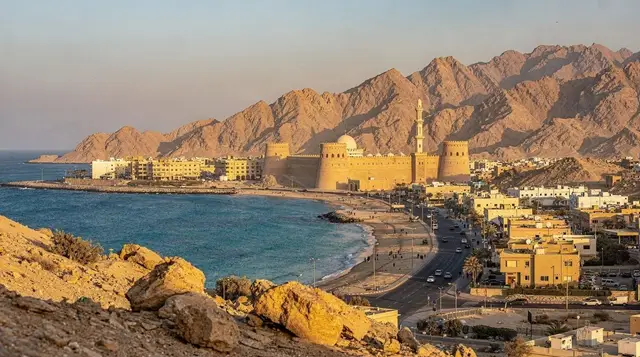
Fujairah is the only one of the seven emirates with no coastline at all on the Arabian Gulf — its entire shoreline faces the Gulf of Oman instead, which changes more than just the map. The water here is generally clearer and less silty than Dubai and Abu Dhabi’s Gulf coast, the coral and reef life is genuinely better for snorkeling and diving, and the emirate itself is geographically split from the rest of the UAE by the Hajar mountains, crossed via a scenic highway rather than flat desert road. That mountain crossing, combined with the different coastline, gives Fujairah a distinct feel from the rest of the country despite being only around 90 minutes from Dubai.
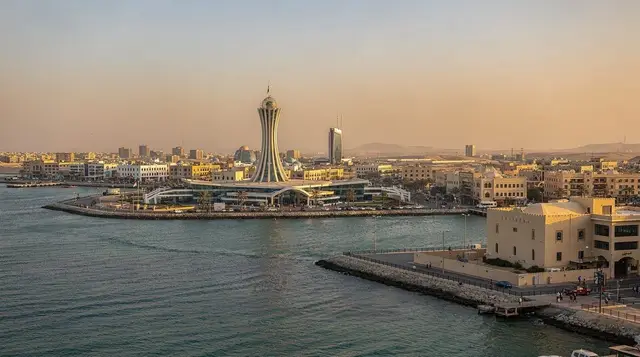
Fujairah city itself is a modest, workaday capital rather than a resort town — the actual draw is the coastline north of the city, particularly around Al Aqah, where resort hotels, diving centers, and Snoopy Island cluster together.
Snoopy Island
Snoopy Island is a small rock islet just offshore from Al Aqah beach, named for a silhouette that, from the right angle, resembles the Peanuts character lying on his back — a nickname that’s stuck hard enough that it now appears on official tourism material despite having no historical or Arabic naming basis. It’s one of the most accessible snorkeling spots in the UAE, reachable by a short swim or kayak from the beach, with a reef system around the rock supporting parrotfish, moray eels, and, seasonally, sea turtles.
A guided Fujairah snorkeling and kayak trip to Snoopy Island and Sandy Beach covers equipment and a guide for visitors without their own gear, or the Fujairah snorkeling and watersports at Snoopy Island option bundles in broader watersports for a fuller beach day. Visibility is best outside the summer months, when increased algae growth and warmer water reduce clarity compared to the cooler, clearer conditions from roughly October through April.
See diving and snorkeling in the UAE for how Fujairah’s sites compare to what’s available on Dubai’s Gulf coast.
Fujairah’s east coast vs Dubai’s Gulf coast
| Fujairah (Gulf of Oman) | Dubai (Arabian Gulf) | |
|---|---|---|
| Water clarity | Generally clearer, less silty | Often murkier, more sediment |
| Reef and marine life | Better for snorkeling and diving | Limited, mostly artificial reef structures |
| Crowds | Noticeably quieter, even in peak season | Busy, resort-dense beaches |
| Amenities | Fewer, resort-concentrated at Al Aqah | Extensive: malls, promenades, watersports |
| Distance from central Dubai | ~1.5 hours via E44 | N/A |
Al Aqah beach
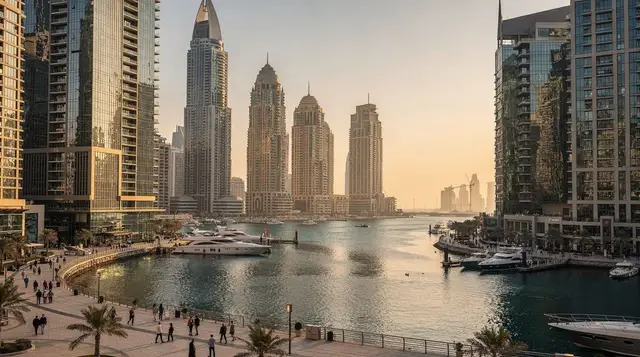
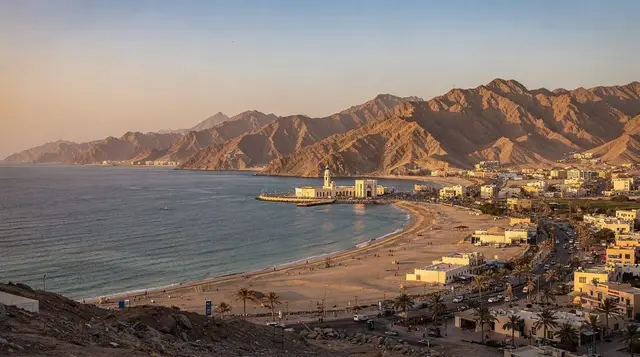
Al Aqah is Fujairah’s main resort strip, a stretch of coastline lined with international hotel brands — Fairmont and Le Meridien among them — built specifically around the Snoopy Island snorkeling draw and the generally calmer, clearer water than the Arabian Gulf side of the country offers. It functions much like a scaled-down version of Dubai’s JBR or Marina beach strip, but with far fewer crowds, no highrise skyline backdrop, and a genuinely different underwater experience just offshore.
Non-resort guests can generally access public beach stretches near Al Aqah, though the best snorkeling access to Snoopy Island tends to run through resort beach fronts or a guided tour launch point rather than a fully public entry. Compared to Dubai’s Marina and JBR beaches, Al Aqah has a fraction of the visitor volume even during peak winter season, which is precisely the trade travelers make when choosing Fujairah over a Dubai beach day — fewer amenities and dining choices in exchange for a quieter, less commercialized stretch of coast and noticeably better water underneath it.
The mountains rising directly behind the resort strip are another point of contrast with Dubai’s flat coastal geography — several properties along Al Aqah market rooms specifically for the combined sea-and-mountain view, a pairing that doesn’t exist anywhere on Dubai’s Gulf coast.
Al Bidyah Mosque, the UAE’s oldest
Al Bidyah Mosque, also spelled Al-Bidya, is generally recognized as the oldest surviving mosque in the UAE, believed to date to the 15th century based on architectural and archaeological evidence, though some estimates place parts of it later. Built from mud brick, coral stone, and gypsum with four small domes rather than a single large one and no minaret, it’s a striking contrast to the grand, modern mosques elsewhere in the country like Sheikh Zayed Grand Mosque in Abu Dhabi — this is small, humble, and clearly built by and for a small fishing community rather than as a national monument, even though it now functions as exactly that for visitors.
The mosque still holds occasional prayers and is generally open for exterior and limited interior viewing outside prayer times; modest dress applies as it does at any working mosque. It sits a short distance north of Al Aqah, an easy add-on to a beach or Snoopy Island day.
Diving beyond Snoopy Island
Fujairah’s reputation as the UAE’s diving hub extends well past Snoopy Island. Dibba Rock, further north near the border with Khor Fakkan and Musandam, is a well-regarded dive and snorkel site with better depth and visibility for certified divers than the shallower, more beginner-oriented waters around Snoopy Island. Several dive operators based around Al Aqah and Dibba run PADI certification courses alongside single-tank and multi-tank dive trips, and liveaboard-style trips into Musandam’s fjords are also bookable from the same coastal stretch for divers wanting to combine Omani and UAE sites in one trip.
Water temperature stays warm enough for diving year-round, generally in the high 20s to low 30s°C, though visibility peaks outside the hottest and most humid summer months.
Wreck diving is a smaller but genuine niche here too — several artificial and accidental wrecks lie within recreational diving depth off the Fujairah coast, an option worth asking local dive shops about directly since site conditions and current permits shift more often than beach and reef information does.
Wadi Wurayah National Park
Inland from the coast, Wadi Wurayah was designated the UAE’s first protected mountain area, covering a section of the Hajar range around a seasonal waterfall and freshwater pools that are a rarity anywhere in the country. Access is more restricted than a typical tourist site — a permit system has been used at various points to manage visitor numbers and protect the ecosystem, which includes species found nowhere else in the UAE — so check current access rules before planning a visit rather than assuming free entry.
When the waterfall is running, generally after winter rains, it’s a genuinely striking sight against the otherwise arid mountain backdrop; in drier stretches of the year the pools can reduce to a fraction of their wet-season size or dry up entirely.
Fujairah Fort and heritage village
Fujairah Fort, overlooking Fujairah city, is described locally as the oldest fort in the UAE, with foundations believed to predate the 17th-century structure that stands today. It sits beside a small heritage village recreating traditional Emirati village life — wind-tower houses, a mosque replica, and displays on pearling and pre-oil daily life — giving useful context before or after visiting Al Bidyah Mosque nearby. Neither site takes more than an hour combined, making them an easy pairing rather than a full day’s activity on their own.
The Friday Market
Along the mountain road between Fujairah and the town of Masafi, the Friday Market (also called Al Malaha Market) is a strip of roadside stalls, despite the name, generally open most days of the week, selling pottery, dried fruit, nuts, rugs, and local produce laid out under simple shaded stands along the highway. It’s more of a working local market than a curated tourist attraction, which is exactly its appeal — prices are negotiable, quality varies stall to stall, and it gives a genuine look at east-coast commerce rather than a staged version of it. It works well as a stop on the drive between Dubai and Fujairah rather than a dedicated destination in itself.
A brief history: forts, Portuguese outposts, and independence
Fujairah’s location on the Gulf of Oman made it strategically significant to Portuguese traders in the 16th and 17th centuries, who built fortified outposts along parts of the east coast to control access to the Strait of Hormuz shipping routes — a period whose remnants are more visible further north around Khor Fakkan and Dibba than in Fujairah city itself. Fujairah was also the last of the emirates to be formally recognized as independent by the British in 1952, having previously been treated as part of Sharjah’s territory despite functioning autonomously under its own ruling family for generations before that.
That relatively late formal recognition is part of why Fujairah’s borders with Sharjah’s east-coast exclaves (Khor Fakkan and Dibba Al-Hisn) remain interlocking rather than clean — a legacy of overlapping historical claims that predate the modern federation and were never fully redrawn after the UAE’s 1971 formation.
Where to stay and eat
Al Aqah’s resort strip covers most of Fujairah’s accommodation for visiting tourists, generally at rates below comparable beachfront properties in Dubai, with dive-focused packages commonly bundled into room rates at properties near Snoopy Island. Fujairah city itself has budget hotel options aimed more at business and transit travelers than tourists, useful only if resort pricing at Al Aqah doesn’t fit your budget and you don’t mind a short drive to the beach.
Dining follows the same resort-concentrated pattern as Ras Al Khaimah — expect hotel restaurants and beach-club dining around Al Aqah, and simpler Emirati, Filipino, and South Asian cafes in Fujairah city catering to the local workforce. Budget AED 150–300 (41–82 USD) per person at a resort restaurant, or AED 30–70 (8–19 USD) for a casual meal in Fujairah city.
Getting to Fujairah from Dubai
By car, Fujairah is roughly 1.5 hours from central Dubai via the E44, the Dubai–Fujairah highway that crosses the Hajar mountains through Masafi — a genuinely scenic drive in its own right, with mountain vistas that don’t exist on Dubai’s flatter desert routes. There’s no metro or practical rail option; RTA intercity buses run from Dubai but with limited frequency, making a rental car or organized tour the more practical choice for most visitors. See getting around Dubai and the car rental guide for planning specifics, or day trips from Dubai to Fujairah for a full self-drive itinerary.
Note that Khor Fakkan and Dibba Al-Hisn, both technically Sharjah exclaves, sit directly on Fujairah’s coastline and are commonly combined with a Fujairah trip given their geographic proximity, despite belonging to a different emirate on paper — a genuine quirk of UAE internal borders that surprises most first-time visitors to the east coast.
Is Fujairah worth the trip?
For divers and snorkelers, yes clearly — the Gulf of Oman’s clearer water and healthier reef structures around Snoopy Island and further along the coast make Fujairah the UAE’s best underwater destination by a meaningful margin over anything on the Gulf coast. For visitors without an interest in diving or beach time, the draw is thinner: Al Bidyah Mosque and Fujairah Fort are worthwhile but modest historical stops, and the mountain drive itself is a genuine highlight rather than a means to an end.
Combine it with a stop at the Friday Market and, time permitting, Khor Fakkan for a fuller east-coast day rather than treating Fujairah in isolation — see best day trips from Dubai for how it stacks up against Abu Dhabi, Hatta, or the northern emirates loop for a single day out.
Combining Fujairah with a wider east-coast trip
Because Fujairah shares its coastline with Sharjah’s Khor Fakkan and Dibba Al-Hisn exclaves, and sits within a reasonable extension of a Musandam dhow trip, it works well as part of a broader east-coast itinerary rather than an isolated round trip from Dubai. A common pattern for travelers with a full day or overnight to spare: cross the mountains via Masafi with a stop at the Friday Market, spend the afternoon at Al Aqah and Snoopy Island, then continue up the coast to Khor Fakkan’s corniche and watchtower before heading back over the mountains or continuing on toward RAK.
See Dubai to Fujairah day trip and Dubai to Khor Fakkan for how the two combine into a single longer day out.
Fujairah with kids
Al Aqah’s resort beaches and the shallow, calm snorkeling around Snoopy Island generally suit families well, with several resorts offering beginner-friendly snorkel gear and guided sessions appropriate for older children. The Friday Market and Fujairah Fort are low-effort, short stops that work fine with kids in tow, though the fort itself involves some uneven, unshaded ground best avoided at midday in summer. See Dubai with kids for broader family-trip planning that applies to a Fujairah add-on.
Fujairah’s mountain villages and dam roads
Away from the coast, the roads winding through Fujairah’s stretch of the Hajar mountains pass a scattering of small villages built into the terraced hillsides, some still using traditional falaj irrigation channels to water date palm groves fed by mountain runoff. Several small dams, built to manage seasonal flash flooding rather than as scenic attractions, sit tucked into valleys off the main highways — Fujairah’s own version of Hatta’s more famous turquoise reservoir, though smaller and far less visited. These aren’t sites with dedicated visitor infrastructure or parking, so they suit travelers with a rental car and time to explore rather than a fixed day-trip itinerary, best approached as a scenic detour on the drive back from Al Aqah rather than a destination in their own right.
The contrast between these quiet mountain villages and the resort strip at Al Aqah, only a 20–30 minute drive apart, is a genuine reminder that Fujairah’s tourism development has concentrated almost entirely on the coast, leaving the interior largely as it’s been for generations.
A one-day Fujairah itinerary from Dubai
For a well-paced single day, leave Dubai by 7:30–8am to arrive around 9:30am, giving the coolest part of the day to a Snoopy Island snorkel session before the water gets crowded. Follow that with lunch at a resort restaurant or a simpler cafe in Fujairah city, then a stop at Al Bidyah Mosque and Fujairah Fort in the early afternoon, when the mosque’s exterior photographs well in softer light. Time the return drive for late afternoon, with a stop at the Friday Market along the E44 near Masafi if there’s daylight left — it makes a natural break in the mountain crossing back to Dubai. This itinerary comfortably fits the day-trip budget of AED 150–350 (41–95 USD) per person covered above, though a private tour or rental car adds flexibility to linger at any single stop.
Travelers wanting to add Khor Fakkan to the same day should budget an earlier departure, since the extra 20–30 minutes each way toward Khor Fakkan on top of Fujairah’s stops makes for a genuinely long day rather than a relaxed one — see best day trips from Dubai for how a two-stop east-coast day compares to keeping it to Fujairah alone.
Frequently asked questions about Fujairah
How far is Fujairah from Dubai?
About 1.5 hours by car via the E44, the Dubai–Fujairah highway that crosses the Hajar mountains through Masafi.
Why is the water clearer in Fujairah than in Dubai?
Fujairah sits on the Gulf of Oman rather than the shallower, more sediment-heavy Arabian Gulf that Dubai and Abu Dhabi face, which generally produces better underwater visibility and healthier reef conditions.
Is Snoopy Island good for beginners who’ve never snorkeled?
Yes — it’s shallow, close to shore, and calm enough for first-timers, and guided trips include equipment and instruction for anyone without their own snorkel gear or experience.
Is Al Bidyah Mosque still used for prayer?
Yes, it remains an occasionally active place of worship, and visitors should avoid entering during prayer times and dress modestly when visiting.
Is the Friday Market only open on Fridays?
No, despite the name it’s generally open most days of the week, though selection and stall numbers can vary by day.
Can I visit Fujairah without a car?
It’s possible via organized tours or private transfer from Dubai, but there’s no practical public transport route, so a car or a booked tour is the realistic option for most visitors.
Is Fujairah worth an overnight stay or just a day trip?
For divers and snorkelers wanting multiple dive sessions, an overnight resort stay makes sense. For visitors mainly interested in the mosque, fort, and a single snorkeling session, a well-planned day trip from Dubai covers it comfortably.
What’s the difference between Fujairah and Khor Fakkan?
Fujairah is its own emirate covering most of the UAE’s east coast; Khor Fakkan is a separate Sharjah exclave enclosed within Fujairah’s territory, despite sitting geographically on the same coastline.
Do I need a permit to visit Wadi Wurayah?
Access rules have shifted over time as the protected area’s management balances conservation with visitor numbers, so check current permit requirements before planning a visit rather than assuming free, unrestricted entry.
Is Fujairah good for a scuba diving certification course?
Yes — several PADI-affiliated dive centers around Al Aqah and Dibba run certification courses taking advantage of the clearer Gulf of Oman water, generally a better learning environment than the murkier Arabian Gulf coast.
Is the drive from Dubai to Fujairah scenic?
Yes, genuinely — the E44 crosses the Hajar mountains through Masafi, giving mountain views that don’t exist on Dubai’s flatter desert-facing routes, and it’s considered one of the more enjoyable drives in the country.
Is Fujairah more affordable than staying in Dubai?
Generally yes for accommodation, since Al Aqah’s resort rates typically run below comparable beachfront properties in Dubai, though flights, activity pricing, and dining costs are broadly similar across the country.
Top experiences
Bookable activities with verified prices and instant confirmation on GetYourGuide.