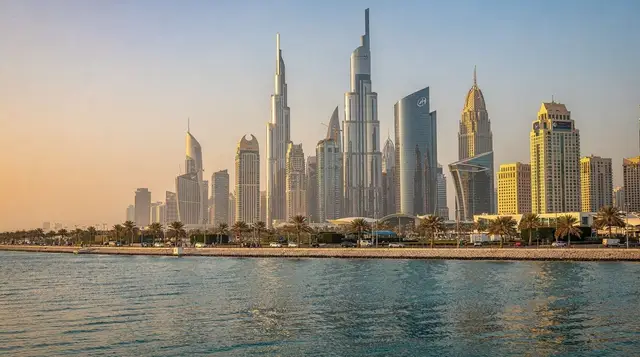
Jebel Ali — south Dubai's quiet beach corridor
Jebel Ali guide: JA Beach resorts, Palm Jebel Ali's status, Expo City next door, and why this quiet south Dubai strip is the shortest route to Abu Dhabi.
Dubai: Abu Dhabi day-trip Grand Mosque, Royal Palace & lunch
Quick facts
- Location
- South Dubai, past Dubai Marina toward Abu Dhabi
- Distance to Downtown
- 35–45 minutes by car, no direct metro
- Distance to Abu Dhabi
- 45–60 minutes, shorter than from central Dubai
- Best for
- Resort stays, quiet beach time, Abu Dhabi day trips
- Palm Jebel Ali
- Under redevelopment, not yet open to visitors
What Jebel Ali actually is
Jebel Ali is the stretch of south Dubai that most visitors never see, sitting past Dubai Marina toward the Abu Dhabi border and built around one of the world’s largest man-made ports rather than any single landmark. For travelers, it’s really a handful of self-contained beach resorts, a free zone, and — more recently — Expo City Dubai, rather than a walkable district in the way Downtown Dubai or Old Dubai are. There’s no metro station here and very little street life; you come to Jebel Ali specifically to stay at one of its resorts, not to wander.
That isolation is the actual selling point. Hotels here sit on longer, quieter private beaches than anything available in Dubai Marina or Palm Jumeirah, and the drive time to Abu Dhabi is genuinely shorter from Jebel Ali than from almost anywhere else in the city — a detail worth knowing if Abu Dhabi day trips are a priority for your trip.
JA Beach and the resort strip
The area’s best-known cluster is the JA Beach hotels, a set of properties with direct access to a long, uncrowded stretch of coastline that rarely appears in Dubai’s Instagram feed precisely because it’s a 35–45 minute drive from the city center. These resorts function as full-service, self-contained bases: private beach, multiple pools, watersports concessions, and enough restaurants on-site that guests rarely need to leave for meals. That’s a genuine advantage in the June–September heat, when the walk from a Marina hotel to the beach is uncomfortable but a resort’s shaded loungers and pool bar are steps away.
The trade-off is equally real: staying here puts real distance between you and the Burj Khalifa, the souks, and Dubai Marina’s restaurant strip. If your trip revolves around ticking off central landmarks, basing in Jebel Ali adds 30–45 minutes each way to nearly every excursion. It suits a specific traveler — someone doing a beach-and-pool holiday with Dubai as a backdrop rather than a city-break itinerary — better than a first-time visitor. See where to stay in Dubai and Dubai’s best areas to stay for how Jebel Ali stacks up against staying centrally.
Palm Jebel Ali: the paused sister island
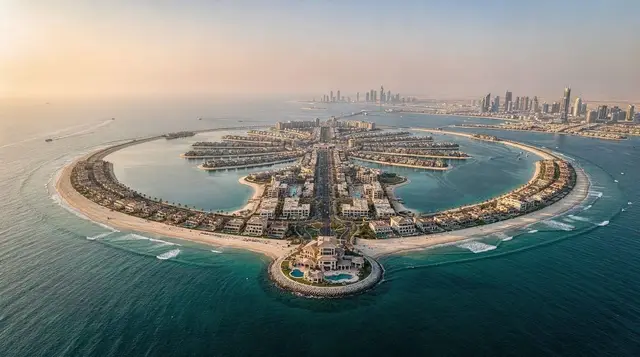
Dubai announced a second, larger palm-shaped island here years before Palm Jumeirah’s tourist infrastructure matured, and Palm Jebel Ali’s frond structure is visible from satellite imagery today, but the island itself has cycled through pauses and relaunches and remains, as of 2026, a residential development rather than a visitor destination. There are no hotels, attractions, or public beach access open on Palm Jebel Ali — if you see it referenced online as a place to visit, that’s outdated or aspirational marketing rather than current reality. Anyone drawn to a palm-island stay should book Palm Jumeirah instead, where Atlantis, The View, and The Pointe are fully operational.
Expo City Dubai next door
The 2020 World Expo site (delayed to 2021–2022 by the pandemic) sits just north of Jebel Ali and has been repurposed as Expo City Dubai, a permanent mixed-use district with the Al Wasl Dome, Terra sustainability pavilion, and a rotating calendar of events and exhibitions. It’s a legitimate half-day stop if you’re already in the area — the Dome’s nightly light shows are free to view from outside — but it’s a different kind of visit than a theme park or historic souk, leaning toward architecture and sustainability exhibits over thrill rides. There’s a dedicated metro extension connecting Expo City to the Red Line, making it easier to reach on its own than most of the rest of Jebel Ali, which has no metro access at all.
Getting there and around
Without a metro line running through the resort strip itself, a car is close to mandatory here — either a taxi, Careem, or a rental picked up on arrival. Most JA Beach-area hotels run shuttle services to Dubai Marina or Downtown for guests who want to spend a day in the city center, but check the schedule and cost before assuming it’s frequent or free. See getting around Dubai for the wider transit picture, and the Dubai car rental guide if you’d rather have your own vehicle for the drive to Abu Dhabi or Expo City.
The genuine practical upside: Jebel Ali sits closer to the Abu Dhabi border than central Dubai does, cutting a typical 90-minute Downtown-to-Abu Dhabi drive down to roughly 45–60 minutes. If a Abu Dhabi day trip with the Grand Mosque and lunch is high on your list, a Jebel Ali base shaves real time off the round trip compared with staying in the Marina or Downtown — worth weighing if Abu Dhabi matters more to you than late-night access to Dubai’s restaurant and bar scene. The Dubai to Abu Dhabi day trip guide covers the route and timing in more detail.
Desert access and day trips from a Jebel Ali base
Being on the southern edge of the city also puts Jebel Ali marginally closer to the inland desert conservation areas than a Marina or Downtown hotel, which matters if a desert safari is on your itinerary. Most operators run desert safari with BBQ dinner in a Bedouin camp pickups from hotels across the city, including the Jebel Ali resort strip, though confirm your specific property is on the pickup list before booking — some smaller boutique hotels here fall outside standard shuttle routes and need a taxi to a nearby meeting point instead.
Jebel Ali Port and Free Zone
Part of why Jebel Ali feels so distinct from the rest of Dubai is that it was built primarily as an industrial and logistics hub rather than a tourist district. Jebel Ali Port, opened in the late 1970s, is one of the largest man-made harbors in the world and remains among the busiest container ports globally, handling a substantial share of the trade moving through the wider Gulf region. The adjacent Jebel Ali Free Zone (JAFZA), established in 1985, was one of the first of its kind in the region and now hosts thousands of international companies, which explains the steady stream of business travelers who show up at the area’s hotels alongside beach-holiday guests.
None of this is visitable in the way a landmark is — there’s no viewing platform over the port, and the free zone itself is a working business park rather than an attraction — but it’s worth understanding as context for why Jebel Ali developed the way it did: a working port and logistics zone with beach resorts added on the coastal fringe, rather than a purpose-built tourist destination like Palm Jumeirah or Downtown Dubai. It also explains the area’s excellent road infrastructure, built originally to move freight efficiently, which happens to make the drive to Abu Dhabi and the airport more direct than from more centrally located, traffic-congested parts of the city.
Weather and packing for a Jebel Ali stay
Because a Jebel Ali stay is built around resort beach time rather than walking tours, packing priorities shift slightly compared with a Downtown or Old Dubai trip. Sun protection matters more here than almost anywhere else in the city, since most of your daylight hours will genuinely be spent outdoors on sand or by a pool rather than ducking between air-conditioned buildings. A reef-safe sunscreen, a wide-brimmed hat, and a proper cover-up for the walk between your room and the beach are all worth prioritizing over the smarter-casual clothing that matters more in Downtown’s restaurants and malls.
From June through September, even resort beach time needs to be scheduled around the worst of the midday heat — most properties here shift toward the pool’s shaded areas or indoor activities between roughly 12pm and 4pm during peak summer, so don’t assume a beach resort location makes summer heat management unnecessary. November through March remains the standout window, with comfortable enough temperatures that full-day outdoor beach time is realistic without needing to retreat indoors.
Honest take: who should actually stay here
Jebel Ali makes sense for a narrow but real group of travelers: people doing a beach-resort holiday who happen to be routing through Dubai, families who want a single all-inclusive-feeling property rather than a city-hopping itinerary, and anyone whose Dubai trip is genuinely built around an Abu Dhabi day trip or two. It does not make sense as a first Dubai base — you’ll spend meaningful time and money on transport to reach the Burj Khalifa, the souks, or Dubai Marina’s nightlife, and there’s essentially no walkable neighborhood to explore on foot once you leave the resort gates.
If you’re weighing Jebel Ali against a more central option, the honest comparison is this: Dubai Marina gives you beach access plus walkable restaurants and a metro line, at the cost of a busier, more built-up beachfront. Jebel Ali trades that convenience for quieter sand and a shorter Abu Dhabi run. Neither is objectively better — it depends on whether your priority is proximity to the city or distance from it.
Jebel Ali vs Dubai Marina vs Palm Jumeirah
| Jebel Ali | Dubai Marina | Palm Jumeirah | |
|---|---|---|---|
| Metro access | None | Direct (Red Line) | Monorail only |
| Beach crowding | Quietest of the three | Busiest, most amenities | Resort-controlled, moderate |
| Distance to Downtown | 35–45 min | 25–30 min | 20–30 min |
| Distance to Abu Dhabi | 45–60 min (shortest) | 70–90 min | 75–95 min |
| Walkable dining/nightlife | Minimal, resort-only | Extensive | Resort-only, limited outside hotels |
For a broader view of how Dubai’s districts compare, Dubai’s best areas to stay breaks down each option against your likely itinerary, and the best day trips from Dubai guide covers Abu Dhabi alongside Sharjah, Al Ain, and Hatta if you want to compare which excursion actually suits a Jebel Ali base best.
For a trip that pairs a Jebel Ali or south Dubai stay with a proper Abu Dhabi leg, the Dubai and Abu Dhabi combined itinerary lays out a realistic day-by-day split, and the dedicated Abu Dhabi day trip tour page compares the main operators running that route.
A brief history of Jebel Ali
Jebel Ali’s transformation began in the 1970s, when Dubai’s ruling family made the decision to build a deep-water port far larger than the city’s growing trade volumes actually required at the time — a bet on future growth that took years to pay off but ultimately positioned Dubai as a major regional and global trade hub. The port opened in phases through the late 1970s and early 1980s, and the surrounding free zone followed shortly after in 1985, one of the first modern free trade zones in the Middle East and a model that Dubai would later replicate across dozens of other specialized zones citywide.
For decades, Jebel Ali remained almost entirely industrial, with little in the way of visitor infrastructure. The beach resorts that now anchor the area’s tourism appeal are a comparatively recent addition, developed as Dubai’s tourism ambitions expanded southward along the coastline in search of undeveloped beachfront that the more central districts had already built out. That history explains the area’s slightly disjointed feel today — a serious, functioning industrial zone sitting immediately alongside quiet, resort-oriented beaches, a combination that doesn’t really exist anywhere else in the city.
Practical notes for a Jebel Ali stay
Book resort transfers or shuttle seats in advance rather than assuming same-day availability, particularly during the November–March peak season when hotels here fill with both leisure travelers and conference groups tied to the nearby Jebel Ali Free Zone. Pack for a beach-first trip: swimwear, sun protection, and a light cover-up for the resort’s public areas, since even here the general modest-dress norm applies once you step off the private beach itself. If you plan to visit Expo City, check its event calendar first, since some exhibitions and pavilions rotate or close for maintenance between major events.
Dining tends to be resort-contained unless you’re willing to drive, so budget accordingly — a resort dinner here typically runs comparable to or slightly above Downtown prices given the captive-audience economics of an isolated beach property. If saving money on food matters, factor in at least one grocery run or a drive to a more affordable dining cluster nearer the Marina.
Restaurants and dining near the resort strip
Beyond in-resort dining, options within easy reach of Jebel Ali’s hotels are limited compared to the density found around Dubai Marina or Downtown. A handful of standalone restaurants sit along the main road connecting the resort strip to the highway, generally casual, mid-priced options catering to both resort guests and the area’s business travelers rather than destination dining in their own right. Grocery stores and pharmacies exist in small strip-mall clusters near the hotels, useful for self-catering or picking up essentials without a longer drive toward the Marina.
For a proper dining night out, most guests either eat in-resort or factor in a 30–40 minute drive toward Dubai Marina or Downtown, treating it as a deliberate evening excursion rather than a casual dinner decision. This is one of the clearest practical trade-offs of a Jebel Ali stay: the quiet, resort-contained convenience that makes it appealing for a beach holiday is the same isolation that limits spontaneous dining and nightlife options.
Watersports and beach activities at JA Beach
The JA Beach resort strip’s watersports concessions generally cover the standard range found at most Dubai beach resorts: jet ski rental, banana boat rides, stand-up paddleboarding, and windsurfing lessons at some properties, bookable directly through the resort’s beach desk rather than needing to seek out a third-party operator. Because the stretch of coast here is less crowded than JBR or the Marina, conditions for beginner windsurfing and paddleboarding tend to be calmer and less congested, a genuine advantage for anyone learning rather than an experienced watersports enthusiast chasing more challenging conditions.
Snorkeling isn’t a major draw here — the coastline lacks the reef structures found further along the Gulf toward Fujairah — so treat Jebel Ali’s water activities as resort-pool-and-beach recreation rather than a dedicated diving or snorkeling destination. Guests wanting a proper snorkeling day are better served booking a trip out to Fujairah’s Snoopy Island or an artificial reef excursion from the Marina instead.
Frequently asked questions about Jebel Ali
Is Palm Jebel Ali open to visitors?
No. Unlike Palm Jumeirah, Palm Jebel Ali remains a residential development with no hotels, attractions, or public beach access as of 2026. Visit Palm Jumeirah instead for a working palm-island experience.
Is there a metro station near Jebel Ali’s hotels?
No direct line serves the JA Beach resort strip. The nearest useful metro access is the Expo City extension of the Red Line, which is a separate area from the beach hotels and requires a taxi or shuttle to connect between the two.
How far is Jebel Ali from Downtown Dubai?
Roughly 35–45 minutes by car depending on traffic, noticeably longer than from Dubai Marina and without a direct metro option, so factor that into your day-planning if you’re basing here.
Is Jebel Ali closer to Abu Dhabi than Dubai Marina?
Yes — it typically shaves 20–30 minutes off the drive compared with a central Dubai hotel, making it a genuinely practical base if an Abu Dhabi day trip or overnight is a priority for your visit.
What is Expo City Dubai and is it worth visiting?
It’s the permanent legacy site of the 2020 World Expo, featuring the Al Wasl Dome, sustainability pavilions, and rotating exhibitions. It’s worth a half-day if you’re already in south Dubai, less so as a dedicated trip from central Dubai given the distance.
Are Jebel Ali’s beaches better than Dubai Marina’s?
They’re quieter and generally longer, since they belong to individual resorts rather than a shared public beachfront, but you trade that for isolation — there’s no walkable strip of independent restaurants or bars nearby.
Do I need a car to stay in Jebel Ali?
Effectively yes, or reliance on resort shuttles and taxis. There’s no walkable town center and no metro directly serving the beach hotel strip, unlike Dubai Marina or Downtown.
Should first-time Dubai visitors stay in Jebel Ali?
Generally no. It works well as a second stay or a dedicated beach-resort leg of a longer trip, but a first visit is better served by a central base like Dubai Marina or Old Dubai with walkable access to major sights.
What is Jebel Ali Port known for?
It’s one of the largest man-made harbors in the world and among the busiest container ports globally, built in the late 1970s. It’s a working industrial facility, not a tourist attraction, but it explains the area’s origins and infrastructure.
Is Jebel Ali a good base for business travelers?
Yes, particularly for anyone with meetings tied to the Jebel Ali Free Zone (JAFZA), one of the region’s oldest and largest free trade zones. Many of the area’s hotels see a steady mix of business and leisure guests for exactly this reason.
Can I visit Al Maktoum International Airport from Jebel Ali?
Al Maktoum International, Dubai’s second airport and a growing hub for budget and cargo carriers, sits closer to Jebel Ali than to Dubai’s main airport, which is worth knowing if your flights route through it rather than the primary Dubai International Airport — factor a shorter transfer time into your planning if so.
Does Jebel Ali have any nightlife or entertainment beyond the resorts?
Very little independent of the hotels themselves. Nightlife here means resort bars, lounges, and occasional beach-club-style events at specific properties, rather than the bar and club density found in Dubai Marina or JBR.
Top experiences
Bookable activities with verified prices and instant confirmation on GetYourGuide.