Desert or city: which should you prioritise in Dubai
Two completely different versions of the same trip
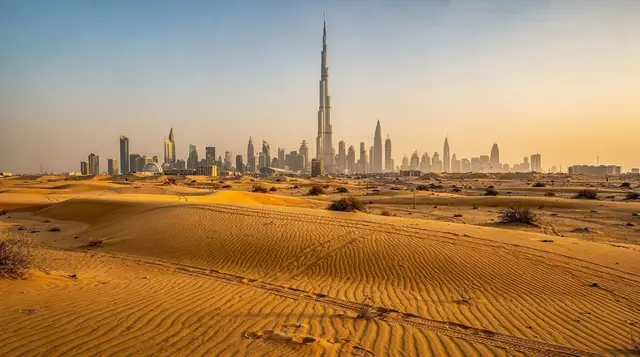
Ask ten people what “doing Dubai” means and you’ll get two different answers: the skyline, malls, and landmarks, or the dunes, camps, and desert sky. Both are genuinely representative of the destination, and neither is the “real” Dubai at the expense of the other — but with two or three days rather than a week, most visitors have to prioritise, and the honest answer depends on what you actually want out of the trip rather than what looks best in photos beforehand.
| Time needed | Desert: 6–7 hrs, one evening. City: flexible, spreads across a day |
| Cost | Both similar per person; desert is one bundled price, city adds up per attraction |
| Best season | City works year-round; desert daytime activities avoid June–September |
| With one day | City usually wins on logistics |
| With 2–3 days | Do both — no real tradeoff |
Desert versus city, side by side
| Desert safari | City landmarks | |
|---|---|---|
| Time commitment | 6–7 hrs, one block | Flexible, splits across a day |
| Heat exposure | Evening avoids the worst | Air-conditioned indoor breaks |
| Cost structure | One bundled per-person price | Adds up per attraction |
| Booking flexibility | Fixed pickup (shared) or flexible (private) | Book each ticket independently |
| Best for | A single strong, distinctive memory | A broader, efficient set of sights |
| Repeat-visit appeal | Often skipped once novelty wears off | Tends to stay part of every visit |
What the desert side actually delivers
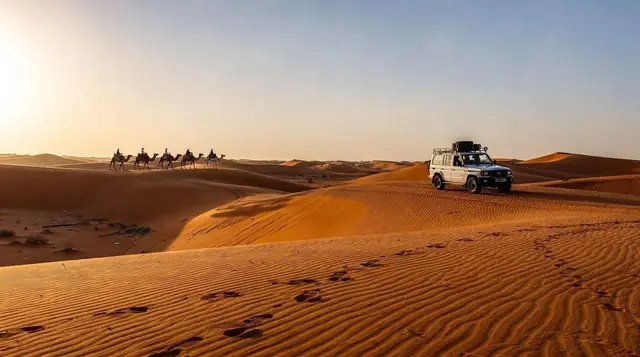
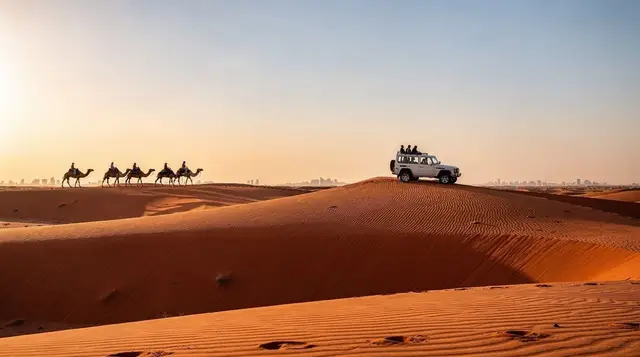
A desert safari typically means an afternoon pickup, dune bashing in a 4x4, and an evening camp with a barbecue dinner and entertainment, ending with a drive back after dark. It’s the closest most visitors get to the landscape that surrounds the entire city, and the shift from air-conditioned towers to open dunes within 45 minutes is genuinely disorienting in a good way. This evening red dunes desert safari with buffet dinner is a solid representative example of the standard format — dune bashing, a camp stop, and dinner, back at your hotel by around 9-10pm.
The best desert safari guide compares operators and formats if you want more than the standard package, and the Dubai Desert destination page covers the Conservation Reserve and Al Marmoom areas where many of these operate.
What the city side actually delivers
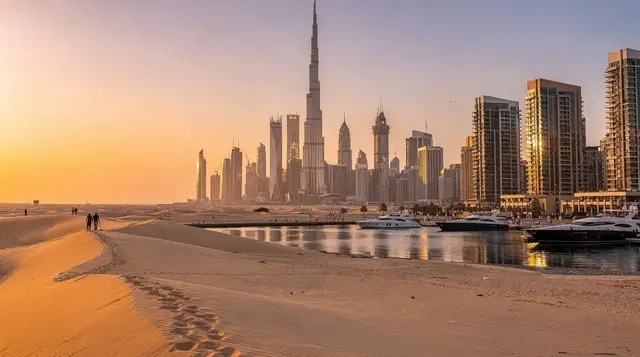
The city side centers on a small cluster of landmarks that are genuinely worth seeing regardless of how photographed they already are: Burj Khalifa, the world’s tallest building, and Dubai Mall, which functions as much as a destination in its own right as a shopping center, sitting next to the Dubai Fountain on the same plaza. This Burj Khalifa level 124, 125 and Sky Views ticket gets you the full observation deck experience in one booking.
Add Downtown Dubai’s walkability, air-conditioned interiors during the heat of the day, and proximity to everything else on a standard first visit, and the city side wins on convenience even where the desert wins on novelty.
The honest tradeoff: time, heat, and what you’ll remember
Desert safaris eat a full afternoon and evening — realistically 6-7 hours door to door — and are genuinely miserable to attempt in June through August daytime heat, though evening departures avoid the worst of it. City landmarks can be done in shorter blocks, fit around meals and heat breaks in air-conditioned malls, and stack more easily into a single day. If forced to rank memorability against time cost: a desert safari tends to produce a stronger single memory per hour spent, while city landmarks produce a broader, more efficient set of sights per day. Neither is objectively better; it depends on whether you’re building a highlight reel or a checklist.
The cost side of the comparison
Desert safaris and city landmarks land in a similar price bracket for a standard visit, but the value math differs. A group buffet-and-camp safari runs a fixed per-person rate that covers transport, dinner, and entertainment in one booking, which makes it easy to budget precisely. City landmarks are paid individually — Burj Khalifa tickets, an optional Dubai Mall aquarium add-on, dining separately — so the total can climb quickly if you stack several paid attractions in one day, or stay low if you stick to free viewpoints like the Fountain promenade and Marina Walk. Neither side is inherently cheaper; it depends on how many separate paid attractions you add to the city day versus the one bundled desert safari price.
Photos and what actually looks different afterward
There’s a practical angle worth naming honestly: desert photos and city skyline photos look genuinely different from each other, and most visitors end up wanting both in their final photo set rather than a full album of one or the other. If a single strong desert photo matters more than a comprehensive skyline set, a short safari add-on to an otherwise city-focused trip covers that without restructuring the whole itinerary. Sunset and blue-hour timing matters for both — the desert for dune colour during the safari’s earlier stretch before full dark, the city for the skyline lighting up against a fading sky from the Marina Walk or a rooftop vantage point.
If you only have one day: what actually wins
With a genuine single day, the city side usually wins on pure logistics — you can realistically fit Burj Khalifa, the Dubai Mall aquarium, and the Fountain show into a compact loop with buffer for meals and heat breaks, while a desert safari alone consumes the entire afternoon and evening with little room for anything else. The 1-day itinerary is built around exactly this logic. If the desert experience matters more to you personally than landmark-checking, though, it’s a legitimate one-day choice too — just accept that it becomes the entire day rather than one part of it.
With two to three days: you don’t have to choose
Past a single day, this stops being a real tradeoff — most standard 2-3 day plans fit both comfortably, with a morning or full day for city landmarks and a single evening block for the desert safari, since the safari doesn’t compete with daytime hours the way a second city day would. The Dubai desert and city itinerary is built specifically around combining both halves without either one feeling rushed, and it’s the itinerary worth following if this exact dilemma is what’s holding up your planning.
Shared versus private, and how that changes the calculation
The desert side of this comparison also has an internal choice worth flagging: the private versus shared desert safari guide covers it in full, but the short version is that shared safaris are cheaper and run on fixed group schedules, while private safaris cost more but let you set your own pickup time and skip the multi-vehicle convoy stops for photos that shared tours build in. If your city sightseeing runs long and you need a flexible desert pickup time to make an evening safari work around it, a private option removes the scheduling friction that a fixed shared departure doesn’t allow for.
The dune bashing guide and desert safari what to wear guide round out the practical side of the desert half of this decision. That flexibility is worth factoring in specifically when you’re trying to fit both halves into a tight two-day window rather than spreading them across separate days.
What tips the decision one way or the other
A few honest signals worth weighing: traveling with young kids tends to favor the city side for logistics and predictable timing, while a desert safari with small children needs specific “with kids” operators rather than the standard adult-oriented format. Visiting June through September pushes hard toward the city side for anything outdoor during the day, though evening desert safaris remain viable year-round. First-time visitors who’ve never seen a desert landscape tend to rate the safari as the trip highlight in hindsight more often than repeat visitors do, for whom the novelty has worn off and the city’s landmarks feel like the more efficient use of remaining time.
A hybrid option worth knowing about
For anyone genuinely torn, a handful of tours split the difference by pairing a shorter city stop with a desert evening in the same booking — a half-day Burj Khalifa or Old Dubai stop followed by an afternoon safari pickup, rather than treating them as fully separate commitments. These hybrid days trade some depth on both halves for a single day that touches both, which suits visitors with genuinely limited time more than either a full desert day or a full city day would. The Dubai desert and city itinerary covers how to sequence this without either half feeling rushed if a genuine hybrid day appeals more than choosing one over the other.
What each side actually looks like in the evening
The desert evening builds toward a single set-piece — the camp, the fire show, the meal under open sky — while the city evening is more distributed: the Dubai Fountain’s timed shows, a Marina Walk sunset, or a rooftop bar all work as standalone stops rather than one anchored event. Neither structure is better, but it’s worth knowing which kind of evening you actually prefer before deciding: a single memorable set-piece, or a flexible evening you can adjust on the fly based on how the day went.
Frequently asked questions about desert versus city in Dubai
Is a desert safari worth it if I only have one full day in Dubai?
It can be, but it consumes the entire afternoon and evening, leaving little room for city landmarks — worth it only if the desert experience is your priority over a broader landmark checklist.
Can I do both a desert safari and city sightseeing in the same day?
Not comfortably — a desert safari’s afternoon pickup and evening return leave little daytime window for landmarks. With two days, splitting them across separate days works far better.
Is desert safari season-dependent?
Daytime desert activities are genuinely unpleasant June through September; evening safaris run year-round since the worst heat has passed by departure time.
Which is better for families with young children?
City landmarks generally offer more predictable timing and air-conditioned breaks; desert safaris with kids need a specifically kid-friendly operator rather than the standard adult format.
Do repeat visitors to Dubai still do desert safaris?
Many skip it on repeat visits once the novelty has passed, favoring city landmarks, day trips, or neighborhoods they missed the first time.
Is dune bashing safe?
Reputable operators use experienced drivers and standard safety briefings; it’s a bumpy, high-adrenaline ride rather than a genuinely dangerous one when booked through an established company.
Is a private desert safari worth the extra cost over a shared one?
It’s worth it mainly for schedule flexibility — a private pickup time that fits around a busy city day — rather than for a meaningfully different core experience, since the dune bashing and camp activities are broadly similar across shared and private formats.
Does the desert safari or the city landmarks feel more “essential” to skip on a repeat trip?
Repeat visitors more often skip the desert safari than the core landmarks, since Burj Khalifa and Dubai Mall tend to fold naturally into any Dubai stay regardless of length, while a desert safari is a deliberate half-day commitment.