What actually surprises first-time visitors to Dubai
Photos don’t prepare you for the actual experience
Dubai is one of the most photographed cities in the world, which means most visitors arrive with a strong mental image already formed — and then find that the reality diverges from the photos in specific, consistent ways. None of it is bad, but a few things genuinely catch first-timers off guard, and knowing them beforehand makes the first day or two go smoother. The first-time visitor guide covers the full planning picture; this is the shorter, more candid version of what actually surprises people.
| Biggest surprise | Scale — districts are far apart, not walkable |
| Heat window | June-September, regularly 40-48°C |
| Best season | November-March |
| Weekend | Saturday-Sunday (shifted in 2022) |
| Safety | Rated among the safer major cities for petty and violent crime alike |
The heat is a different category of hot
Visitors expect Dubai to be hot, but the reality — especially June through September, when daytime temperatures regularly hit 40-48°C — is a different category of heat than most people have experienced, to the point where stepping outside for even a short walk feels genuinely draining within minutes. The adaptation, universal among residents, is living indoors and moving between air-conditioned spaces via car or covered walkway rather than walking outdoors for any real distance. First-timers who plan a walking-heavy day in peak summer are usually surprised by how quickly the heat forces a change of plans.
The city is far bigger and more spread out than it looks in photos
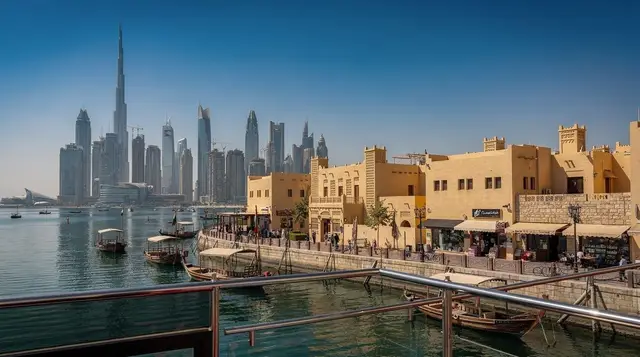
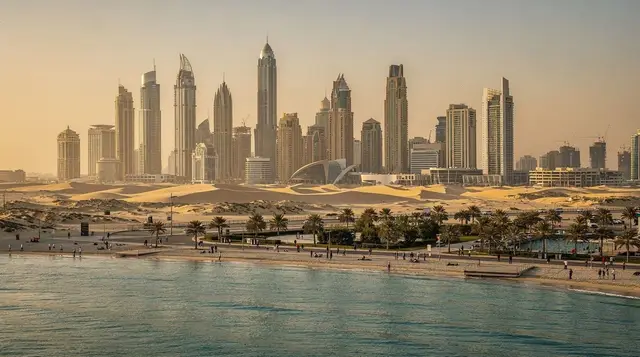
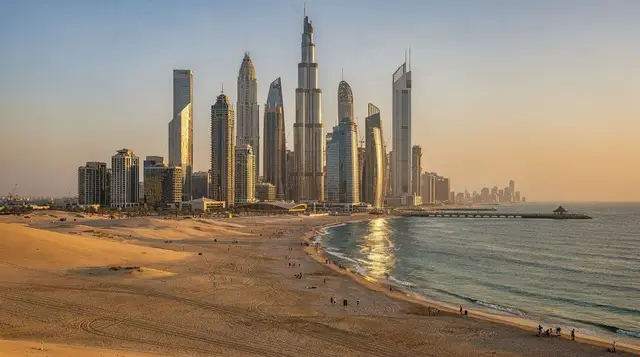
Skyline photos compress Dubai’s scale in a way that misleads first-timers about distance — Downtown, the Marina, Old Dubai, and Palm Jumeirah are each substantial districts separated by real distance, not walkable neighborhoods within a single compact center. Renting a car, taking taxis, or planning around the Metro’s two main lines is essential rather than optional, and visitors who assume they can walk between “nearby-looking” landmarks are often surprised by how far apart things actually are on the ground.
It’s far more culturally diverse than expected
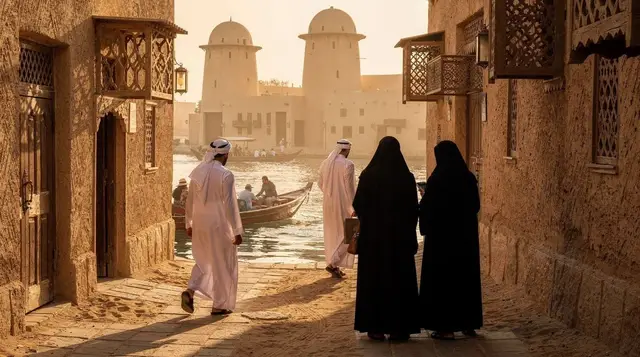
Emiratis make up a minority of Dubai’s population, and the day-to-day city is shaped heavily by South Asian, Filipino, Arab, and Western expatriate communities working across every sector of the economy. First-timers expecting a monolithic “Arabian” cultural experience are often surprised by how genuinely international the city feels on the street — multiple languages, a huge range of cuisines, and a religious and cultural mix that’s considerably broader than the skyline and government architecture might suggest. The Emirati culture and etiquette guide covers the specifically local customs worth knowing regardless of this diversity.
The rules are more specific — and more relaxed — than expected
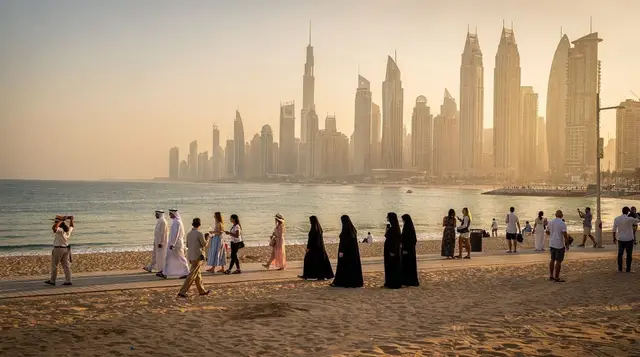
Dubai has a reputation for strict rules that doesn’t entirely match the on-the-ground reality for tourists. Public modesty in malls, souks, and mosques matters — shoulders and knees covered is the general rule, detailed in the dress code guide — but beach and pool areas are genuinely relaxed about swimwear. Alcohol is available at licensed hotels, bars, and restaurants without difficulty, covered fully in the alcohol rules guide, which surprises visitors expecting a fully dry destination.
What’s actually restricted (public intoxication, drugs, and public displays of affection) is narrower and more specific than the general reputation suggests, but genuinely enforced where it applies.
It feels safer than most first-timers expect
Dubai consistently ranks among the safer major cities globally for petty crime and violent crime alike, and first-time visitors — particularly solo travelers and women — are often surprised by how comfortable walking around at night, using public transport, or leaving belongings visibly on a cafe table feels compared to other major international cities. The safety guide goes into what actually does require caution (mainly traffic and driving norms, and the country’s serious approach to drug laws) rather than the crime concerns visitors often bring with them.
The weekend isn’t Friday-Saturday anymore
Dubai and the wider UAE shifted the official weekend to Saturday-Sunday in 2022 to align with global markets, which still trips up visitors expecting a Friday-Saturday weekend based on outdated information. Friday remains culturally significant — it’s the day of Jummah prayer and Dubai’s well-known Friday brunch culture — but the working week now runs Monday to Friday like most of the rest of the world, and planning around the old schedule leads to avoidable confusion about what’s open when.
The cost split is more extreme than expected
Dubai has a reputation for being uniformly expensive, but the reality is a wider cost spread than most visitors anticipate — a AED 3 metro fare and a AED 3,000 hotel suite exist in the same city within a few kilometers of each other. Budget travelers are often pleasantly surprised by how cheap public transport, street food, and free attractions like the Dubai Fountain actually are, while luxury travelers find the ceiling on spending is genuinely uncapped. Neither extreme is representative on its own; the is Dubai worth visiting guide covers the honest value case across budget levels.
The landmarks are bigger in person than photos suggest
Burj Khalifa’s height is hard to process from a photo, and standing at its base — or looking up at it from the Dubai Fountain promenade — is one of the few times a famous landmark genuinely exceeds the mental image built up beforehand rather than disappointing by comparison. The same is true of Dubai Mall’s sheer footprint, which reads as “large” in writing but feels considerably bigger once you’re actually walking it. This half-day city tour with a guide is a reasonable way to get oriented across several of these landmarks on day one, with someone else handling the navigation and logistics while you adjust to the scale.
The common mistakes worth avoiding early
A first day spent trying to walk between landmarks that look close together in photos, or scheduling an outdoor activity in the early afternoon during summer, are the two most common early missteps — both are avoidable with a bit of planning rather than trial and error on the ground. The common mistakes guide has a fuller list, but the underlying pattern is usually the same: importing assumptions from a more compact, temperate city and finding they don’t hold here.
This half-day modern city tour is a low-effort way to cover ground on day one without the trial-and-error of self-navigating a city whose scale and heat are both easy to underestimate on first arrival.
The pace of construction is still surprising
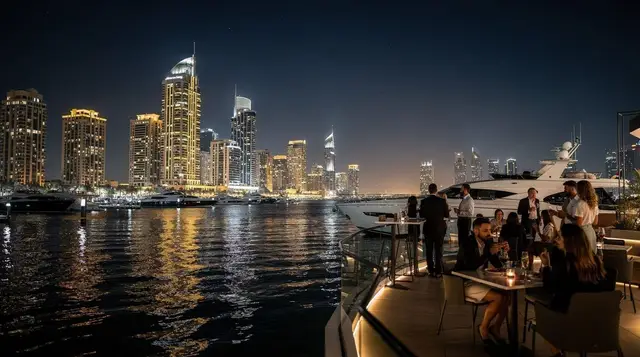
Even to visitors who’ve read about Dubai’s rapid growth, seeing active construction cranes next to already-completed skyscrapers, and hearing that entire districts like Business Bay or Dubai Marina didn’t exist in a recognizable form twenty-five years ago, tends to land differently in person than it does as a fact read in advance. The city genuinely still feels like it’s being built in real time in a way few global cities do, and that ongoing-construction energy is itself part of what surprises first-timers, for better or worse depending on which street you happen to be walking down that day.
What tends to stick after the trip
Ask first-timers what they remember most a few months later, and it’s rarely the single most-photographed landmark — it’s usually some combination of the heat’s intensity, the scale of the malls, an unexpectedly good meal in a neighborhood they hadn’t planned to visit, or a conversation with a driver or shopkeeper from somewhere entirely unrelated to the UAE. The skyline gets you here, but the details that don’t show up in photos are usually what makes the trip feel specific rather than interchangeable with any other big, wealthy city.
What surprises repeat visitors, not just first-timers
Some surprises don’t fade after the first trip. Returning visitors are often still caught out by how much the city has physically changed since their last visit — a district that was mostly empty lots two years earlier is a functioning neighborhood by the next trip, at a pace that outstrips most other major cities’ visible development. The modern architecture piece covers why the city builds the way it does, which helps make sense of how much can change between visits even a couple of years apart.
Language and getting around without Arabic
English works as a genuine practical default across hotels, malls, restaurants, taxis, and the Metro — first-timers who arrive expecting a language barrier are usually surprised by how little Arabic they actually need day to day, a byproduct of the city’s largely expatriate workforce. Menus, signage, and Metro announcements are bilingual as standard, and most service staff default to English before Arabic in tourist-facing settings.
Adjusting your first day for the flight and the heat together
Arriving after a long-haul flight into peak afternoon heat is a specific first-day trap: jet lag and heat exhaustion compound each other faster than either alone, and first-timers who plan an ambitious sightseeing afternoon straight off a red-eye often regret it. This half-day city tour with a guide is a reasonable lower-effort way to see key landmarks on day one without the navigation load of doing it solo while still adjusting.
Frequently asked questions about first impressions of Dubai
Is Dubai as strict as its reputation suggests?
Less than most first-timers expect — dress code and public conduct rules are specific and real, but alcohol, dining, and beachwear are more relaxed than the general reputation implies.
Is Dubai safe for solo travelers and women?
Yes, generally rated among the safer major cities globally for both petty and violent crime, with most caution needed around driving norms and drug law enforcement rather than personal safety.
Is Dubai’s weekend still Friday-Saturday?
No — it shifted to Saturday-Sunday in 2022 to align with global business weeks, though Friday retains cultural significance for prayer and brunch traditions.
Is Dubai too hot to visit outside of winter?
Summer (June-September) is genuinely extreme and best spent mostly indoors; November through March is the pleasant, most-visited season.
Is Dubai as culturally homogenous as it looks in photos?
No — the city’s population and daily culture are shaped heavily by South Asian, Filipino, Arab, and Western expatriate communities, making it far more internationally diverse than the skyline suggests.
Is Dubai only for luxury travelers?
No — it has a genuinely wide cost range from budget-friendly public transport and street food to uncapped luxury spending, and both ends of that range are well represented.
Do the landmarks actually live up to the photos?
Mostly yes, and in Burj Khalifa’s case, the scale in person tends to exceed rather than disappoint compared to the mental image built up from photos beforehand.
What’s the most common mistake first-time visitors make?
Underestimating distance and heat — assuming landmarks are walkable because they look close in photos, or scheduling outdoor time during peak summer afternoon hours.
Does Dubai still feel like a construction site in places?
In parts, yes — active building work alongside completed skyscrapers is common, and the sense of a city still being built in real time is itself part of the first-time experience.
Do I need to speak Arabic to get around Dubai as a first-time visitor?
No — English is the practical default in hotels, malls, restaurants, taxis, and on the Metro, and most tourist-facing signage and service staff default to English first.
What’s the biggest first-day mistake first-time visitors make?
Scheduling an ambitious, walking-heavy sightseeing afternoon straight off a long-haul flight — jet lag and Dubai’s heat compound each other faster than either does alone.