Dubai's lesser-known spots worth seeking out
Dubai has more depth than the skyline suggests
The postcard version of Dubai — Burj Khalifa, Palm Jumeirah, Dubai Mall — is real and worth seeing, but it’s also the version every visitor sees, which means it says less about the city than a handful of quieter spots that don’t make the standard itinerary. None of what follows is secret exactly; it’s simply overlooked by travelers working through a landmark checklist on a short trip.
| Best for | Returning visitors, or first-timers with 4+ days |
| Where | Old Dubai, Business Bay, Hatta, Khor Fakkan |
| Cost | Mostly free to walk; Hatta/Khor Fakkan need transport |
| Getting there | Taxi/Careem or on foot in Old Dubai; car or transfer for Hatta/Khor Fakkan |
| Best time | Early morning for Old Dubai; a full day for Hatta or Khor Fakkan |
Al Fahidi’s alleys, not just its name-check
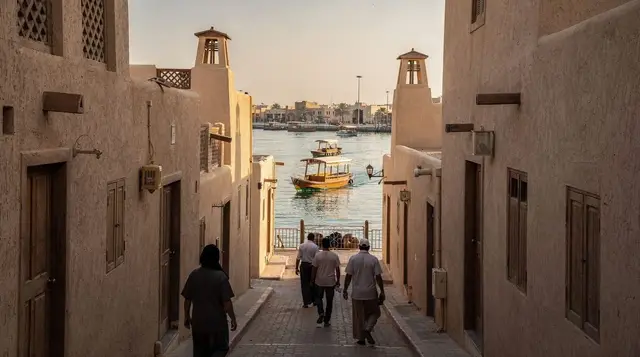
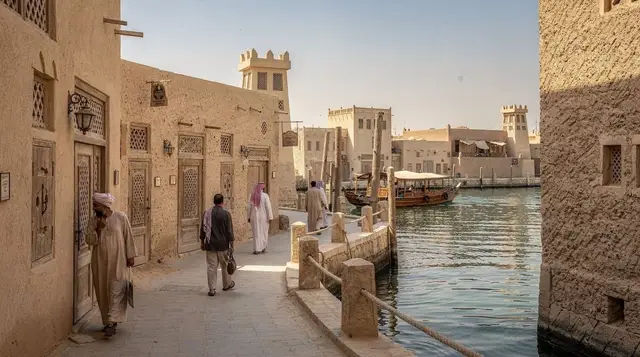
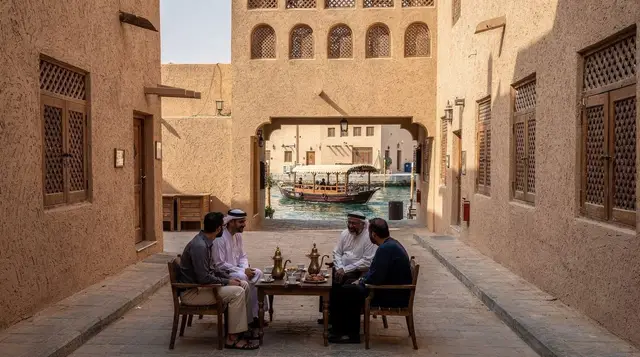
Al Fahidi Historical District, Dubai’s old wind-tower quarter in Old Dubai, gets mentioned in most guides but rarely explored properly — most visitors walk through once for photos of the distinctive wind towers and move on. Slowing down here means finding the small art galleries and cafes tucked into restored courtyard houses, several of which double as quiet exhibition spaces with no entry fee, a genuinely different pace from anywhere else in the city. Early morning, before the tour groups arrive, is when the district feels most like what it actually was rather than a photo backdrop.
Al Shindagha Museum: Dubai’s history without the crowds
Just along the Creek from Al Fahidi, Al Shindagha Museum tells Dubai’s history from pearl-diving fishing village to global city across a genuinely well-curated set of restored heritage houses, and it draws a fraction of the visitors that Old Dubai’s more famous stops do. It pairs naturally with an abra crossing along the Creek, and gives useful context for everything else you’ll see in the city afterward — the scale of Dubai’s transformation only really lands once you’ve seen how recent and how total it was.
The Dubai Canal on foot, not from a car
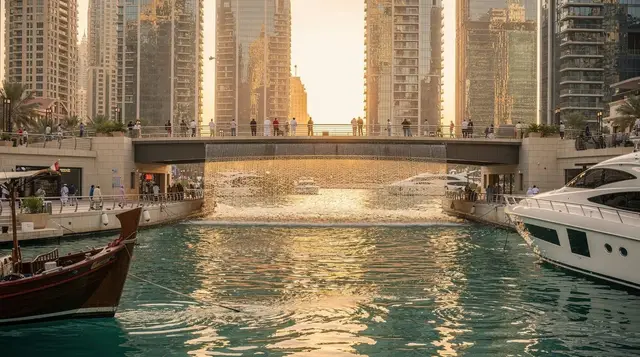
The Dubai Canal, which connects Dubai Creek to the Gulf through Business Bay and Jumeirah, has a landscaped waterfront path running much of its length that almost nobody walks in full — most visitors see it only from a car crossing one of its bridges. Walking even a section of it, particularly near Business Bay at dusk with the Museum of the Future’s distinctive silhouette in view, is a genuinely different perspective on the city’s newer architecture than the standard Downtown vantage points offer.
The Coffee Museum, a genuinely odd little detour
Tucked in Al Fahidi, the Coffee Museum is a small, low-key stop covering coffee’s history across the Arab world and beyond — modest in scale, but a legitimately interesting half-hour if you’re already exploring Old Dubai, and one of the few museum stops in the city that isn’t trying to be a major attraction. It’s the kind of place that rarely makes a first-timer’s list precisely because it’s easy to walk past.
Hatta: mountains instead of desert or skyline
Hatta, Dubai’s mountain exclave bordering Oman, is the single biggest departure from what most visitors expect from Dubai — cooler air, actual elevation, a turquoise reservoir lake, and hiking trails through the Hajar Mountains rather than dunes or towers. This Hatta sightseeing tour with kayaking covers the dam and the lake in a single day trip from the city, and the Hatta adventures guide has more on the mountain biking and hiking options for a longer visit.
Khor Fakkan: the east coast most visitors never see
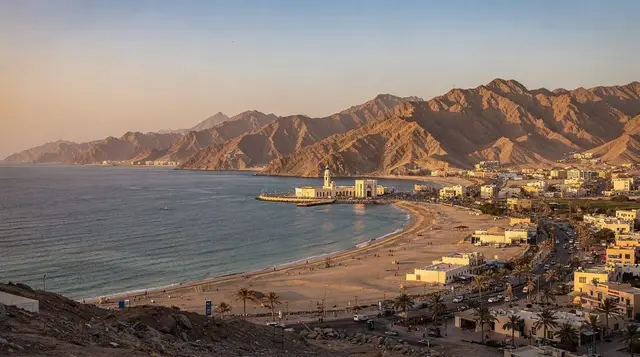
Khor Fakkan, on the UAE’s Fujairah coast facing the Gulf of Oman rather than the Gulf, is a genuinely different coastline from Dubai’s — a corniche backed by mountains, a small working port, and beaches that see a fraction of Dubai’s tourist volume. It’s a longer drive than most day trips from Dubai, which is exactly why it stays quiet, but it rewards the extra distance with a coastal atmosphere nothing on the Dubai side replicates.
Old Dubai’s Creek at night, not just by day
Most visitors do the abra crossing and souks during daylight, but the Creek at night has its own character — the Gold Souk’s window displays lit up, the water reflecting the lights of both banks, and a noticeably cooler, quieter walk than the same route at midday. This old town, Creek, abra boat, and souks guided walking tour can be booked for an evening slot specifically to catch this version of the district rather than the busier daytime one, and it removes the guesswork of navigating the souk alleys after dark on your own.
Business Bay’s canal-side cafes, not just the towers
Most visitors experience Business Bay only as a drive-through neighborhood on the way to Downtown, but its canal-side promenade has a growing strip of independent cafes and restaurants that see almost none of the tourist traffic the Marina or Downtown pull in. It’s worth a stop specifically for an unhurried coffee or meal with a canal view that isn’t packed with other visitors doing the same thing, and it connects easily to a walk toward the Museum of the Future if you’re building a loop through the area.
Bur Dubai’s residential streets, away from the souks
One block back from Bur Dubai’s souk strip and the Creek waterfront, the neighborhood’s residential streets — older low-rise buildings, small family-run restaurants serving South Asian and Middle Eastern food at a fraction of Downtown prices, and a genuinely lived-in atmosphere — offer a version of Dubai that has nothing to do with tourism at all. It’s not a curated stop with a name or an entry fee, just a worthwhile wander if you’re already in the area and want fifteen minutes away from the more visited streets.
Why these spots stay under the radar
Most of what’s on this list isn’t hidden by design — it’s simply competing against landmarks with far bigger marketing budgets and far more Instagram recognition. Burj Khalifa and Palm Jumeirah are genuinely impressive, but they’ve also absorbed most of the attention that could otherwise spread across a city with considerably more texture than its skyline suggests. None of these replace the major landmarks; they’re worth adding once you’ve covered the essentials and have room for something slower.
When to fit these into a longer trip
Most of these spots make sense once you’ve already covered Downtown, the Marina, and Palm Jumeirah, since they’re deliberately quieter alternatives rather than replacements for the essentials — a returning visitor or someone with four or more days has natural room to add two or three of them without feeling like they’re missing the main event. On a first visit with only two or three days, Al Fahidi and Al Shindagha are the easiest additions since they sit close together in Old Dubai and slot naturally into a half-day already built around the souks and abra crossing; Hatta and Khor Fakkan need a dedicated day and suit a longer stay better than a compressed one.
Getting to these spots without a rental car
None of these require a car specifically — taxis and Careem reach all of them, and Al Fahidi, Al Shindagha, and the Bur Dubai streets are close enough together to cover on foot once you’re in Old Dubai. Hatta and Khor Fakkan are the exceptions, both requiring either a rental car or a booked day-trip transfer given the distance, so factor that into which of these fit a car-free itinerary versus one built around a day trip with transport included.
Jebel Jais’s quieter side, beyond the zipline
Most visitors know Jebel Jais only for the zipline and the via ferrata, but the mountain road itself, winding up through Ras Al Khaimah’s stretch of the Hajar range, is worth the drive on its own — pull-offs along the route give sweeping views with a fraction of the crowd the ticketed activities draw, and the cooler mountain air is a genuine relief from the coastal heat even without booking anything at the top.
Sharjah’s cultural side, a short drive from Dubai
Sharjah, Dubai’s neighboring emirate and a UNESCO World Book Capital, has a genuinely different cultural texture — a concentration of museums, restored heritage architecture, and a more conservative, less touristic pace than Dubai’s. It’s close enough for a half-day add-on rather than a dedicated trip, and it rewards visitors who’ve already covered Dubai’s essentials and want a contrasting emirate without the distance of Abu Dhabi.
A comparison: how far each spot really is from central Dubai
| Spot | Distance from Downtown | Realistic time to allow |
|---|---|---|
| Al Fahidi / Al Shindagha | ~20 minutes | Half a day |
| Business Bay canal-side cafes | ~10 minutes | 1-2 hours |
| Sharjah | ~45 minutes | Half day |
| Jebel Jais (quiet viewpoints) | ~1.5 hours | Half to full day |
| Hatta | ~1.5-2 hours | Full day |
| Khor Fakkan | ~2-2.5 hours | Full day |
Frequently asked questions about Dubai’s lesser-known spots
Is Al Fahidi worth visiting beyond a quick photo stop?
Yes — slowing down to explore its galleries and courtyard cafes reveals a genuinely different pace from the rest of the city, especially early in the morning before tour groups arrive.
Is Hatta worth a full day trip from Dubai?
Yes, if mountain scenery and a change of pace from desert or skyline interest you — it’s the most distinct landscape available on a single day trip from the city.
Is Al Shindagha Museum better than the more famous Dubai Museum?
Both cover similar ground, but Al Shindagha’s restored heritage houses and lower visitor numbers make for a more comfortable, less rushed visit.
Is Khor Fakkan a realistic day trip from Dubai?
It’s a longer drive than most Dubai day trips, generally 2-2.5 hours each way, so it suits travelers with a full free day rather than a half-day gap.
Is walking the Dubai Canal worth the time versus the Marina Walk?
It’s quieter and less crowded than the Marina Walk, with a different, more modern architectural backdrop — worth it as a change of pace rather than a replacement.
Is the Creek worth visiting at night as well as during the day?
Yes — the lit-up Gold Souk windows and cooler evening air make for a genuinely different atmosphere from the same route at midday.
Are these spots suitable for a first-time visitor, or only repeat trips?
They work for either, but a first-timer should still prioritise the major landmarks first — these are best added once you have a spare half-day or a longer trip that goes beyond the essentials.
Is the Coffee Museum worth a special trip on its own?
Not on its own, but it’s a worthwhile half-hour add-on if you’re already exploring Al Fahidi and want a low-key stop between the more visited sights.
Is Sharjah worth visiting as a day trip from Dubai?
Yes, if you’re interested in museums, heritage architecture, and a slower, more conservative pace — it’s about 45 minutes from Downtown and works well as a half-day add-on.
Is Jebel Jais worth visiting without booking the zipline or via ferrata?
Yes — the mountain road itself and its viewpoints are worth the drive on their own, with a fraction of the crowd the ticketed activities draw at the top.